The verdict: agribusiness and food-security skills pay off when they improve a real production, investment, market or safety decision. The useful combination is operational evidence, financial judgement, value-chain awareness, technology selection and risk governance.
Farm enterprise leaders, agribusiness managers, finance teams, technology and sustainability specialists, food-safety leaders and value-chain professionals benefit most because their decisions connect biological, commercial and operational realities.
What will you be able to do afterwards?
- Translate farm and value-chain evidence into an operating or investment decision.
- Assess whether a connected technology solves a defined production, irrigation or livestock problem.
- Use seasonal cash-flow thinking when reviewing funding needs and repayment capacity.
- Connect market intelligence with route-to-market, working-capital and resource decisions.
- Identify risks across farming, processing, storage, logistics and product development.
- Set practical measures for technology adoption, enterprise performance and food-safety oversight.
- Challenge weak assumptions in an investment model, supplier proposal or innovation plan.
- Build an implementation approach with clear owners, controls and review points.
These are decision-making skills rather than narrow technical licences. They do not turn a finance manager into an agronomist or a farm manager into a food scientist. They help each role contribute reliable evidence to a joined-up business decision.
Who is it for, and who is it not for?
This subject suits people who allocate resources, manage farm or food enterprises, evaluate agricultural investment, advise producers, introduce connected systems, manage value chains or govern food-safety innovation. It is valuable when choices in one area affect cash flow, market access, operational resilience or product risk elsewhere.
It is not designed for someone seeking basic bookkeeping, equipment repair instruction or laboratory qualification. It is also a poor fit for teams that want technology or funding before defining the operating problem. A sensor, model or financing structure cannot compensate for unclear ownership and weak evidence.
The Advanced Agribusiness Management, Finance and Marketing Course supports managers who need to connect strategy, value-chain analysis, enterprise financial planning, working capital, market intelligence, route-to-market design, risk and performance. It is a broad fit for decisions spanning farming, processing, distribution and food enterprises.
How do you choose a technology that supports farm decisions?
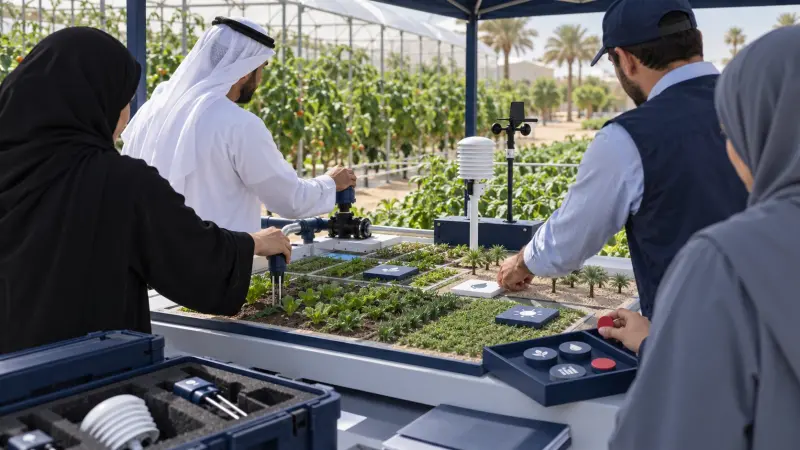
Begin with the decision, not the device. State whether the team needs to improve irrigation timing, monitor livestock, understand field variation, reduce uncertainty in an operating choice or coordinate equipment and data. Then identify what information is currently available and what is missing.
Assess whether sensors, remote sensing, precision tools, smart irrigation or automation can provide evidence at the right time and level of reliability. Consider interoperability with existing systems, the people who will interpret the information, and what happens when connectivity or a device fails. Technology only helps when it changes a monitored operating decision.
The Smart Agriculture Technology and Farm Decisions Course connects farm use cases, agricultural IoT, sensor data, remote sensing, precision agriculture, smart irrigation, livestock monitoring, automation, interoperability, cybersecurity awareness, economics and adoption. It is relevant when teams must turn technology options into an implementation plan rather than collect disconnected tools.
What does a practical investment scenario look like?
Consider an agribusiness evaluating an expansion that affects production, storage and distribution. The proposal appears commercially attractive, but operating costs follow the production cycle, working-capital needs change across the cycle, and repayment depends on assumptions about output and market access.
A weak review focuses on the final return figure. A stronger review traces the assumptions to operational evidence. Finance asks when cash enters and leaves. Operations tests production and capacity assumptions. Commercial teams challenge the route to market. Risk owners consider disruption, input availability and execution dependencies.
The team then builds scenarios, documents the assumptions, identifies the decisions that would change the plan and sets responsibility for updating the model. The aim is not to make uncertainty disappear. It is to show how uncertainty affects liquidity, funding, covenants and the investment decision.
The Agribusiness Finance and Investment Modelling Training Course develops advanced capability in sector drivers, seasonality, operating and capital costs, funding, appraisal, risk, due diligence and model governance. It suits finance, investment, lending and planning professionals who need to turn value-chain evidence into financeable decisions.
How should market and value-chain choices connect?
A market opportunity is useful only if the enterprise can source, produce, process, store and deliver consistently. Managers need to trace the full value chain and identify where margin, working capital, quality, capacity or risk changes. A route-to-market decision can alter packaging, inventory and logistics requirements.
Use market intelligence to shape choices, not to decorate a plan. Define the customer or channel need, test whether the enterprise can meet it, and identify the operating changes required. Then connect commercial measures with financial and operational indicators so teams do not optimise one function at the expense of the whole enterprise.
Cooperatives and multi-party value chains require especially clear roles. Participants need agreement on evidence, timing, quality, aggregation, payment and escalation. A commercially promising plan can fail if these operating arrangements remain implicit.
How do food safety and innovation stay aligned?
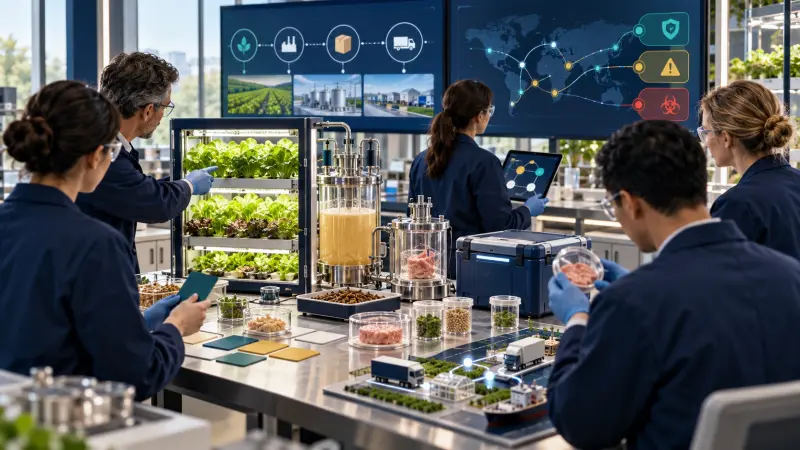
Innovation introduces new ingredients, processes, technologies and supply relationships. Leaders should identify emerging hazards early, define the evidence required for release decisions, strengthen traceability and set review points during development. Speed does not remove the need for accountable controls.
The Future Food Systems Safety and Innovation Training Course connects food-safety foresight, novel-food assessment, emerging technologies, digital traceability, predictive risk, rapid-development controls, supply-chain innovation, consumer transparency and scenario planning. It is suited to leaders who must govern innovation risks rather than evaluate commercial potential alone.
In practice, product development, quality, safety, supply-chain and commercial teams need one decision record. It should state the evidence reviewed, unresolved issues, responsible owners and conditions for progressing, pausing or revising the work. This keeps innovation and safety in the same management conversation.
How do you build a balanced capability plan?
Start with the decisions your team repeatedly struggles to make. If connected technology is being purchased without operational adoption, prioritise technology selection and implementation. If investment proposals rely on untested assumptions, strengthen modelling and due diligence. If commercial, finance and operations plans conflict, focus on integrated enterprise management. If innovation outpaces safety governance, develop foresight, traceability and risk controls.
Do not send everyone to the same subject. Match learning to role and decision rights, then bring participants together around a real workplace case. Ask them to produce a farm-technology plan, an investment model, an integrated decision portfolio or a food-safety governance portfolio that managers can review.
Afterwards, assign ownership for applying the work. Training has limited value when outputs sit outside normal planning and review. The goal is a better decision process supported by evidence, named responsibilities and regular challenge.
Bottom line: practical agribusiness capability connects field evidence, finance, markets, technology and food-safety governance around real decisions. Choose the skill gap that is currently limiting performance. Check the course page for the full syllabus, upcoming dates and fees.
Frequently asked questions
Should a farm invest in connected technology immediately?
Only after defining the operating decision and evidence gap. The team should also assess economics, interoperability, adoption, data responsibility and what happens when the technology fails.
Why does seasonality matter in financial planning?
It affects when operating cash enters and leaves, when funding may be required and how repayment capacity should be assessed against the production and commercial cycle.
What makes an agribusiness model credible?
Its assumptions connect to farm, processing, storage, logistics and market evidence; its logic is transparent; its risks are tested; and ownership for review and updates is clear.
How can commercial and operational teams work together?
Use one value-chain view that links the customer or channel need with sourcing, production, capacity, quality, inventory, logistics, working capital and risk decisions.
Why should innovation teams involve food-safety leaders early?
Early involvement helps identify emerging hazards, evidence needs, traceability requirements and review points before commercial momentum makes controls harder to redesign.