The verdict: most internal control design failures are not caused by a missing framework. They happen because teams describe controls too vaguely, assign ownership without authority, confuse policy with evidence, or design activities that do not match the risk.
The people who benefit most are control owners, internal auditors, risk and compliance professionals, and managers who need controls that work during normal operations rather than only during an audit.
What will you be able to do afterwards?
- Translate a business objective into a clear risk statement before choosing a control.
- Separate preventive, detective and corrective activities so each one has a defined purpose.
- Write control descriptions that state who acts, what they do, what evidence remains and how exceptions move.
- Test whether evidence proves performance instead of merely showing that a document exists.
- Distinguish a design weakness from an operating failure and respond appropriately.
- Connect deficiencies to practical improvements, accountable owners and follow-up evidence.
- Challenge unnecessary controls that add effort without changing the risk response.
Who is it for, and who is it not for?
This subject is useful for internal auditors who evaluate design and operating effectiveness, risk teams that connect objectives to events and responses, compliance specialists who monitor obligations, and managers who own processes. It also suits finance, operations, procurement, HR and technology professionals who are asked to document or improve controls within their work.
It is not the right starting point for someone looking only for a list of standard controls to copy. A control library can help, but it cannot replace understanding the objective, process, decision points and failure modes. It is also not for teams that want audit language without accepting operational ownership. A control belongs in the process, not in the audit file.
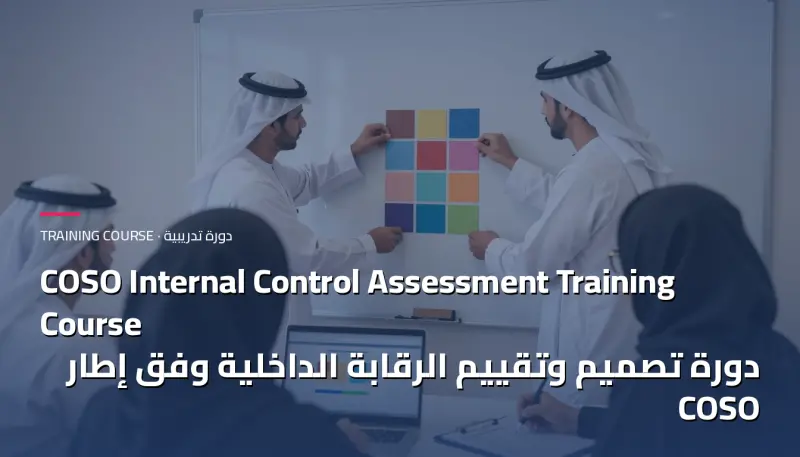
For a focused method covering design, evidence testing, deficiency evaluation and improvement planning, the COSO Internal Control Design and Assessment Training Course is the closest fit. Leaders who need to connect control architecture with broader oversight can consider Strategic Insights to Governance, Risk Management, and Compliance. Teams exploring automated evidence and continuous monitoring can review the AI-Enabled GRC Monitoring and Control Course.
Why do apparently strong controls fail in practice?
The first common mistake is beginning with an activity instead of a risk. A team may require a manager to approve every transaction, yet never define the error, misuse or decision failure the approval is meant to prevent. The approver then checks whatever seems important at the time. Evidence exists, but the control objective remains unclear.
The fix is to state the objective, identify the event that could prevent it, and describe how the activity changes that risk. This sequence makes the control easier to perform and test. It also reveals when an approval is unnecessary or when a different control would be stronger.
The second mistake is treating a policy as a control. A policy explains an expectation. A control is a repeatable action that applies that expectation to a transaction, decision, system or exception. If the only evidence is that a policy was published, the organisation may know the rule but cannot demonstrate that the rule shaped actual work.
The fix is to define the operational action: who checks the requirement, at which point, using what source, and what happens when the condition is not met. The policy remains useful context, but the control becomes observable.
How should a control description be written?
A useful description reads like an operating instruction, not a slogan. “Management reviews performance” is too broad. A stronger description identifies the responsible role, the information reviewed, the comparison or judgement made, the evidence retained, and the route for exceptions.
Frequency matters only when it follows the pace of the risk. A review performed too late cannot prevent an irreversible decision. A review performed too often may become ceremonial. Teams should consider when the underlying activity changes, how quickly an error can cause harm, and when intervention is still possible.
Ownership also needs care. Naming a department is not enough. The named role must have access to the information, competence to judge it, and authority to stop or escalate the activity. Otherwise the control owner becomes a recorder of problems rather than someone able to manage them.
What does good evidence look like?
Evidence should show what was reviewed and what conclusion was reached. A signature or system status may prove that a step occurred, but not that the reviewer challenged the right information. Stronger evidence connects the input, the assessment, any exception and the resolution.
Teams often retain too much evidence without improving assurance. Large files can hide the one fact that matters. The better approach is to identify the minimum evidence that proves the control objective, protect its integrity and make it retrievable. Evidence design should be part of control design, not an afterthought before testing.
Automation does not remove this requirement. Automated workflows can collect records and flag signals, but teams still need to understand data quality, rule logic, access rights, model governance and human escalation. Technology can increase coverage while also repeating a flawed rule at scale.
How can the skills be applied in a workplace scenario?
Consider a procurement team with a recurring issue: urgent purchases are approved, but the reason for urgency is rarely challenged and supplier selection evidence is inconsistent. The existing control says that a senior manager approves urgent requests.
A trained team starts by defining the risks: avoidable urgency, bypassed competition, unmanaged conflicts and weak value evidence. It then separates the response into practical activities. The requester documents the operational need; an independent role validates the exception; procurement records the supplier rationale; and unresolved conflicts move to a defined authority.
The evidence is redesigned around the decision rather than the presence of a signature. Testing can now determine whether the exception was justified, whether the reviewer had relevant information, and whether concerns were resolved. If failures continue, the team can distinguish poor design from non-performance and choose a targeted improvement.
How do you avoid over-controlling the process?
More controls do not automatically mean better control. Duplicate approvals, repeated reconciliations and broad checklists can delay work while leaving the important risk untouched. Managers should ask whether each activity changes a risk, produces distinct evidence and operates at a useful point in the process.
Controls should also be proportionate to judgement and complexity. Stable, routine activity may suit automated validation and exception reporting. High-judgement decisions may require documented challenge by an experienced role. The aim is a coherent set of activities, not the largest possible control inventory.
Bottom line: effective internal control design starts with objectives and risks, turns them into specific operating actions, and builds evidence and escalation into the process. It is worthwhile when participants can work on real processes and have authority to improve them. Check the course page for the full syllabus, upcoming dates and fees.
Frequently asked questions
What is the difference between control design and operating effectiveness?
Design asks whether the control, if performed as intended, can address the stated risk. Operating effectiveness asks whether the control was actually performed consistently by the right role, using appropriate information and evidence.
Can one control address several risks?
It can, but the relationship should be explicit. If the activity changes different risks in different ways, the description and testing approach must show how each objective is covered.
Should every control leave documentary evidence?
Every key control needs evidence suitable for assurance, but that evidence may be a protected system record, a workflow decision, an exception log or another reliable trace rather than a separate document.
When should an automated control be reviewed?
Review it when the process, data source, rule logic, access model or underlying risk changes, and when monitoring indicates unexpected exceptions or gaps. Automation still requires accountable ownership.
How should teams prioritise control deficiencies?
Consider the objective affected, the likelihood and consequence of failure, the availability of compensating activities, and how quickly the exposure can grow. Prioritisation should guide action rather than merely label the issue.