AI for Hydrogen Production and Storage Course
- Duration
- 1 Week5 days
- Next start
- Milan
- Scheduled dates
- 58
- Classroom cities
- 54Milan, Nice, Manama, Toronto and more
- Format
- Classroom and live online
- Fee per participant
- €3,000–€16,000Average €7,500
What does this course cover?
Overview
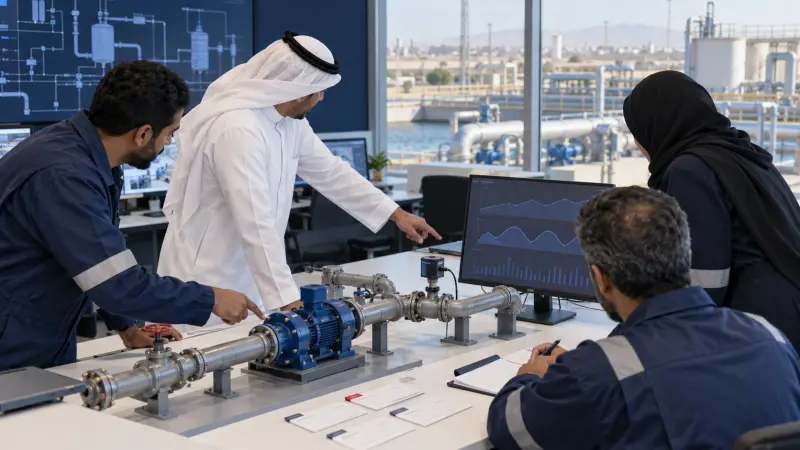
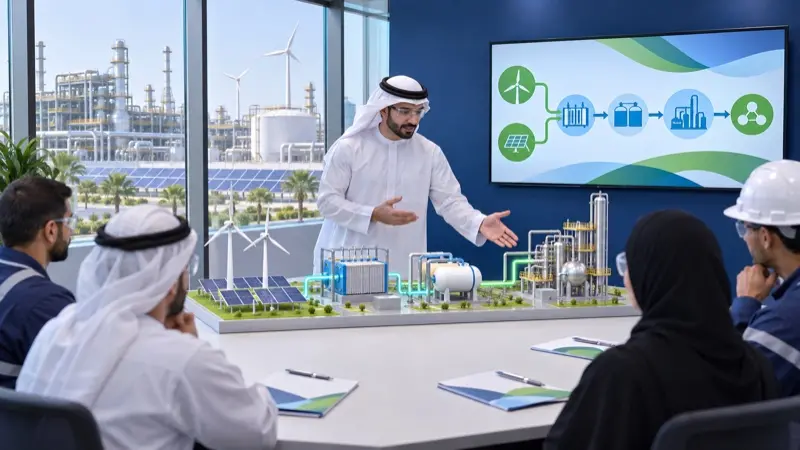
AI for Hydrogen Production and Storage Operations Training Course is a one-week advanced course for hydrogen project engineers, process engineers, energy asset managers, storage specialists, operations personnel, and digital transformation teams, who leave with an AI-Enabled Hydrogen Production and Storage Deployment Blueprint. Participants connect electrolyzer analytics, hydrogen demand forecasting, hydrogen predictive maintenance, storage integrity analytics, and a hydrogen digital twin to operational evidence, safety boundaries, cybersecurity, and human authority. Agile Leaders Training Center delivers training in AI for hydrogen production and storage operations.
Who Should Attend
- Hydrogen project engineering personnel responsible for system boundaries, performance, integration, and deployment
- Process engineering personnel responsible for production efficiency, operating envelopes, controls, and optimization
- Energy asset management personnel responsible for condition, reliability, lifecycle, and intervention priorities
- Storage engineering personnel responsible for inventory, pressure, integrity, monitoring, and recovery
- Operations personnel responsible for situational awareness, alarms, escalation, and safe response
- Digital transformation personnel responsible for data architecture, analytics pilots, assurance, and scaling
The course assumes participants can interpret hydrogen process data and engineering constraints, and it leaves out process design calculations, model coding, safety certification, and autonomous control.
Departments and Industries
The course supports hydrogen operations across renewable energy, industrial gases, refining, chemicals, power systems, transport fuels, and energy storage.
- Hydrogen production and process operations
- Electrolyzer and balance-of-plant engineering
- Compression, storage, and distribution
- Asset integrity and maintenance
- Process safety and operational technology security
- Energy integration and digital engineering
Learning Objectives
By the end of this course, participants will be able to:
- Analyze hydrogen use cases, boundaries, and operating constraints
- Evaluate production, storage, and energy data readiness
- Apply forecasting, optimization, and condition analytics
- Diagnose anomalies and prioritize engineering response
- Evaluate digital twins, safeguards, and pilot evidence
- Build an AI-enabled hydrogen deployment blueprint
Course Agenda
Day 1: Hydrogen System Context and Data
- Production, Storage, and Energy Boundary Map
- Hydrogen AI Use-Case Selection Matrix
- Sensor, Historian, and Maintenance Data Inventory
- Data Quality and Operating-Context Scorecard
- Value, Feasibility, Safety, and Criticality Screen
Day 2: Production Forecasting and Optimization
- Renewable Power and Hydrogen Demand Forecast Sheet
- Electrolyzer Performance and Degradation Dashboard
- Production Efficiency Feature Map
- Operating Envelope and Constraint Model
- Human-Reviewed Optimization Recommendation Flow
Day 3: Condition, Anomaly, and Integrity Analytics
- Equipment Condition Indicator Matrix
- Predictive Maintenance and Intervention Priority Board
- Hydrogen Anomaly and Leak Detection Logic
- Storage Inventory and Pressure Reconciliation Method
- Storage Integrity Evidence and Escalation Register
Day 4: Digital Twins and Deployment Assurance
- Hydrogen Digital Twin Purpose and Fidelity Canvas
- Sensor Placement and Dispersion Scenario Model
- Energy Integration and Flexibility Decision Map
- Industrial Data and Cybersecurity Boundary Checklist
- Pilot Validation, Fallback, and Human-Authority Gate
Day 5: Hydrogen AI Practice and Capstone
- Suggested Exercise: Screen a Hydrogen AI Use Case
- Suggested Exercise: Diagnose Production and Degradation Data
- Suggested Exercise: Evaluate an Anomaly and Storage Response
- Suggested Exercise: Test a Digital Twin and Assurance Plan
- Capstone Exercise: AI-Enabled Hydrogen Production and Storage Deployment Blueprint
Practical Exercises
The course uses suggested activities that convert hydrogen operating challenges into controlled AI-supported engineering decisions.
- Suggested activity: define system boundaries, data sources, operating context, candidate uses, safety constraints, and accountable owners
- Suggested activity: compare forecast, production, degradation, and optimization evidence against engineering limits
- Suggested activity: design anomaly, leak, storage reconciliation, integrity, and escalation logic
- Suggested activity: assemble digital-twin scope, cybersecurity boundaries, pilot measures, fallback controls, and deployment gates
FAQs
Who suits AI for hydrogen production and storage operations, and what does the course assume?
AI for hydrogen operations suits project, process, asset, storage, operations, and digital engineering personnel. The course assumes participants can interpret hydrogen process data and engineering constraints.
How does AI for hydrogen operations differ from general hydrogen strategy training?
Hydrogen operations AI focuses on production and storage data, forecasts, optimization, degradation, anomalies, integrity, digital twins, safeguards, and pilot evidence rather than market policy and investment strategy.
How can AI support electrolyzer performance and maintenance?
AI can organize operating data, identify degradation patterns, compare performance with operating context, forecast condition changes, and prioritize engineering review while operators retain decision authority.
How can a hydrogen digital twin support storage and safety decisions?
A hydrogen digital twin can connect sensor data, process behavior, inventory, pressure, dispersion scenarios, and defined assumptions to test placement, response, operating, and monitoring decisions.
What controls support responsible hydrogen AI deployment?
Responsible deployment requires defined intended use, validated data, engineering limits, accountable owners, cybersecurity boundaries, explainable recommendations, human authorization, fallback procedures, monitoring, and evidence-based scale decisions.
Conclusion
Participants take back an AI-Enabled Hydrogen Production and Storage Deployment Blueprint linking boundaries, data, forecasts, production, condition, anomalies, storage integrity, digital twins, safeguards, owners, and pilot evidence. It changes how engineering teams move from isolated analytics to controlled operating decisions. The blueprint supports validation, human authority, recovery planning, and staged deployment.
credits: 5 credit per day
Course Mode: full-time
Provider: Agile Leaders Training Center
-
Events for this Course
-
Milan 23 – 27 November 2026
-
Nice 30 November – 4 December 2026
-
Manama 6 – 10 December 2026
-
Toronto 6 – 10 December 2026
-
Geneva 13 – 17 December 2026
-
Dubai 14 – 18 December 2026
-
Cape town 20 – 24 December 2026
-
Berlin 28 December 2026 – 1 January 2027
-
Trabzon 3 – 7 January 2027
-
Bangkok 10 – 14 January 2027
-
Kuala Lumpur 18 – 22 January 2027
-
Johannesburg 24 – 28 January 2027
-
Dubai 25 – 29 January 2027
-
Amman 31 January – 4 February 2027
-
Tashkent 7 – 11 February 2027
-
Baku 22 – 26 February 2027
-
Paris 1 – 5 March 2027
-
Lisbon 1 – 5 March 2027
-
Phuket 7 – 11 March 2027
-
Cairo 15 – 19 March 2027
-
Athens 15 – 19 March 2027
-
Seoul 22 – 26 March 2027
-
Muscat 28 March – 1 April 2027
-
Madrid 5 – 9 April 2027
-
Marbella 11 – 15 April 2027
-
New York 19 – 23 April 2027
-
Istanbul 26 – 30 April 2027
-
Barcelona 3 – 7 May 2027
-
Zoom 10 – 14 May 2027
-
London 17 – 21 May 2027
-
Addis Ababa 17 – 21 May 2027
-
Kuwait 23 – 27 May 2027
-
Porto 31 May – 4 June 2027
-
Prague 7 – 11 June 2027
-
Lagos 13 – 17 June 2027
-
Montreux 14 – 18 June 2027
-
Frankfurt 21 – 25 June 2027
-
Abu Dhabi 28 June – 2 July 2027
-
Tbilisi 5 – 9 July 2027
-
Singapore 12 – 16 July 2027
-
Accra 26 – 30 July 2027
-
Rome 2 – 6 August 2027
-
Zanzibar 8 – 12 August 2027
-
Langkawi 15 – 19 August 2027
-
Doha 22 – 26 August 2027
-
Casablanca 30 August – 3 September 2027
-
Chicago 5 – 9 September 2027
-
Nairobi 12 – 16 September 2027
-
San Diego 20 – 24 September 2027
-
Munich 27 September – 1 October 2027
-
Amsterdam 4 – 8 October 2027
-
Bali 10 – 14 October 2027
-
Sharm El-Sheikh 18 – 22 October 2027
-
London 25 – 29 October 2027
-
Vienna 1 – 5 November 2027
-
Tokyo 8 – 12 November 2027
-
Jakarta 15 – 19 November 2027
-
Abu Dhabi 22 – 26 November 2027
When and where does this course run?
| Image | Location | Dates | Duration | Mode | Price | Actions |
|---|---|---|---|---|---|---|

|
Athens |
Week 11, 2027 15 – 19 March 2027 |
1 Week | Onsite | €7,500 | |

|
Seoul |
Week 12, 2027 22 – 26 March 2027 |
1 Week | Onsite | €12,000 | |

|
Muscat |
Week 12, 2027 28 March – 1 April 2027 |
1 Week | Onsite | €6,500 | |

|
Madrid |
Week 14, 2027 5 – 9 April 2027 |
1 Week | Onsite | €6,500 | |

|
Marbella |
Week 14, 2027 11 – 15 April 2027 |
1 Week | Onsite | €6,500 | |

|
New York |
Week 16, 2027 19 – 23 April 2027 |
1 Week | Onsite | €16,000 | |

|
Istanbul |
Week 17, 2027 26 – 30 April 2027 |
1 Week | Onsite | €6,000 | |

|
Barcelona |
Week 18, 2027 3 – 7 May 2027 |
1 Week | Onsite | €6,500 | |

|
Zoom |
Week 19, 2027 10 – 14 May 2027 |
1 Week | Online | €3,000 | |

|
London |
Week 20, 2027 17 – 21 May 2027 |
1 Week | Onsite | €6,500 | |

|
Addis Ababa |
Week 20, 2027 17 – 21 May 2027 |
1 Week | Onsite | €6,000 | |

|
Kuwait |
Week 20, 2027 23 – 27 May 2027 |
1 Week | Onsite | €7,000 | |

|
Porto |
Week 22, 2027 31 May – 4 June 2027 |
1 Week | Onsite | €6,500 | |

|
Prague |
Week 23, 2027 7 – 11 June 2027 |
1 Week | Onsite | €7,500 | |

|
Lagos |
Week 23, 2027 13 – 17 June 2027 |
1 Week | Onsite | €6,000 | |

|
Montreux |
Week 24, 2027 14 – 18 June 2027 |
1 Week | Onsite | €8,000 | |

|
Frankfurt |
Week 25, 2027 21 – 25 June 2027 |
1 Week | Onsite | €6,500 | |

|
Abu Dhabi |
Week 26, 2027 28 June – 2 July 2027 |
1 Week | Onsite | €6,500 | |

|
Tbilisi |
Week 27, 2027 5 – 9 July 2027 |
1 Week | Onsite | €5,700 | |

|
Singapore |
Week 28, 2027 12 – 16 July 2027 |
1 Week | Onsite | €7,480 |
This course by city
- Oil & Gas Training and Other Technical Courses in Abu Dhabi
- Oil & Gas Training and Other Technical Courses in Accra
- Oil & Gas Training and Other Technical Courses in Addis Ababa
- Oil & Gas Training and Other Technical Courses in Amman
- Oil & Gas Training and Other Technical Courses in Amsterdam
- Oil & Gas Training and Other Technical Courses in Athens
- Oil & Gas Training and Other Technical Courses in Baku
- Oil & Gas Training and Other Technical Courses in Bali
- Oil & Gas Training and Other Technical Courses in Bangkok
- Oil & Gas Training and Other Technical Courses in Barcelona
- Oil & Gas Training and Other Technical Courses in Berlin
- Oil & Gas Training and Other Technical Courses in Cairo
- Oil & Gas Training and Other Technical Courses in Cape town
- Oil & Gas Training and Other Technical Courses in Casablanca
- Oil & Gas Training and Other Technical Courses in Chicago
- Oil & Gas Training and Other Technical Courses in Doha
- Oil & Gas Training and Other Technical Courses in Dubai
- Oil & Gas Training and Other Technical Courses in Frankfurt
- Oil & Gas Training and Other Technical Courses in Geneva
- Oil & Gas Training and Other Technical Courses in Istanbul
- Oil & Gas Training and Other Technical Courses in Jakarta
- Oil & Gas Training and Other Technical Courses in Johannesburg
- Oil & Gas Training and Other Technical Courses in Kuala Lumpur
- Oil & Gas Training and Other Technical Courses in Kuwait
- Oil & Gas Training and Other Technical Courses in Lagos
- Oil & Gas Training and Other Technical Courses in Langkawi
- Oil & Gas Training and Other Technical Courses in Lisbon
- Oil & Gas Training and Other Technical Courses in London
- Oil & Gas Training and Other Technical Courses in Madrid
- Oil & Gas Training and Other Technical Courses in Manama
- Oil & Gas Training and Other Technical Courses in Marbella
- Oil & Gas Training and Other Technical Courses in Milan
- Oil & Gas Training and Other Technical Courses in Montreux
- Oil & Gas Training and Other Technical Courses in Munich
- Oil & Gas Training and Other Technical Courses in Muscat
- Oil & Gas Training and Other Technical Courses in Nairobi
- Oil & Gas Training and Other Technical Courses in New York
- Oil & Gas Training and Other Technical Courses in Nice
- Oil & Gas Training and Other Technical Courses in Paris
- Oil & Gas Training and Other Technical Courses in Phuket
- Oil & Gas Training and Other Technical Courses in Porto
- Oil & Gas Training and Other Technical Courses in Prague
- Oil & Gas Training and Other Technical Courses in Rome
- Oil & Gas Training and Other Technical Courses in San Diego
- Oil & Gas Training and Other Technical Courses in Seoul
- Oil & Gas Training and Other Technical Courses in Sharm El-Sheikh
- Oil & Gas Training and Other Technical Courses in Singapore
- Oil & Gas Training and Other Technical Courses in Tashkent
- Oil & Gas Training and Other Technical Courses in Tbilisi
- Oil & Gas Training and Other Technical Courses in Tokyo
- Oil & Gas Training and Other Technical Courses in Toronto
- Oil & Gas Training and Other Technical Courses in Trabzon
- Oil & Gas Training and Other Technical Courses in Vienna
- Oil & Gas Training and Other Technical Courses in Zanzibar
- Oil & Gas Training and Other Technical Courses in Zoom
More ways to train
- Every date of this courseAll cities and months, with fees
- Oil & Gas Training and Other Technical CoursesEvery course in this subject
- Live online coursesTrain from wherever you are
- Training citiesCourses in each city
- All upcoming datesThe course calendar by month
- Training for your teamTell us the course, the number of participants and your dates
- Contact usAsk us about this course