AI in Oil Refinery Training for Process Optimization

At a glance
- Duration
- 5 days
- Format
- Classroom
- Cities
- London, Tashkent, Montreux, Bali, Tbilisi, Paris and more
- Next session
- 19 – 23 October 2026, London
- Average fee
- 5,750 €
Course Overview
The AI in Oil Refinery Training Course provides a practical, engineering-focused understanding of how artificial intelligence, machine learning, industrial data analytics, digital twins, and IIoT technologies can support modern refinery operations. The course is particularly relevant for Instrumentation, Automation & Control Engineers, while remaining suitable for process, reliability, maintenance, operations, and digital transformation professionals across petroleum refineries.
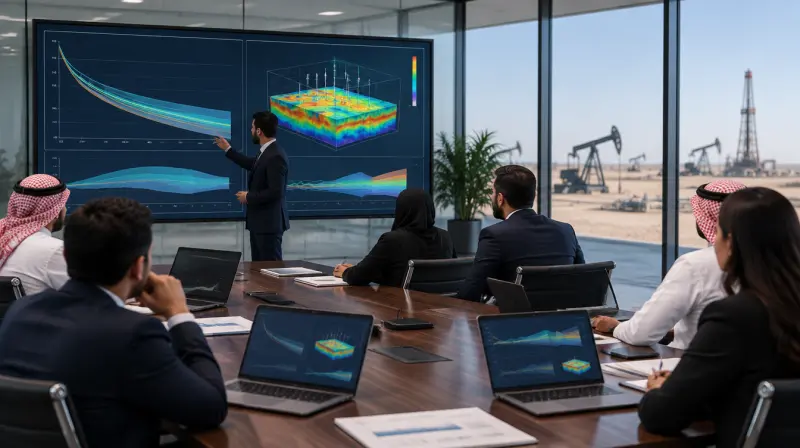
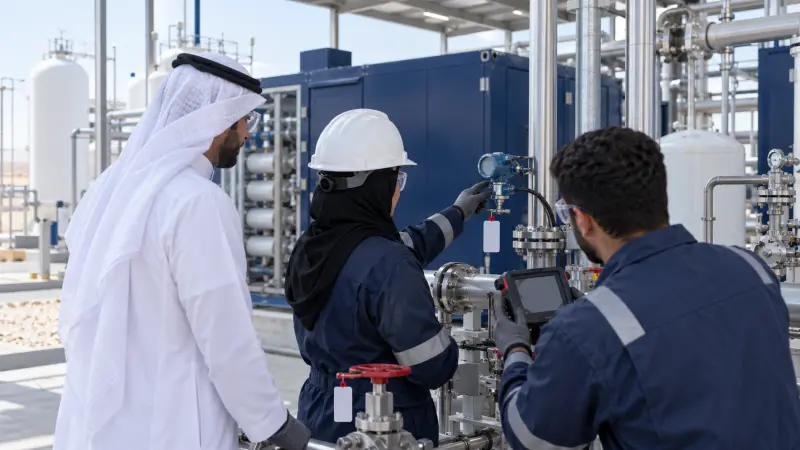
Participants explore how an AI Refinery environment uses process measurements, field instrumentation, DCS and SCADA data, process historians, equipment condition signals, and operational records to improve process control, asset reliability, safety, energy efficiency, and production performance. The petroleum-industry reference specifically identifies downstream applications including smart refining, plant modelling and simulation, remote operations, risk analysis, IoT connectivity, machine vision, and energy and asset management.
The course connects Artificial Intelligence in Oil Refinery with practical applications such as AI for Process Optimization, Refinery Optimization, Refinery Predictive Maintenance, Digital Twin Refinery, Oil and Gas Data Analytics, Machine Learning Oil and Gas, and IIoT Oil and Gas. It also addresses implementation challenges such as legacy control systems, fragmented data, cybersecurity, workforce capability, data quality, and integration constraints, which are identified as major barriers to effective AI adoption in oil and gas operations.
Target Audience
- Instrumentation, Automation & Control Engineers
- Process Control Engineers
- Instrumentation Engineers
- Automation Engineers
- Refinery Process Engineers
- Chemical and Petroleum Engineers
- Reliability and Maintenance Engineers
- Asset Integrity Engineers
- Operations and Production Engineers
- DCS and SCADA Engineers
- Industrial IT and OT Engineers
- Digital Transformation Engineers
- Data and Analytics Professionals
- Energy Efficiency Engineers
- Technical Managers and Engineering Leaders
Targeted Organizational Departments
- Instrumentation and Control
- Automation and Process Control
- Refinery Operations
- Process Engineering
- Maintenance and Reliability
- Asset Integrity
- Production
- Digital Transformation
- Operational Technology
- Information Technology
- Data Analytics and AI
- Engineering and Technical Services
- Energy Management
- HSE and Process Safety
- Operational Excellence
Targeted Industries
- Petroleum Refining
- Oil and Gas
- Petrochemicals
- Chemical Processing
- Gas Processing
- Hydrocarbon Processing
- Integrated Energy Companies
- Industrial Process Manufacturing
- Refinery Engineering Services
- Industrial Automation and Control
Course Offerings
By the end of this course, participants will be able to:
- Explain the role of AI in Oil Refinery operations.
- Identify AI opportunities within instrumentation, automation, and process control environments.
- Understand how refinery process data can be prepared and used for AI and analytics.
- Apply AI for Process Optimization to improve refinery operating performance.
- Recognize how machine learning supports abnormal condition and fault detection.
- Understand predictive maintenance using equipment and instrumentation data.
- Explain Digital Twin Refinery concepts and architecture.
- Understand IIoT Oil and Gas connectivity and edge data applications.
- Evaluate AI integration with DCS, SCADA, PLC, and process historian systems.
- Interpret AI-supported alarm analytics and operational decision support.
- Identify cybersecurity, data quality, and legacy-system integration risks.
- Develop a practical AI implementation roadmap for refinery operations.
Training Methodology
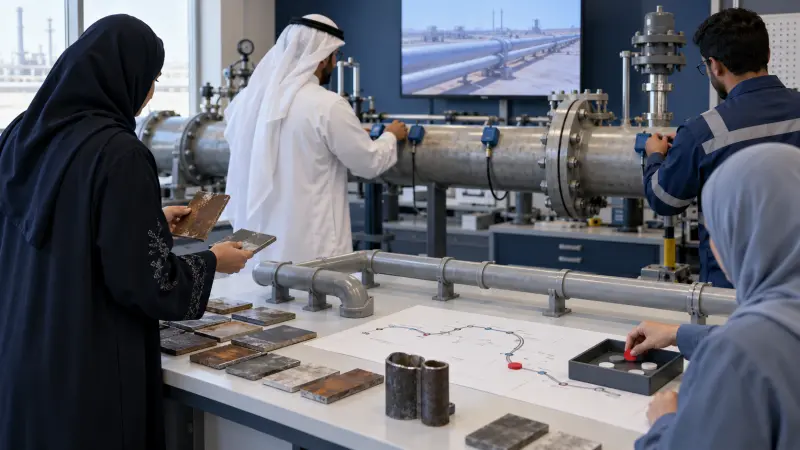
The training uses an applied engineering approach focused on how AI technologies interact with refinery instrumentation, automation, and control systems. Participants will examine realistic refinery scenarios involving process measurements, control loops, instrumentation signals, alarms, process historians, equipment-condition data, and operational KPIs.
Interactive sessions introduce AI in Oil and Gas concepts through practical examples of process optimization, anomaly detection, predictive maintenance, digital twins, intelligent monitoring, and operational decision support. The petroleum-industry reference supports this approach through downstream applications involving smart refining, advanced process modelling, IoT-connected systems, machine vision, remote operations, and asset management.
Group exercises focus on identifying data sources, defining useful process variables, interpreting trends, selecting appropriate AI use cases, and determining where AI can support rather than replace engineering judgment.
Participants also examine implementation barriers including legacy automation systems, fragmented data environments, insufficient infrastructure, cybersecurity exposure, workforce capability, and data quality. These challenges are directly reflected in the uploaded oil and gas AI research.
The methodology combines instructor-led explanation, refinery cases, technical discussions, process-data interpretation, use-case mapping, group problem solving, technology examples, and implementation planning.
Course Toolbox
Tools and commercial software platforms are not provided. Participants receive practical insights, examples, templates, and frameworks relevant to refinery AI applications.
- AI Refinery Use-Case Identification Framework
- Instrumentation Data Mapping Template
- Process Variable Selection Guide
- DCS and SCADA Data Integration Example
- Process Historian Data Flow Example
- AI for Process Optimization Framework
- Refinery Predictive Maintenance Template
- Sensor Health and Data Quality Checklist
- Digital Twin Refinery Architecture Example
- IIoT Connectivity Mapping Template
- Alarm Analytics Framework
- Fault Detection and Diagnostics Example
- Refinery AI Feasibility Matrix
- AI Business Value Evaluation Template
- OT Cybersecurity Considerations Checklist
- AI Implementation Readiness Checklist
- Refinery Digital Transformation Roadmap Template
Course Agenda
Day 1: AI, Instrumentation Data and Refinery Digital Foundations
- Topic 1: AI in Oil Refinery: Applications across Modern Refinery Operations
- Topic 2: From Conventional Automation to the AI Refinery: Digital Transformation of Refinery Systems
- Topic 3: Refinery Instrumentation Data: Pressure, Temperature, Flow, Level, Analytical, and Equipment Signals
- Topic 4: Oil and Gas Data Analytics: DCS, SCADA, PLC, Historian, Maintenance, and Laboratory Data
- Topic 5: Machine Learning Oil and Gas: Prediction, Classification, Pattern Recognition, and Anomaly Detection
- Topic 6: Selecting AI for Refinery Operations: Matching Operational Problems with AI Applications
- Reflection & Review: Map existing refinery instrumentation and automation data to practical AI opportunities.
Day 2: AI for Process Control and Refinery Optimization
- Topic 1: AI for Process Optimization: Improving Process Stability, Efficiency, and Operating Performance
- Topic 2: Refinery Process Optimization using Real-Time Measurements and Historical Operating Data
- Topic 3: AI-Supported Process Control: Identifying Relationships between Controlled and Manipulated Variables
- Topic 4: Advanced Process Monitoring for Crude Distillation, Fractionation, and Refinery Process Units
- Topic 5: Machine Learning for Process Deviation, Constraint, and Abnormal Condition Detection
- Topic 6: AI-Enabled Decision Support for Operators and Control Engineers
- Reflection & Review: Analyze a refinery process-control scenario and identify suitable AI-supported optimization opportunities.
Day 3: Intelligent Instrumentation, Predictive Maintenance and Reliability
- Topic 1: Predictive Maintenance Oil and Gas: Using Instrument and Equipment Condition Data
- Topic 2: Refinery Predictive Maintenance for Pumps, Compressors, Motors, Valves, and Rotating Equipment
- Topic 3: Intelligent Sensors and Condition Monitoring: Vibration, Temperature, Pressure, Flow, and Equipment Health
- Topic 4: Machine Learning for Fault Detection, Diagnostics, and Failure Prediction
- Topic 5: AI Applications for Control Valve Performance, Instrument Degradation, and Sensor Reliability
- Topic 6: Asset Integrity Analytics: Corrosion, Leakage, Equipment Health, and Maintenance Prioritization
- Reflection & Review: Build a predictive-maintenance use case linking sensor signals, failure modes, alarms, and maintenance actions.
Day 4: DCS, SCADA, IIoT and Digital Twin Refinery Applications
- Topic 1: Digital Twin Refinery: Linking Physical Assets, Process Models, Instrumentation, and Operational Data
- Topic 2: Digital Twin Oil and Gas Applications for Process Units, Equipment, and Control Systems
- Topic 3: IIoT Oil and Gas Architecture: Sensors, Edge Devices, Gateways, Networks, and Industrial Data Platforms
- Topic 4: AI Integration with DCS, SCADA, PLC, and Process Historian Systems
- Topic 5: AI-Based Alarm Analytics, Abnormal Situation Management, and Intelligent Monitoring
- Topic 6: Edge Analytics, Remote Monitoring, and AI-Supported Operational Decision Making
- Reflection & Review: Design a conceptual refinery architecture connecting instruments, control systems, historians, IIoT, digital twins, and AI analytics.
Day 5: AI Implementation, Governance and Refinery Digital Transformation
- Topic 1: Refinery Digital Transformation: From Automation Data to Operational Intelligence
- Topic 2: Selecting High-Value AI Projects based on Process Impact, Data Availability, and Technical Feasibility
- Topic 3: Data Quality for AI: Sensor Accuracy, Calibration, Missing Data, Noise, and Historian Integrity
- Topic 4: OT Cybersecurity and AI Integration: Protecting Industrial Control and Connected Refinery Systems
- Topic 5: Legacy Systems, Integration Challenges, Human Oversight, and AI Governance
- Topic 6: Developing an AI Refinery Roadmap: Pilot Selection, Deployment, Scaling, and Performance Measurement
- Reflection & Review: Develop a practical AI implementation roadmap for one instrumentation, automation, control, maintenance, or refinery optimization use case.
FAQ
What specific qualifications or prerequisites are needed for participants before enrolling in the course?
No formal AI, data science, or programming qualification is required. A technical background in refinery operations, instrumentation, automation, process control, maintenance, reliability, process engineering, or industrial systems is beneficial. The course focuses on understanding and applying AI within refinery environments rather than programming AI models from scratch.
How long is each day's session, and is there a total number of hours required for the entire course?
Each day's session is generally structured to last around 4-5 hours, with breaks and interactive activities included. The total course duration spans five days, approximately 20-25 hours of instruction.
Will this course help Instrumentation, Automation & Control Engineers understand how AI integrates with existing refinery control systems?
Yes. A major part of the course focuses on how AI can work with instrumentation data, DCS, SCADA, PLC systems, process historians, IIoT sensors, alarm systems, and digital twins. Participants examine how existing operational data can support anomaly detection, predictive maintenance, process optimization, fault diagnostics, and operational decision support.
How This Course is Different from Other AI in Oil Refinery Courses
This course is designed around the engineering reality of refinery operations rather than treating artificial intelligence as a standalone IT subject. It combines AI in Oil Refinery with instrumentation, automation, process control, maintenance, reliability, IIoT, digital twins, and refinery process optimization.
A key differentiator is its focus on the operational data that already exists inside refineries. Participants examine how signals from field instruments, DCS and SCADA systems, process historians, equipment sensors, alarms, and maintenance systems can support AI-driven decisions.
The course also places significant emphasis on Digital Twin Refinery, Refinery Predictive Maintenance, AI for Process Optimization, intelligent alarm analytics, sensor reliability, and AI integration with industrial control systems. This reflects the petroleum-industry literature, which identifies downstream AI applications including smart refining, advanced modelling, IoT integration, remote monitoring, risk analysis, and asset management.
It also addresses practical implementation issues. The uploaded research highlights data quality, legacy systems, cybersecurity, infrastructure, workforce capability, cost, and organisational readiness as major barriers to AI adoption.
credits: 5 credit per day
Course Mode: full-time
Provider: Agile Leaders Training Center
-
Events for this Course
-
London 19 – 23 October 2026
-
Tashkent 1 – 5 November 2026
-
Montreux 2 – 6 November 2026
-
Bali 8 – 12 November 2026
-
Tbilisi 16 – 20 November 2026
-
Paris 23 – 27 November 2026
-
Madrid 30 November – 4 December 2026
-
Abu Dhabi 7 – 11 December 2026
-
Nairobi 13 – 17 December 2026
-
Chicago 20 – 24 December 2026
-
Frankfurt 21 – 25 December 2026
-
Manama 27 – 31 December 2026
-
Dubai 28 December 2026 – 1 January 2027
-
Marbella 10 – 14 January 2027
-
Baku 11 – 15 January 2027
-
Kuwait 17 – 21 January 2027
-
Langkawi 24 – 28 January 2027
-
Lisbon 25 – 29 January 2027
-
Zanzibar 31 January – 4 February 2027
-
London 8 – 12 February 2027
-
Athens 15 – 19 February 2027
-
Abu Dhabi 22 – 26 February 2027
-
San Diego 1 – 5 March 2027
-
Nice 1 – 5 March 2027
-
Rome 8 – 12 March 2027
-
Amsterdam 8 – 12 March 2027
-
Accra 14 – 18 March 2027
-
Vienna 22 – 26 March 2027
-
Singapore 22 – 26 March 2027
-
Manama 28 March – 1 April 2027
-
Kuala Lumpur 29 March – 2 April 2027
-
Istanbul 5 – 9 April 2027
-
Johannesburg 11 – 15 April 2027
-
Dubai 12 – 16 April 2027
-
Doha 18 – 22 April 2027
-
London 19 – 23 April 2027
-
Phuket 25 – 29 April 2027
-
Cairo 3 – 7 May 2027
-
Milan 3 – 7 May 2027
-
Rome 10 – 14 May 2027
-
Amman 16 – 20 May 2027
-
Zoom 24 – 28 May 2027
-
Abu Dhabi 24 – 28 May 2027
-
Amsterdam 31 May – 4 June 2027
-
New York 31 May – 4 June 2027
-
Trabzon 6 – 10 June 2027
-
London 14 – 18 June 2027
-
Barcelona 21 – 25 June 2027
-
Sharm El-Sheikh 28 June – 2 July 2027
-
Madrid 28 June – 2 July 2027
-
Jakarta 5 – 9 July 2027
-
Bangkok 11 – 15 July 2027
-
Munich 19 – 23 July 2027
-
Toronto 25 – 29 July 2027
-
Prague 26 – 30 July 2027
-
Dubai 2 – 6 August 2027
-
Amsterdam 2 – 6 August 2027
-
Istanbul 9 – 13 August 2027
-
Cairo 16 – 20 August 2027
-
Tokyo 23 – 27 August 2027
-
Berlin 23 – 27 August 2027
-
Casablanca 30 August – 3 September 2027
-
Milan 30 August – 3 September 2027
-
Geneva 5 – 9 September 2027
-
Seoul 13 – 17 September 2027
-
Porto 13 – 17 September 2027
-
Barcelona 27 September – 1 October 2027
-
Abu Dhabi 27 September – 1 October 2027
-
Muscat 3 – 7 October 2027
-
Paris 4 – 8 October 2027
-
Istanbul 4 – 8 October 2027
-
Dubai 11 – 15 October 2027
-
Vienna 11 – 15 October 2027
-
Cape town 17 – 21 October 2027
-
Kuala Lumpur 18 – 22 October 2027
| Image | Location | Dates | Duration | Mode | Price | Actions |
|---|---|---|---|---|---|---|

|
London |
Week 43, 2026 19 – 23 October 2026 |
5 Days | Onsite | €5,700 | |

|
Tashkent |
Week 44, 2026 1 – 5 November 2026 |
5 Days | Onsite | €4,500 | |

|
Montreux |
Week 45, 2026 2 – 6 November 2026 |
5 Days | Onsite | €7,500 | |

|
Bali |
Week 45, 2026 8 – 12 November 2026 |
5 Days | Onsite | €5,700 | |

|
Tbilisi |
Week 47, 2026 16 – 20 November 2026 |
5 Days | Onsite | €5,000 | |

|
Paris |
Week 48, 2026 23 – 27 November 2026 |
5 Days | Onsite | €5,700 | |

|
Madrid |
Week 49, 2026 30 November – 4 December 2026 |
5 Days | Onsite | €5,700 | |

|
Abu Dhabi |
Week 50, 2026 7 – 11 December 2026 |
5 Days | Onsite | €4,700 | |

|
Nairobi |
Week 50, 2026 13 – 17 December 2026 |
5 Days | Onsite | €4,500 | |

|
Chicago |
Week 51, 2026 20 – 24 December 2026 |
5 Days | Onsite | €12,000 | |

|
Frankfurt |
Week 52, 2026 21 – 25 December 2026 |
5 Days | Onsite | €5,700 | |

|
Manama |
Week 52, 2026 27 – 31 December 2026 |
5 Days | Onsite | €4,700 | |

|
Dubai |
Week 53, 2026 28 December 2026 – 1 January 2027 |
5 Days | Onsite | €4,500 | |

|
Marbella |
Week 01, 2027 10 – 14 January 2027 |
5 Days | Onsite | €5,700 | |

|
Baku |
Week 02, 2027 11 – 15 January 2027 |
5 Days | Onsite | €5,000 | |

|
Kuwait |
Week 02, 2027 17 – 21 January 2027 |
5 Days | Onsite | €5,500 | |

|
Langkawi |
Week 03, 2027 24 – 28 January 2027 |
5 Days | Onsite | €6,000 | |

|
Lisbon |
Week 04, 2027 25 – 29 January 2027 |
5 Days | Onsite | €5,700 | |

|
Zanzibar |
Week 04, 2027 31 January – 4 February 2027 |
5 Days | Onsite | €5,500 | |
|
|
London |
Week 06, 2027 8 – 12 February 2027 |
5 Days | Onsite | €5,700 |
Frequently asked questions
Are training dates available?
Yes. Available dates and destinations are listed in the course dates section on this page.
How can I register?
Choose an available date on this page and complete the registration form, or send a programme enquiry.
Can I download the course brochure?
Yes. Use the brochure download link provided on this page.
This course by city
- Data Analytics Training and Data Science Courses in Abu Dhabi
- Data Analytics Training and Data Science Courses in Accra
- Data Analytics Training and Data Science Courses in Amman
- Data Analytics Training and Data Science Courses in Amsterdam
- Data Analytics Training and Data Science Courses in Athens
- Data Analytics Training and Data Science Courses in Baku
- Data Analytics Training and Data Science Courses in Bali
- Data Analytics Training and Data Science Courses in Bangkok
- Data Analytics Training and Data Science Courses in Barcelona
- Data Analytics Training and Data Science Courses in Berlin
- Data Analytics Training and Data Science Courses in Cairo
- Data Analytics Training and Data Science Courses in Cape town
- Data Analytics Training and Data Science Courses in Casablanca
- Data Analytics Training and Data Science Courses in Chicago
- Data Analytics Training and Data Science Courses in Doha
- Data Analytics Training and Data Science Courses in Dubai
- Data Analytics Training and Data Science Courses in Frankfurt
- Data Analytics Training and Data Science Courses in Geneva
- Data Analytics Training and Data Science Courses in Istanbul
- Data Analytics Training and Data Science Courses in Jakarta
- Data Analytics Training and Data Science Courses in Johannesburg
- Data Analytics Training and Data Science Courses in Kuala Lumpur
- Data Analytics Training and Data Science Courses in Kuwait
- Data Analytics Training and Data Science Courses in Langkawi
- Data Analytics Training and Data Science Courses in Lisbon
- Data Analytics Training and Data Science Courses in London
- Data Analytics Training and Data Science Courses in Madrid
- Data Analytics Training and Data Science Courses in Manama
- Data Analytics Training and Data Science Courses in Marbella
- Data Analytics Training and Data Science Courses in Milan
- Data Analytics Training and Data Science Courses in Montreux
- Data Analytics Training and Data Science Courses in Munich
- Data Analytics Training and Data Science Courses in Muscat
- Data Analytics Training and Data Science Courses in Nairobi
- Data Analytics Training and Data Science Courses in New York
- Data Analytics Training and Data Science Courses in Nice
- Data Analytics Training and Data Science Courses in Paris
- Data Analytics Training and Data Science Courses in Phuket
- Data Analytics Training and Data Science Courses in Porto
- Data Analytics Training and Data Science Courses in Prague
- Data Analytics Training and Data Science Courses in Rome
- Data Analytics Training and Data Science Courses in San Diego
- Data Analytics Training and Data Science Courses in Seoul
- Data Analytics Training and Data Science Courses in Sharm El-Sheikh
- Data Analytics Training and Data Science Courses in Singapore
- Data Analytics Training and Data Science Courses in Tashkent
- Data Analytics Training and Data Science Courses in Tbilisi
- Data Analytics Training and Data Science Courses in Tokyo
- Data Analytics Training and Data Science Courses in Toronto
- Data Analytics Training and Data Science Courses in Trabzon
- Data Analytics Training and Data Science Courses in Vienna
- Data Analytics Training and Data Science Courses in Zanzibar
- Data Analytics Training and Data Science Courses in Zoom