ASME Section VIII Pressure Vessel Training Course

At a glance
- Duration
- 1 Week
- Format
- Classroom
- Cities
- Cape town, Casablanca, Jakarta, Barcelona, Geneva, Bali and more
- Next session
- 15 – 19 November 2026, Cape town
- Average fee
- 7,500 €
Overview
ASME Section VIII Pressure Vessel Design and Inspection Training Course is a one-week practitioner course for mechanical, pressure-equipment, inspection, maintenance, fabrication, and quality teams who leave with a Pressure Vessel Lifecycle Assurance File. The course connects code scope, design basis, materials, welded fabrication, examination, pressure testing, documentation, in-service inspection, degradation, and repair interfaces through traceable engineering evidence. Agile Leaders Training Center delivers this course on ASME Section VIII pressure vessel design and inspection.
Who Should Attend
- Functions responsible for pressure-vessel design basis and technical review
- Teams responsible for materials, fabrication, welding, and quality records
- Groups responsible for examination, inspection, testing, and acceptance evidence
- Personnel responsible for in-service integrity, degradation, and maintenance planning
- Functions responsible for repair, alteration, rerating, and technical escalation interfaces
The course assumes participants already work with mechanical equipment, drawings, inspection records, or fabrication evidence and leaves out code certification, detailed finite-element analysis, authorized inspection functions, and approval of actual vessel designs or repairs.
Departments and Industries
The course supports departments responsible for pressure-vessel lifecycle decisions across process and industrial facilities.
- Mechanical engineering and pressure-equipment design
- Fabrication, welding, quality control, and supplier assurance
- Inspection, integrity, reliability, and maintenance
- Oil, gas, chemical, and refining operations
- Power, utilities, manufacturing, and industrial services
Learning Objectives
By the end of this course, participants will be able to:
- Analyze ASME Section VIII scope and Division 1 design responsibilities.
- Evaluate pressure, material, joint, opening, and support design inputs.
- Apply fabrication, welding, examination, and documentation controls.
- Build pressure-test and overpressure-protection verification records.
- Evaluate in-service inspection evidence and degradation findings.
- Prioritize maintenance, repair, alteration, and technical escalation actions.
Course Agenda
Day 1: Establish Code Scope and Design Basis
- ASME Section VIII Division 1 Scope and Responsibility Map
- Vessel Service, Pressure, Temperature, Load, and Design-Data Sheet
- Internal and External Pressure Design-Basis Checklist
- Design Margin, Joint Efficiency, and Allowable-Stress Relationship Map
- Manufacturer, User, Designer, and Authorized-Inspection Interface Matrix
Day 2: Review Materials and Design Interfaces
- ASME Section II Material Specification and Property Review
- Toughness, Temperature, Thickness, and Material-Selection Decision Sheet
- Shell, Head, Nozzle, Opening, Reinforcement, and Ligament Review Map
- Flange, Bolting, Gasket, Support, and Attachment Interface Checklist
- Design Calculation, Drawing, Revision, and Assumption Traceability Register
Day 3: Control Fabrication and Examination
- Welding Procedure, Welder Qualification, and ASME Section IX Evidence File
- Forming, Fit-Up, Alignment, Joint Detail, and Dimensional-Control Checklist
- Preheat, Heat Input, Post-Weld Heat Treatment, and Thermal-Control Record
- ASME Section V Examination Method and Acceptance-Evidence Matrix
- Material Traceability, Nonconformance, Repair, and Data-Report Workflow
Day 4: Verify Testing and In-Service Condition
- Hydrostatic and Pneumatic Test-Basis Verification Pack
- Pressure-Test Boundary, Gauge, Vent, Drain, and Safety Checklist
- Overpressure Protection, Relief-Device, and Set-Pressure Interface Review
- API 510 and RP 572 In-Service Inspection Planning Map
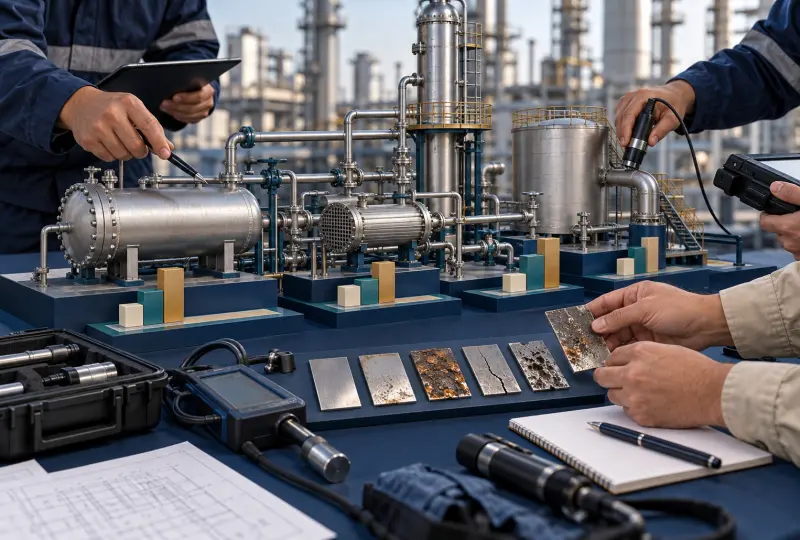
- Corrosion, Cracking, Distortion, Leakage, and Degradation Evidence Register
Day 5: Practice Lifecycle Assurance Decisions
- Exercise: Classify Vessel Scope and Design Responsibilities
- Exercise: Review Material, Opening, and Joint Evidence
- Exercise: Resolve a Fabrication and Examination Nonconformance
- Exercise: Prioritize Inspection, Maintenance, and Repair Findings
- Capstone Exercise: Build the Pressure Vessel Lifecycle Assurance File
Practical Exercises
The course uses suggested activities to connect construction-code evidence with in-service integrity decisions.
- Suggested activity: assemble a design-data sheet and identify missing pressure, temperature, load, material, and joint inputs.
- Suggested activity: trace a fabricated joint through material identification, welding qualifications, thermal controls, examination, and acceptance records.
- Suggested activity: review a pressure-test pack and identify boundary, instrumentation, relief, venting, and documentation gaps.
- Suggested activity: convert inspection and degradation findings into monitoring, maintenance, repair, alteration, or engineering-escalation priorities.
FAQs
Who suits ASME Section VIII pressure vessel training, and what does it assume?
ASME Section VIII pressure vessel training suits mechanical, fabrication, quality, inspection, integrity, and maintenance personnel who already work with pressure equipment, drawings, technical records, or inspection evidence within defined professional responsibilities.
How does ASME Section VIII pressure vessel training differ from API 510 inspection training?
ASME Section VIII pressure vessel training focuses on construction requirements for design, materials, fabrication, examination, testing, and documentation; API 510 inspection training focuses on in-service inspection, rating, repair, alteration, and rerating.
What evidence supports an ASME Section VIII pressure vessel review?
An ASME Section VIII pressure vessel review uses design data, material records, calculations, drawings, welding qualifications, examination results, pressure-test documentation, overpressure-protection evidence, data reports, and controlled revisions.
How are pressure vessel inspection findings linked to maintenance decisions?
Pressure vessel inspection findings are linked through location, damage type, dimensions, rate, operating context, acceptance criteria, remaining-life assessment, monitoring needs, repair scope, authorization, and traceable technical review.
When should a pressure vessel condition be escalated for engineering review?
A pressure vessel condition should be escalated when design basis, material identity, pressure boundary, degradation rate, crack-like flaws, deformation, leakage, relief protection, acceptance criteria, or repair limits are uncertain or outside approved controls.
Conclusion
Participants take back a Pressure Vessel Lifecycle Assurance File. The file connects code scope, design inputs, material and fabrication evidence, examinations, pressure testing, documentation, in-service findings, and response priorities. It changes disconnected records into a traceable basis for design review, quality verification, inspection planning, maintenance decisions, and technical escalation.
credits: 5 credit per day
Course Mode: full-time
Provider: Agile Leaders Training Center
-
Events for this Course
-
Cape town 15 – 19 November 2026
-
Casablanca 16 – 20 November 2026
-
Jakarta 23 – 27 November 2026
-
Barcelona 30 November – 4 December 2026
-
Geneva 13 – 17 December 2026
-
Bali 13 – 17 December 2026
-
Toronto 20 – 24 December 2026
-
Lagos 3 – 7 January 2027
-
Tokyo 4 – 8 January 2027
-
Doha 10 – 14 January 2027
-
Cairo 18 – 22 January 2027
-
Athens 25 – 29 January 2027
-
Nice 1 – 5 February 2027
-
Marbella 7 – 11 February 2027
-
Kuala Lumpur 8 – 12 February 2027
-
Phuket 14 – 18 February 2027
-
Amman 21 – 25 February 2027
-
Berlin 22 – 26 February 2027
-
Dubai 1 – 5 March 2027
-
Porto 1 – 5 March 2027
-
Nairobi 7 – 11 March 2027
-
Rome 15 – 19 March 2027
-
London 22 – 26 March 2027
-
San Diego 29 March – 2 April 2027
-
Baku 12 – 16 April 2027
-
Abu Dhabi 19 – 23 April 2027
-
Istanbul 26 – 30 April 2027
-
Dubai 3 – 7 May 2027
-
Frankfurt 3 – 7 May 2027
-
Paris 10 – 14 May 2027
-
Addis Ababa 10 – 14 May 2027
-
Madrid 17 – 21 May 2027
-
Prague 24 – 28 May 2027
-
Singapore 24 – 28 May 2027
-
Tashkent 6 – 10 June 2027
-
Amsterdam 14 – 18 June 2027
-
Trabzon 27 June – 1 July 2027
-
Tbilisi 5 – 9 July 2027
-
Seoul 12 – 16 July 2027
-
London 19 – 23 July 2027
-
Munich 19 – 23 July 2027
-
Bangkok 25 – 29 July 2027
-
Muscat 25 – 29 July 2027
-
Lisbon 2 – 6 August 2027
-
Johannesburg 8 – 12 August 2027
-
Kuwait 15 – 19 August 2027
-
Vienna 23 – 27 August 2027
-
Abu Dhabi 23 – 27 August 2027
-
Manama 29 August – 2 September 2027
-
Montreux 30 August – 3 September 2027
-
Langkawi 5 – 9 September 2027
-
Sharm El-Sheikh 13 – 17 September 2027
-
Zoom 27 September – 1 October 2027
-
Zanzibar 10 – 14 October 2027
-
Chicago 17 – 21 October 2027
-
Milan 25 – 29 October 2027
-
New York 1 – 5 November 2027
-
Accra 7 – 11 November 2027
| Image | Location | Dates | Duration | Mode | Price | Actions |
|---|---|---|---|---|---|---|

|
Nairobi |
Week 09, 2027 7 – 11 March 2027 |
1 Week | Onsite | €6,000 | |

|
Rome |
Week 11, 2027 15 – 19 March 2027 |
1 Week | Onsite | €6,500 | |

|
London |
Week 12, 2027 22 – 26 March 2027 |
1 Week | Onsite | €6,500 | |

|
San Diego |
Week 13, 2027 29 March – 2 April 2027 |
1 Week | Onsite | €16,000 | |

|
Baku |
Week 15, 2027 12 – 16 April 2027 |
1 Week | Onsite | €8,000 | |

|
Abu Dhabi |
Week 16, 2027 19 – 23 April 2027 |
1 Week | Onsite | €6,500 | |

|
Istanbul |
Week 17, 2027 26 – 30 April 2027 |
1 Week | Onsite | €6,000 | |

|
Dubai |
Week 18, 2027 3 – 7 May 2027 |
1 Week | Onsite | €6,500 | |

|
Frankfurt |
Week 18, 2027 3 – 7 May 2027 |
1 Week | Onsite | €6,500 | |

|
Paris |
Week 19, 2027 10 – 14 May 2027 |
1 Week | Onsite | €6,500 | |

|
Addis Ababa |
Week 19, 2027 10 – 14 May 2027 |
1 Week | Onsite | €6,000 | |

|
Madrid |
Week 20, 2027 17 – 21 May 2027 |
1 Week | Onsite | €6,500 | |

|
Prague |
Week 21, 2027 24 – 28 May 2027 |
1 Week | Onsite | €7,500 | |

|
Singapore |
Week 21, 2027 24 – 28 May 2027 |
1 Week | Onsite | €6,500 | |

|
Tashkent |
Week 22, 2027 6 – 10 June 2027 |
1 Week | Onsite | €8,000 | |

|
Amsterdam |
Week 24, 2027 14 – 18 June 2027 |
1 Week | Onsite | €6,500 | |

|
Trabzon |
Week 25, 2027 27 June – 1 July 2027 |
1 Week | Onsite | €8,000 | |

|
Tbilisi |
Week 27, 2027 5 – 9 July 2027 |
1 Week | Onsite | €5,700 | |

|
Seoul |
Week 28, 2027 12 – 16 July 2027 |
1 Week | Onsite | €12,000 | |
|
|
London |
Week 29, 2027 19 – 23 July 2027 |
1 Week | Onsite | €6,500 |
Frequently asked questions
What does this course cover?
OverviewASME Section VIII Pressure Vessel Design and Inspection Training Course is a one-week practitioner course for mechanical, pressure-equipment, inspection, maintenance, fabrication, and quality teams who leave with a Pressure Vessel Lifecycle Assurance File. The course connects code scope, design basis, materials, welded fabrication, examination, pr…
Are training dates available?
Yes. Available dates and destinations are listed in the course dates section on this page.
How can I register?
Choose an available date on this page and complete the registration form, or send a programme enquiry.
Can I download the course brochure?
Yes. Use the brochure download link provided on this page.
This course by city
- Maintenance Training and Engineering Training Courses in Abu Dhabi
- Maintenance Training and Engineering Training Courses in Accra
- Maintenance Training and Engineering Training Courses in Addis Ababa
- Maintenance Training and Engineering Training Courses in Amman
- Maintenance Training and Engineering Training Courses in Amsterdam
- Maintenance Training and Engineering Training Courses in Athens
- Maintenance Training and Engineering Training Courses in Baku
- Maintenance Training and Engineering Training Courses in Bali
- Maintenance Training and Engineering Training Courses in Bangkok
- Maintenance Training and Engineering Training Courses in Barcelona
- Maintenance Training and Engineering Training Courses in Berlin
- Maintenance Training and Engineering Training Courses in Cairo
- Maintenance Training and Engineering Training Courses in Cape town
- Maintenance Training and Engineering Training Courses in Casablanca
- Maintenance Training and Engineering Training Courses in Chicago
- Maintenance Training and Engineering Training Courses in Doha
- Maintenance Training and Engineering Training Courses in Dubai
- Maintenance Training and Engineering Training Courses in Frankfurt
- Maintenance Training and Engineering Training Courses in Geneva
- Maintenance Training and Engineering Training Courses in Istanbul
- Maintenance Training and Engineering Training Courses in Jakarta
- Maintenance Training and Engineering Training Courses in Johannesburg
- Maintenance Training and Engineering Training Courses in Kuala Lumpur
- Maintenance Training and Engineering Training Courses in Kuwait
- Maintenance Training and Engineering Training Courses in Lagos
- Maintenance Training and Engineering Training Courses in Langkawi
- Maintenance Training and Engineering Training Courses in Lisbon
- Maintenance Training and Engineering Training Courses in London
- Maintenance Training and Engineering Training Courses in Madrid
- Maintenance Training and Engineering Training Courses in Manama
- Maintenance Training and Engineering Training Courses in Marbella
- Maintenance Training and Engineering Training Courses in Milan
- Maintenance Training and Engineering Training Courses in Montreux
- Maintenance Training and Engineering Training Courses in Munich
- Maintenance Training and Engineering Training Courses in Muscat
- Maintenance Training and Engineering Training Courses in Nairobi
- Maintenance Training and Engineering Training Courses in New York
- Maintenance Training and Engineering Training Courses in Nice
- Maintenance Training and Engineering Training Courses in Paris
- Maintenance Training and Engineering Training Courses in Phuket
- Maintenance Training and Engineering Training Courses in Porto
- Maintenance Training and Engineering Training Courses in Prague
- Maintenance Training and Engineering Training Courses in Rome
- Maintenance Training and Engineering Training Courses in San Diego
- Maintenance Training and Engineering Training Courses in Seoul
- Maintenance Training and Engineering Training Courses in Sharm El-Sheikh
- Maintenance Training and Engineering Training Courses in Singapore
- Maintenance Training and Engineering Training Courses in Tashkent
- Maintenance Training and Engineering Training Courses in Tbilisi
- Maintenance Training and Engineering Training Courses in Tokyo
- Maintenance Training and Engineering Training Courses in Toronto
- Maintenance Training and Engineering Training Courses in Trabzon
- Maintenance Training and Engineering Training Courses in Vienna
- Maintenance Training and Engineering Training Courses in Zanzibar
- Maintenance Training and Engineering Training Courses in Zoom