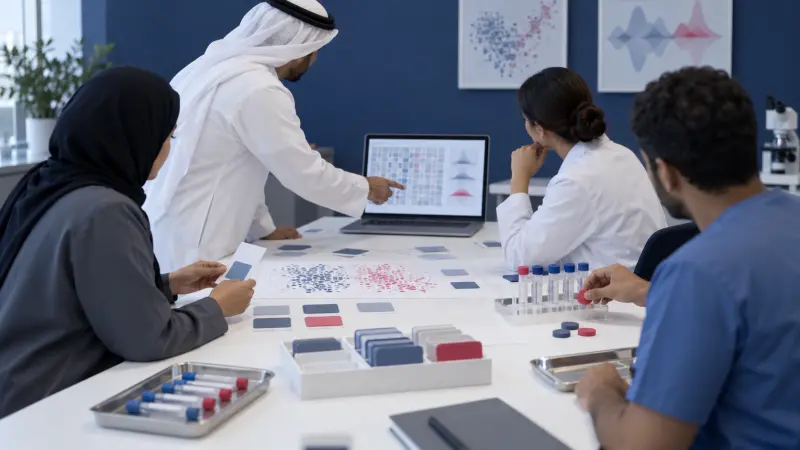
Cell and Gene Therapy Foundations Course

At a glance
- Duration
- 1 Week
- Format
- Classroom
- Cities
- Vienna, Chicago, Casablanca, Lisbon, Barcelona, London and more
- Next session
- 2 – 6 November 2026, Vienna
- Average fee
- 5,750 €
Overview
Cell and Gene Therapy Foundations and Delivery Course is a one-week foundation course for healthcare, biotechnology, pharmaceutical, quality, clinical operations, and patient-access personnel, who leave with a Cell and Gene Therapy Pathway Map. The course explains product types, scientific concepts, development and manufacturing interfaces, identity controls, clinical handoffs, safety monitoring, and cross-functional governance without laboratory or prescribing instruction. Agile Leaders Training Center presents cell and gene therapy foundations for coordinated product delivery.
Who Should Attend
- Teams responsible for cell and gene therapy service readiness
- Personnel supporting biotechnology and pharmaceutical operations
- Functions responsible for quality, logistics, and product handoffs
- Teams supporting clinical operations and patient pathways
- Personnel responsible for access, governance, and safety interfaces
The course assumes no laboratory specialization and leaves out product manufacture, clinical prescribing, patient-specific decisions, and jurisdiction-specific regulatory advice.
Departments and Industries
The course supports organizations that coordinate advanced therapy products across development, supply, care delivery, and follow-up.
- Biotechnology and biopharmaceutical organizations
- Hospital cell therapy and specialist care services
- Clinical research and trial operations units
- Quality, supply chain, laboratory, and pharmacy interfaces
- Patient access, health technology, and service-planning teams
Learning Objectives
By the end of this course, participants will be able to:
- Compare major cell, tissue, and gene therapy product types
- Use in vivo, ex vivo, autologous, and allogeneic distinctions
- Analyze development, manufacturing, and release interfaces
- Build chain-of-identity and chain-of-custody process maps
- Evaluate clinical handoffs and long-term safety monitoring needs
- Prioritize cross-functional readiness and governance actions
Course Agenda
Day 1: Products and Scientific Foundations
- Cell, Tissue, and Gene Therapy Product Classification Map
- In Vivo and Ex Vivo Delivery Comparison
- Autologous and Allogeneic Product Decision Grid
- Viral and Nonviral Vector Concept Map
- Gene Addition, Editing, and Cell Engineering Overview
Day 2: Development and Manufacturing Lifecycle
- Discovery-to-Delivery Lifecycle Map
- Starting Material and Donor Source Trace
- Process Development and Critical Quality Attribute Matrix
- Manufacturing Change and Comparability Concept Guide
- Product Testing and Release Interface Map
Day 3: Identity, Custody, and Logistics
- Patient and Product Chain-of-Identity Map
- Chain-of-Custody Handoff Record
- Collection and Apheresis Process Interface
- Cryopreservation, Storage, and Transport Control Map
- Exception, Deviation, and Escalation Decision Tree
Day 4: Clinical Delivery and Follow-Up
- Center Readiness and Multidisciplinary Role Matrix
- Patient Journey and Scheduling Dependency Map
- Product Receipt, Preparation, and Administration Handoff
- Immediate Safety Observation and Reporting Interface
- Long-Term Follow-Up and Pharmacovigilance Map
Day 5: Cell and Gene Therapy Pathway Practice
- Suggested Exercise: Product Classification Decisions
- Suggested Exercise: Lifecycle and Quality Interface Mapping
- Suggested Exercise: Identity and Custody Control Review
- Suggested Exercise: Clinical Delivery and Follow-Up Planning
- Capstone Exercise: Cell and Gene Therapy Pathway Map
Practical Exercises
The course uses suggested activities with fictional product-development, manufacturing, logistics, hospital, and follow-up scenarios.
- Suggested activity: classify product examples and map in vivo, ex vivo, autologous, and allogeneic features.
- Suggested activity: trace lifecycle interfaces, quality information, and release dependencies.
- Suggested activity: identify patient-product handoffs and failure points in identity and custody.
- Suggested activity: build a service pathway linking readiness, delivery, monitoring, and governance.
FAQs
Who suits cell and gene therapy foundations training, and what does it assume?
Healthcare, biotechnology, pharmaceutical, quality, clinical operations, logistics, access, and service-planning personnel suit the course; it assumes no laboratory specialization.
How does cell and gene therapy foundations training differ from laboratory training?
Cell and gene therapy foundations training explains product categories, lifecycle interfaces, identity controls, delivery pathways, and safety follow-up rather than teaching laboratory methods, manufacturing execution, or clinical procedures.
What is the difference between in vivo and ex vivo gene therapy?
In vivo gene therapy delivers genetic material within the body, while ex vivo approaches modify cells outside the body before they are returned through a controlled clinical pathway.
Why do cell and gene therapies require chain-of-identity controls?
Chain-of-identity controls maintain the documented link between a patient, collected material, manufactured product, transport stages, receipt, and administration so that each handoff preserves the intended match.
Conclusion
Participants leave with a Cell and Gene Therapy Pathway Map containing classification, lifecycle, quality-interface, identity, custody, logistics, delivery, monitoring, and governance tools. The map turns specialist terminology into connected cross-functional responsibilities. It helps teams locate handoffs, dependencies, evidence needs, and escalation points across the product-to-patient pathway.
credits: 5 credit per day
Course Mode: full-time
Provider: Agile Leaders Training Center
-
Events for this Course
-
Vienna 2 – 6 November 2026
-
Chicago 8 – 12 November 2026
-
Casablanca 9 – 13 November 2026
-
Lisbon 9 – 13 November 2026
-
Barcelona 16 – 20 November 2026
-
London 23 – 27 November 2026
-
Dubai 30 November – 4 December 2026
-
Amsterdam 30 November – 4 December 2026
-
Toronto 6 – 10 December 2026
-
Rome 7 – 11 December 2026
-
Jakarta 14 – 18 December 2026
-
Abu Dhabi 14 – 18 December 2026
-
Prague 21 – 25 December 2026
-
Tokyo 28 December 2026 – 1 January 2027
-
Amsterdam 4 – 8 January 2027
-
Porto 4 – 8 January 2027
-
Kuala Lumpur 11 – 15 January 2027
-
Kuwait 17 – 21 January 2027
-
Abu Dhabi 18 – 22 January 2027
-
Cape town 24 – 28 January 2027
-
Dubai 25 – 29 January 2027
-
Trabzon 31 January – 4 February 2027
-
Paris 8 – 12 February 2027
-
Zanzibar 14 – 18 February 2027
-
London 15 – 19 February 2027
-
New York 15 – 19 February 2027
-
Madrid 22 – 26 February 2027
-
Milan 1 – 5 March 2027
-
Manama 7 – 11 March 2027
-
Frankfurt 8 – 12 March 2027
-
Athens 15 – 19 March 2027
-
Muscat 21 – 25 March 2027
-
Munich 29 March – 2 April 2027
-
Doha 4 – 8 April 2027
-
Phuket 11 – 15 April 2027
-
Lagos 11 – 15 April 2027
-
Tashkent 18 – 22 April 2027
-
Tbilisi 19 – 23 April 2027
-
Nice 26 – 30 April 2027
-
Istanbul 3 – 7 May 2027
-
Singapore 3 – 7 May 2027
-
Manama 9 – 13 May 2027
-
Johannesburg 16 – 20 May 2027
-
Cairo 24 – 28 May 2027
-
London 24 – 28 May 2027
-
Vienna 31 May – 4 June 2027
-
Kuala Lumpur 7 – 11 June 2027
-
Bali 13 – 17 June 2027
-
Dubai 21 – 25 June 2027
-
Sharm El-Sheikh 21 – 25 June 2027
-
Abu Dhabi 21 – 25 June 2027
-
Milan 28 June – 2 July 2027
-
Zoom 5 – 9 July 2027
-
Nairobi 11 – 15 July 2027
-
Baku 19 – 23 July 2027
-
Berlin 19 – 23 July 2027
-
Cairo 26 – 30 July 2027
-
Amsterdam 26 – 30 July 2027
-
Paris 2 – 6 August 2027
-
Istanbul 9 – 13 August 2027
-
Accra 15 – 19 August 2027
-
Dubai 16 – 20 August 2027
-
Rome 23 – 27 August 2027
-
Langkawi 29 August – 2 September 2027
-
Marbella 29 August – 2 September 2027
-
London 6 – 10 September 2027
-
Geneva 12 – 16 September 2027
-
Barcelona 20 – 24 September 2027
-
Montreux 27 September – 1 October 2027
-
Abu Dhabi 27 September – 1 October 2027
-
Seoul 4 – 8 October 2027
-
Bangkok 10 – 14 October 2027
-
Madrid 18 – 22 October 2027
-
San Diego 25 – 29 October 2027
-
Amman 31 October – 4 November 2027
| Image | Location | Dates | Duration | Mode | Price | Actions |
|---|---|---|---|---|---|---|

|
Vienna |
Week 45, 2026 2 – 6 November 2026 |
1 Week | Onsite | €5,700 | |

|
Chicago |
Week 45, 2026 8 – 12 November 2026 |
1 Week | Onsite | €12,000 | |

|
Casablanca |
Week 46, 2026 9 – 13 November 2026 |
1 Week | Onsite | €4,100 | |

|
Lisbon |
Week 46, 2026 9 – 13 November 2026 |
1 Week | Onsite | €5,700 | |

|
Barcelona |
Week 47, 2026 16 – 20 November 2026 |
1 Week | Onsite | €5,700 | |

|
London |
Week 48, 2026 23 – 27 November 2026 |
1 Week | Onsite | €5,700 | |

|
Dubai |
Week 49, 2026 30 November – 4 December 2026 |
1 Week | Onsite | €4,500 | |

|
Amsterdam |
Week 49, 2026 30 November – 4 December 2026 |
1 Week | Onsite | €5,700 | |

|
Toronto |
Week 49, 2026 6 – 10 December 2026 |
1 Week | Onsite | €12,000 | |

|
Rome |
Week 50, 2026 7 – 11 December 2026 |
1 Week | Onsite | €5,700 | |

|
Jakarta |
Week 51, 2026 14 – 18 December 2026 |
1 Week | Onsite | €5,700 | |

|
Abu Dhabi |
Week 51, 2026 14 – 18 December 2026 |
1 Week | Onsite | €4,700 | |

|
Prague |
Week 52, 2026 21 – 25 December 2026 |
1 Week | Onsite | €6,000 | |

|
Tokyo |
Week 53, 2026 28 December 2026 – 1 January 2027 |
1 Week | Onsite | €10,000 | |
|
|
Amsterdam |
Week 01, 2027 4 – 8 January 2027 |
1 Week | Onsite | €5,700 | |

|
Porto |
Week 01, 2027 4 – 8 January 2027 |
1 Week | Onsite | €5,700 | |

|
Kuala Lumpur |
Week 02, 2027 11 – 15 January 2027 |
1 Week | Onsite | €5,200 | |

|
Kuwait |
Week 02, 2027 17 – 21 January 2027 |
1 Week | Onsite | €5,500 | |
|
|
Abu Dhabi |
Week 03, 2027 18 – 22 January 2027 |
1 Week | Onsite | €4,700 | |

|
Cape town |
Week 03, 2027 24 – 28 January 2027 |
1 Week | Onsite | €4,500 |
Frequently asked questions
What does this course cover?
OverviewCell and Gene Therapy Foundations and Delivery Course is a one-week foundation course for healthcare, biotechnology, pharmaceutical, quality, clinical operations, and patient-access personnel, who leave with a Cell and Gene Therapy Pathway Map. The course explains product types, scientific concepts, development and manufacturing interfaces, identi…
Are training dates available?
Yes. Available dates and destinations are listed in the course dates section on this page.
How can I register?
Choose an available date on this page and complete the registration form, or send a programme enquiry.
Can I download the course brochure?
Yes. Use the brochure download link provided on this page.
This course by city
- Healthcare Management Training Courses in Abu Dhabi
- Healthcare Management Training Courses in Accra
- Healthcare Management Training Courses in Amman
- Healthcare Management Training Courses in Amsterdam
- Healthcare Management Training Courses in Athens
- Healthcare Management Training Courses in Baku
- Healthcare Management Training Courses in Bali
- Healthcare Management Training Courses in Bangkok
- Healthcare Management Training Courses in Barcelona
- Healthcare Management Training Courses in Berlin
- Healthcare Management Training Courses in Cairo
- Healthcare Management Training Courses in Cape town
- Healthcare Management Training Courses in Casablanca
- Healthcare Management Training Courses in Chicago
- Healthcare Management Training Courses in Doha
- Healthcare Management Training Courses in Dubai
- Healthcare Management Training Courses in Frankfurt
- Healthcare Management Training Courses in Geneva
- Healthcare Management Training Courses in Istanbul
- Healthcare Management Training Courses in Jakarta
- Healthcare Management Training Courses in Johannesburg
- Healthcare Management Training Courses in Kuala Lumpur
- Healthcare Management Training Courses in Kuwait
- Healthcare Management Training Courses in Lagos
- Healthcare Management Training Courses in Langkawi
- Healthcare Management Training Courses in Lisbon
- Healthcare Management Training Courses in London
- Healthcare Management Training Courses in Madrid
- Healthcare Management Training Courses in Manama
- Healthcare Management Training Courses in Marbella
- Healthcare Management Training Courses in Milan
- Healthcare Management Training Courses in Montreux
- Healthcare Management Training Courses in Munich
- Healthcare Management Training Courses in Muscat
- Healthcare Management Training Courses in Nairobi
- Healthcare Management Training Courses in New York
- Healthcare Management Training Courses in Nice
- Healthcare Management Training Courses in Paris
- Healthcare Management Training Courses in Phuket
- Healthcare Management Training Courses in Porto
- Healthcare Management Training Courses in Prague
- Healthcare Management Training Courses in Rome
- Healthcare Management Training Courses in San Diego
- Healthcare Management Training Courses in Seoul
- Healthcare Management Training Courses in Sharm El-Sheikh
- Healthcare Management Training Courses in Singapore
- Healthcare Management Training Courses in Tashkent
- Healthcare Management Training Courses in Tbilisi
- Healthcare Management Training Courses in Tokyo
- Healthcare Management Training Courses in Toronto
- Healthcare Management Training Courses in Trabzon
- Healthcare Management Training Courses in Vienna
- Healthcare Management Training Courses in Zanzibar
- Healthcare Management Training Courses in Zoom