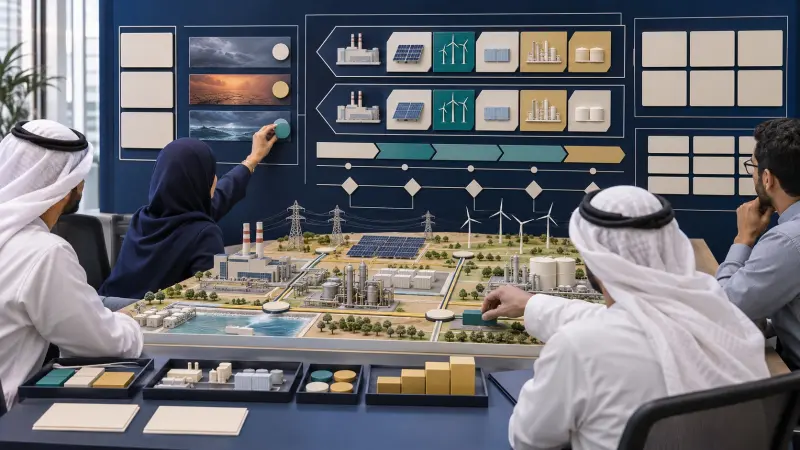
Climate Policy Economics for Energy Business Course

At a glance
- Duration
- 1 Week
- Format
- Classroom
- Cities
- Johannesburg, Cairo, Rome, Amsterdam, Trabzon, London and more
- Next session
- 8 – 12 November 2026, Johannesburg
- Average fee
- 5,750 €
Overview
Climate Policy Economics for Petroleum and Energy Business Training Course is a one-week course for energy strategy, economics, policy, sustainability, commercial, and investment professionals who leave with a Climate Policy and Energy Business Decision Pack. Participants connect policy instruments, carbon pricing, political economy, stakeholder positions, transition risk, competitiveness, investment, and strategic response. The course converts policy uncertainty into structured business scenarios and choices. Agile Leaders Training Center presents this course on climate policy economics for energy business.
Who Should Attend
- Functions responsible for energy strategy and corporate planning
- Teams responsible for economic and policy analysis
- Personnel responsible for sustainability and transition planning
- Groups responsible for commercial and investment decisions
- Teams responsible for risk, government affairs, and stakeholder analysis
The course assumes participants contribute to energy-business decisions and can interpret economic, policy, market, or investment information; it leaves out introductory climate science and jurisdiction-specific legal advice.
Departments and Industries
The course supports departments and industries that assess climate policy exposure and energy-transition choices.
- Petroleum and integrated energy businesses
- Power, utilities, and infrastructure organizations
- Strategy, economics, and corporate planning functions
- Sustainability, risk, and government-affairs teams
- Investment, finance, and commercial departments
- Consulting and policy research organizations
Learning Objectives
By the end of this course, participants will be able to:
- Analyze climate policy objectives and economic tradeoffs
- Compare carbon-pricing and policy instruments
- Evaluate political feasibility and stakeholder positions
- Diagnose petroleum-business transition exposure
- Use scenarios to test investment choices
- Build an energy-business strategic response
Course Agenda
Day 1: Frame Climate Policy Economics
- Climate Externality and Market Failure Map
- Energy and Emissions Value-Chain Diagram
- Policy Objective and Tradeoff Matrix
- Mitigation and Adaptation Instrument Comparison
- Energy Business Exposure Baseline
Day 2: Compare Instruments and Political Choices
- Carbon Tax and Emissions Trading Comparison
- Regulation and Fiscal Incentive Map
- Stakeholder Power-Interest Matrix
- Policy Formation and Implementation Chain
- Political Feasibility Assessment
Day 3: Analyze Petroleum Business Exposure
- Transition Risk Channel Map
- Competitiveness and Cost Pass-Through Model
- Asset and Portfolio Exposure Heat Map
- Demand and Price Scenario Set
- Stakeholder Position Register
Day 4: Evaluate Investment and Strategy
- Internal Carbon Price Sensitivity Model
- Climate Policy Scenario Matrix
- Capital Allocation Decision Sheet
- Energy Business Model Transition Options
- Strategic Response Scorecard
Day 5: Practice Climate Policy Decisions
- Suggested Exercise: Compare Policy Instruments
- Suggested Exercise: Map Political and Stakeholder Positions
- Suggested Exercise: Test an Investment Under Climate Scenarios
- Suggested Exercise: Build an Energy Business Response
- Capstone Exercise: Present a Climate Policy and Energy Business Decision Pack
Practical Exercises
The course uses suggested activities to turn policy, political, market, and investment evidence into energy-business decisions.
- Suggested activity: compare carbon pricing, regulation, incentives, and market instruments against policy objectives.
- Suggested activity: map stakeholder influence, political feasibility, implementation pathways, and business exposure.
- Suggested activity: test petroleum assets and investments across policy, demand, price, and competitiveness scenarios.
- Suggested activity: prepare a strategic response linking risk, capital choices, stakeholder positions, and decision triggers.
FAQs
Who suits climate policy economics for energy business training, and what does it assume?
Energy strategy, economics, policy, sustainability, commercial, investment, and risk professionals suit the training. It assumes experience contributing to business decisions and interpreting policy or market evidence.
How does climate policy economics differ from general sustainability training?
Climate policy economics evaluates instruments, incentives, political feasibility, competitiveness, investment, and business response. General sustainability training usually covers broader environmental and organizational practices without the same economic and political analysis.
How does carbon pricing affect petroleum and energy business decisions?
Carbon pricing can change operating costs, product competitiveness, demand, asset exposure, investment returns, and capital priorities, so decision-makers test its effects through assumptions and scenarios.
How is political economy used in climate policy analysis?
Political economy maps institutions, stakeholder interests, influence, distributional effects, public positions, implementation capacity, and policy durability to assess how a policy may form and operate.
How can energy businesses respond to climate policy uncertainty?
Energy businesses can compare scenarios, identify exposure channels, test investment sensitivities, define decision triggers, evaluate business-model options, and align stakeholder actions with a documented response.
Conclusion
Participants take a Climate Policy and Energy Business Decision Pack back to their organization. It connects policy economics, carbon pricing, political feasibility, transition exposure, competitiveness, scenarios, investment, and stakeholder evidence. Teams can use the pack to compare policy impacts, test capital choices, and document strategic responses for petroleum, power, and infrastructure activities.
credits: 5 credit per day
Course Mode: full-time
Provider: Agile Leaders Training Center
-
Events for this Course
-
Johannesburg 8 – 12 November 2026
-
Cairo 9 – 13 November 2026
-
Rome 16 – 20 November 2026
-
Amsterdam 23 – 27 November 2026
-
Trabzon 29 November – 3 December 2026
-
London 30 November – 4 December 2026
-
Manama 6 – 10 December 2026
-
Bangkok 6 – 10 December 2026
-
Dubai 14 – 18 December 2026
-
Toronto 20 – 24 December 2026
-
Tbilisi 21 – 25 December 2026
-
Jakarta 28 December 2026 – 1 January 2027
-
Munich 28 December 2026 – 1 January 2027
-
Casablanca 4 – 8 January 2027
-
Seoul 4 – 8 January 2027
-
Madrid 11 – 15 January 2027
-
San Diego 11 – 15 January 2027
-
London 25 – 29 January 2027
-
Frankfurt 25 – 29 January 2027
-
Zoom 1 – 5 February 2027
-
Sharm El-Sheikh 8 – 12 February 2027
-
Singapore 8 – 12 February 2027
-
Cape town 14 – 18 February 2027
-
Milan 15 – 19 February 2027
-
Langkawi 21 – 25 February 2027
-
Paris 22 – 26 February 2027
-
Abu Dhabi 1 – 5 March 2027
-
Dubai 8 – 12 March 2027
-
Accra 21 – 25 March 2027
-
Kuala Lumpur 22 – 26 March 2027
-
Manama 4 – 8 April 2027
-
Marbella 4 – 8 April 2027
-
Bali 11 – 15 April 2027
-
Madrid 12 – 16 April 2027
-
Chicago 25 – 29 April 2027
-
Vienna 26 – 30 April 2027
-
Istanbul 3 – 7 May 2027
-
Berlin 3 – 7 May 2027
-
Lagos 16 – 20 May 2027
-
Amsterdam 17 – 21 May 2027
-
Kuala Lumpur 24 – 28 May 2027
-
Cairo 31 May – 4 June 2027
-
Abu Dhabi 31 May – 4 June 2027
-
Dubai 7 – 11 June 2027
-
Amman 20 – 24 June 2027
-
Zanzibar 20 – 24 June 2027
-
London 28 June – 2 July 2027
-
Doha 4 – 8 July 2027
-
Milan 12 – 16 July 2027
-
Porto 12 – 16 July 2027
-
Kuwait 18 – 22 July 2027
-
Barcelona 26 – 30 July 2027
-
Abu Dhabi 26 – 30 July 2027
-
Phuket 1 – 5 August 2027
-
Rome 2 – 6 August 2027
-
Prague 9 – 13 August 2027
-
Athens 9 – 13 August 2027
-
Paris 16 – 20 August 2027
-
Addis Ababa 16 – 20 August 2027
-
Baku 23 – 27 August 2027
-
New York 23 – 27 August 2027
-
London 30 August – 3 September 2027
-
Nice 30 August – 3 September 2027
-
Geneva 12 – 16 September 2027
-
Dubai 20 – 24 September 2027
-
Abu Dhabi 20 – 24 September 2027
-
Amsterdam 27 September – 1 October 2027
-
Barcelona 4 – 8 October 2027
-
Montreux 4 – 8 October 2027
-
Tashkent 10 – 14 October 2027
-
Muscat 17 – 21 October 2027
-
Tokyo 18 – 22 October 2027
-
Istanbul 25 – 29 October 2027
-
Lisbon 25 – 29 October 2027
-
Vienna 1 – 5 November 2027
-
Nairobi 7 – 11 November 2027
| Image | Location | Dates | Duration | Mode | Price | Actions |
|---|---|---|---|---|---|---|

|
Sharm El-Sheikh |
Week 06, 2027 8 – 12 February 2027 |
1 Week | Onsite | €4,100 | |

|
Singapore |
Week 06, 2027 8 – 12 February 2027 |
1 Week | Onsite | €5,700 | |

|
Cape town |
Week 06, 2027 14 – 18 February 2027 |
1 Week | Onsite | €4,500 | |

|
Milan |
Week 07, 2027 15 – 19 February 2027 |
1 Week | Onsite | €5,700 | |

|
Langkawi |
Week 07, 2027 21 – 25 February 2027 |
1 Week | Onsite | €6,000 | |

|
Paris |
Week 08, 2027 22 – 26 February 2027 |
1 Week | Onsite | €5,700 | |

|
Abu Dhabi |
Week 09, 2027 1 – 5 March 2027 |
1 Week | Onsite | €4,700 | |

|
Dubai |
Week 10, 2027 8 – 12 March 2027 |
1 Week | Onsite | €4,500 | |

|
Accra |
Week 11, 2027 21 – 25 March 2027 |
1 Week | Onsite | €4,100 | |

|
Kuala Lumpur |
Week 12, 2027 22 – 26 March 2027 |
1 Week | Onsite | €5,200 | |

|
Manama |
Week 13, 2027 4 – 8 April 2027 |
1 Week | Onsite | €4,700 | |

|
Marbella |
Week 13, 2027 4 – 8 April 2027 |
1 Week | Onsite | €5,700 | |

|
Bali |
Week 14, 2027 11 – 15 April 2027 |
1 Week | Onsite | €5,700 | |

|
Madrid |
Week 15, 2027 12 – 16 April 2027 |
1 Week | Onsite | €5,700 | |

|
Chicago |
Week 16, 2027 25 – 29 April 2027 |
1 Week | Onsite | €12,000 | |

|
Vienna |
Week 17, 2027 26 – 30 April 2027 |
1 Week | Onsite | €5,700 | |

|
Istanbul |
Week 18, 2027 3 – 7 May 2027 |
1 Week | Onsite | €4,500 | |

|
Berlin |
Week 18, 2027 3 – 7 May 2027 |
1 Week | Onsite | €5,700 | |

|
Lagos |
Week 19, 2027 16 – 20 May 2027 |
1 Week | Onsite | €4,100 | |

|
Amsterdam |
Week 20, 2027 17 – 21 May 2027 |
1 Week | Onsite | €5,700 |
Frequently asked questions
What does this course cover?
OverviewClimate Policy Economics for Petroleum and Energy Business Training Course is a one-week course for energy strategy, economics, policy, sustainability, commercial, and investment professionals who leave with a Climate Policy and Energy Business Decision Pack. Participants connect policy instruments, carbon pricing, political economy, stakeholder p…
Are training dates available?
Yes. Available dates and destinations are listed in the course dates section on this page.
How can I register?
Choose an available date on this page and complete the registration form, or send a programme enquiry.
Can I download the course brochure?
Yes. Use the brochure download link provided on this page.
This course by city
- Environment & Sustainability Training Courses in Abu Dhabi
- Environment & Sustainability Training Courses in Accra
- Environment & Sustainability Training Courses in Addis Ababa
- Environment & Sustainability Training Courses in Amman
- Environment & Sustainability Training Courses in Amsterdam
- Environment & Sustainability Training Courses in Athens
- Environment & Sustainability Training Courses in Baku
- Environment & Sustainability Training Courses in Bali
- Environment & Sustainability Training Courses in Bangkok
- Environment & Sustainability Training Courses in Barcelona
- Environment & Sustainability Training Courses in Berlin
- Environment & Sustainability Training Courses in Cairo
- Environment & Sustainability Training Courses in Cape town
- Environment & Sustainability Training Courses in Casablanca
- Environment & Sustainability Training Courses in Chicago
- Environment & Sustainability Training Courses in Doha
- Environment & Sustainability Training Courses in Dubai
- Environment & Sustainability Training Courses in Frankfurt
- Environment & Sustainability Training Courses in Geneva
- Environment & Sustainability Training Courses in Istanbul
- Environment & Sustainability Training Courses in Jakarta
- Environment & Sustainability Training Courses in Johannesburg
- Environment & Sustainability Training Courses in Kuala Lumpur
- Environment & Sustainability Training Courses in Kuwait
- Environment & Sustainability Training Courses in Lagos
- Environment & Sustainability Training Courses in Langkawi
- Environment & Sustainability Training Courses in Lisbon
- Environment & Sustainability Training Courses in London
- Environment & Sustainability Training Courses in Madrid
- Environment & Sustainability Training Courses in Manama
- Environment & Sustainability Training Courses in Marbella
- Environment & Sustainability Training Courses in Milan
- Environment & Sustainability Training Courses in Montreux
- Environment & Sustainability Training Courses in Munich
- Environment & Sustainability Training Courses in Muscat
- Environment & Sustainability Training Courses in Nairobi
- Environment & Sustainability Training Courses in New York
- Environment & Sustainability Training Courses in Nice
- Environment & Sustainability Training Courses in Paris
- Environment & Sustainability Training Courses in Phuket
- Environment & Sustainability Training Courses in Porto
- Environment & Sustainability Training Courses in Prague
- Environment & Sustainability Training Courses in Rome
- Environment & Sustainability Training Courses in San Diego
- Environment & Sustainability Training Courses in Seoul
- Environment & Sustainability Training Courses in Sharm El-Sheikh
- Environment & Sustainability Training Courses in Singapore
- Environment & Sustainability Training Courses in Tashkent
- Environment & Sustainability Training Courses in Tbilisi
- Environment & Sustainability Training Courses in Tokyo
- Environment & Sustainability Training Courses in Toronto
- Environment & Sustainability Training Courses in Trabzon
- Environment & Sustainability Training Courses in Vienna
- Environment & Sustainability Training Courses in Zanzibar
- Environment & Sustainability Training Courses in Zoom