Climate-Smart Agriculture and Resilience Course

At a glance
- Duration
- 1 Week
- Format
- Classroom
- Cities
- Istanbul, Amsterdam, Montreux, Abu Dhabi, San Diego, Cape town and more
- Next session
- 9 – 13 November 2026, Istanbul
- Average fee
- 5,750 €
Overview
Climate-Smart Agriculture and Resilient Production Training Course is a one-week professional course for agricultural managers, agronomists, production leaders, extension professionals, and sustainability teams, who leave with a Climate-Smart Production and Resilience Plan. The course connects agricultural climate risk, climate services, crop and livestock adaptation, soil and water resilience, and low-emission agriculture. Agile Leaders Training Center develops climate-smart agriculture practice.
Who Should Attend
- People responsible for farm and food-production planning
- Teams responsible for crop, livestock, soil, and water decisions
- Functions responsible for agricultural climate risk and sustainability
- People responsible for extension services and producer support
- Public-sector teams responsible for agricultural resilience initiatives
The course assumes participants work with agricultural production data and operating plans; it leaves out generic climate policy, emergency response, and broad food-security strategy.
Departments and Industries
The course supports climate-smart production decisions across agricultural and food-system operations.
- Crop production and horticulture operations
- Livestock, dairy, and mixed-farming systems
- Food processing and agricultural supply chains
- Agricultural extension and advisory services
- Sustainability, environment, and resource management teams
- Public agricultural planning functions
Learning Objectives
By the end of this course, participants will be able to:
- Analyze agricultural climate hazards, exposure, and vulnerability.
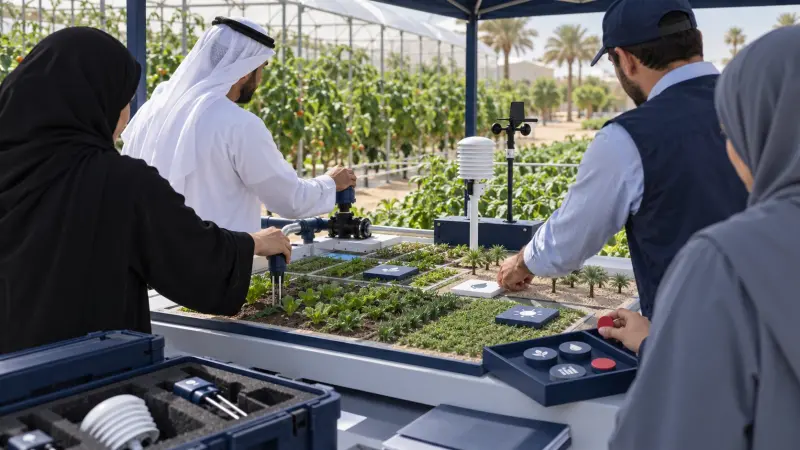
- Apply climate services to seasonal production decisions.
- Compare crop and livestock adaptation options.
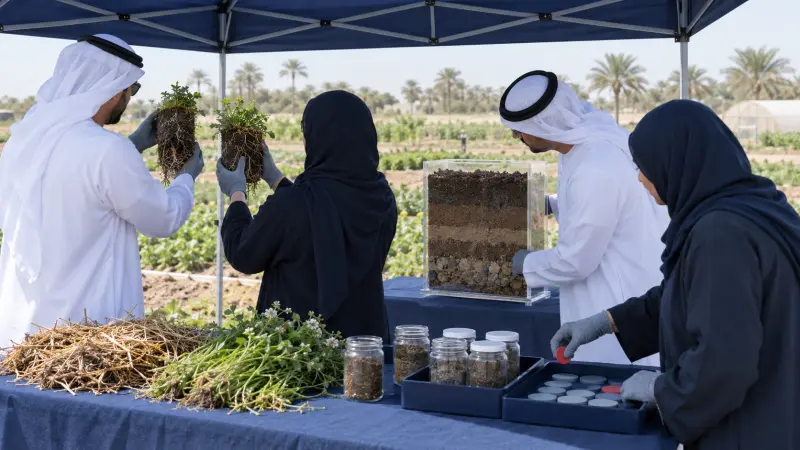
- Build soil and water resilience measures.
- Evaluate low-emission agriculture practices and trade-offs.
- Build a climate-smart production and resilience plan.
Course Agenda
Day 1: Profile Agricultural Climate Risk
- Agricultural Climate Hazard and Exposure Map
- Farm Vulnerability and Sensitivity Assessment
- Crop and Livestock Risk Register
- Climate Scenario Interpretation Worksheet
- Climate-Smart Agriculture Three-Pillar Decision Frame
Day 2: Use Climate Services
- Seasonal Climate Information Review Method
- Production Calendar Adjustment Matrix
- Climate Threshold and Trigger Log
- Farm Early-Warning Communication Protocol
- Adaptation Decision Pathway Template
Day 3: Adapt Production Systems
- Crop Variety and Diversification Options Matrix
- Livestock Heat and Water Stress Control Plan
- Agroforestry and Landscape Diversification Map
- Soil Moisture Conservation Practice Checklist
- Farm Water Balance and Storage Assessment
Day 4: Reduce Agricultural Emissions
- Agricultural Emissions Source Inventory
- Fertilizer Efficiency and Nitrogen Management Review
- Livestock Feed and Manure Mitigation Options
- Energy and Irrigation Efficiency Comparison
- Adaptation-Mitigation Trade-Off Assessment
Day 5: Practice Climate-Smart Planning
- Exercise: Complete an Agricultural Climate Risk Profile
- Exercise: Select Seasonal Production Triggers
- Exercise: Compare Crop and Livestock Adaptations
- Exercise: Prioritize Resilience and Emissions Measures
- Capstone Exercise: Complete the Climate-Smart Production and Resilience Plan
Practical Exercises
The course uses suggested activities based on crop, livestock, horticulture, and food-production settings.
- Suggested activity: map heat, drought, flood, and water-supply exposure across a mixed farming operation.
- Suggested activity: compare soil, crop, livestock, and water adaptations against feasibility, timing, and residual risk.
- Suggested activity: identify agricultural emissions sources and prioritize lower-emission operating practices.
- Suggested activity: combine climate triggers, adaptations, responsibilities, and monitoring measures in a production plan.
FAQs
Who suits climate-smart agriculture training?
Climate-smart agriculture training suits professionals who plan or advise crop, livestock, and food-production operations and who can work with production records, resource data, and operating plans.
How does climate-smart agriculture differ from general climate policy training?
Climate-smart agriculture focuses on farm and production decisions for productivity, resilience, and emissions, while general climate policy training focuses on wider policy instruments, institutions, and economy-level action.
What does agricultural climate risk assessment examine?
Agricultural climate risk assessment examines hazards, exposure, sensitivity, adaptive capacity, production dependencies, and the residual risk remaining after adaptation measures.
How can climate-smart agriculture improve production resilience?
Climate-smart agriculture can improve resilience through climate information, diversified production, adapted varieties and breeds, soil-moisture conservation, water management, agroforestry, and operational triggers.
How does low-emission agriculture support climate-smart production?
Low-emission agriculture supports climate-smart production by improving fertilizer, feed, manure, energy, irrigation, and land-management decisions while testing trade-offs with productivity and resilience.
Conclusion
Participants take back a Climate-Smart Production and Resilience Plan connecting hazards, climate information, adaptations, emissions measures, responsibilities, and monitoring. It makes farm-level climate decisions traceable. The plan supports seasonal adjustments, investment priorities, and coordinated action across crop, livestock, soil, and water systems.
credits: 5 credit per day
Course Mode: full-time
Provider: Agile Leaders Training Center
-
Events for this Course
-
Istanbul 9 – 13 November 2026
-
Amsterdam 16 – 20 November 2026
-
Montreux 23 – 27 November 2026
-
Abu Dhabi 23 – 27 November 2026
-
San Diego 30 November – 4 December 2026
-
Cape town 6 – 10 December 2026
-
London 7 – 11 December 2026
-
Athens 14 – 18 December 2026
-
Seoul 21 – 25 December 2026
-
Dubai 28 December 2026 – 1 January 2027
-
Prague 4 – 8 January 2027
-
Abu Dhabi 4 – 8 January 2027
-
Muscat 10 – 14 January 2027
-
Lagos 10 – 14 January 2027
-
Johannesburg 17 – 21 January 2027
-
Paris 25 – 29 January 2027
-
Milan 1 – 5 February 2027
-
Amsterdam 8 – 12 February 2027
-
Toronto 14 – 18 February 2027
-
London 15 – 19 February 2027
-
Tokyo 22 – 26 February 2027
-
Kuwait 28 February – 4 March 2027
-
Chicago 7 – 11 March 2027
-
Rome 15 – 19 March 2027
-
Marbella 21 – 25 March 2027
-
Casablanca 22 – 26 March 2027
-
Manama 28 March – 1 April 2027
-
Dubai 29 March – 2 April 2027
-
Abu Dhabi 29 March – 2 April 2027
-
Accra 4 – 8 April 2027
-
Madrid 12 – 16 April 2027
-
Barcelona 19 – 23 April 2027
-
Zoom 26 – 30 April 2027
-
Cairo 3 – 7 May 2027
-
Vienna 3 – 7 May 2027
-
Berlin 3 – 7 May 2027
-
Nice 10 – 14 May 2027
-
Frankfurt 10 – 14 May 2027
-
Amsterdam 17 – 21 May 2027
-
London 24 – 28 May 2027
-
Kuala Lumpur 31 May – 4 June 2027
-
Jakarta 7 – 11 June 2027
-
Dubai 14 – 18 June 2027
-
Barcelona 14 – 18 June 2027
-
Abu Dhabi 14 – 18 June 2027
-
Rome 21 – 25 June 2027
-
Baku 28 June – 2 July 2027
-
Vienna 5 – 9 July 2027
-
Milan 12 – 16 July 2027
-
Singapore 12 – 16 July 2027
-
Manama 18 – 22 July 2027
-
Madrid 26 – 30 July 2027
-
Zanzibar 1 – 5 August 2027
-
Phuket 8 – 12 August 2027
-
Tashkent 15 – 19 August 2027
-
Paris 23 – 27 August 2027
-
New York 23 – 27 August 2027
-
Istanbul 30 August – 3 September 2027
-
Bangkok 5 – 9 September 2027
-
Trabzon 12 – 16 September 2027
-
London 13 – 17 September 2027
-
Kuala Lumpur 20 – 24 September 2027
-
Tbilisi 20 – 24 September 2027
-
Nairobi 26 – 30 September 2027
-
Lisbon 27 September – 1 October 2027
-
Langkawi 3 – 7 October 2027
-
Cairo 4 – 8 October 2027
-
Doha 10 – 14 October 2027
-
Sharm El-Sheikh 11 – 15 October 2027
-
Munich 18 – 22 October 2027
-
Bali 24 – 28 October 2027
-
Dubai 25 – 29 October 2027
-
Porto 25 – 29 October 2027
-
Amman 31 October – 4 November 2027
-
Addis Ababa 1 – 5 November 2027
-
Geneva 7 – 11 November 2027
| Image | Location | Dates | Duration | Mode | Price | Actions |
|---|---|---|---|---|---|---|

|
Kuala Lumpur |
Week 22, 2027 31 May – 4 June 2027 |
1 Week | Onsite | €5,200 | |

|
Jakarta |
Week 23, 2027 7 – 11 June 2027 |
1 Week | Onsite | €5,700 | |

|
Dubai |
Week 24, 2027 14 – 18 June 2027 |
1 Week | Onsite | €4,500 | |

|
Barcelona |
Week 24, 2027 14 – 18 June 2027 |
1 Week | Onsite | €5,700 | |

|
Abu Dhabi |
Week 24, 2027 14 – 18 June 2027 |
1 Week | Onsite | €4,700 | |

|
Rome |
Week 25, 2027 21 – 25 June 2027 |
1 Week | Onsite | €5,700 | |

|
Baku |
Week 26, 2027 28 June – 2 July 2027 |
1 Week | Onsite | €5,000 | |

|
Vienna |
Week 27, 2027 5 – 9 July 2027 |
1 Week | Onsite | €5,700 | |

|
Milan |
Week 28, 2027 12 – 16 July 2027 |
1 Week | Onsite | €5,700 | |

|
Singapore |
Week 28, 2027 12 – 16 July 2027 |
1 Week | Onsite | €5,700 | |

|
Manama |
Week 28, 2027 18 – 22 July 2027 |
1 Week | Onsite | €4,700 | |

|
Madrid |
Week 30, 2027 26 – 30 July 2027 |
1 Week | Onsite | €5,700 | |

|
Zanzibar |
Week 30, 2027 1 – 5 August 2027 |
1 Week | Onsite | €5,500 | |

|
Phuket |
Week 31, 2027 8 – 12 August 2027 |
1 Week | Onsite | €6,000 | |

|
Tashkent |
Week 32, 2027 15 – 19 August 2027 |
1 Week | Onsite | €4,500 | |

|
Paris |
Week 34, 2027 23 – 27 August 2027 |
1 Week | Onsite | €5,700 | |

|
New York |
Week 34, 2027 23 – 27 August 2027 |
1 Week | Onsite | €12,000 | |

|
Istanbul |
Week 35, 2027 30 August – 3 September 2027 |
1 Week | Onsite | €4,500 | |

|
Bangkok |
Week 35, 2027 5 – 9 September 2027 |
1 Week | Onsite | €6,000 | |

|
Trabzon |
Week 36, 2027 12 – 16 September 2027 |
1 Week | Onsite | €6,800 |
Frequently asked questions
What does this course cover?
OverviewClimate-Smart Agriculture and Resilient Production Training Course is a one-week professional course for agricultural managers, agronomists, production leaders, extension professionals, and sustainability teams, who leave with a Climate-Smart Production and Resilience Plan. The course connects agricultural climate risk, climate services, crop and…
Are training dates available?
Yes. Available dates and destinations are listed in the course dates section on this page.
How can I register?
Choose an available date on this page and complete the registration form, or send a programme enquiry.
Can I download the course brochure?
Yes. Use the brochure download link provided on this page.
This course by city
- Environment & Sustainability Training Courses in Abu Dhabi
- Environment & Sustainability Training Courses in Accra
- Environment & Sustainability Training Courses in Addis Ababa
- Environment & Sustainability Training Courses in Amman
- Environment & Sustainability Training Courses in Amsterdam
- Environment & Sustainability Training Courses in Athens
- Environment & Sustainability Training Courses in Baku
- Environment & Sustainability Training Courses in Bali
- Environment & Sustainability Training Courses in Bangkok
- Environment & Sustainability Training Courses in Barcelona
- Environment & Sustainability Training Courses in Berlin
- Environment & Sustainability Training Courses in Cairo
- Environment & Sustainability Training Courses in Cape town
- Environment & Sustainability Training Courses in Casablanca
- Environment & Sustainability Training Courses in Chicago
- Environment & Sustainability Training Courses in Doha
- Environment & Sustainability Training Courses in Dubai
- Environment & Sustainability Training Courses in Frankfurt
- Environment & Sustainability Training Courses in Geneva
- Environment & Sustainability Training Courses in Istanbul
- Environment & Sustainability Training Courses in Jakarta
- Environment & Sustainability Training Courses in Johannesburg
- Environment & Sustainability Training Courses in Kuala Lumpur
- Environment & Sustainability Training Courses in Kuwait
- Environment & Sustainability Training Courses in Lagos
- Environment & Sustainability Training Courses in Langkawi
- Environment & Sustainability Training Courses in Lisbon
- Environment & Sustainability Training Courses in London
- Environment & Sustainability Training Courses in Madrid
- Environment & Sustainability Training Courses in Manama
- Environment & Sustainability Training Courses in Marbella
- Environment & Sustainability Training Courses in Milan
- Environment & Sustainability Training Courses in Montreux
- Environment & Sustainability Training Courses in Munich
- Environment & Sustainability Training Courses in Muscat
- Environment & Sustainability Training Courses in Nairobi
- Environment & Sustainability Training Courses in New York
- Environment & Sustainability Training Courses in Nice
- Environment & Sustainability Training Courses in Paris
- Environment & Sustainability Training Courses in Phuket
- Environment & Sustainability Training Courses in Porto
- Environment & Sustainability Training Courses in Prague
- Environment & Sustainability Training Courses in Rome
- Environment & Sustainability Training Courses in San Diego
- Environment & Sustainability Training Courses in Seoul
- Environment & Sustainability Training Courses in Sharm El-Sheikh
- Environment & Sustainability Training Courses in Singapore
- Environment & Sustainability Training Courses in Tashkent
- Environment & Sustainability Training Courses in Tbilisi
- Environment & Sustainability Training Courses in Tokyo
- Environment & Sustainability Training Courses in Toronto
- Environment & Sustainability Training Courses in Trabzon
- Environment & Sustainability Training Courses in Vienna
- Environment & Sustainability Training Courses in Zanzibar
- Environment & Sustainability Training Courses in Zoom