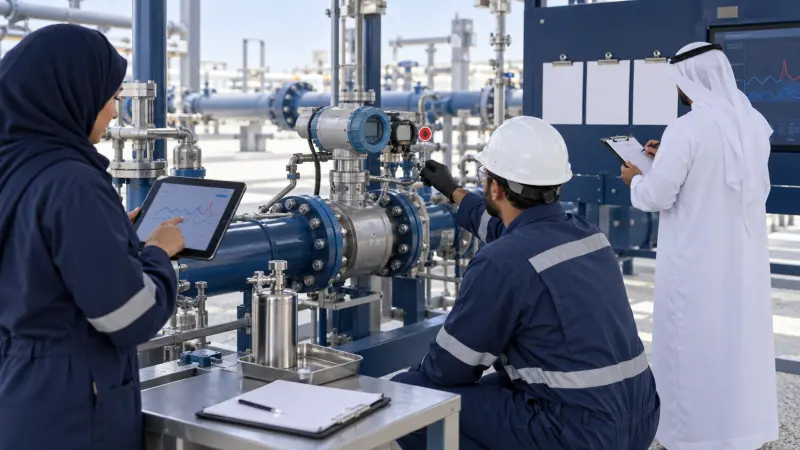
Commingled Production Allocation Training Course

At a glance
- Duration
- 1 Week
- Format
- Classroom
- Cities
- Porto, Chicago, Tokyo, Bangkok, Tashkent, San Diego and more
- Next session
- 9 – 13 November 2026, Porto
- Average fee
- 7,500 €
Overview
Commingled Production Allocation and Reconciliation Training Course is a one-week advanced course for production allocation, field operations, measurement, petroleum accounting and joint-venture professionals. Participants connect meters, well tests, laboratory data, process models and commercial rules to allocate oil, gas and water through shared facilities. They leave with a Production Allocation and Reconciliation Control Pack covering method, uncertainty, imbalance, ownership and audit evidence. Agile Leaders Training Center presents this specialist production-allocation course.
Who Should Attend
- Production allocation and hydrocarbon accounting engineers
- Field operations and production-reporting professionals
- Metering, measurement and instrumentation specialists
- Petroleum accountants and revenue analysts
- Joint-venture, commercial and lifting-accounting teams
- Internal audit, assurance and regulatory-reporting personnel
Participants should understand production operations, measurement, accounting or joint-venture reporting. The course does not replace custody-transfer certification or detailed multiphase-flowmeter design.
Departments and Industries
- Upstream operators, joint ventures and national oil companies
- Onshore and offshore fields using shared production facilities
- Production operations, measurement and surveillance departments
- Hydrocarbon accounting, finance and commercial functions
- Pipeline, terminal, processing and export organisations
- Regulators, auditors and allocation-system consultants
Learning Objectives
By the end of this course, participants will be able to:
- Map production streams, measurement points and ownership boundaries
- Select allocation methods for commingled oil, gas and water
- Use well tests, meters, models and quality data to calculate factors
- Reconcile gains, losses, shrinkage, fuel, flare and inventory movement
- Quantify uncertainty and control back-allocation and adjustments
- Build an auditable Production Allocation and Reconciliation Control Pack
Course Agenda
Day 1: Establish the Allocation System
- Production Flow Network and Ownership Boundary Map
- Measurement Hierarchy and Metering-Point Register
- Allocation Agreement and Stakeholder Requirement Matrix
- Oil, Gas, Water and Product-Quality Data Dictionary
- Allocation Period, Cut-Off and Data-Readiness Checklist
Day 2: Build Allocation Calculations
- Direct, Proportional and Difference Allocation Methods
- Well-Test and Virtual-Meter Input Validation
- Oil, Gas and Water Allocation-Factor Calculations
- Density, Composition, Energy and Quality Adjustment
- Worked Shared-Separator and Export-Meter Allocation
Day 3: Treat Losses and Imbalances
- Fuel, Flare, Vent, Shrinkage and Process-Loss Treatment
- Inventory Change and Line-Pack Reconciliation
- Metering Mismatch and Unaccounted-for Quantity Analysis
- Cross-Period Adjustment and Back-Allocation Rules
- Daily, Monthly and Final Reconciliation Workflow
Day 4: Govern Uncertainty and Audit
- Measurement Uncertainty and Allocation Sensitivity
- Data Substitution, Estimation and Exception Approval
- Version Control, Change Log and Recalculation Evidence
- Partner Statement and Regulatory Reporting Controls
- Allocation Review, Dispute and Audit Trail
Day 5: Practice Allocation Decisions
- Suggested Exercise: Map a Commingled Production Network
- Suggested Exercise: Calculate Oil, Gas and Water Factors
- Suggested Exercise: Reconcile Shrinkage and Meter Imbalance
- Suggested Exercise: Back-Allocate Corrected Well-Test Data
- Capstone Exercise: Present the Production Allocation and Reconciliation Control Pack
Practical Exercises
- Build an allocation network from wells through shared separation and export.
- Calculate contributor factors using meter, test and quality information.
- Reconcile measured exports with fuel, flare, inventory and process losses.
- Defend an adjustment through uncertainty, approval, version and partner evidence.
FAQs
What is commingled production allocation?
It is the process of determining the oil, gas and water contribution and ownership of each well, field or participant after streams are combined in shared production, processing, transport or storage systems.
Which data support an allocation calculation?
Inputs may include fiscal and operational meters, well tests, virtual meters, laboratory composition, density, process conditions, inventories, fuel and flare records, operating status and agreed allocation rules.
How are gains and losses reconciled?
Measured inputs and outputs are placed on consistent quantity and quality bases, adjusted for inventory, fuel, flare, shrinkage and known losses, then the remaining imbalance is investigated and allocated under approved rules.
What is back-allocation?
Back-allocation revises historical contributor quantities when better information arrives, such as corrected meter data, validated well tests or updated fluid properties, while preserving a controlled audit trail.
How is allocation uncertainty controlled?
Teams identify uncertainty in measurements, tests, models and assumptions, test sensitivity, apply hierarchy and substitution rules, approve exceptions and communicate material effects to stakeholders.
What will participants produce?
Participants build a control pack containing the network, data hierarchy, equations, loss treatment, reconciliation, uncertainty register, adjustment workflow, statements and audit evidence.
Conclusion
Participants leave with a repeatable method for turning mixed production evidence into fair, transparent and auditable ownership quantities. The control pack supports consistent reporting as operating conditions, tests, meters and agreements change.
credits: 5 credit per day
Course Mode: full-time
Provider: Agile Leaders Training Center
-
Events for this Course
-
Porto 9 – 13 November 2026
-
Chicago 15 – 19 November 2026
-
Tokyo 23 – 27 November 2026
-
Zoom 30 November – 4 December 2026
-
Bangkok 6 – 10 December 2026
-
Tashkent 13 – 17 December 2026
-
San Diego 21 – 25 December 2026
-
Trabzon 27 – 31 December 2026
-
Casablanca 4 – 8 January 2027
-
Amsterdam 4 – 8 January 2027
-
Johannesburg 10 – 14 January 2027
-
Accra 17 – 21 January 2027
-
Cape town 24 – 28 January 2027
-
Abu Dhabi 1 – 5 February 2027
-
Marbella 7 – 11 February 2027
-
Kuwait 14 – 18 February 2027
-
Lisbon 22 – 26 February 2027
-
Berlin 1 – 5 March 2027
-
Dubai 8 – 12 March 2027
-
Rome 8 – 12 March 2027
-
Bali 14 – 18 March 2027
-
London 15 – 19 March 2027
-
Madrid 22 – 26 March 2027
-
Seoul 29 March – 2 April 2027
-
Vienna 5 – 9 April 2027
-
Frankfurt 12 – 16 April 2027
-
Sharm El-Sheikh 19 – 23 April 2027
-
Nairobi 25 – 29 April 2027
-
Singapore 3 – 7 May 2027
-
Montreux 10 – 14 May 2027
-
Kuala Lumpur 17 – 21 May 2027
-
Langkawi 23 – 27 May 2027
-
Amman 30 May – 3 June 2027
-
Manama 6 – 10 June 2027
-
Nice 14 – 18 June 2027
-
Barcelona 21 – 25 June 2027
-
Geneva 27 June – 1 July 2027
-
Tbilisi 5 – 9 July 2027
-
Dubai 12 – 16 July 2027
-
Istanbul 12 – 16 July 2027
-
Paris 19 – 23 July 2027
-
New York 26 – 30 July 2027
-
Doha 1 – 5 August 2027
-
Milan 9 – 13 August 2027
-
Zanzibar 15 – 19 August 2027
-
Cairo 16 – 20 August 2027
-
Toronto 22 – 26 August 2027
-
Athens 30 August – 3 September 2027
-
Muscat 5 – 9 September 2027
-
Addis Ababa 13 – 17 September 2027
-
Munich 20 – 24 September 2027
-
Baku 27 September – 1 October 2027
-
Jakarta 4 – 8 October 2027
-
Lagos 10 – 14 October 2027
-
London 18 – 22 October 2027
-
Phuket 24 – 28 October 2027
-
Abu Dhabi 1 – 5 November 2027
-
Prague 8 – 12 November 2027
| Image | Location | Dates | Duration | Mode | Price | Actions |
|---|---|---|---|---|---|---|

|
Paris |
Week 29, 2027 19 – 23 July 2027 |
1 Week | Onsite | €6,500 | |

|
New York |
Week 30, 2027 26 – 30 July 2027 |
1 Week | Onsite | €16,000 | |

|
Doha |
Week 30, 2027 1 – 5 August 2027 |
1 Week | Onsite | €7,000 | |

|
Milan |
Week 32, 2027 9 – 13 August 2027 |
1 Week | Onsite | €7,000 | |

|
Zanzibar |
Week 32, 2027 15 – 19 August 2027 |
1 Week | Onsite | €6,000 | |

|
Cairo |
Week 33, 2027 16 – 20 August 2027 |
1 Week | Onsite | €5,200 | |

|
Toronto |
Week 33, 2027 22 – 26 August 2027 |
1 Week | Onsite | €16,000 | |

|
Athens |
Week 35, 2027 30 August – 3 September 2027 |
1 Week | Onsite | €7,500 | |

|
Muscat |
Week 35, 2027 5 – 9 September 2027 |
1 Week | Onsite | €6,500 | |

|
Addis Ababa |
Week 37, 2027 13 – 17 September 2027 |
1 Week | Onsite | €6,000 | |

|
Munich |
Week 38, 2027 20 – 24 September 2027 |
1 Week | Onsite | €6,500 | |

|
Baku |
Week 39, 2027 27 September – 1 October 2027 |
1 Week | Onsite | €8,000 | |

|
Jakarta |
Week 40, 2027 4 – 8 October 2027 |
1 Week | Onsite | €8,000 | |

|
Lagos |
Week 40, 2027 10 – 14 October 2027 |
1 Week | Onsite | €6,000 | |

|
London |
Week 42, 2027 18 – 22 October 2027 |
1 Week | Onsite | €6,500 | |

|
Phuket |
Week 42, 2027 24 – 28 October 2027 |
1 Week | Onsite | €8,000 | |

|
Abu Dhabi |
Week 44, 2027 1 – 5 November 2027 |
1 Week | Onsite | €6,500 | |

|
Prague |
Week 45, 2027 8 – 12 November 2027 |
1 Week | Onsite | €7,500 |
Frequently asked questions
What does this course cover?
OverviewCommingled Production Allocation and Reconciliation Training Course is a one-week advanced course for production allocation, field operations, measurement, petroleum accounting and joint-venture professionals. Participants connect meters, well tests, laboratory data, process models and commercial rules to allocate oil, gas and water through shared…
Are training dates available?
Yes. Available dates and destinations are listed in the course dates section on this page.
How can I register?
Choose an available date on this page and complete the registration form, or send a programme enquiry.
Can I download the course brochure?
Yes. Use the brochure download link provided on this page.
This course by city
- Oil & Gas Training and Other Technical Courses in Abu Dhabi
- Oil & Gas Training and Other Technical Courses in Accra
- Oil & Gas Training and Other Technical Courses in Addis Ababa
- Oil & Gas Training and Other Technical Courses in Amman
- Oil & Gas Training and Other Technical Courses in Amsterdam
- Oil & Gas Training and Other Technical Courses in Athens
- Oil & Gas Training and Other Technical Courses in Baku
- Oil & Gas Training and Other Technical Courses in Bali
- Oil & Gas Training and Other Technical Courses in Bangkok
- Oil & Gas Training and Other Technical Courses in Barcelona
- Oil & Gas Training and Other Technical Courses in Berlin
- Oil & Gas Training and Other Technical Courses in Cairo
- Oil & Gas Training and Other Technical Courses in Cape town
- Oil & Gas Training and Other Technical Courses in Casablanca
- Oil & Gas Training and Other Technical Courses in Chicago
- Oil & Gas Training and Other Technical Courses in Doha
- Oil & Gas Training and Other Technical Courses in Dubai
- Oil & Gas Training and Other Technical Courses in Frankfurt
- Oil & Gas Training and Other Technical Courses in Geneva
- Oil & Gas Training and Other Technical Courses in Istanbul
- Oil & Gas Training and Other Technical Courses in Jakarta
- Oil & Gas Training and Other Technical Courses in Johannesburg
- Oil & Gas Training and Other Technical Courses in Kuala Lumpur
- Oil & Gas Training and Other Technical Courses in Kuwait
- Oil & Gas Training and Other Technical Courses in Lagos
- Oil & Gas Training and Other Technical Courses in Langkawi
- Oil & Gas Training and Other Technical Courses in Lisbon
- Oil & Gas Training and Other Technical Courses in London
- Oil & Gas Training and Other Technical Courses in Madrid
- Oil & Gas Training and Other Technical Courses in Manama
- Oil & Gas Training and Other Technical Courses in Marbella
- Oil & Gas Training and Other Technical Courses in Milan
- Oil & Gas Training and Other Technical Courses in Montreux
- Oil & Gas Training and Other Technical Courses in Munich
- Oil & Gas Training and Other Technical Courses in Muscat
- Oil & Gas Training and Other Technical Courses in Nairobi
- Oil & Gas Training and Other Technical Courses in New York
- Oil & Gas Training and Other Technical Courses in Nice
- Oil & Gas Training and Other Technical Courses in Paris
- Oil & Gas Training and Other Technical Courses in Phuket
- Oil & Gas Training and Other Technical Courses in Porto
- Oil & Gas Training and Other Technical Courses in Prague
- Oil & Gas Training and Other Technical Courses in Rome
- Oil & Gas Training and Other Technical Courses in San Diego
- Oil & Gas Training and Other Technical Courses in Seoul
- Oil & Gas Training and Other Technical Courses in Sharm El-Sheikh
- Oil & Gas Training and Other Technical Courses in Singapore
- Oil & Gas Training and Other Technical Courses in Tashkent
- Oil & Gas Training and Other Technical Courses in Tbilisi
- Oil & Gas Training and Other Technical Courses in Tokyo
- Oil & Gas Training and Other Technical Courses in Toronto
- Oil & Gas Training and Other Technical Courses in Trabzon
- Oil & Gas Training and Other Technical Courses in Vienna
- Oil & Gas Training and Other Technical Courses in Zanzibar
- Oil & Gas Training and Other Technical Courses in Zoom