Control Valves and Actuators Training Course

At a glance
- Duration
- 1 Week
- Format
- Classroom
- Cities
- Jakarta, Manama, Cairo, Amman, Lagos, Kuala Lumpur and more
- Next session
- 9 – 13 November 2026, Jakarta
- Average fee
- 7,500 €
Overview
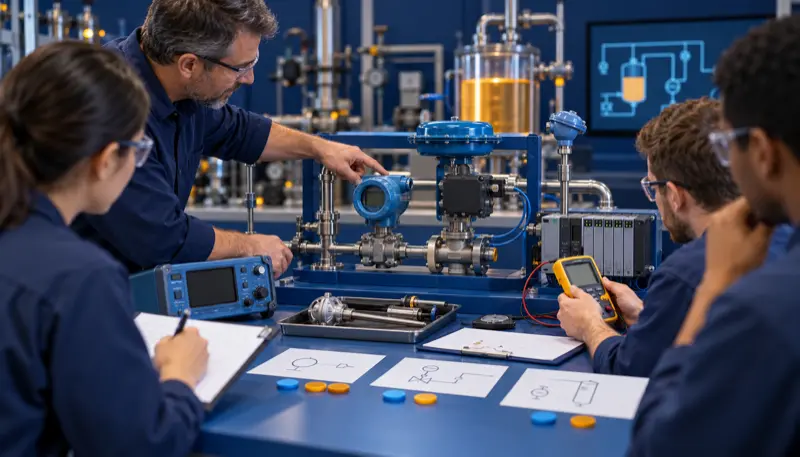
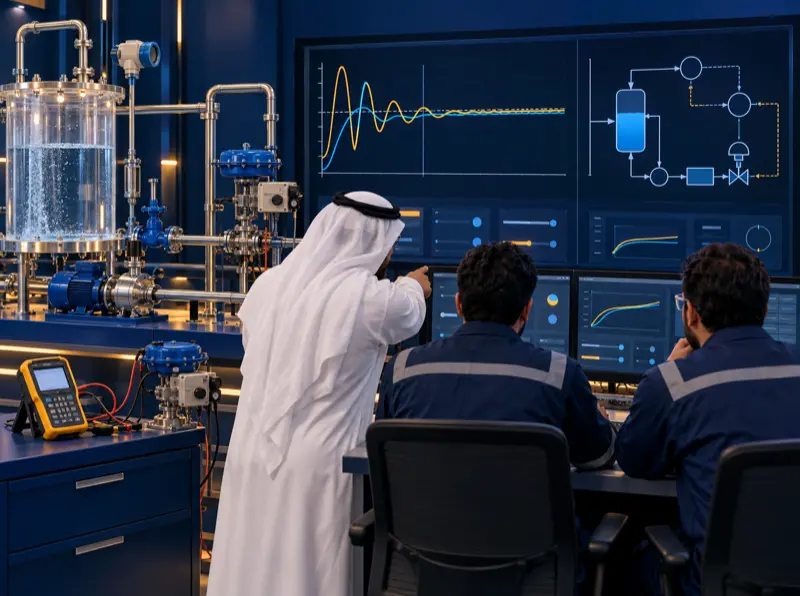
Control Valves and Actuators Foundation Course is a one-week programme for instrumentation, control, maintenance and commissioning personnel who leave with a Control Valve Inspection and Commissioning Workbook. Participants examine valve bodies, trim, flow characteristics, sizing inputs, service damage, actuator types, positioners, fail action, calibration, stroke testing and diagnostics. Activities use approved data and isolated equipment rather than live process intervention. Agile Leaders Training Center presents control valves and actuators through structured equipment decisions.
Who Should Attend
- Personnel responsible for control-valve inspection, calibration and repair
- Engineers selecting valve, actuator and positioner arrangements
- Operators identifying valve-response and process symptoms
- Reliability teams analysing recurring valve and actuator faults
- Commissioning personnel verifying installation, stroking and records
The course assumes participants can read basic piping and instrumentation diagrams and instrument signals, and it leaves out detailed piping design, advanced loop tuning, live process work and manufacturer-specific overhaul authorization.
Departments and Industries
The course supports departments and industries that depend on modulating valves for reliable process control.
- Oil, gas, refining and petrochemical operations
- Power generation, water and utility systems
- Chemical, pharmaceutical and food processing
- Instrumentation, control and automation departments
- Maintenance, reliability, operations and commissioning teams
Learning Objectives
By the end of this course, participants will be able to:
- Analyze valve bodies, trim and service conditions
- Apply flow-characteristic and sizing concepts to selection checks
- Compare pneumatic, electric and hydraulic actuator arrangements
- Use calibration and stroke-test evidence to assess performance
- Diagnose common valve, actuator and positioner faults
- Build controlled maintenance and commissioning records
Course Agenda
Day 1: Valve Construction and Service Selection
- Control Valve Function within the Process Loop
- Globe, Ball, Butterfly and Plug Valve Comparison
- Body, Bonnet, Stem, Seat, Plug and Trim Identification
- Two-Port, Three-Port, Mixing and Diverting Applications
- Control Valve Inspection and Commissioning Workbook Structure
Day 2: Flow Characteristics and Service Effects
- Cv and Kv Flow-Capacity Concept
- Linear, Equal-Percentage and Quick-Opening Characteristics
- Rangeability, Pressure Drop and Installed Behaviour
- Liquid, Gas and Steam Sizing Input Checks
- Cavitation, Flashing, Noise and Erosion Indicators
Day 3: Actuators, Positioners and Fail Action
- Pneumatic Diaphragm and Piston Actuator Operation
- Electric and Hydraulic Actuator Application
- Positioner, I/P Converter, Solenoid and Air-Set Interface
- Air-to-Open, Air-to-Close and Fail-Position Decisions
- Thrust, Torque, Travel and Seat-Load Checks
Day 4: Installation, Calibration and Diagnostics
- Orientation, Supports, Bypass and Accessibility Review
- Supply Pressure, Tubing and Electrical Connection Checks
- Zero, Span, Travel and Positioner Calibration
- Stroke Test, Step Response and Deadband Evidence
- Leakage, Stiction, Hunting and Position-Deviation Diagnosis
Day 5: Maintenance and Commissioning Practice
- Exercise: Identify Valve, Trim and Actuator Components
- Exercise: Review Sizing Inputs and Service-Damage Risks
- Exercise: Calibrate a Positioner and Record a Stroke Test
- Exercise: Diagnose a Valve-Response Fault from Evidence
- Capstone Exercise: Complete a Control Valve Inspection and Commissioning Workbook
Practical Exercises
The course uses suggested activities based on approved datasheets, isolated equipment and simulated diagnostic records.
- Suggested activity: compare valve characteristics against a service requirement
- Suggested activity: verify fail action and accessory connections from a schematic
- Suggested activity: interpret travel, pressure and response data for a suspected fault
- Suggested activity: prepare inspection, calibration and commissioning acceptance records
FAQs
Who is the course for and what does it assume?
It suits instrumentation, control, maintenance, operations and commissioning personnel. It assumes basic familiarity with P&IDs, instrument signals and safe isolation practices.
How does this differ from a PID loop-tuning course?
This course concentrates on valve bodies, trim, actuators, positioners, calibration and equipment diagnostics. A PID tuning course concentrates on controller response and loop-adjustment methods.
Does the course perform detailed control-valve sizing?
It teaches sizing inputs, capacity concepts and verification checks. Final sizing and selection require current process data, approved equations, manufacturer information and competent engineering review.
What is the difference between cavitation and flashing?
Both begin when liquid pressure falls to the vapour-pressure region. Cavitation involves bubble collapse after pressure recovery; flashing persists downstream when pressure does not recover sufficiently.
What practical output is completed?
Participants complete a Control Valve Inspection and Commissioning Workbook covering selection checks, components, fail action, calibration, diagnostics, maintenance and acceptance evidence.
Conclusion
Participants leave with a repeatable method for examining control-valve assemblies, confirming actuator action, interpreting performance evidence and documenting controlled work. The workbook connects service conditions, components, calibration and fault diagnosis while approved procedures, isolation controls and manufacturer limits remain in charge.
credits: 5 credit per day
Course Mode: full-time
Provider: Agile Leaders Training Center
-
Events for this Course
-
Jakarta 9 – 13 November 2026
-
Manama 15 – 19 November 2026
-
Cairo 16 – 20 November 2026
-
Amman 22 – 26 November 2026
-
Lagos 29 November – 3 December 2026
-
Kuala Lumpur 7 – 11 December 2026
-
Istanbul 7 – 11 December 2026
-
Abu Dhabi 14 – 18 December 2026
-
Addis Ababa 21 – 25 December 2026
-
Bali 27 – 31 December 2026
-
Barcelona 4 – 8 January 2027
-
Zoom 11 – 15 January 2027
-
Tbilisi 18 – 22 January 2027
-
Dubai 25 – 29 January 2027
-
Porto 25 – 29 January 2027
-
Kuwait 31 January – 4 February 2027
-
London 1 – 5 February 2027
-
Bangkok 7 – 11 February 2027
-
Vienna 15 – 19 February 2027
-
Chicago 21 – 25 February 2027
-
Frankfurt 1 – 5 March 2027
-
Prague 8 – 12 March 2027
-
Phuket 14 – 18 March 2027
-
Johannesburg 21 – 25 March 2027
-
Tashkent 28 March – 1 April 2027
-
Langkawi 11 – 15 April 2027
-
Geneva 18 – 22 April 2027
-
Madrid 26 – 30 April 2027
-
Doha 9 – 13 May 2027
-
Seoul 17 – 21 May 2027
-
Casablanca 24 – 28 May 2027
-
Munich 24 – 28 May 2027
-
Montreux 31 May – 4 June 2027
-
Sharm El-Sheikh 7 – 11 June 2027
-
San Diego 7 – 11 June 2027
-
Toronto 13 – 17 June 2027
-
Zanzibar 20 – 24 June 2027
-
Paris 28 June – 2 July 2027
-
Muscat 4 – 8 July 2027
-
London 12 – 16 July 2027
-
Rome 12 – 16 July 2027
-
Tokyo 19 – 23 July 2027
-
New York 26 – 30 July 2027
-
Dubai 9 – 13 August 2027
-
Athens 9 – 13 August 2027
-
Milan 16 – 20 August 2027
-
Trabzon 22 – 26 August 2027
-
Nice 30 August – 3 September 2027
-
Baku 6 – 10 September 2027
-
Singapore 13 – 17 September 2027
-
Nairobi 19 – 23 September 2027
-
Berlin 27 September – 1 October 2027
-
Lisbon 4 – 8 October 2027
-
Abu Dhabi 11 – 15 October 2027
-
Amsterdam 18 – 22 October 2027
-
Cape town 24 – 28 October 2027
-
Accra 31 October – 4 November 2027
-
Marbella 7 – 11 November 2027
| Image | Location | Dates | Duration | Mode | Price | Actions |
|---|---|---|---|---|---|---|

|
Rome |
Week 28, 2027 12 – 16 July 2027 |
1 Week | Onsite | €6,500 | |

|
Tokyo |
Week 29, 2027 19 – 23 July 2027 |
1 Week | Onsite | €12,000 | |

|
New York |
Week 30, 2027 26 – 30 July 2027 |
1 Week | Onsite | €16,000 | |

|
Dubai |
Week 32, 2027 9 – 13 August 2027 |
1 Week | Onsite | €6,500 | |

|
Athens |
Week 32, 2027 9 – 13 August 2027 |
1 Week | Onsite | €7,500 | |

|
Milan |
Week 33, 2027 16 – 20 August 2027 |
1 Week | Onsite | €7,000 | |

|
Trabzon |
Week 33, 2027 22 – 26 August 2027 |
1 Week | Onsite | €8,000 | |

|
Nice |
Week 35, 2027 30 August – 3 September 2027 |
1 Week | Onsite | €8,000 | |

|
Baku |
Week 36, 2027 6 – 10 September 2027 |
1 Week | Onsite | €8,000 | |

|
Singapore |
Week 37, 2027 13 – 17 September 2027 |
1 Week | Onsite | €6,500 | |

|
Nairobi |
Week 37, 2027 19 – 23 September 2027 |
1 Week | Onsite | €6,000 | |

|
Berlin |
Week 39, 2027 27 September – 1 October 2027 |
1 Week | Onsite | €6,500 | |

|
Lisbon |
Week 40, 2027 4 – 8 October 2027 |
1 Week | Onsite | €6,500 | |

|
Abu Dhabi |
Week 41, 2027 11 – 15 October 2027 |
1 Week | Onsite | €6,500 | |

|
Amsterdam |
Week 42, 2027 18 – 22 October 2027 |
1 Week | Onsite | €6,500 | |

|
Cape town |
Week 42, 2027 24 – 28 October 2027 |
1 Week | Onsite | €6,000 | |

|
Accra |
Week 43, 2027 31 October – 4 November 2027 |
1 Week | Onsite | €6,000 | |

|
Marbella |
Week 44, 2027 7 – 11 November 2027 |
1 Week | Onsite | €6,500 |
Frequently asked questions
What does this course cover?
OverviewControl Valves and Actuators Foundation Course is a one-week programme for instrumentation, control, maintenance and commissioning personnel who leave with a Control Valve Inspection and Commissioning Workbook. Participants examine valve bodies, trim, flow characteristics, sizing inputs, service damage, actuator types, positioners, fail action, ca…
Are training dates available?
Yes. Available dates and destinations are listed in the course dates section on this page.
How can I register?
Choose an available date on this page and complete the registration form, or send a programme enquiry.
Can I download the course brochure?
Yes. Use the brochure download link provided on this page.
This course by city
- Oil & Gas Training and Other Technical Courses in Abu Dhabi
- Oil & Gas Training and Other Technical Courses in Accra
- Oil & Gas Training and Other Technical Courses in Addis Ababa
- Oil & Gas Training and Other Technical Courses in Amman
- Oil & Gas Training and Other Technical Courses in Amsterdam
- Oil & Gas Training and Other Technical Courses in Athens
- Oil & Gas Training and Other Technical Courses in Baku
- Oil & Gas Training and Other Technical Courses in Bali
- Oil & Gas Training and Other Technical Courses in Bangkok
- Oil & Gas Training and Other Technical Courses in Barcelona
- Oil & Gas Training and Other Technical Courses in Berlin
- Oil & Gas Training and Other Technical Courses in Cairo
- Oil & Gas Training and Other Technical Courses in Cape town
- Oil & Gas Training and Other Technical Courses in Casablanca
- Oil & Gas Training and Other Technical Courses in Chicago
- Oil & Gas Training and Other Technical Courses in Doha
- Oil & Gas Training and Other Technical Courses in Dubai
- Oil & Gas Training and Other Technical Courses in Frankfurt
- Oil & Gas Training and Other Technical Courses in Geneva
- Oil & Gas Training and Other Technical Courses in Istanbul
- Oil & Gas Training and Other Technical Courses in Jakarta
- Oil & Gas Training and Other Technical Courses in Johannesburg
- Oil & Gas Training and Other Technical Courses in Kuala Lumpur
- Oil & Gas Training and Other Technical Courses in Kuwait
- Oil & Gas Training and Other Technical Courses in Lagos
- Oil & Gas Training and Other Technical Courses in Langkawi
- Oil & Gas Training and Other Technical Courses in Lisbon
- Oil & Gas Training and Other Technical Courses in London
- Oil & Gas Training and Other Technical Courses in Madrid
- Oil & Gas Training and Other Technical Courses in Manama
- Oil & Gas Training and Other Technical Courses in Marbella
- Oil & Gas Training and Other Technical Courses in Milan
- Oil & Gas Training and Other Technical Courses in Montreux
- Oil & Gas Training and Other Technical Courses in Munich
- Oil & Gas Training and Other Technical Courses in Muscat
- Oil & Gas Training and Other Technical Courses in Nairobi
- Oil & Gas Training and Other Technical Courses in New York
- Oil & Gas Training and Other Technical Courses in Nice
- Oil & Gas Training and Other Technical Courses in Paris
- Oil & Gas Training and Other Technical Courses in Phuket
- Oil & Gas Training and Other Technical Courses in Porto
- Oil & Gas Training and Other Technical Courses in Prague
- Oil & Gas Training and Other Technical Courses in Rome
- Oil & Gas Training and Other Technical Courses in San Diego
- Oil & Gas Training and Other Technical Courses in Seoul
- Oil & Gas Training and Other Technical Courses in Sharm El-Sheikh
- Oil & Gas Training and Other Technical Courses in Singapore
- Oil & Gas Training and Other Technical Courses in Tashkent
- Oil & Gas Training and Other Technical Courses in Tbilisi
- Oil & Gas Training and Other Technical Courses in Tokyo
- Oil & Gas Training and Other Technical Courses in Toronto
- Oil & Gas Training and Other Technical Courses in Trabzon
- Oil & Gas Training and Other Technical Courses in Vienna
- Oil & Gas Training and Other Technical Courses in Zanzibar
- Oil & Gas Training and Other Technical Courses in Zoom