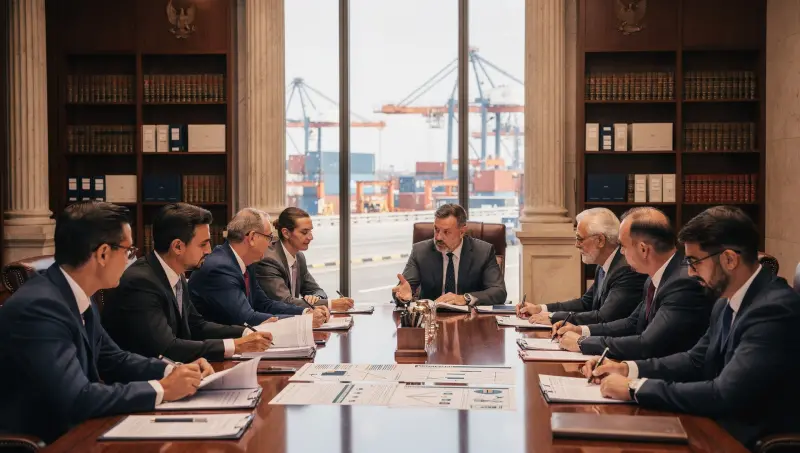
Customs Duty and Indirect Tax Strategy Course

At a glance
- Duration
- 1 Week
- Format
- Classroom
- Cities
- Tbilisi, Vienna, Amman, London, Langkawi, Phuket and more
- Next session
- 26 – 30 October 2026, Tbilisi
- Average fee
- 5,750 €
Overview
Advanced Customs Duty and Indirect Tax Strategy Training Course is a one-week course for tax managers, customs specialists, finance teams, trade compliance professionals, procurement leaders and supply chain managers, who leave with a Customs and Indirect Tax Decision Pack. Participants connect tariff classification, customs valuation, origin evidence, import tax, landed cost, transaction controls and audit readiness without receiving country-specific legal advice. Agile Leaders Training Center develops customs duty and indirect tax strategy capability.
Who Should Attend
Tax teams responsible for indirect tax positions and import transaction controls
Customs teams responsible for classification, valuation, origin and declarations
Finance teams responsible for landed cost, provisions and reconciliation
Trade compliance teams responsible for evidence, risk and audit readiness
Procurement teams responsible for supplier terms and import cost decisions
Supply chain teams responsible for cross-border flows and customs data
The course assumes participants can interpret import documents and transaction data, and it leaves out legal opinions, filing representation and country-specific tax advice.
Departments and Industries
The course supports departments and industries that manage customs exposure and indirect tax on cross-border goods.
Finance, tax, treasury and internal audit
Customs, global trade and regulatory compliance
Manufacturing, retail and consumer goods
Energy, industrial equipment and engineering supply chains
Logistics, freight forwarding and distribution
Procurement, sourcing and commercial operations
Learning Objectives
By the end of this course, participants will be able to:
Apply classification governance to customs master data
Analyze customs valuation methods and transaction evidence
Evaluate preferential and non-preferential origin claims
Build landed-cost and import-tax scenario models
Diagnose declaration, control and audit-trail weaknesses
Prioritize customs and indirect-tax risk actions
Course Agenda
Day 1: Classification and Customs Governance
Harmonized System Classification Decision Record
Product Description and Attribute Evidence Sheet
Tariff Master-Data Ownership Matrix
Classification Change and Approval Workflow
Customs Duty Exposure Map
Day 2: Valuation and Transaction Evidence
WTO Customs Valuation Method Sequence
Transaction Value Evidence File
Valuation Adjustment and Charge Analysis
Related-Party Price Review Checklist
Alternative Valuation Method Decision Tree
Day 3: Origin and Import Tax
Preferential and Non-Preferential Origin Map
Origin Rule Qualification Worksheet
Supplier Origin Evidence Control
Import Indirect-Tax Base Reconciliation
Landed-Cost Scenario Model
Day 4: Controls, Risk and Audit Readiness
Customs Declaration Control Matrix
Trade Data Reconciliation Method
Customs and Indirect-Tax Risk Register
Post-Clearance Audit Evidence Index
Cross-Functional Customs Decision Report
Day 5: Customs Strategy Practice
Exercise: Resolve a Tariff Classification Case
Exercise: Rebuild a Customs Valuation File
Exercise: Test an Origin Qualification Claim
Exercise: Reconcile Landed Cost and Import Tax
Capstone Exercise: Customs and Indirect Tax Decision Pack
Practical Exercises
The course uses suggested activities to convert shipment and transaction evidence into controlled customs decisions.
Suggested activity: classify a product from technical attributes and supporting records
Suggested activity: challenge transaction value and proposed adjustments
Suggested activity: test supplier origin evidence against a stated rule
Suggested activity: present a risk-ranked customs and import-tax action plan
FAQs
Who suits advanced customs duty and indirect tax strategy training, and what does it assume?
Tax, customs, finance, trade compliance, procurement and supply chain professionals suit the training. It assumes familiarity with import documents, product data and transaction records.
How does customs duty and indirect tax strategy training differ from basic import procedures training?
Customs duty and indirect tax strategy training focuses on evidence, governance, risk and cross-functional decisions; basic import procedures training commonly focuses on document flow and routine clearance steps.
How is customs value determined for duty analysis?
Customs value analysis starts with transaction value and its supporting conditions and adjustments, then considers the ordered alternative methods when transaction value cannot be used.
Why do rules of origin affect customs duty strategy?
Rules of origin affect eligibility for preferential treatment, evidence requirements, supplier controls, tariff treatment and the defensibility of an origin claim.
What supports customs and indirect tax audit readiness?
Audit readiness depends on governed master data, consistent declarations, valuation and origin files, reconciliations, approvals, exception records and traceable corrective actions.
Conclusion
Participants take back a Customs and Indirect Tax Decision Pack containing classification records, valuation files, origin worksheets, landed-cost models, control matrices and a risk register. The pack makes assumptions, ownership and evidence gaps traceable. It supports import-cost decisions, declaration controls, audit preparation and cross-functional risk reporting.
credits: 5 credit per day
Course Mode: full-time
Provider: Agile Leaders Training Center
-
Events for this Course
-
Tbilisi 26 – 30 October 2026
-
Vienna 2 – 6 November 2026
-
Amman 8 – 12 November 2026
-
London 9 – 13 November 2026
-
Langkawi 15 – 19 November 2026
-
Phuket 22 – 26 November 2026
-
Lagos 22 – 26 November 2026
-
Geneva 29 November – 3 December 2026
-
Sharm El-Sheikh 7 – 11 December 2026
-
Amsterdam 7 – 11 December 2026
-
Dubai 14 – 18 December 2026
-
Abu Dhabi 14 – 18 December 2026
-
Rome 21 – 25 December 2026
-
Nice 28 December 2026 – 1 January 2027
-
Amsterdam 4 – 8 January 2027
-
London 11 – 15 January 2027
-
Prague 11 – 15 January 2027
-
Chicago 17 – 21 January 2027
-
Dubai 18 – 22 January 2027
-
Frankfurt 25 – 29 January 2027
-
Berlin 1 – 5 February 2027
-
Kuala Lumpur 8 – 12 February 2027
-
Tokyo 8 – 12 February 2027
-
Vienna 15 – 19 February 2027
-
Abu Dhabi 22 – 26 February 2027
-
Johannesburg 28 February – 4 March 2027
-
London 8 – 12 March 2027
-
Athens 8 – 12 March 2027
-
Accra 14 – 18 March 2027
-
Paris 15 – 19 March 2027
-
Milan 22 – 26 March 2027
-
Dubai 29 March – 2 April 2027
-
Madrid 29 March – 2 April 2027
-
Tashkent 4 – 8 April 2027
-
Istanbul 12 – 16 April 2027
-
Porto 12 – 16 April 2027
-
Manama 18 – 22 April 2027
-
Doha 25 – 29 April 2027
-
Barcelona 3 – 7 May 2027
-
Bangkok 9 – 13 May 2027
-
London 17 – 21 May 2027
-
Milan 17 – 21 May 2027
-
Nairobi 23 – 27 May 2027
-
Cairo 24 – 28 May 2027
-
Abu Dhabi 31 May – 4 June 2027
-
Rome 7 – 11 June 2027
-
Zanzibar 13 – 17 June 2027
-
Amsterdam 21 – 25 June 2027
-
Jakarta 28 June – 2 July 2027
-
Cape town 4 – 8 July 2027
-
Paris 5 – 9 July 2027
-
Toronto 11 – 15 July 2027
-
Barcelona 12 – 16 July 2027
-
Zoom 12 – 16 July 2027
-
Manama 18 – 22 July 2027
-
Casablanca 19 – 23 July 2027
-
Cairo 26 – 30 July 2027
-
New York 26 – 30 July 2027
-
Trabzon 1 – 5 August 2027
-
Dubai 2 – 6 August 2027
-
Bali 8 – 12 August 2027
-
Kuala Lumpur 16 – 20 August 2027
-
Abu Dhabi 16 – 20 August 2027
-
Marbella 22 – 26 August 2027
-
San Diego 30 August – 3 September 2027
-
Munich 6 – 10 September 2027
-
Montreux 13 – 17 September 2027
-
Istanbul 20 – 24 September 2027
-
Singapore 20 – 24 September 2027
-
Madrid 27 September – 1 October 2027
-
Seoul 4 – 8 October 2027
-
Baku 11 – 15 October 2027
-
Lisbon 11 – 15 October 2027
-
Kuwait 17 – 21 October 2027
-
Muscat 24 – 28 October 2027
| Image | Location | Dates | Duration | Mode | Price | Actions |
|---|---|---|---|---|---|---|

|
Berlin |
Week 05, 2027 1 – 5 February 2027 |
1 Week | Onsite | €5,700 | |

|
Kuala Lumpur |
Week 06, 2027 8 – 12 February 2027 |
1 Week | Onsite | €5,200 | |

|
Tokyo |
Week 06, 2027 8 – 12 February 2027 |
1 Week | Onsite | €10,000 | |

|
Vienna |
Week 07, 2027 15 – 19 February 2027 |
1 Week | Onsite | €5,700 | |

|
Abu Dhabi |
Week 08, 2027 22 – 26 February 2027 |
1 Week | Onsite | €4,700 | |

|
Johannesburg |
Week 08, 2027 28 February – 4 March 2027 |
1 Week | Onsite | €4,500 | |

|
London |
Week 10, 2027 8 – 12 March 2027 |
1 Week | Onsite | €5,700 | |

|
Athens |
Week 10, 2027 8 – 12 March 2027 |
1 Week | Onsite | €6,700 | |

|
Accra |
Week 10, 2027 14 – 18 March 2027 |
1 Week | Onsite | €4,100 | |

|
Paris |
Week 11, 2027 15 – 19 March 2027 |
1 Week | Onsite | €5,700 | |

|
Milan |
Week 12, 2027 22 – 26 March 2027 |
1 Week | Onsite | €5,700 | |

|
Dubai |
Week 13, 2027 29 March – 2 April 2027 |
1 Week | Onsite | €4,500 | |

|
Madrid |
Week 13, 2027 29 March – 2 April 2027 |
1 Week | Onsite | €5,700 | |

|
Tashkent |
Week 13, 2027 4 – 8 April 2027 |
1 Week | Onsite | €4,500 | |

|
Istanbul |
Week 15, 2027 12 – 16 April 2027 |
1 Week | Onsite | €4,500 | |

|
Porto |
Week 15, 2027 12 – 16 April 2027 |
1 Week | Onsite | €5,700 | |

|
Manama |
Week 15, 2027 18 – 22 April 2027 |
1 Week | Onsite | €4,700 | |

|
Doha |
Week 16, 2027 25 – 29 April 2027 |
1 Week | Onsite | €5,500 | |

|
Barcelona |
Week 18, 2027 3 – 7 May 2027 |
1 Week | Onsite | €5,700 | |

|
Bangkok |
Week 18, 2027 9 – 13 May 2027 |
1 Week | Onsite | €6,000 |
Frequently asked questions
What does this course cover?
OverviewAdvanced Customs Duty and Indirect Tax Strategy Training Course is a one-week course for tax managers, customs specialists, finance teams, trade compliance professionals, procurement leaders and supply chain managers, who leave with a Customs and Indirect Tax Decision Pack. Participants connect tariff classification, customs valuation, origin evid…
Are training dates available?
Yes. Available dates and destinations are listed in the course dates section on this page.
How can I register?
Choose an available date on this page and complete the registration form, or send a programme enquiry.
Can I download the course brochure?
Yes. Use the brochure download link provided on this page.
This course by city
- Finance and Accounting Training Courses in Abu Dhabi
- Finance and Accounting Training Courses in Accra
- Finance and Accounting Training Courses in Amman
- Finance and Accounting Training Courses in Amsterdam
- Finance and Accounting Training Courses in Athens
- Finance and Accounting Training Courses in Baku
- Finance and Accounting Training Courses in Bali
- Finance and Accounting Training Courses in Bangkok
- Finance and Accounting Training Courses in Barcelona
- Finance and Accounting Training Courses in Berlin
- Finance and Accounting Training Courses in Cairo
- Finance and Accounting Training Courses in Cape town
- Finance and Accounting Training Courses in Casablanca
- Finance and Accounting Training Courses in Chicago
- Finance and Accounting Training Courses in Doha
- Finance and Accounting Training Courses in Dubai
- Finance and Accounting Training Courses in Frankfurt
- Finance and Accounting Training Courses in Geneva
- Finance and Accounting Training Courses in Istanbul
- Finance and Accounting Training Courses in Jakarta
- Finance and Accounting Training Courses in Johannesburg
- Finance and Accounting Training Courses in Kuala Lumpur
- Finance and Accounting Training Courses in Kuwait
- Finance and Accounting Training Courses in Lagos
- Finance and Accounting Training Courses in Langkawi
- Finance and Accounting Training Courses in Lisbon
- Finance and Accounting Training Courses in London
- Finance and Accounting Training Courses in Madrid
- Finance and Accounting Training Courses in Manama
- Finance and Accounting Training Courses in Marbella
- Finance and Accounting Training Courses in Milan
- Finance and Accounting Training Courses in Montreux
- Finance and Accounting Training Courses in Munich
- Finance and Accounting Training Courses in Muscat
- Finance and Accounting Training Courses in Nairobi
- Finance and Accounting Training Courses in New York
- Finance and Accounting Training Courses in Nice
- Finance and Accounting Training Courses in Paris
- Finance and Accounting Training Courses in Phuket
- Finance and Accounting Training Courses in Porto
- Finance and Accounting Training Courses in Prague
- Finance and Accounting Training Courses in Rome
- Finance and Accounting Training Courses in San Diego
- Finance and Accounting Training Courses in Seoul
- Finance and Accounting Training Courses in Sharm El-Sheikh
- Finance and Accounting Training Courses in Singapore
- Finance and Accounting Training Courses in Tashkent
- Finance and Accounting Training Courses in Tbilisi
- Finance and Accounting Training Courses in Tokyo
- Finance and Accounting Training Courses in Toronto
- Finance and Accounting Training Courses in Trabzon
- Finance and Accounting Training Courses in Vienna
- Finance and Accounting Training Courses in Zanzibar
- Finance and Accounting Training Courses in Zoom