Deepwater Turbidite Reservoir Geology Course

At a glance
- Duration
- 1 Week
- Format
- Classroom
- Cities
- Tokyo, Frankfurt, Abu Dhabi, Amman, Addis Ababa, Nairobi and more
- Next session
- 9 – 13 November 2026, Tokyo
- Average fee
- 7,500 €
Overview
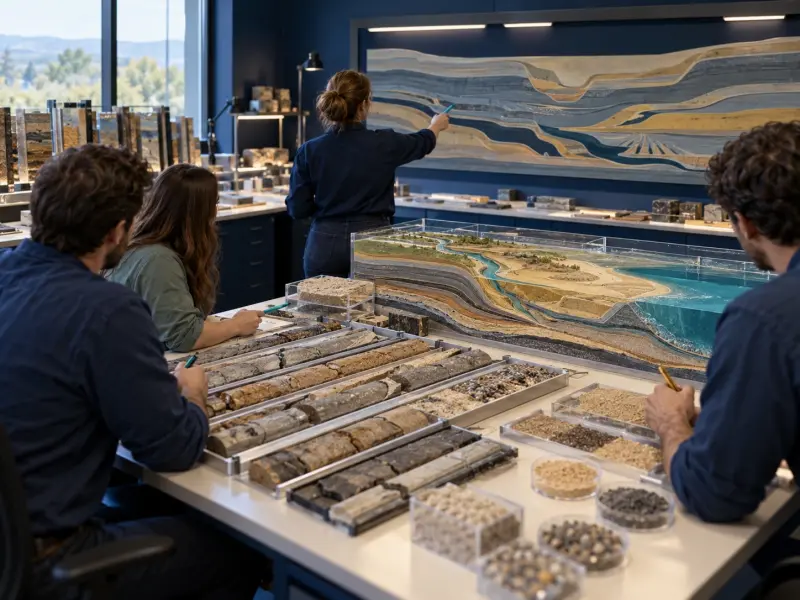
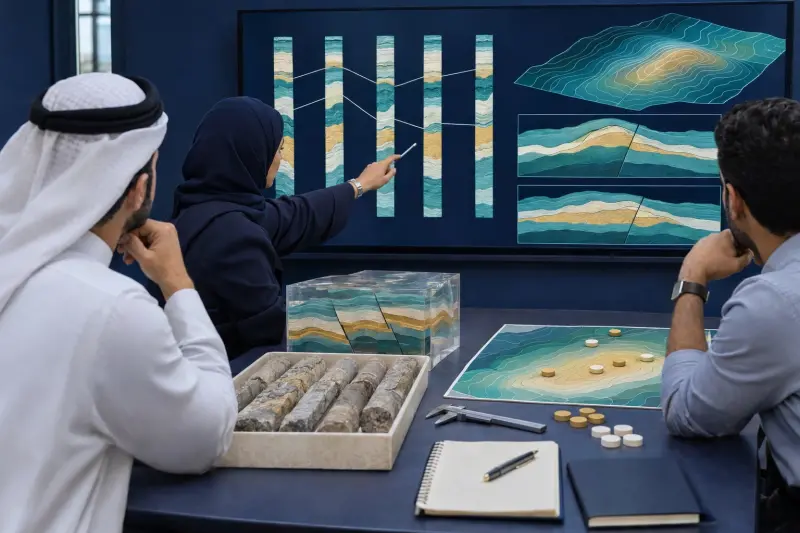
Deepwater Turbidite Reservoir Geology Training Course is a one-week advanced course for exploration, development, sedimentology, reservoir, seismic, geomodeling, and assurance functions who leave with a Deepwater Turbidite Reservoir Interpretation Portfolio. Participants connect deepwater turbidite reservoir geology, gravity-flow deposits, turbidite facies, submarine fans, mass-transport deposits, deepwater architecture, seismic geomorphology, reservoir connectivity, and reservoir heterogeneity. The course converts scale-dependent evidence into testable architecture and uncertainty scenarios. Agile Leaders Training Center presents deepwater turbidite reservoir interpretation.
Who Should Attend
- Exploration functions responsible for deepwater play concepts, prospect risking, and depositional interpretation
- Development geology functions responsible for facies frameworks, correlations, and reservoir architecture
- Sedimentology functions responsible for gravity-flow processes, core description, and depositional models
- Seismic interpretation functions responsible for geomorphology, attributes, and architectural mapping
- Reservoir and geomodeling functions responsible for connectivity, heterogeneity, and uncertainty scenarios
- Subsurface assurance functions responsible for evidence quality, analog selection, and interpretation challenge
The course assumes participants already interpret sedimentological, well-log, seismic, or reservoir data, and it leaves out broad introductory clastic sedimentology, seismic processing, detailed dynamic simulation, and software programming.
Departments and Industries
The course supports departments and industries that interpret deepwater gravity-flow deposits and their subsurface behavior.
- Offshore oil and gas exploration and appraisal
- Deepwater field development and reservoir characterization
- Carbon storage and subsurface containment assessment
- Marine geoscience and basin analysis
- Seismic interpretation and geomodeling
- Geoscience research and technical assurance
Learning Objectives
By the end of this course, participants will be able to:
- Analyze sediment-gravity-flow processes, deposits, and facies evidence
- Build slope-to-basin channel, levee, lobe, and fan architecture
- Use core, image-log, wireline, and seismic evidence across scales
- Evaluate mass-transport deposits and their architectural effects
- Compare connectivity, compartmentalization, and heterogeneity scenarios
- Build an integrated interpretation with analog and uncertainty controls
Course Agenda
Day 1: Diagnose Deepwater Gravity Flows
- Sediment-Gravity-Flow End-Member Classification Matrix
- Turbidity-Current, Debris-Flow, and Hybrid-Flow Process Model
- Turbidite Bedform and Bouma-Type Facies Description Sheet
- Erosion, Bypass, Deposition, and Ponding Evidence Checklist
- Deepwater Facies Confidence and Alternative Register
Day 2: Build Slope-to-Basin Architecture
- Shelf-Edge, Slope, and Basin-Floor Source-to-Sink Profile
- Canyon, Channel, Levee, and Overbank Architecture Framework
- Terminal and Frontal Lobe Element Mapping Method
- Submarine-Fan Hierarchy and Stacking-Pattern Panel
- Confined, Weakly Confined, and Unconfined Setting Matrix
Day 3: Integrate Core, Logs, and Seismic
- Core Facies and Paleoflow Interpretation Log
- Borehole-Image Bed, Scour, Slump, and Transport-Direction Workflow
- Wireline-Facies Calibration and Electrofacies Comparison Chart
- Seismic Geomorphology and Attribute-Fairway Map
- Cross-Scale Architectural Element Correlation Panel
Day 4: Evaluate Reservoir Architecture
- Mass-Transport Deposit Interaction and Reservoir-Boundary Map
- Channel-Amalgamation and Compartmentalization Assessment
- Lobe-Axis, Fringe, and Sand-Connectivity Scenario Matrix
- Facies-Controlled Reservoir Heterogeneity Model
- Analog Selection, Scale Transfer, and Uncertainty Checklist
Day 5: Practice Turbidite Interpretation
- Suggested Exercise: Classify Gravity-Flow Deposits and Turbidite Facies
- Suggested Exercise: Reconstruct Channel-Levee and Lobe Architecture
- Suggested Exercise: Calibrate Core, Logs, and Seismic Geomorphology
- Suggested Exercise: Test Connectivity and Heterogeneity Scenarios
- Capstone Exercise: Complete the Deepwater Turbidite Reservoir Interpretation Portfolio
Practical Exercises
The course uses suggested activities to reconcile deepwater observations, architecture, reservoir implications, and uncertainty.
- Suggested activity: classify beds and deposits from core descriptions, images, and process evidence while recording alternatives.
- Suggested activity: map a channel-levee-lobe fairway from seismic geomorphology and calibrate it with well evidence.
- Suggested activity: test how amalgamation, lobe position, mass-transport deposits, and scale alter connectivity.
- Suggested activity: assemble a traceable interpretation portfolio with analog limits and uncertainty scenarios.
FAQs
Who suits deepwater turbidite reservoir geology training, and what does it assume?
Deepwater turbidite reservoir geology training suits exploration, development, sedimentology, seismic, reservoir, geomodeling, and assurance functions. It assumes working experience with geological, well-log, seismic, or reservoir evidence.
How does deepwater turbidite reservoir geology differ from broad clastic sedimentology training?
Deepwater turbidite reservoir geology concentrates on gravity flows, slope-to-basin architecture, channels, levees, lobes, mass-transport deposits, seismic geomorphology, and reservoir connectivity. Broad clastic sedimentology compares a wider range of continental, coastal, shallow-marine, and deepwater settings.
How are deepwater turbidite channels and lobes identified?
Channels and lobes are identified by combining erosional form, stacking geometry, seismic attributes, core and image-log facies, wireline response, paleoflow evidence, and their position within the slope-to-basin system.
How do mass-transport deposits affect turbidite reservoirs?
Mass-transport deposits can erode, deflect, confine, pond, separate, or locally deform later turbidite sands. Their geometry and timing therefore influence reservoir boundaries, thickness patterns, connectivity, and interpretation uncertainty.
How is connectivity tested in a deepwater turbidite reservoir?
Connectivity is tested by mapping architectural elements, distinguishing channel amalgamation from abandonment, locating lobe axes and fringes, calibrating seismic geometry with wells, and carrying alternative facies and boundary scenarios into the reservoir model.
Conclusion
Participants take back a Deepwater Turbidite Reservoir Interpretation Portfolio linking processes, facies, architecture, core, logs, seismic geomorphology, reservoir implications, analogs, and uncertainty. It changes isolated observations into a scale-aware interpretation chain. The portfolio supports clearer fairway maps, connectivity scenarios, heterogeneity models, and assurance decisions.
credits: 5 credit per day
Course Mode: full-time
Provider: Agile Leaders Training Center
-
Events for this Course
-
Tokyo 9 – 13 November 2026
-
Frankfurt 9 – 13 November 2026
-
Abu Dhabi 23 – 27 November 2026
-
Amman 6 – 10 December 2026
-
Addis Ababa 14 – 18 December 2026
-
Nairobi 27 – 31 December 2026
-
Rome 4 – 8 January 2027
-
Sharm El-Sheikh 11 – 15 January 2027
-
Accra 17 – 21 January 2027
-
Bali 24 – 28 January 2027
-
Kuala Lumpur 25 – 29 January 2027
-
Jakarta 1 – 5 February 2027
-
Barcelona 15 – 19 February 2027
-
Tashkent 21 – 25 February 2027
-
Istanbul 22 – 26 February 2027
-
Zoom 1 – 5 March 2027
-
Toronto 14 – 18 March 2027
-
Baku 15 – 19 March 2027
-
Vienna 22 – 26 March 2027
-
Trabzon 4 – 8 April 2027
-
London 12 – 16 April 2027
-
Singapore 12 – 16 April 2027
-
Johannesburg 18 – 22 April 2027
-
Kuwait 25 – 29 April 2027
-
Amsterdam 26 – 30 April 2027
-
Seoul 17 – 21 May 2027
-
Muscat 23 – 27 May 2027
-
Paris 24 – 28 May 2027
-
Berlin 31 May – 4 June 2027
-
San Diego 7 – 11 June 2027
-
Prague 14 – 18 June 2027
-
Geneva 20 – 24 June 2027
-
Chicago 20 – 24 June 2027
-
Manama 27 June – 1 July 2027
-
Montreux 28 June – 2 July 2027
-
Dubai 5 – 9 July 2027
-
New York 5 – 9 July 2027
-
Athens 12 – 16 July 2027
-
Milan 19 – 23 July 2027
-
Lagos 25 – 29 July 2027
-
Zanzibar 1 – 5 August 2027
-
Munich 9 – 13 August 2027
-
Cape town 15 – 19 August 2027
-
Cairo 16 – 20 August 2027
-
Marbella 22 – 26 August 2027
-
Tbilisi 23 – 27 August 2027
-
London 30 August – 3 September 2027
-
Nice 30 August – 3 September 2027
-
Casablanca 6 – 10 September 2027
-
Porto 6 – 10 September 2027
-
Madrid 20 – 24 September 2027
-
Bangkok 26 – 30 September 2027
-
Abu Dhabi 4 – 8 October 2027
-
Phuket 10 – 14 October 2027
-
Lisbon 11 – 15 October 2027
-
Langkawi 17 – 21 October 2027
-
Doha 24 – 28 October 2027
-
Dubai 8 – 12 November 2027
| Image | Location | Dates | Duration | Mode | Price | Actions |
|---|---|---|---|---|---|---|

|
Tokyo |
Week 46, 2026 9 – 13 November 2026 |
1 Week | Onsite | €12,000 | |

|
Frankfurt |
Week 46, 2026 9 – 13 November 2026 |
1 Week | Onsite | €6,500 | |

|
Abu Dhabi |
Week 48, 2026 23 – 27 November 2026 |
1 Week | Onsite | €6,500 | |

|
Amman |
Week 49, 2026 6 – 10 December 2026 |
1 Week | Onsite | €6,000 | |

|
Addis Ababa |
Week 51, 2026 14 – 18 December 2026 |
1 Week | Onsite | €6,000 | |

|
Nairobi |
Week 52, 2026 27 – 31 December 2026 |
1 Week | Onsite | €6,000 | |

|
Rome |
Week 01, 2027 4 – 8 January 2027 |
1 Week | Onsite | €6,500 | |

|
Sharm El-Sheikh |
Week 02, 2027 11 – 15 January 2027 |
1 Week | Onsite | €5,200 | |

|
Accra |
Week 02, 2027 17 – 21 January 2027 |
1 Week | Onsite | €6,000 | |

|
Bali |
Week 03, 2027 24 – 28 January 2027 |
1 Week | Onsite | €6,500 | |

|
Kuala Lumpur |
Week 04, 2027 25 – 29 January 2027 |
1 Week | Onsite | €6,500 | |

|
Jakarta |
Week 05, 2027 1 – 5 February 2027 |
1 Week | Onsite | €8,000 | |

|
Barcelona |
Week 07, 2027 15 – 19 February 2027 |
1 Week | Onsite | €6,500 | |

|
Tashkent |
Week 07, 2027 21 – 25 February 2027 |
1 Week | Onsite | €8,000 | |

|
Istanbul |
Week 08, 2027 22 – 26 February 2027 |
1 Week | Onsite | €6,000 | |

|
Zoom |
Week 09, 2027 1 – 5 March 2027 |
1 Week | Online | €3,000 | |

|
Toronto |
Week 10, 2027 14 – 18 March 2027 |
1 Week | Onsite | €16,000 | |

|
Baku |
Week 11, 2027 15 – 19 March 2027 |
1 Week | Onsite | €8,000 | |

|
Vienna |
Week 12, 2027 22 – 26 March 2027 |
1 Week | Onsite | €7,500 | |

|
Trabzon |
Week 13, 2027 4 – 8 April 2027 |
1 Week | Onsite | €8,000 |
Frequently asked questions
What does this course cover?
OverviewDeepwater Turbidite Reservoir Geology Training Course is a one-week advanced course for exploration, development, sedimentology, reservoir, seismic, geomodeling, and assurance functions who leave with a Deepwater Turbidite Reservoir Interpretation Portfolio. Participants connect deepwater turbidite reservoir geology, gravity-flow deposits, turbidi…
Are training dates available?
Yes. Available dates and destinations are listed in the course dates section on this page.
How can I register?
Choose an available date on this page and complete the registration form, or send a programme enquiry.
Can I download the course brochure?
Yes. Use the brochure download link provided on this page.
This course by city
- Oil & Gas Training and Other Technical Courses in Abu Dhabi
- Oil & Gas Training and Other Technical Courses in Accra
- Oil & Gas Training and Other Technical Courses in Addis Ababa
- Oil & Gas Training and Other Technical Courses in Amman
- Oil & Gas Training and Other Technical Courses in Amsterdam
- Oil & Gas Training and Other Technical Courses in Athens
- Oil & Gas Training and Other Technical Courses in Baku
- Oil & Gas Training and Other Technical Courses in Bali
- Oil & Gas Training and Other Technical Courses in Bangkok
- Oil & Gas Training and Other Technical Courses in Barcelona
- Oil & Gas Training and Other Technical Courses in Berlin
- Oil & Gas Training and Other Technical Courses in Cairo
- Oil & Gas Training and Other Technical Courses in Cape town
- Oil & Gas Training and Other Technical Courses in Casablanca
- Oil & Gas Training and Other Technical Courses in Chicago
- Oil & Gas Training and Other Technical Courses in Doha
- Oil & Gas Training and Other Technical Courses in Dubai
- Oil & Gas Training and Other Technical Courses in Frankfurt
- Oil & Gas Training and Other Technical Courses in Geneva
- Oil & Gas Training and Other Technical Courses in Istanbul
- Oil & Gas Training and Other Technical Courses in Jakarta
- Oil & Gas Training and Other Technical Courses in Johannesburg
- Oil & Gas Training and Other Technical Courses in Kuala Lumpur
- Oil & Gas Training and Other Technical Courses in Kuwait
- Oil & Gas Training and Other Technical Courses in Lagos
- Oil & Gas Training and Other Technical Courses in Langkawi
- Oil & Gas Training and Other Technical Courses in Lisbon
- Oil & Gas Training and Other Technical Courses in London
- Oil & Gas Training and Other Technical Courses in Madrid
- Oil & Gas Training and Other Technical Courses in Manama
- Oil & Gas Training and Other Technical Courses in Marbella
- Oil & Gas Training and Other Technical Courses in Milan
- Oil & Gas Training and Other Technical Courses in Montreux
- Oil & Gas Training and Other Technical Courses in Munich
- Oil & Gas Training and Other Technical Courses in Muscat
- Oil & Gas Training and Other Technical Courses in Nairobi
- Oil & Gas Training and Other Technical Courses in New York
- Oil & Gas Training and Other Technical Courses in Nice
- Oil & Gas Training and Other Technical Courses in Paris
- Oil & Gas Training and Other Technical Courses in Phuket
- Oil & Gas Training and Other Technical Courses in Porto
- Oil & Gas Training and Other Technical Courses in Prague
- Oil & Gas Training and Other Technical Courses in Rome
- Oil & Gas Training and Other Technical Courses in San Diego
- Oil & Gas Training and Other Technical Courses in Seoul
- Oil & Gas Training and Other Technical Courses in Sharm El-Sheikh
- Oil & Gas Training and Other Technical Courses in Singapore
- Oil & Gas Training and Other Technical Courses in Tashkent
- Oil & Gas Training and Other Technical Courses in Tbilisi
- Oil & Gas Training and Other Technical Courses in Tokyo
- Oil & Gas Training and Other Technical Courses in Toronto
- Oil & Gas Training and Other Technical Courses in Trabzon
- Oil & Gas Training and Other Technical Courses in Vienna
- Oil & Gas Training and Other Technical Courses in Zanzibar
- Oil & Gas Training and Other Technical Courses in Zoom