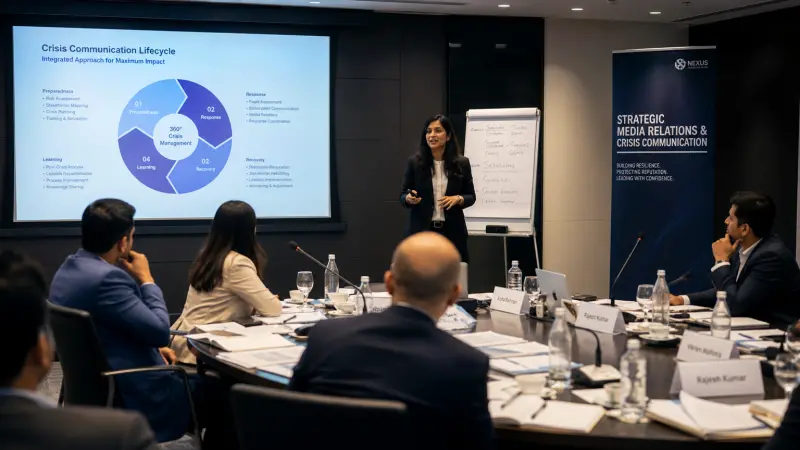
Disaster Response & Crisis Communication Training Course

At a glance
- Duration
- 1 Week
- Format
- Classroom
- Cities
- Trabzon, Munich, Dubai, Tokyo, Madrid, Amsterdam and more
- Next session
- 25 – 29 October 2026, Trabzon
- Average fee
- 5,750 €
Course Overview
Effective disaster response in public health environments requires rapid coordination, clear communication, and structured recovery strategies. Disaster Response & Crisis Communication: Public Health Recovery Training equips professionals with the skills needed to manage public health threats, strengthen crisis communication systems, and support long-term health system recovery. The course combines practical applications of public health crisis communication, disaster response training, emergency communication strategies, and public health emergency response into one integrated program.
Participants will gain the ability to evaluate crisis situations, respond with accurate and responsible messaging, and mitigate the spread of misinformation during high-pressure events. The training addresses essential areas such as risk communication in public health, health communication in disasters, public health disaster preparedness, and disaster recovery in healthcare. It also focuses on strengthening emergency health response systems and designing recovery strategies in healthcare that build resilience in disrupted environments.
By the end of the program, participants will understand how to manage communication across diverse stakeholders, support vulnerable communities, maintain continuity of care, and reinforce public trust during emergencies. This course is designed to enhance confidence, strengthen coordination, and improve overall public health crisis response.
Target Audience
- Public health professionals
- Emergency and disaster response teams
- Crisis communication staff
- Healthcare administrators
- Humanitarian operations personnel
- Epidemiologists and surveillance officers
- Disaster risk reduction units
- Health policy and regulatory staff
Targeted Organizational Departments
- Public Health & Preventive Medicine
- Emergency and Disaster Management Departments
- Crisis Communication & Media Units
- Healthcare Operations and Safety
- Disease Surveillance and Epidemiology Units
- Government Health Authorities
- Humanitarian Relief and Response Units
These departments directly support goals related to public health crisis communication, public health disaster preparedness, and public health crisis response.
Targeted Industries
- Government health agencies
- Hospitals and healthcare networks
- Humanitarian and relief organizations
- Emergency medical services
- Public safety and civil defense
- NGOs and development organizations
- Disaster risk reduction agencies
- Public policy and regulatory sectors
Course Offerings
By the end of this course, participants will be able to:
- Apply structured disaster response training in real public health emergencies.
- Design effective public health crisis communication strategies.
- Implement emergency communication strategies to manage misinformation.
- Strengthen public health emergency response procedures.
- Develop disaster recovery in healthcare plans.
- Use risk communication in public health to guide community behavior.
- Lead public health disaster management initiatives.
- Enhance emergency health response systems and resilience planning.
Training Methodology
This course adopts an interactive, practice-driven methodology designed to mirror real disaster response conditions. Learning is structured around scenario-based exercises, group problem-solving, and crisis simulations that allow participants to apply concepts such as public health crisis communication, emergency communication strategies, and public health crisis response.
Case studies from diverse public health emergencies help participants analyze communication decisions, identify gaps, and propose effective countermeasures. Group workshops encourage collaborative crisis planning, message development, and stakeholder coordination aligned with public health disaster preparedness standards. Participants practice how to communicate with the public, healthcare teams, and leadership under time pressure.
Interactive role-plays simulate press briefings, emergency announcements, and coordination with multi-sector stakeholders. Reflection sessions allow participants to evaluate their decisions, build confidence, and refine communication approaches in line with crisis communication best practices.
By incorporating hands-on activities focused on disaster recovery in healthcare, health communication in disasters, and emergency health response systems, the methodology ensures participants leave with practical, applicable skills they can immediately implement within their organizations.
Course Toolbox
(Insights and examples — tools are not provided.)
- Crisis communication mapping templates
- Risk communication scenario exercises
- Disaster response checklists
- Emergency coordination flowcharts
- Stakeholder communication matrices
- Recovery strategy framework samples
- Public information briefing models
- Communication evaluation templates
Course Agenda
Day 1: Foundations of Disaster Response in Public Health
- Topic 1: Public Health Emergency Response Systems: Structure, Functions, and Activation
- Topic 2: Core Principles of Crisis Communication in Disaster Settings
- Topic 3: Identifying and Assessing Communication Risks, Misinformation, and Public Perception
- Topic 4: Coordination Mechanisms Among Health Agencies, Emergency Units, and Stakeholders
- Topic 5: Public Health Disaster Preparedness Frameworks and Readiness Planning
- Reflection & Review: Key insights from Day 1 and alignment with global public health response models
Day 2: Emergency Communication & Crisis Leadership
- Topic 1: Strategic Emergency Communication Techniques for High-Risk Situations
- Topic 2: Digital Media, Social Channels, and Information Flow During Public Health Crises
- Topic 3: Risk Communication Approaches to Guide Public Behavior and Compliance
- Topic 4: Crisis Leadership, Decision-Making Models, and Situational Prioritization
- Topic 5: Managing Rumors, Stigma, Panic, and Public Anxiety in Disaster Environments
- Reflection & Review: Evaluating communication effectiveness and leadership performance
Day 3: Disaster Operations & Health System Continuity
- Topic 1: Rapid Health and Needs Assessments in Disaster Zones
- Topic 2: Maintaining Emergency Health Services and Continuity of Care During Crises
- Topic 3: Surveillance Strengthening for Outbreak Detection and Real-Time Reporting
- Topic 4: Multi-Sector Response Coordination Across Health, Security, and Relief Organizations
- Topic 5: Ensuring Equity, Access, and Protection of Vulnerable Populations in Emergencies
- Reflection & Review: Operational challenges and solutions for resilient health systems
Day 4: Crisis Communication Planning & Implementation
- Topic 1: Designing Integrated Crisis Communication Plans for Public Health Emergencies
- Topic 2: Message Mapping, Public Briefings, and High-Clarity Information Delivery
- Topic 3: Ethical, Cultural, and Legal Considerations in Crisis Messaging
- Topic 4: Communicating with Diverse, High-Risk, and Difficult-to-Reach Communities
- Topic 5: Communication Monitoring, Feedback Loops, and Real-Time Strategy Adjustment
- Reflection & Review: Simulation and evaluation of a full communication cycle
Day 5: Disaster Recovery & Long-Term Public Health Resilience
- Topic 1: Health System Recovery Models and Post-Disaster Rehabilitation
- Topic 2: Restoring Essential Health Services and Rebuilding Care Pathways
- Topic 3: Community-Centered Recovery Strategies and Engagement Approaches
- Topic 4: Monitoring, Evaluation, and Measurement of Public Health Recovery Outcomes
- Topic 5: Building Resilient Health Systems and Strengthening Future Preparedness
- Reflection & Review: Comprehensive final simulation and full-cycle response assessment
FAQ
What specific qualifications or prerequisites are needed for participants before enrolling in the course?
Participants should have a basic understanding of public health, healthcare administration, or emergency management. Prior experience in crisis response is beneficial but not required.
How long is each day's session, and is there a total number of hours required for the entire course?
Each day's session runs approximately 4–5 hours. The full program includes 20–25 total training hours.
What is the most common communication challenge during public health crises?
The most common challenge is rapid misinformation spread, which can undermine public trust, complicate response operations, and delay essential health interventions.
How This Course is Different
This course stands out because it integrates both disaster response operations and crisis communication into one cohesive learning experience. Most programs focus on operational response alone, but this course emphasizes how communication directly influences the success or failure of public health interventions. Participants gain not only the technical skills needed for public health emergency response but also the communication expertise required to maintain public trust and alignment in high-risk situations.
The course uniquely combines public health crisis communication, disaster recovery in healthcare, risk communication in public health, and public health disaster management into a single, end-to-end framework. It examines how communication decisions affect outbreak control, resource coordination, community behavior, and long-term recovery.
The training uses high-impact simulations that mirror real-world scenarios, preparing participants to respond confidently under pressure. It also provides practical models and planning structures that can be applied directly in government, healthcare, or humanitarian settings.
Ultimately, the program equips participants with comprehensive, actionable skills that strengthen organizational readiness, improve emergency coordination, and support resilient public health systems during and after disasters.
credits: 5 credit per day
Course Mode: full-time
Provider: Agile Leaders Training Center
-
Events for this Course
-
Trabzon 25 – 29 October 2026
-
Munich 2 – 6 November 2026
-
Dubai 9 – 13 November 2026
-
Tokyo 9 – 13 November 2026
-
Madrid 16 – 20 November 2026
-
Amsterdam 23 – 27 November 2026
-
Abu Dhabi 30 November – 4 December 2026
-
Geneva 6 – 10 December 2026
-
Casablanca 7 – 11 December 2026
-
Amman 13 – 17 December 2026
-
Paris 21 – 25 December 2026
-
Tbilisi 21 – 25 December 2026
-
Montreux 28 December 2026 – 1 January 2027
-
Vienna 4 – 8 January 2027
-
London 11 – 15 January 2027
-
Zoom 11 – 15 January 2027
-
Amsterdam 18 – 22 January 2027
-
Athens 25 – 29 January 2027
-
Istanbul 1 – 5 February 2027
-
Berlin 1 – 5 February 2027
-
Zanzibar 14 – 18 February 2027
-
Langkawi 21 – 25 February 2027
-
Toronto 21 – 25 February 2027
-
Bali 28 February – 4 March 2027
-
Abu Dhabi 8 – 12 March 2027
-
Dubai 15 – 19 March 2027
-
Rome 15 – 19 March 2027
-
Johannesburg 21 – 25 March 2027
-
Accra 28 March – 1 April 2027
-
New York 5 – 9 April 2027
-
London 12 – 16 April 2027
-
Porto 12 – 16 April 2027
-
Singapore 19 – 23 April 2027
-
Cape town 25 – 29 April 2027
-
Lagos 2 – 6 May 2027
-
Seoul 3 – 7 May 2027
-
Abu Dhabi 10 – 14 May 2027
-
Manama 16 – 20 May 2027
-
Barcelona 17 – 21 May 2027
-
Kuala Lumpur 24 – 28 May 2027
-
Nice 24 – 28 May 2027
-
Istanbul 31 May – 4 June 2027
-
Milan 31 May – 4 June 2027
-
Bangkok 6 – 10 June 2027
-
Prague 14 – 18 June 2027
-
Dubai 21 – 25 June 2027
-
Frankfurt 21 – 25 June 2027
-
Chicago 27 June – 1 July 2027
-
Rome 28 June – 2 July 2027
-
Phuket 4 – 8 July 2027
-
London 5 – 9 July 2027
-
Baku 19 – 23 July 2027
-
Cairo 26 – 30 July 2027
-
Vienna 26 – 30 July 2027
-
Marbella 1 – 5 August 2027
-
Doha 8 – 12 August 2027
-
Barcelona 9 – 13 August 2027
-
Madrid 16 – 20 August 2027
-
Dubai 23 – 27 August 2027
-
Jakarta 23 – 27 August 2027
-
Milan 30 August – 3 September 2027
-
Abu Dhabi 6 – 10 September 2027
-
Amsterdam 13 – 17 September 2027
-
Nairobi 19 – 23 September 2027
-
Paris 27 September – 1 October 2027
-
San Diego 27 September – 1 October 2027
-
Muscat 3 – 7 October 2027
-
London 4 – 8 October 2027
-
Lisbon 4 – 8 October 2027
-
Tashkent 10 – 14 October 2027
-
Cairo 11 – 15 October 2027
-
Manama 17 – 21 October 2027
-
Kuala Lumpur 18 – 22 October 2027
-
Kuwait 24 – 28 October 2027
-
Sharm El-Sheikh 25 – 29 October 2027
| Image | Location | Dates | Duration | Mode | Price | Actions |
|---|---|---|---|---|---|---|
|
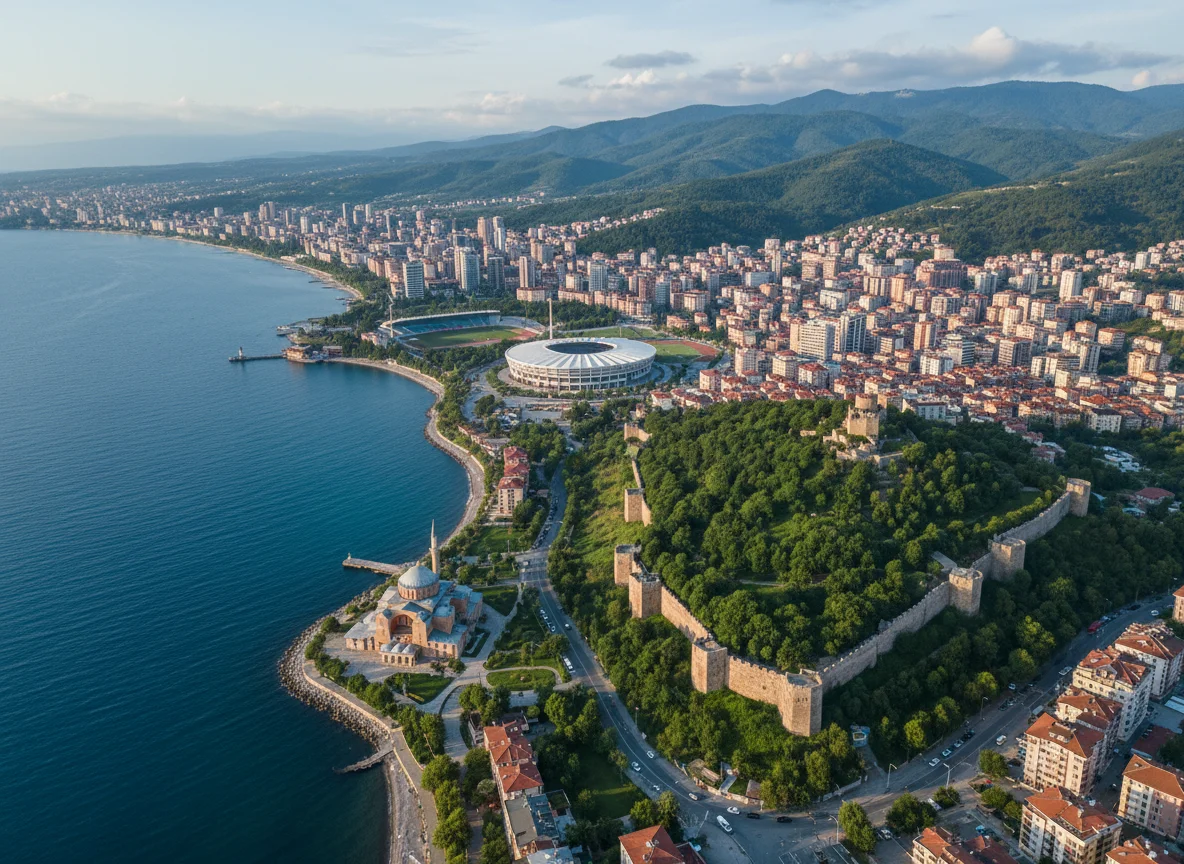
Trabzon |
Week 43, 2026 25 – 29 October 2026 |
1 Week | Onsite | €6,800 | |

|
Munich |
Week 45, 2026 2 – 6 November 2026 |
1 Week | Onsite | €5,700 | |

|
Dubai |
Week 46, 2026 9 – 13 November 2026 |
1 Week | Onsite | €4,500 | |

|
Tokyo |
Week 46, 2026 9 – 13 November 2026 |
1 Week | Onsite | €10,000 | |

|
Madrid |
Week 47, 2026 16 – 20 November 2026 |
1 Week | Onsite | €5,700 | |

|
Amsterdam |
Week 48, 2026 23 – 27 November 2026 |
1 Week | Onsite | €5,700 | |

|
Abu Dhabi |
Week 49, 2026 30 November – 4 December 2026 |
1 Week | Onsite | €4,700 | |

|
Geneva |
Week 49, 2026 6 – 10 December 2026 |
1 Week | Onsite | €6,200 | |

|
Casablanca |
Week 50, 2026 7 – 11 December 2026 |
1 Week | Onsite | €4,100 | |

|
Amman |
Week 50, 2026 13 – 17 December 2026 |
1 Week | Onsite | €4,100 | |

|
Paris |
Week 52, 2026 21 – 25 December 2026 |
1 Week | Onsite | €5,700 | |

|
Tbilisi |
Week 52, 2026 21 – 25 December 2026 |
1 Week | Onsite | €5,000 | |

|
Montreux |
Week 53, 2026 28 December 2026 – 1 January 2027 |
1 Week | Onsite | €7,500 | |

|
Vienna |
Week 01, 2027 4 – 8 January 2027 |
1 Week | Onsite | €5,700 | |

|
London |
Week 02, 2027 11 – 15 January 2027 |
1 Week | Onsite | €5,700 | |

|
Zoom |
Week 02, 2027 11 – 15 January 2027 |
1 Week | Online | €1,500 | |
|
|
Amsterdam |
Week 03, 2027 18 – 22 January 2027 |
1 Week | Onsite | €5,700 | |

|
Athens |
Week 04, 2027 25 – 29 January 2027 |
1 Week | Onsite | €6,700 | |

|
Istanbul |
Week 05, 2027 1 – 5 February 2027 |
1 Week | Onsite | €4,500 | |

|
Berlin |
Week 05, 2027 1 – 5 February 2027 |
1 Week | Onsite | €5,700 |
Frequently asked questions
Are training dates available?
Yes. Available dates and destinations are listed in the course dates section on this page.
How can I register?
Choose an available date on this page and complete the registration form, or send a programme enquiry.
Can I download the course brochure?
Yes. Use the brochure download link provided on this page.
This course by city
- Occupational Health, Safety and Security Training Courses in Abu Dhabi
- Occupational Health, Safety and Security Training Courses in Accra
- Occupational Health, Safety and Security Training Courses in Amman
- Occupational Health, Safety and Security Training Courses in Amsterdam
- Occupational Health, Safety and Security Training Courses in Athens
- Occupational Health, Safety and Security Training Courses in Baku
- Occupational Health, Safety and Security Training Courses in Bali
- Occupational Health, Safety and Security Training Courses in Bangkok
- Occupational Health, Safety and Security Training Courses in Barcelona
- Occupational Health, Safety and Security Training Courses in Berlin
- Occupational Health, Safety and Security Training Courses in Cairo
- Occupational Health, Safety and Security Training Courses in Cape town
- Occupational Health, Safety and Security Training Courses in Casablanca
- Occupational Health, Safety and Security Training Courses in Chicago
- Occupational Health, Safety and Security Training Courses in Doha
- Occupational Health, Safety and Security Training Courses in Dubai
- Occupational Health, Safety and Security Training Courses in Frankfurt
- Occupational Health, Safety and Security Training Courses in Geneva
- Occupational Health, Safety and Security Training Courses in Istanbul
- Occupational Health, Safety and Security Training Courses in Jakarta
- Occupational Health, Safety and Security Training Courses in Johannesburg
- Occupational Health, Safety and Security Training Courses in Kuala Lumpur
- Occupational Health, Safety and Security Training Courses in Kuwait
- Occupational Health, Safety and Security Training Courses in Lagos
- Occupational Health, Safety and Security Training Courses in Langkawi
- Occupational Health, Safety and Security Training Courses in Lisbon
- Occupational Health, Safety and Security Training Courses in London
- Occupational Health, Safety and Security Training Courses in Madrid
- Occupational Health, Safety and Security Training Courses in Manama
- Occupational Health, Safety and Security Training Courses in Marbella
- Occupational Health, Safety and Security Training Courses in Milan
- Occupational Health, Safety and Security Training Courses in Montreux
- Occupational Health, Safety and Security Training Courses in Munich
- Occupational Health, Safety and Security Training Courses in Muscat
- Occupational Health, Safety and Security Training Courses in Nairobi
- Occupational Health, Safety and Security Training Courses in New York
- Occupational Health, Safety and Security Training Courses in Nice
- Occupational Health, Safety and Security Training Courses in Paris
- Occupational Health, Safety and Security Training Courses in Phuket
- Occupational Health, Safety and Security Training Courses in Porto
- Occupational Health, Safety and Security Training Courses in Prague
- Occupational Health, Safety and Security Training Courses in Rome
- Occupational Health, Safety and Security Training Courses in San Diego
- Occupational Health, Safety and Security Training Courses in Seoul
- Occupational Health, Safety and Security Training Courses in Sharm El-Sheikh
- Occupational Health, Safety and Security Training Courses in Singapore
- Occupational Health, Safety and Security Training Courses in Tashkent
- Occupational Health, Safety and Security Training Courses in Tbilisi
- Occupational Health, Safety and Security Training Courses in Tokyo
- Occupational Health, Safety and Security Training Courses in Toronto
- Occupational Health, Safety and Security Training Courses in Trabzon
- Occupational Health, Safety and Security Training Courses in Vienna
- Occupational Health, Safety and Security Training Courses in Zanzibar
- Occupational Health, Safety and Security Training Courses in Zoom