Dynamic Reservoir Simulation Training Course

At a glance
- Duration
- 1 Week
- Format
- Classroom
- Cities
- Geneva, Abu Dhabi, London, Montreux, Vienna, Amman and more
- Next session
- 15 – 19 November 2026, Geneva
- Average fee
- 7,500 €
Overview
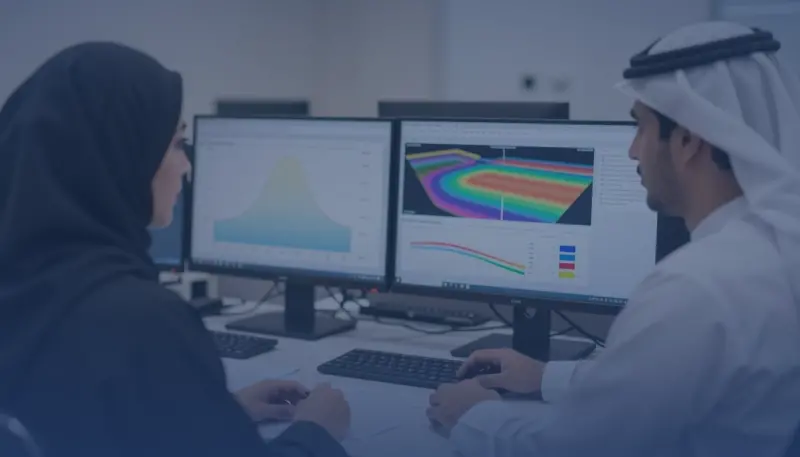
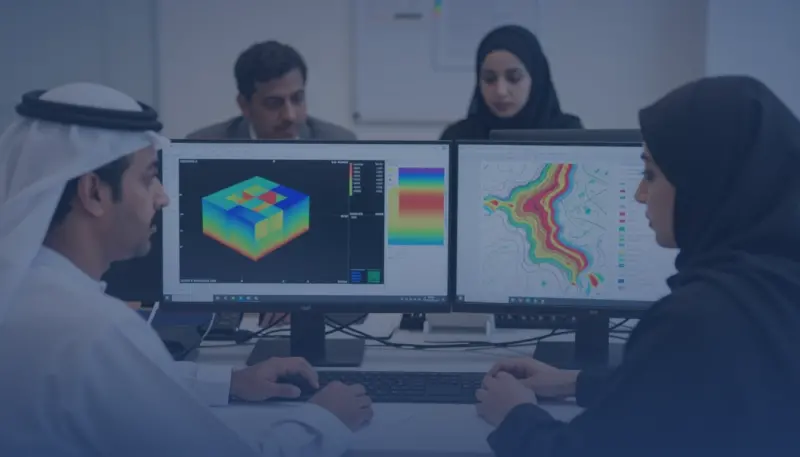
Dynamic Oil and Gas Reservoir Simulation Training Course is a one-week intermediate course for reservoir, simulation, subsurface, production, petroleum-engineering, and asset functions who leave with a Reservoir Simulation Study File. Participants convert static earth models and engineering data into initialized dynamic models, represent wells and controls, manage numerical runs, diagnose results, perform foundational history matching, and compare development forecasts. The course emphasizes traceable inputs, stable execution, and decision-ready outputs. Agile Leaders Training Center presents practical dynamic reservoir simulation.
Who Should Attend
- Reservoir-engineering functions responsible for dynamic models and production forecasts
- Simulation functions responsible for model construction, execution, and result diagnosis
- Subsurface-modeling functions responsible for grid, property, and uncertainty inputs
- Production-technology functions responsible for well behavior and surveillance evidence
- Petroleum-engineering functions responsible for recovery plans and development scenarios
- Asset functions responsible for integrating technical forecasts into field decisions
The course assumes participants already use reservoir, well, fluid, and production data at work, and it leaves out introductory petroleum geology, software certification, advanced assisted history matching, and ensemble optimization.
Departments and Industries
The course supports departments and industries that construct, use, or assure dynamic subsurface forecasts.
- Reservoir engineering, simulation, and subsurface modeling
- Production technology, petroleum engineering, and well performance
- Field development, asset planning, and technical assurance
- Oil and gas exploration, development, and production
- Underground gas storage and carbon-storage project teams
- Energy consulting, engineering services, and applied research
Learning Objectives
By the end of this course, participants will be able to:
- Build a simulation-ready grid and input register
- Apply fluid, rock-flow, equilibrium, and aquifer data
- Use well models, completions, schedules, and controls
- Diagnose timestep, convergence, balance, and output issues
- Compare historical response and development forecasts
- Evaluate model quality, limitations, and decision evidence
Course Agenda
Day 1: Frame the Dynamic Model
- Reservoir Simulation Purpose and Study-Scope Charter
- Static-to-Dynamic Model Handover Checklist
- Grid Geometry, Active Cells, and Upscaling Register
- Porosity, Permeability, Regions, and Fault Representation
- Units, Datum, Conventions, Assumptions, and Data Lineage
Day 2: Initialize Fluids and Rock Flow
- Pressure-Volume-Temperature Data and Fluid Model Selection
- Relative Permeability and Capillary Pressure Functions
- Rock Compressibility and Pore-Volume Behavior
- Initial Pressure, Saturation, Contacts, and Equilibration
- Aquifer Selection, Boundary Conditions, and Volume Checks
Day 3: Represent Wells and Run Cases
- Well Trajectory, Completion, Connection, and Skin Model
- Production and Injection Controls with Operating Constraints
- Historical Schedule, Events, and Restart Strategy
- Timestep, Solver, Convergence, and Numerical-Control Review
- Run Management, Messages, Material Balance, and Result Plots
Day 4: Calibrate and Forecast
- Pressure, Rate, Water-Cut, and Gas-Oil-Ratio Comparison
- Foundational History-Match Parameter and Evidence Register
- Mismatch Diagnosis and Physically Plausible Adjustment Cycle
- Base Case, Development Scenario, and Forecast Assumptions
- Well, Field, Recovery, and Constraint Forecast Comparison
Day 5: Assure the Simulation Study
- Suggested Exercise: Assemble a Simulation-Ready Input Register
- Suggested Exercise: Initialize and Check a Dynamic Model
- Suggested Exercise: Diagnose a Failed or Unstable Run
- Suggested Exercise: Compare History and Forecast Responses
- Capstone Exercise: Complete the Reservoir Simulation Study File
Practical Exercises
The course uses suggested activities to turn reservoir evidence into a controlled simulation workflow and a reviewable forecast.
- Suggested activity: screen a static model, fluid description, rock-flow tables, contacts, and production history for simulation readiness.
- Suggested activity: locate initialization, convergence, material-balance, and well-control problems from run messages and diagnostic plots.
- Suggested activity: propose physically plausible changes for pressure, rate, water-cut, and gas-oil-ratio mismatches.
- Suggested activity: compare development scenarios and communicate forecast assumptions, limitations, sensitivities, and actions.
FAQs
Who suits dynamic oil and gas reservoir simulation training, and what does it assume?
Dynamic oil and gas reservoir simulation training suits reservoir, simulation, subsurface, production, petroleum-engineering, and asset functions. It assumes practical familiarity with reservoir properties, well data, production history, and engineering calculations.
How does dynamic reservoir simulation differ from static reservoir modeling?
Static reservoir modeling describes geometry and spatial rock properties. Dynamic reservoir simulation adds fluid behavior, rock-flow functions, pressure and saturation conditions, wells, controls, time, and governing flow equations to predict reservoir response.
What inputs are required to initialize a reservoir simulation model?
Initialization normally requires a grid, pore-volume properties, regions, contacts, pressure datum, fluid properties, rock-flow functions, compressibility, saturation rules, aquifer or boundary assumptions, and volume checks that reconcile the model with geological and engineering evidence.
Why do reservoir simulation runs fail to converge?
Convergence problems can arise from inconsistent inputs, abrupt control changes, unsuitable timesteps, difficult phase behavior, sharp saturation changes, grid quality, well constraints, or solver settings. Diagnosis should preserve physical meaning rather than merely force a run to finish.
How is a reservoir simulation forecast quality-checked?
A forecast is checked through input lineage, initialization volumes, material balance, numerical stability, historical response, well behavior, constraint handling, scenario consistency, sensitivity to key assumptions, and clear documentation of limitations.
Conclusion
Participants take back a Reservoir Simulation Study File containing scope, data lineage, grid and property controls, initialization evidence, well and schedule definitions, run diagnostics, foundational calibration, forecast scenarios, quality checks, limitations, and actions. The file connects model construction to a traceable engineering review. It supports clearer simulation challenge and more defensible field-development decisions.
credits: 5 credit per day
Course Mode: full-time
Provider: Agile Leaders Training Center
-
Events for this Course
-
Geneva 15 – 19 November 2026
-
Abu Dhabi 16 – 20 November 2026
-
London 14 – 18 December 2026
-
Montreux 14 – 18 December 2026
-
Vienna 21 – 25 December 2026
-
Amman 27 – 31 December 2026
-
Casablanca 4 – 8 January 2027
-
Trabzon 10 – 14 January 2027
-
Toronto 17 – 21 January 2027
-
Dubai 18 – 22 January 2027
-
Sharm El-Sheikh 25 – 29 January 2027
-
Athens 25 – 29 January 2027
-
Baku 8 – 12 February 2027
-
Berlin 8 – 12 February 2027
-
Nairobi 14 – 18 February 2027
-
Barcelona 22 – 26 February 2027
-
Bangkok 28 February – 4 March 2027
-
Abu Dhabi 1 – 5 March 2027
-
Phuket 14 – 18 March 2027
-
London 22 – 26 March 2027
-
Doha 28 March – 1 April 2027
-
Munich 29 March – 2 April 2027
-
Jakarta 12 – 16 April 2027
-
San Diego 12 – 16 April 2027
-
New York 19 – 23 April 2027
-
Cape town 25 – 29 April 2027
-
Madrid 3 – 7 May 2027
-
Accra 16 – 20 May 2027
-
Marbella 16 – 20 May 2027
-
Tashkent 23 – 27 May 2027
-
Prague 31 May – 4 June 2027
-
Johannesburg 6 – 10 June 2027
-
Paris 14 – 18 June 2027
-
Kuala Lumpur 21 – 25 June 2027
-
Addis Ababa 21 – 25 June 2027
-
Tbilisi 28 June – 2 July 2027
-
Milan 12 – 16 July 2027
-
Seoul 19 – 23 July 2027
-
Tokyo 26 – 30 July 2027
-
Bali 1 – 5 August 2027
-
Muscat 8 – 12 August 2027
-
Langkawi 15 – 19 August 2027
-
Lagos 22 – 26 August 2027
-
Amsterdam 23 – 27 August 2027
-
Rome 30 August – 3 September 2027
-
Nice 30 August – 3 September 2027
-
Kuwait 5 – 9 September 2027
-
Cairo 13 – 17 September 2027
-
Porto 13 – 17 September 2027
-
Manama 19 – 23 September 2027
-
Zoom 27 September – 1 October 2027
-
Frankfurt 27 September – 1 October 2027
-
Dubai 11 – 15 October 2027
-
Chicago 17 – 21 October 2027
-
Istanbul 25 – 29 October 2027
-
Zanzibar 31 October – 4 November 2027
-
Lisbon 1 – 5 November 2027
-
Singapore 8 – 12 November 2027
| Image | Location | Dates | Duration | Mode | Price | Actions |
|---|---|---|---|---|---|---|

|
Muscat |
Week 31, 2027 8 – 12 August 2027 |
1 Week | Onsite | €6,500 | |

|
Langkawi |
Week 32, 2027 15 – 19 August 2027 |
1 Week | Onsite | €8,000 | |

|
Lagos |
Week 33, 2027 22 – 26 August 2027 |
1 Week | Onsite | €6,000 | |

|
Amsterdam |
Week 34, 2027 23 – 27 August 2027 |
1 Week | Onsite | €6,500 | |

|
Rome |
Week 35, 2027 30 August – 3 September 2027 |
1 Week | Onsite | €6,500 | |

|
Nice |
Week 35, 2027 30 August – 3 September 2027 |
1 Week | Onsite | €8,000 | |

|
Kuwait |
Week 35, 2027 5 – 9 September 2027 |
1 Week | Onsite | €7,000 | |

|
Cairo |
Week 37, 2027 13 – 17 September 2027 |
1 Week | Onsite | €5,200 | |

|
Porto |
Week 37, 2027 13 – 17 September 2027 |
1 Week | Onsite | €6,500 | |

|
Manama |
Week 37, 2027 19 – 23 September 2027 |
1 Week | Onsite | €6,500 | |

|
Zoom |
Week 39, 2027 27 September – 1 October 2027 |
1 Week | Online | €3,000 | |

|
Frankfurt |
Week 39, 2027 27 September – 1 October 2027 |
1 Week | Onsite | €6,500 | |

|
Dubai |
Week 41, 2027 11 – 15 October 2027 |
1 Week | Onsite | €6,500 | |

|
Chicago |
Week 41, 2027 17 – 21 October 2027 |
1 Week | Onsite | €16,000 | |

|
Istanbul |
Week 43, 2027 25 – 29 October 2027 |
1 Week | Onsite | €6,000 | |

|
Zanzibar |
Week 43, 2027 31 October – 4 November 2027 |
1 Week | Onsite | €6,000 | |

|
Lisbon |
Week 44, 2027 1 – 5 November 2027 |
1 Week | Onsite | €6,500 | |

|
Singapore |
Week 45, 2027 8 – 12 November 2027 |
1 Week | Onsite | €6,500 |
Frequently asked questions
What does this course cover?
OverviewDynamic Oil and Gas Reservoir Simulation Training Course is a one-week intermediate course for reservoir, simulation, subsurface, production, petroleum-engineering, and asset functions who leave with a Reservoir Simulation Study File. Participants convert static earth models and engineering data into initialized dynamic models, represent wells and…
Are training dates available?
Yes. Available dates and destinations are listed in the course dates section on this page.
How can I register?
Choose an available date on this page and complete the registration form, or send a programme enquiry.
Can I download the course brochure?
Yes. Use the brochure download link provided on this page.
This course by city
- Oil & Gas Training and Other Technical Courses in Abu Dhabi
- Oil & Gas Training and Other Technical Courses in Accra
- Oil & Gas Training and Other Technical Courses in Addis Ababa
- Oil & Gas Training and Other Technical Courses in Amman
- Oil & Gas Training and Other Technical Courses in Amsterdam
- Oil & Gas Training and Other Technical Courses in Athens
- Oil & Gas Training and Other Technical Courses in Baku
- Oil & Gas Training and Other Technical Courses in Bali
- Oil & Gas Training and Other Technical Courses in Bangkok
- Oil & Gas Training and Other Technical Courses in Barcelona
- Oil & Gas Training and Other Technical Courses in Berlin
- Oil & Gas Training and Other Technical Courses in Cairo
- Oil & Gas Training and Other Technical Courses in Cape town
- Oil & Gas Training and Other Technical Courses in Casablanca
- Oil & Gas Training and Other Technical Courses in Chicago
- Oil & Gas Training and Other Technical Courses in Doha
- Oil & Gas Training and Other Technical Courses in Dubai
- Oil & Gas Training and Other Technical Courses in Frankfurt
- Oil & Gas Training and Other Technical Courses in Geneva
- Oil & Gas Training and Other Technical Courses in Istanbul
- Oil & Gas Training and Other Technical Courses in Jakarta
- Oil & Gas Training and Other Technical Courses in Johannesburg
- Oil & Gas Training and Other Technical Courses in Kuala Lumpur
- Oil & Gas Training and Other Technical Courses in Kuwait
- Oil & Gas Training and Other Technical Courses in Lagos
- Oil & Gas Training and Other Technical Courses in Langkawi
- Oil & Gas Training and Other Technical Courses in Lisbon
- Oil & Gas Training and Other Technical Courses in London
- Oil & Gas Training and Other Technical Courses in Madrid
- Oil & Gas Training and Other Technical Courses in Manama
- Oil & Gas Training and Other Technical Courses in Marbella
- Oil & Gas Training and Other Technical Courses in Milan
- Oil & Gas Training and Other Technical Courses in Montreux
- Oil & Gas Training and Other Technical Courses in Munich
- Oil & Gas Training and Other Technical Courses in Muscat
- Oil & Gas Training and Other Technical Courses in Nairobi
- Oil & Gas Training and Other Technical Courses in New York
- Oil & Gas Training and Other Technical Courses in Nice
- Oil & Gas Training and Other Technical Courses in Paris
- Oil & Gas Training and Other Technical Courses in Phuket
- Oil & Gas Training and Other Technical Courses in Porto
- Oil & Gas Training and Other Technical Courses in Prague
- Oil & Gas Training and Other Technical Courses in Rome
- Oil & Gas Training and Other Technical Courses in San Diego
- Oil & Gas Training and Other Technical Courses in Seoul
- Oil & Gas Training and Other Technical Courses in Sharm El-Sheikh
- Oil & Gas Training and Other Technical Courses in Singapore
- Oil & Gas Training and Other Technical Courses in Tashkent
- Oil & Gas Training and Other Technical Courses in Tbilisi
- Oil & Gas Training and Other Technical Courses in Tokyo
- Oil & Gas Training and Other Technical Courses in Toronto
- Oil & Gas Training and Other Technical Courses in Trabzon
- Oil & Gas Training and Other Technical Courses in Vienna
- Oil & Gas Training and Other Technical Courses in Zanzibar
- Oil & Gas Training and Other Technical Courses in Zoom