Electrical Maintenance, Testing and Troubleshooting
At a glance
- Duration
- 1 Week
- Format
- Classroom
- Cities
- Chicago, Kuala Lumpur, Tokyo, Berlin, Vienna, Madrid and more
- Next session
- 1 – 5 November 2026, Chicago
- Average fee
- 7,500 €
Course Overview
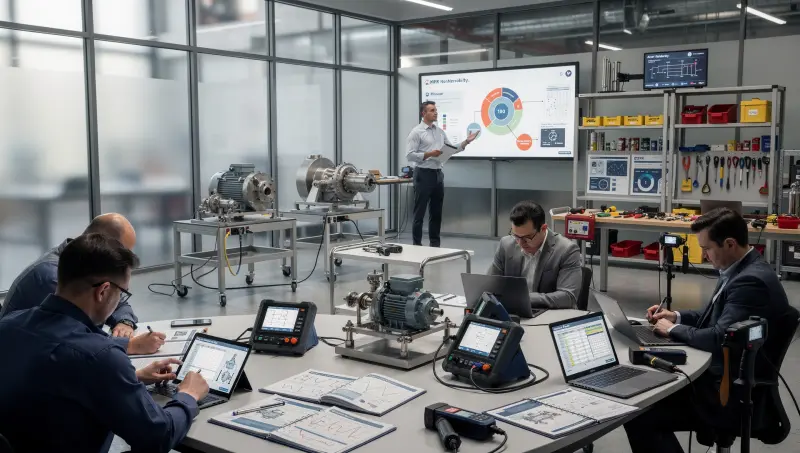
The Electrical Maintenance, Testing and Troubleshooting Training Course is a practical one-week program designed to strengthen the technical capabilities of electricians, electrical maintenance technicians, and industrial maintenance personnel. It combines Industrial Electrical Maintenance Training with systematic Electrical Fault Finding, safe isolation, equipment testing, preventive maintenance, and evidence-based troubleshooting.
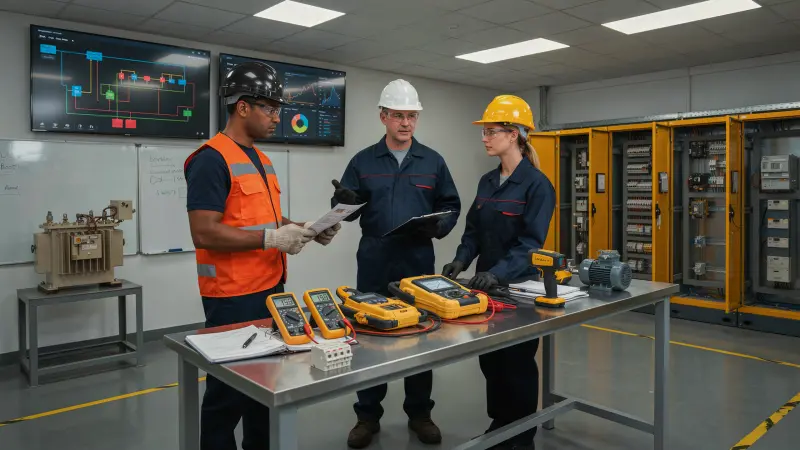
Participants learn how to inspect, test, maintain, and diagnose common industrial electrical assets, including low-voltage switchgear, circuit breakers, transformers, electric motors, motor control centres, cables, busbars, protection devices, and variable-frequency drives. The course uses established Electrical Preventive Maintenance principles, including condition-based inspection, scheduled maintenance, equipment criticality, trend analysis, and maintenance documentation. The maintenance references emphasize that effective programs should combine preventive and condition-based approaches, supported by testing, historical records, and equipment condition data.
The program also reinforces the practical maintenance principles of keeping electrical equipment clean, cool, dry, and properly tightened. These principles address common causes of equipment deterioration, such as contamination, overheating, moisture, blocked ventilation, and loose electrical connections.
Through practical examples, fault scenarios, inspection checklists, and maintenance-planning exercises, participants develop the competencies required for Electrical Testing and Inspection, Power Distribution Maintenance, Motor Maintenance Training, Switchgear Maintenance, Transformer Maintenance, and safer Maintenance Training for Electricians.
Target Audience
- Industrial Electricians
- Electrical Maintenance Technicians
- Senior Electrical Technicians
- Electrical Maintenance Engineers
- Electrical Supervisors
- Plant Maintenance Technicians
- Facilities Maintenance Electricians
- Electromechanical Technicians
- Motor and Control Technicians
- Reliability and Condition-Monitoring Technicians
- Electrical Testing and Commissioning Personnel
- Maintenance Planners responsible for electrical equipment
Targeted Organizational Departments
- Electrical Maintenance Department
- Engineering and Technical Services
- Plant Maintenance and Utilities
- Facilities Management
- Reliability and Asset Management
- Operations and Production Support
- Electrical Testing and Inspection
- Health, Safety and Environment
- Power Distribution and Utilities
- Automation and Control Maintenance
- Maintenance Planning and Scheduling
- Technical Training and Workforce Development
Targeted Industries
- Oil and Gas
- Petrochemicals and Chemicals
- Power Generation and Utilities
- Manufacturing and Industrial Production
- Mining and Minerals Processing
- Water and Wastewater Treatment
- Food and Beverage Processing
- Construction and Facilities Management
Course Offerings
By the end of this course, participants will be able to:
- Apply safe isolation, verification, and Lockout Tagout procedures before electrical maintenance.
- Read single-line diagrams, motor-control diagrams, wiring diagrams, and equipment schematics.
- Select suitable instruments for Electrical Testing and Inspection.
- Measure voltage, current, resistance, continuity, insulation resistance, and phase condition.
- Apply systematic Electrical Fault Finding techniques to industrial circuits.
- Diagnose open circuits, short circuits, overloads, phase loss, earth faults, and control failures.
- Inspect and maintain low-voltage switchgear, circuit breakers, busbars, and electrical panels.
- Perform basic Transformer Maintenance inspections and condition checks.
- Conduct Motor Maintenance Training tasks, including insulation, alignment, connection, cooling, vibration, and bearing checks.
- Troubleshoot contactors, relays, overload devices, motor starters, and control circuits.
Training Methodology
The course uses a practical, instructor-led methodology suitable for electricians and maintenance technicians working in industrial environments. Each subject begins with a concise technical explanation followed by equipment examples, diagrams, photographs, maintenance scenarios, and guided troubleshooting activities.
Participants analyze single-line diagrams, motor circuits, control schematics, switchgear layouts, maintenance records, and fault symptoms. Small-group exercises require participants to identify likely causes, select suitable test instruments, determine safe test points, interpret readings, and recommend corrective action. The switchgear material supports discussions on functional compartments, circuit-breaker sections, busbar systems, cable compartments, commissioning, operation, and maintenance.
The Motor Maintenance Training component uses practical examples involving insulation resistance, grounding, alignment, ventilation, bearings, lubrication, electrical connections, motor starting, and variable-speed operation. The motor reference also highlights that motors and driven equipment must be disconnected and locked out before work begins.
Case studies present recurring electrical failures such as overheating terminals, nuisance tripping, contaminated panels, insulation deterioration, motor overload, phase imbalance, moisture ingress, and incorrect VFD settings. Participants compare preventive, predictive, and corrective maintenance responses.
Daily reflection sessions consolidate learning through fault-analysis questions, maintenance decisions, peer discussion, and structured feedback. The program emphasizes observable workplace performance rather than theory alone.
Course Toolbox
Participants receive examples and insights relating to:
- Electrical preventive-maintenance inspection checklist
- Electrical troubleshooting sequence
- Safe isolation and Lockout Tagout checklist
- Electrical risk-assessment example
- Single-line diagram interpretation guide
- Electrical test-instrument selection guide
- Multimeter and clamp-meter application examples
- Insulation-resistance test-record example
- Contact-resistance testing example
Course Agenda
Day 1: Electrical Safety, System Fundamentals and Safe Testing
- Topic 1: Industrial Electrical Systems, Maintenance Responsibilities, and Common Failure Modes
- Topic 2: Electrical Hazards, Shock, Arc-Flash Risk, and Safe Working Boundaries
- Topic 3: Electrical Isolation, Lockout Tagout, Permit-to-Work, and Verification of Dead Condition
- Topic 4: Reading Single-Line Diagrams, Wiring Diagrams, and Control Schematics
- Topic 5: Electrical Test Instruments, Measurement Categories, and Safe Meter Selection
- Topic 6: Voltage, Current, Resistance, Continuity, Polarity, and Phase-Sequence Testing
- Reflection & Review: Review an electrical maintenance scenario, identify hazards, establish a safe isolation sequence, and select the correct test instruments and measurement points.
Day 2: Preventive Electrical Maintenance and Condition Assessment
- Topic 1: Preventive, Corrective, Condition-Based, and Reliability-Centred Maintenance
- Topic 2: Developing Electrical Preventive Maintenance Tasks and Intervals
- Topic 3: Equipment Criticality, Failure Consequences, and Maintenance Prioritization
- Topic 4: Visual Inspection for Heat, Moisture, Dust, Corrosion, Tracking, and Loose Connections
- Topic 5: Thermographic Inspection, Temperature Trending, and Hot-Spot Interpretation
- Topic 6: Maintenance Records, Test Trending, Job Plans, and Corrective-Action Priorities
- Reflection & Review: Build a preventive-maintenance plan for a selected electrical asset, defining inspection tasks, testing requirements, maintenance frequency, acceptance criteria, and escalation actions.
Day 3: Switchgear, Circuit Breakers and Power Distribution Maintenance
- Topic 1: Low-Voltage Switchgear Construction, Compartments, Busbars, and Functional Units
- Topic 2: Switchgear Inspection, Cleaning, Ventilation, Moisture Control, and Connection Tightness
- Topic 3: Air, Vacuum, and Molded-Case Circuit Breaker Maintenance
- Topic 4: Contact Inspection, Contact Resistance, Mechanical Operation, and Trip Devices
- Topic 5: Cables, Bus Ducts, Insulators, Terminations, Grounding, and Distribution Panels
- Topic 6: Switchgear Troubleshooting: Overheating, Nuisance Tripping, Arcing, and Insulation Failure
- Reflection & Review: Analyze a switchgear overheating case, identify likely causes, define the required tests, and recommend immediate, planned, and condition-monitoring actions.
Day 4: Electric Motors, Motor Control Centres and Variable-Frequency Drives
- Topic 1: Motor Construction, Rating-Plate Data, Connections, and Operating Conditions
- Topic 2: Motor Installation, Alignment, Cooling, Earthing, and Insulation-Resistance Testing
- Topic 3: Preventive Motor Maintenance: Bearings, Lubrication, Vibration, and Temperature
- Topic 4: Motor Control Centres, Contactors, Relays, Overloads, and Starting Circuits
- Topic 5: Variable Frequency Drive Operation, Parameters, Protection, and Common Faults
- Topic 6: Motor Fault Finding: Failure to Start, Overheating, Noise, Vibration, and Phase Loss
- Reflection & Review: Diagnose a motor that trips during startup by reviewing the motor data, control circuit, overload settings, insulation condition, phase supply, mechanical load, and VFD parameters.
Day 5: Transformers, Advanced Troubleshooting and Maintenance Planning
- Topic 1: Transformer Construction, Operating Principles, Loading, Cooling, and Protection
- Topic 2: Dry-Type and Liquid-Filled Transformer Inspection and Maintenance
- Topic 3: Insulation Resistance, Temperature, Oil Condition, Leakage, and Connection Checks
- Topic 4: Systematic Electrical Fault Finding Using Symptoms, Measurements, and Circuit Logic
- Topic 5: Root-Cause Analysis for Repetitive Electrical Failures and Unplanned Outages
- Topic 6: Building an Integrated Electrical Maintenance, Testing, and Troubleshooting Plan
- Reflection & Review: Complete an integrated plant-maintenance case involving a transformer, switchgear feeder, motor-control centre, VFD, and motor, then define testing priorities, probable causes, corrective actions, and preventive measures.
FAQ
What specific qualifications or prerequisites are needed for participants before enrolling in the course?
Participants should have basic knowledge of electricity, industrial electrical systems, or maintenance operations. Practical experience as an electrician, electrical technician, electromechanical technician, or maintenance employee is beneficial. Participants should understand basic electrical quantities such as voltage, current, resistance, and power.
The course does not require advanced engineering qualifications. However, any live testing, switching, isolation, or equipment maintenance conducted in the workplace must only be performed by qualified and authorized personnel in accordance with company procedures, manufacturer instructions, and applicable regulations.
How long is each day's session, and is there a total number of hours required for the entire course?
Each day's session is generally structured to last around 4–5 hours, with breaks and interactive activities included. The total course duration spans one week, approximately 20–25 hours of instruction.
Does this course authorize participants to perform live electrical work or specialized high-voltage testing?
No. The course develops technical knowledge, maintenance judgment, testing awareness, and troubleshooting skills. It does not replace employer authorization, electrical licensing, equipment-specific certification, or legal competency requirements.
Participants must follow local regulations, company electrical-safety rules, approved switching procedures, manufacturer instructions, permit-to-work requirements, and task-specific risk assessments. High-voltage testing, protective-relay testing, live work, arc-flash activities, and specialized diagnostic procedures must be conducted only by appropriately qualified and authorized personnel using approved equipment and controls.
How This Course is Different from Other Electrical Maintenance, Testing and Troubleshooting Courses
This course is different because it integrates electrical safety, testing, equipment maintenance, troubleshooting, and maintenance planning into one workplace-focused program. Many Electrical Troubleshooting Courses concentrate mainly on fault symptoms, while general Industrial Electrician Training may focus heavily on installation. This course connects fault diagnosis with equipment condition, maintenance history, operational risk, and preventive action.
The agenda covers the complete maintenance chain: safe isolation, diagram interpretation, instrument selection, inspection, testing, diagnosis, corrective action, documentation, and recurrence prevention. It also addresses the equipment electricians routinely maintain, including motors, Motor Control Centres, variable-frequency drives, transformers, switchgear, circuit breakers, cables, busbars, panels, and protective devices.
Another distinguishing feature is its combination of Preventive Electrical Maintenance and condition-based maintenance. Participants learn how to use temperature, vibration, insulation condition, contact resistance, visual evidence, operating data, and historical trends to make better maintenance decisions. The course materials emphasize that scheduled maintenance is most effective when adjusted according to equipment condition, criticality, environment, and previous findings.
credits: 5 credit per day
Course Mode: full-time
Provider: Agile Leaders Training Center
-
Events for this Course
-
Chicago 1 – 5 November 2026
-
Kuala Lumpur 2 – 6 November 2026
-
Zoom 9 – 13 November 2026
-
Tokyo 16 – 20 November 2026
-
Berlin 16 – 20 November 2026
-
Vienna 23 – 27 November 2026
-
Madrid 30 November – 4 December 2026
-
Manama 6 – 10 December 2026
-
Abu Dhabi 7 – 11 December 2026
-
Frankfurt 14 – 18 December 2026
-
Accra 27 – 31 December 2026
-
Bali 3 – 7 January 2027
-
Kuwait 3 – 7 January 2027
-
Lagos 24 – 28 January 2027
-
London 1 – 5 February 2027
-
Seoul 1 – 5 February 2027
-
Prague 15 – 19 February 2027
-
Dubai 1 – 5 March 2027
-
Johannesburg 7 – 11 March 2027
-
Zanzibar 14 – 18 March 2027
-
Toronto 14 – 18 March 2027
-
Langkawi 21 – 25 March 2027
-
San Diego 29 March – 2 April 2027
-
Doha 4 – 8 April 2027
-
Abu Dhabi 5 – 9 April 2027
-
Baku 12 – 16 April 2027
-
Milan 19 – 23 April 2027
-
Cape town 25 – 29 April 2027
-
London 17 – 21 May 2027
-
Paris 24 – 28 May 2027
-
Lisbon 24 – 28 May 2027
-
Istanbul 31 May – 4 June 2027
-
Trabzon 6 – 10 June 2027
-
Phuket 20 – 24 June 2027
-
Muscat 20 – 24 June 2027
-
Barcelona 28 June – 2 July 2027
-
Athens 12 – 16 July 2027
-
Montreux 19 – 23 July 2027
-
Sharm El-Sheikh 26 – 30 July 2027
-
Porto 26 – 30 July 2027
-
Jakarta 2 – 6 August 2027
-
Cairo 9 – 13 August 2027
-
Tashkent 15 – 19 August 2027
-
Amman 22 – 26 August 2027
-
Marbella 22 – 26 August 2027
-
Tbilisi 30 August – 3 September 2027
-
Singapore 30 August – 3 September 2027
-
Nairobi 5 – 9 September 2027
-
Dubai 20 – 24 September 2027
-
Nice 20 – 24 September 2027
-
Bangkok 26 – 30 September 2027
-
Amsterdam 4 – 8 October 2027
-
New York 4 – 8 October 2027
-
Casablanca 11 – 15 October 2027
-
Munich 11 – 15 October 2027
-
Rome 18 – 22 October 2027
-
Geneva 24 – 28 October 2027
| Image | Location | Dates | Duration | Mode | Price | Actions |
|---|---|---|---|---|---|---|

|
Chicago |
Week 44, 2026 1 – 5 November 2026 |
1 Week | Onsite | €16,000 | |

|
Kuala Lumpur |
Week 45, 2026 2 – 6 November 2026 |
1 Week | Onsite | €6,500 | |

|
Zoom |
Week 46, 2026 9 – 13 November 2026 |
1 Week | Online | €3,000 | |

|
Tokyo |
Week 47, 2026 16 – 20 November 2026 |
1 Week | Onsite | €12,000 | |

|
Berlin |
Week 47, 2026 16 – 20 November 2026 |
1 Week | Onsite | €6,500 | |

|
Vienna |
Week 48, 2026 23 – 27 November 2026 |
1 Week | Onsite | €7,500 | |

|
Madrid |
Week 49, 2026 30 November – 4 December 2026 |
1 Week | Onsite | €6,500 | |

|
Manama |
Week 49, 2026 6 – 10 December 2026 |
1 Week | Onsite | €6,500 | |
|
Abu Dhabi |
Week 50, 2026 7 – 11 December 2026 |
1 Week | Onsite | €6,500 | |

|
Frankfurt |
Week 51, 2026 14 – 18 December 2026 |
1 Week | Onsite | €6,500 | |

|
Accra |
Week 52, 2026 27 – 31 December 2026 |
1 Week | Onsite | €6,000 | |

|
Bali |
Week 53, 2027 3 – 7 January 2027 |
1 Week | Onsite | €6,500 | |

|
Kuwait |
Week 53, 2027 3 – 7 January 2027 |
1 Week | Onsite | €7,000 | |
|
Lagos |
Week 03, 2027 24 – 28 January 2027 |
1 Week | Onsite | €6,000 | |

|
London |
Week 05, 2027 1 – 5 February 2027 |
1 Week | Onsite | €6,500 | |

|
Seoul |
Week 05, 2027 1 – 5 February 2027 |
1 Week | Onsite | €12,000 | |

|
Prague |
Week 07, 2027 15 – 19 February 2027 |
1 Week | Onsite | €7,500 | |

|
Dubai |
Week 09, 2027 1 – 5 March 2027 |
1 Week | Onsite | €6,500 | |

|
Johannesburg |
Week 09, 2027 7 – 11 March 2027 |
1 Week | Onsite | €6,000 | |
|
Zanzibar |
Week 10, 2027 14 – 18 March 2027 |
1 Week | Onsite | €6,000 |
Frequently asked questions
Are training dates available?
Yes. Available dates and destinations are listed in the course dates section on this page.
How can I register?
Choose an available date on this page and complete the registration form, or send a programme enquiry.
Can I download the course brochure?
Yes. Use the brochure download link provided on this page.
This course by city
- Maintenance Training and Engineering Training Courses in Abu Dhabi
- Maintenance Training and Engineering Training Courses in Accra
- Maintenance Training and Engineering Training Courses in Amman
- Maintenance Training and Engineering Training Courses in Amsterdam
- Maintenance Training and Engineering Training Courses in Athens
- Maintenance Training and Engineering Training Courses in Baku
- Maintenance Training and Engineering Training Courses in Bali
- Maintenance Training and Engineering Training Courses in Bangkok
- Maintenance Training and Engineering Training Courses in Barcelona
- Maintenance Training and Engineering Training Courses in Berlin
- Maintenance Training and Engineering Training Courses in Cairo
- Maintenance Training and Engineering Training Courses in Cape town
- Maintenance Training and Engineering Training Courses in Casablanca
- Maintenance Training and Engineering Training Courses in Chicago
- Maintenance Training and Engineering Training Courses in Doha
- Maintenance Training and Engineering Training Courses in Dubai
- Maintenance Training and Engineering Training Courses in Frankfurt
- Maintenance Training and Engineering Training Courses in Geneva
- Maintenance Training and Engineering Training Courses in Istanbul
- Maintenance Training and Engineering Training Courses in Jakarta
- Maintenance Training and Engineering Training Courses in Johannesburg
- Maintenance Training and Engineering Training Courses in Kuala Lumpur
- Maintenance Training and Engineering Training Courses in Kuwait
- Maintenance Training and Engineering Training Courses in Lagos
- Maintenance Training and Engineering Training Courses in Langkawi
- Maintenance Training and Engineering Training Courses in Lisbon
- Maintenance Training and Engineering Training Courses in London
- Maintenance Training and Engineering Training Courses in Madrid
- Maintenance Training and Engineering Training Courses in Manama
- Maintenance Training and Engineering Training Courses in Marbella
- Maintenance Training and Engineering Training Courses in Milan
- Maintenance Training and Engineering Training Courses in Montreux
- Maintenance Training and Engineering Training Courses in Munich
- Maintenance Training and Engineering Training Courses in Muscat
- Maintenance Training and Engineering Training Courses in Nairobi
- Maintenance Training and Engineering Training Courses in New York
- Maintenance Training and Engineering Training Courses in Nice
- Maintenance Training and Engineering Training Courses in Paris
- Maintenance Training and Engineering Training Courses in Phuket
- Maintenance Training and Engineering Training Courses in Porto
- Maintenance Training and Engineering Training Courses in Prague
- Maintenance Training and Engineering Training Courses in Rome
- Maintenance Training and Engineering Training Courses in San Diego
- Maintenance Training and Engineering Training Courses in Seoul
- Maintenance Training and Engineering Training Courses in Sharm El-Sheikh
- Maintenance Training and Engineering Training Courses in Singapore
- Maintenance Training and Engineering Training Courses in Tashkent
- Maintenance Training and Engineering Training Courses in Tbilisi
- Maintenance Training and Engineering Training Courses in Tokyo
- Maintenance Training and Engineering Training Courses in Toronto
- Maintenance Training and Engineering Training Courses in Trabzon
- Maintenance Training and Engineering Training Courses in Vienna
- Maintenance Training and Engineering Training Courses in Zanzibar
- Maintenance Training and Engineering Training Courses in Zoom