Failure Diagnosis Training Course: Root Cause Analysis & Reliability
Overview
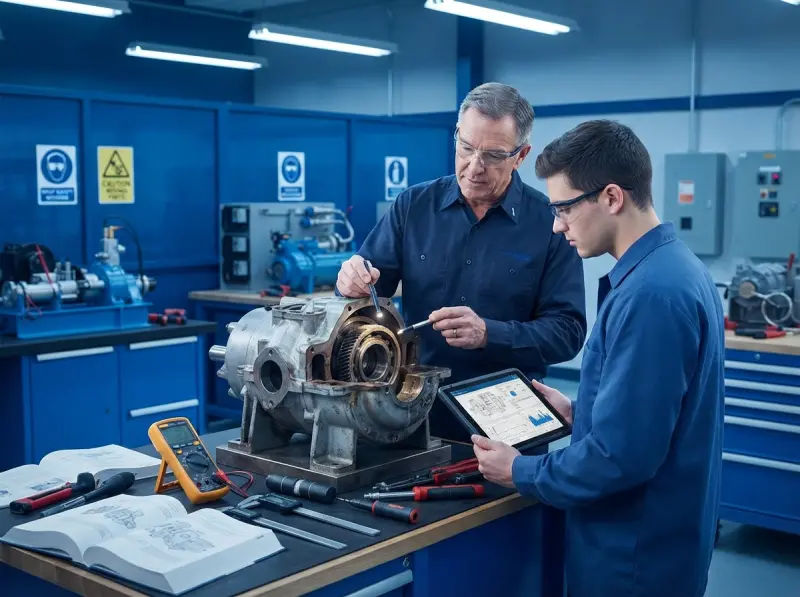
The Industrial Failure Diagnosis and Root Cause Failure Analysis Training Course is a one-week training course designed for maintenance engineers, reliability specialists, and plant operations personnel seeking systematic methods to eliminate recurring asset breakdowns and improve maintenance reliability. Recurring equipment trips, unresolved component fractures, and repeat downtime erode operational safety and operational margins when teams rely on guesswork rather than evidence. Participants learn structured data collection, metallographic failure modes, logic-tree fault isolation, and corrective action verification to solve complex plant problems. Agile Leaders Training Center provides this specialized failure diagnosis training to help engineering teams embed rigorous investigation standards into daily plant operations.
Who Should Attend
Maintenance engineers responsible for plant availability, turnaround planning, and breakdown response
Reliability professionals tasked with asset health monitoring, defect elimination, and reliability-centered maintenance tasks
Operations supervisors managing continuous production lines, process safety barriers, and equipment uptime
Mechanical and electrical maintenance personnel conducting physical inspections, overhaul routines, and component replacements
Quality and plant integrity specialists overseeing defect tracking, compliance audits, and failure reporting
Departments and Industries
Mechanical and electrical maintenance departments in oil and gas refineries
Reliability engineering teams in chemical processing plants
Plant engineering divisions within discrete manufacturing facilities
Asset management units in power generation and utility stations
Field service operations supporting mineral processing and mining equipment
Learning Objectives
By the end of this course, participants will be able to:
Apply the Apollo root cause analysis method to model complex physical failures
Diagnose mechanical failure mechanisms using fracture surface examination and ISO 14224 failure records
Build fault tree analysis diagrams to isolate physical, human, and latent causes
Analyze vibration spectra and oil condition reports to identify developing equipment defects
Prioritize corrective actions using failure mode and effects analysis risk priority numbers
Evaluate corrective action effectiveness using statistical mean time between failures metrics
Day 1: Failure Investigation Foundations and Evidence Preservation
ISO 14224 equipment taxonomy and reliability data collection frameworks
Physical evidence preservation protocols and failure scene photography checklists
Operating log extraction and digital supervisory control data logging analysis
Witness interview techniques and human error identification via the TapRooT methodology
Chain-of-custody documentation and metallurgical sample tagging protocols
Day 2: Mechanical Failure Mechanisms and Defect Identification
Ductile, brittle, and fatigue fracture surface diagnosis via visual fractography
Rotational equipment failure diagnosis on bearings and mechanical seals using ISO 10816 standards
Wear debris categorization and oil analysis interpretation via ASTM D7684 guidelines
Corrosion mechanism classification covering pitting, stress cracking, and flow-accelerated degradation
Shaft misalignment, imbalance, and mechanical looseness vibration signature mapping
Day 3: Structured Root Cause Methodologies
Apollo Root Cause Analysis cause-and-effect charting protocols
Ishikawa diagram development paired with the 5-Why iterative questioning method
Fault tree analysis construction according to IEC 61025 specifications
Distinction mapping between physical causes, human actions, and organizational latent root causes
Evidence matrix validation and hypothesis testing sheets for competing failure theories
Day 4: Corrective Actions, Reporting, and Recurrence Prevention
Failure Modes and Effects Analysis update processes utilizing IEC 60812 standards
Hierarchy of controls deployment to eliminate latent management system weaknesses
Root cause failure analysis report structuring and executive summary drafting
Key performance indicator tracking for mean time between failures and defect elimination rates
Corrective and preventive action log management within enterprise asset management software
Day 5: Investigation Simulation and Capstone Analysis
Centrifugal pump catastrophic shaft seizure case study and evidence collection exercise
Gearbox tooth breakage fault tree construction and hypothesis testing exercise
Compressor trip event data reconciliation and five-why validation exercise
Industrial failure analysis team review and peer challenge session
Capstone exercise: end-to-end failure investigation and corrective action plan defense
Practical Exercises
Participants complete applied tasks to reinforce systematic troubleshooting during the course.
Fracture surface examination and failure mode tagging suggested activity
Cross-functional fault tree mapping for a pump trip suggested activity
Five-why validation and evidence verification matrix build suggested activity
Executive corrective action plan presentation and review suggested activity
FAQs
Who suits this failure diagnosis training and what prior knowledge is assumed?
The failure diagnosis training suits reliability engineers, maintenance leads, and technical inspectors. Participants must understand industrial equipment functions, work with maintenance logs, and manage physical assets. Elementary mechanical trade training and basic plant safety rules are not covered.
How does this failure analysis course differ from a general problem-solving course?
This failure analysis course focuses directly on physical asset degradation, metallurgical evidence, and engineering systems rather than generic business processes. It integrates standards such as ISO 14224 and IEC 61025 with practical engineering data analysis.
How does RCFA training prevent repeat industrial machinery breakdowns?
RCFA training provides systematic tools to identify latent organizational and technical causes instead of stopping at immediate physical component damage. Addressing procedural and design causes prevents identical failures from recurring across operating assets.
Which physical failure modes are covered in equipment failure diagnosis?
Equipment failure diagnosis covers mechanical fatigue, brittle fracture, cavitation, lubrication starvation, alignment errors, and diverse corrosion types. Analysis methods use visual fractography, fluid condition reports, and vibration data to isolate the failure sequence.
Conclusion
Participants return to their facilities equipped with a standardized root cause failure analysis investigation template and an actionable defect elimination workflow. This tangible output enables maintenance departments to replace speculative fixes with evidence-based physical failure diagnosis and structured corrective actions. The systematic approach permanently reduces repeat equipment breakdowns, increases asset reliability, and protects plant productivity.
credits: 5 credit per day
Course Mode: full-time
Provider: Agile Leaders Training Center
Frequently asked questions
What does this course cover?
OverviewThe Industrial Failure Diagnosis and Root Cause Failure Analysis Training Course is a one-week training course designed for maintenance engineers, reliability specialists, and plant operations personnel seeking systematic methods to eliminate recurring asset breakdowns and improve maintenance reliability. Recurring equipment trips, unresolved comp…
Are training dates available?
This course is available on request. Use the enquiry form to arrange a suitable date.
How can I register?
Send the enquiry form on this page and the training team will contact you.
Can I download the course brochure?
Yes. Use the brochure download link provided on this page.
