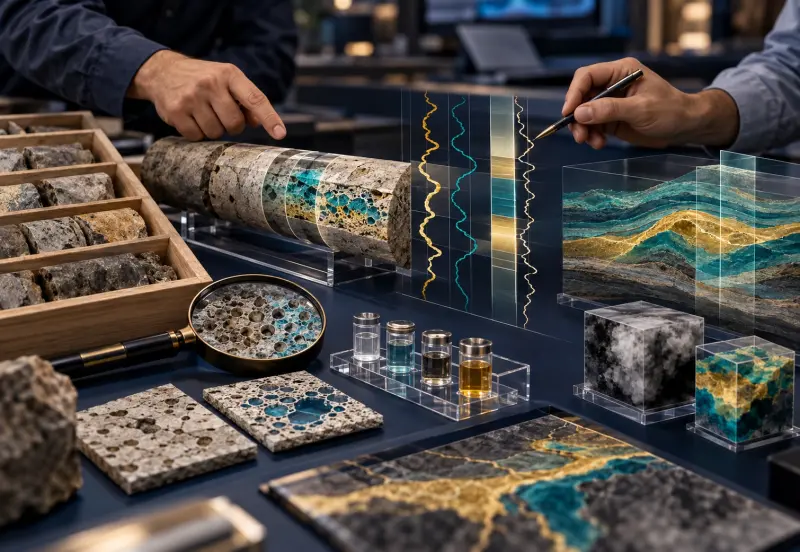
Fault Seal Analysis and Trap Integrity Course

At a glance
- Duration
- 1 Week
- Format
- Classroom
- Cities
- Zanzibar, Milan, Lisbon, Porto, Cape town, Vienna and more
- Next session
- 8 – 12 November 2026, Zanzibar
- Average fee
- 7,500 €
Overview
Fault Seal Analysis and Trap Integrity Assessment Training Course is a one-week advanced course for exploration, structural, reservoir, geophysics, petroleum systems, geomodeling, and assurance functions who leave with a Fault Seal and Trap Integrity Assessment File. Participants integrate fault framework, juxtaposition analysis, shale gouge ratio, clay smear, fault-rock properties, capillary seal capacity, pressure calibration, transmissibility, reactivation, and prospect risking. Agile Leaders Training Center presents fault seal analysis and trap integrity assessment.
Who Should Attend
- Exploration functions responsible for prospect definition, trap validation, and geological chance of success
- Structural geology functions responsible for fault interpretation, geometry, kinematics, and reactivation risk
- Reservoir geology functions responsible for compartmentalization, pressure communication, and development uncertainty
- Geophysics functions responsible for fault mapping, throw extraction, and structural-quality control
- Petroleum systems and geomodeling functions responsible for migration, containment, and fault properties
- Subsurface assurance functions responsible for technical challenge, evidence traceability, and risk decisions
The course assumes participants already interpret seismic, well-log, pressure, structural, or reservoir data at work, and it leaves out introductory structural geology, seismic processing, full-field flow simulation, and software administration.
Departments and Industries
The course supports departments and industries that assess fault-controlled containment, communication, and subsurface risk.
- Oil and gas exploration, appraisal, and field development
- Carbon storage screening and containment assessment
- Geothermal exploration and fractured-reservoir evaluation
- Structural geology, geophysics, and geomodeling
- Reservoir characterization and petroleum systems
- Technical assurance, subsurface risk, and research services
Learning Objectives
By the end of this course, participants will be able to:
- Build quality-controlled fault frameworks and trap-closure maps
- Apply juxtaposition, shale gouge ratio, and clay-smear methods
- Evaluate fault-rock properties and capillary seal capacity
- Analyze pressure communication and fault transmissibility evidence
- Diagnose reactivation, leakage, and geomechanical risk
- Prioritize uncertainty, calibration, and prospect-risk decisions
Course Agenda
Day 1: Define Fault Framework and Trap Geometry
- Fault Interpretation and Throw Quality-Control Checklist
- Fault Growth, Segmentation, and Linkage Architecture Map
- Trap Closure, Crest, Spill-Point, and Leak-Point Register
- Displacement Profile and Structural Consistency Review
- Fault Framework Assumption and Uncertainty Log
Day 2: Analyze Juxtaposition and Fault Rock
- Allan Diagram and Fault Juxtaposition Mapping Method
- Sand-on-Sand Contact and Reservoir Connectivity Matrix
- Shale Gouge Ratio Calculation and Sensitivity Grid
- Clay Smear Potential and Continuity Assessment
- Fault-Rock Type, Composition, and Permeability Register
Day 3: Quantify Seal Capacity and Fluid Flow
- Capillary Threshold Pressure and Seal Capacity Workflow
- Hydrocarbon Column-Height Conversion and Calibration Chart
- Across-Fault Pressure Difference and Communication Plot
- Along-Fault Leakage Pathway and Migration Assessment
- Fault Transmissibility Multiplier Evidence Matrix
Day 4: Test Integrity and Prospect Risk
- Fault Reactivation and Critical-Stress Screening Method
- Top-Seal and Lateral-Seal Failure Mode Register
- Pressure-Depth Calibration and Compartment Diagnosis
- Multi-Fault Dependency and Breach Scenario Tree
- Trap Integrity Chance and Uncertainty Risking Matrix
Day 5: Practice Fault-Seal Assurance
- Suggested Exercise: Quality-Check a Fault Framework and Trap Closure
- Suggested Exercise: Build Juxtaposition and Shale Gouge Ratio Maps
- Suggested Exercise: Estimate Column Height and Calibrate Pressure Evidence
- Suggested Exercise: Challenge Reactivation and Leakage Scenarios
- Capstone Exercise: Complete the Fault Seal and Trap Integrity Assessment File
Practical Exercises
The course uses suggested activities to connect structural interpretation, fault-rock prediction, pressure evidence, geomechanics, and risk decisions.
- Suggested activity: audit fault picks, throw, segmentation, closure, spill points, and alternative structural interpretations.
- Suggested activity: construct an Allan diagram, calculate shale gouge ratio, and compare clay-smear continuity scenarios.
- Suggested activity: convert capillary threshold pressure to column height and test the result against pressure communication.
- Suggested activity: integrate reactivation, leakage, transmissibility, calibration, and uncertainty into a prospect-risk recommendation.
FAQs
Who suits fault seal analysis and trap integrity training, and what does it assume?
Fault seal analysis and trap integrity training suits exploration, structural, reservoir, geophysics, petroleum systems, geomodeling, and assurance functions. It assumes practical experience with seismic, well, pressure, geological, or reservoir evidence.
How does fault seal analysis differ from basin modelling training?
Fault seal analysis evaluates fault geometry, juxtaposition, fault rock, capillary capacity, pressure communication, reactivation, and local trap integrity. Basin modelling reconstructs burial, thermal maturity, generation, migration, and charge history across a wider geological system.
How does shale gouge ratio support fault seal analysis?
Shale gouge ratio estimates the proportion of shale displaced past a point on a fault surface. It supports fault-rock prediction when combined with stratigraphy, displacement, calibration, uncertainty, and evidence from known pressure or fluid contacts.
How is hydrocarbon column height estimated from seal capacity?
Hydrocarbon column height is estimated by relating capillary threshold pressure to fluid-density contrast and gravitational effects, then checking assumptions against fault-rock type, pressure data, contacts, analogs, and uncertainty ranges.
What evidence tests trap integrity and fault reactivation risk?
Trap integrity evidence includes closure and spill geometry, juxtaposition, fault-rock predictions, pressure differences, fluid contacts, capillary capacity, stress orientation and magnitude, fault friction assumptions, leakage indicators, and calibration from nearby traps or compartments.
Conclusion
Participants take back a Fault Seal and Trap Integrity Assessment File linking geometry, juxtaposition, fault rock, seal capacity, pressure calibration, transmissibility, reactivation, uncertainty, and risk. The file changes separate structural and reservoir observations into one traceable containment assessment. It supports clearer prospect decisions, development scenarios, and technical assurance.
credits: 5 credit per day
Course Mode: full-time
Provider: Agile Leaders Training Center
-
Events for this Course
-
Zanzibar 8 – 12 November 2026
-
Milan 16 – 20 November 2026
-
Lisbon 16 – 20 November 2026
-
Porto 23 – 27 November 2026
-
Cape town 29 November – 3 December 2026
-
Vienna 7 – 11 December 2026
-
Berlin 14 – 18 December 2026
-
Abu Dhabi 21 – 25 December 2026
-
Tashkent 27 – 31 December 2026
-
Johannesburg 3 – 7 January 2027
-
Prague 11 – 15 January 2027
-
Dubai 18 – 22 January 2027
-
Seoul 25 – 29 January 2027
-
Geneva 31 January – 4 February 2027
-
Abu Dhabi 8 – 12 February 2027
-
Manama 14 – 18 February 2027
-
Paris 22 – 26 February 2027
-
Istanbul 1 – 5 March 2027
-
Bangkok 7 – 11 March 2027
-
Rome 15 – 19 March 2027
-
Trabzon 21 – 25 March 2027
-
London 29 March – 2 April 2027
-
Frankfurt 29 March – 2 April 2027
-
Munich 5 – 9 April 2027
-
Tbilisi 12 – 16 April 2027
-
Addis Ababa 12 – 16 April 2027
-
Nairobi 18 – 22 April 2027
-
San Diego 26 – 30 April 2027
-
Amsterdam 3 – 7 May 2027
-
Phuket 9 – 13 May 2027
-
Athens 17 – 21 May 2027
-
Cairo 24 – 28 May 2027
-
Dubai 31 May – 4 June 2027
-
Baku 7 – 11 June 2027
-
Sharm El-Sheikh 14 – 18 June 2027
-
Lagos 20 – 24 June 2027
-
Zoom 21 – 25 June 2027
-
Singapore 28 June – 2 July 2027
-
Doha 4 – 8 July 2027
-
Toronto 4 – 8 July 2027
-
Casablanca 12 – 16 July 2027
-
Marbella 18 – 22 July 2027
-
Kuwait 25 – 29 July 2027
-
London 2 – 6 August 2027
-
New York 9 – 13 August 2027
-
Accra 15 – 19 August 2027
-
Montreux 23 – 27 August 2027
-
Kuala Lumpur 30 August – 3 September 2027
-
Madrid 6 – 10 September 2027
-
Muscat 12 – 16 September 2027
-
Nice 20 – 24 September 2027
-
Amman 26 – 30 September 2027
-
Tokyo 4 – 8 October 2027
-
Chicago 10 – 14 October 2027
-
Langkawi 17 – 21 October 2027
-
Jakarta 25 – 29 October 2027
-
Bali 31 October – 4 November 2027
-
Barcelona 8 – 12 November 2027
| Image | Location | Dates | Duration | Mode | Price | Actions |
|---|---|---|---|---|---|---|

|
Zanzibar |
Week 45, 2026 8 – 12 November 2026 |
1 Week | Onsite | €6,000 | |

|
Milan |
Week 47, 2026 16 – 20 November 2026 |
1 Week | Onsite | €7,000 | |

|
Lisbon |
Week 47, 2026 16 – 20 November 2026 |
1 Week | Onsite | €6,500 | |

|
Porto |
Week 48, 2026 23 – 27 November 2026 |
1 Week | Onsite | €6,500 | |

|
Cape town |
Week 48, 2026 29 November – 3 December 2026 |
1 Week | Onsite | €6,000 | |

|
Vienna |
Week 50, 2026 7 – 11 December 2026 |
1 Week | Onsite | €7,500 | |

|
Berlin |
Week 51, 2026 14 – 18 December 2026 |
1 Week | Onsite | €6,500 | |

|
Abu Dhabi |
Week 52, 2026 21 – 25 December 2026 |
1 Week | Onsite | €6,500 | |

|
Tashkent |
Week 52, 2026 27 – 31 December 2026 |
1 Week | Onsite | €8,000 | |

|
Johannesburg |
Week 53, 2027 3 – 7 January 2027 |
1 Week | Onsite | €6,000 | |

|
Prague |
Week 02, 2027 11 – 15 January 2027 |
1 Week | Onsite | €7,500 | |

|
Dubai |
Week 03, 2027 18 – 22 January 2027 |
1 Week | Onsite | €6,500 | |

|
Seoul |
Week 04, 2027 25 – 29 January 2027 |
1 Week | Onsite | €12,000 | |

|
Geneva |
Week 04, 2027 31 January – 4 February 2027 |
1 Week | Onsite | €8,000 | |
|
|
Abu Dhabi |
Week 06, 2027 8 – 12 February 2027 |
1 Week | Onsite | €6,500 | |

|
Manama |
Week 06, 2027 14 – 18 February 2027 |
1 Week | Onsite | €6,500 | |

|
Paris |
Week 08, 2027 22 – 26 February 2027 |
1 Week | Onsite | €6,500 | |

|
Istanbul |
Week 09, 2027 1 – 5 March 2027 |
1 Week | Onsite | €6,000 | |

|
Bangkok |
Week 09, 2027 7 – 11 March 2027 |
1 Week | Onsite | €8,000 | |

|
Rome |
Week 11, 2027 15 – 19 March 2027 |
1 Week | Onsite | €6,500 |
Frequently asked questions
What does this course cover?
OverviewFault Seal Analysis and Trap Integrity Assessment Training Course is a one-week advanced course for exploration, structural, reservoir, geophysics, petroleum systems, geomodeling, and assurance functions who leave with a Fault Seal and Trap Integrity Assessment File. Participants integrate fault framework, juxtaposition analysis, shale gouge ratio…
Are training dates available?
Yes. Available dates and destinations are listed in the course dates section on this page.
How can I register?
Choose an available date on this page and complete the registration form, or send a programme enquiry.
Can I download the course brochure?
Yes. Use the brochure download link provided on this page.
This course by city
- Oil & Gas Training and Other Technical Courses in Abu Dhabi
- Oil & Gas Training and Other Technical Courses in Accra
- Oil & Gas Training and Other Technical Courses in Addis Ababa
- Oil & Gas Training and Other Technical Courses in Amman
- Oil & Gas Training and Other Technical Courses in Amsterdam
- Oil & Gas Training and Other Technical Courses in Athens
- Oil & Gas Training and Other Technical Courses in Baku
- Oil & Gas Training and Other Technical Courses in Bali
- Oil & Gas Training and Other Technical Courses in Bangkok
- Oil & Gas Training and Other Technical Courses in Barcelona
- Oil & Gas Training and Other Technical Courses in Berlin
- Oil & Gas Training and Other Technical Courses in Cairo
- Oil & Gas Training and Other Technical Courses in Cape town
- Oil & Gas Training and Other Technical Courses in Casablanca
- Oil & Gas Training and Other Technical Courses in Chicago
- Oil & Gas Training and Other Technical Courses in Doha
- Oil & Gas Training and Other Technical Courses in Dubai
- Oil & Gas Training and Other Technical Courses in Frankfurt
- Oil & Gas Training and Other Technical Courses in Geneva
- Oil & Gas Training and Other Technical Courses in Istanbul
- Oil & Gas Training and Other Technical Courses in Jakarta
- Oil & Gas Training and Other Technical Courses in Johannesburg
- Oil & Gas Training and Other Technical Courses in Kuala Lumpur
- Oil & Gas Training and Other Technical Courses in Kuwait
- Oil & Gas Training and Other Technical Courses in Lagos
- Oil & Gas Training and Other Technical Courses in Langkawi
- Oil & Gas Training and Other Technical Courses in Lisbon
- Oil & Gas Training and Other Technical Courses in London
- Oil & Gas Training and Other Technical Courses in Madrid
- Oil & Gas Training and Other Technical Courses in Manama
- Oil & Gas Training and Other Technical Courses in Marbella
- Oil & Gas Training and Other Technical Courses in Milan
- Oil & Gas Training and Other Technical Courses in Montreux
- Oil & Gas Training and Other Technical Courses in Munich
- Oil & Gas Training and Other Technical Courses in Muscat
- Oil & Gas Training and Other Technical Courses in Nairobi
- Oil & Gas Training and Other Technical Courses in New York
- Oil & Gas Training and Other Technical Courses in Nice
- Oil & Gas Training and Other Technical Courses in Paris
- Oil & Gas Training and Other Technical Courses in Phuket
- Oil & Gas Training and Other Technical Courses in Porto
- Oil & Gas Training and Other Technical Courses in Prague
- Oil & Gas Training and Other Technical Courses in Rome
- Oil & Gas Training and Other Technical Courses in San Diego
- Oil & Gas Training and Other Technical Courses in Seoul
- Oil & Gas Training and Other Technical Courses in Sharm El-Sheikh
- Oil & Gas Training and Other Technical Courses in Singapore
- Oil & Gas Training and Other Technical Courses in Tashkent
- Oil & Gas Training and Other Technical Courses in Tbilisi
- Oil & Gas Training and Other Technical Courses in Tokyo
- Oil & Gas Training and Other Technical Courses in Toronto
- Oil & Gas Training and Other Technical Courses in Trabzon
- Oil & Gas Training and Other Technical Courses in Vienna
- Oil & Gas Training and Other Technical Courses in Zanzibar
- Oil & Gas Training and Other Technical Courses in Zoom