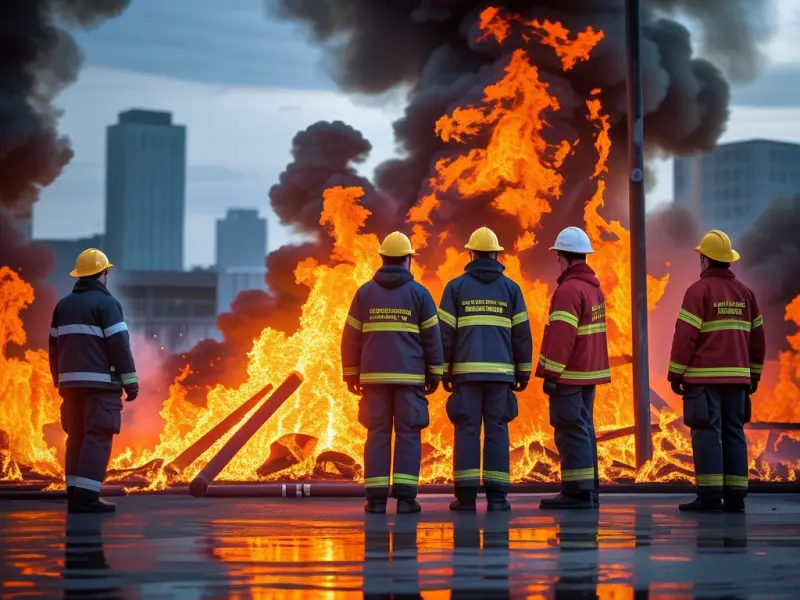
Fire Risk Strategy and Incident Learning Course

At a glance
- Duration
- 1 Week
- Format
- Classroom
- Cities
- Casablanca, Rome, Porto, Jakarta, Milan, Cape town and more
- Next session
- 2 – 6 November 2026, Casablanca
- Average fee
- 5,750 €
Overview
Fire Risk Strategy and Incident Learning Training Course is a one-week advanced course for fire safety, HSE, facility, operations, risk, and emergency personnel who leave with a Fire Risk Strategy and Learning File. Participants connect hazard assessment, prevention controls, monitoring, near-miss and incident analysis, corrective action, emergency interfaces, and assurance reporting into a repeatable governance cycle. Agile Leaders Training Center presents fire risk strategy and incident learning as an organizational control discipline.
Who Should Attend
- Functions responsible for fire-risk governance and prevention strategy
- Teams responsible for facility and operational fire controls
- Personnel responsible for risk monitoring and assurance evidence
- Functions responsible for incident, near-miss, and corrective-action review
- Emergency coordinators responsible for readiness interfaces and learning
The course assumes participants already manage safety, facilities, operations, risk, or emergency responsibilities, and it leaves out introductory extinguisher use, fire-system design, and product certification.
Departments and Industries
The course supports departments and industries that need to govern fire hazards, controls, incidents, and improvement.
- Health, safety, risk, and emergency-management functions
- Facilities, operations, maintenance, and asset-management departments
- Manufacturing, warehousing, logistics, and energy operations
- Healthcare, hospitality, education, and commercial facilities
- Capital projects, contractor management, and business continuity teams
Learning Objectives
By the end of this course, participants will be able to:
- Analyze fire hazards, exposure pathways, and people at risk
- Prioritize prevention and protection controls by risk
- Build monitoring and control-verification arrangements
- Diagnose fire incidents and near-miss control failures
- Evaluate emergency interfaces and corrective actions
- Design fire-risk assurance and management reporting
Course Agenda
Day 1: Fire Risk Strategy Foundations
- Fire Risk Context and Exposure Profile
- Hazard, Fuel and Ignition Source Register
- People-at-Risk and Vulnerability Mapping Method
- Fire Risk Evaluation and Prioritization Matrix
- Fire-Risk Accountability and Governance Framework
Day 2: Prevention and Protection Controls
- Fire Prevention Plan Control Architecture
- Ignition, Fuel and Combustible-Waste Control Register
- Engineering and Administrative Control Selection Method
- Contractor and Hot-Work Interface Checklist
- Emergency Protection and Evacuation Interface Map
Day 3: Monitoring and Assurance
- Fire-Control Verification and Inspection Plan
- Maintenance and Safeguard Assurance Schedule
- Fire-Risk Leading and Lagging Indicator Set
- Control Deviation and Escalation Threshold Matrix
- Management Fire-Risk Assurance Dashboard
Day 4: Incident Learning and Improvement
- Fire and Near-Miss Evidence Collection Protocol
- Barrier Failure and Causal Analysis Method
- Corrective-Action Priority and Ownership Tracker
- Change-Triggered Fire-Risk Review Template
- Incident Learning Communication and Verification Plan
Day 5: Fire Risk Governance Practice
- Exercise: Fire Risk Profile Diagnosis
- Exercise: Prevention Control Challenge
- Exercise: Monitoring Evidence Review
- Exercise: Incident Learning and Action Evaluation
- Capstone Exercise: Fire Risk Strategy and Learning File
Practical Exercises
The course uses suggested activities drawn from manufacturing, warehouses, healthcare facilities, and commercial buildings.
- Suggested activity: map ignition sources, fuels, vulnerable people, existing controls, and accountable owners for a facility scenario.
- Suggested activity: challenge a prevention plan and prioritize control gaps using risk, exposure, and safeguard evidence.
- Suggested activity: investigate a fire near miss, test causal findings, and assign verifiable corrective actions.
- Suggested activity: assemble an assurance dashboard linking inspections, deviations, incidents, actions, and management review.
FAQs
What is fire risk strategy and incident learning?
Fire risk strategy and incident learning connects hazard assessment, prevention, monitoring, incident analysis, corrective action, and management assurance so controls remain effective as operations change.
Who suits fire risk strategy training, and what does it assume?
Fire risk strategy training suits experienced safety, facilities, operations, risk, and emergency personnel who already manage workplace controls or assurance responsibilities.
How does fire risk strategy differ from basic firefighting training?
Fire risk strategy governs hazards, controls, monitoring, learning, and management review. Basic firefighting training focuses on initial response actions and safe use of firefighting equipment.
How should fire near misses be analyzed?
Fire near misses should be analyzed by preserving evidence, reconstructing events, examining failed or missing barriers, testing causal conclusions, assigning actions, and verifying whether controls improve.
How is fire risk management performance monitored?
Fire risk management performance is monitored through inspections, safeguard availability, maintenance completion, deviations, near misses, incidents, action closure, recurring causes, emergency exercises, and management review.
Conclusion
The course integrates fire-risk assessment, prevention controls, monitoring, incident learning, corrective action, emergency interfaces, and assurance reporting. Participants take back a Fire Risk Strategy and Learning File containing profiles, registers, plans, analysis tools, trackers, and a dashboard. The file changes how their organizations govern fire risk and verify improvement.
credits: 5 credit per day
Course Mode: full-time
Provider: Agile Leaders Training Center
-
Events for this Course
-
Casablanca 2 – 6 November 2026
-
Rome 2 – 6 November 2026
-
Porto 2 – 6 November 2026
-
Jakarta 9 – 13 November 2026
-
Milan 16 – 20 November 2026
-
Cape town 22 – 26 November 2026
-
Cairo 30 November – 4 December 2026
-
Paris 30 November – 4 December 2026
-
Zanzibar 6 – 10 December 2026
-
Madrid 14 – 18 December 2026
-
Lagos 20 – 24 December 2026
-
Abu Dhabi 21 – 25 December 2026
-
Amsterdam 28 December 2026 – 1 January 2027
-
Phuket 3 – 7 January 2027
-
Dubai 4 – 8 January 2027
-
Abu Dhabi 11 – 15 January 2027
-
Nairobi 17 – 21 January 2027
-
Manama 24 – 28 January 2027
-
London 1 – 5 February 2027
-
Amsterdam 1 – 5 February 2027
-
Zoom 8 – 12 February 2027
-
Marbella 14 – 18 February 2027
-
Toronto 14 – 18 February 2027
-
Muscat 21 – 25 February 2027
-
Kuala Lumpur 1 – 5 March 2027
-
New York 8 – 12 March 2027
-
Montreux 15 – 19 March 2027
-
Bangkok 21 – 25 March 2027
-
Prague 29 March – 2 April 2027
-
Accra 4 – 8 April 2027
-
Vienna 12 – 16 April 2027
-
London 19 – 23 April 2027
-
Barcelona 19 – 23 April 2027
-
Amman 25 – 29 April 2027
-
Cairo 26 – 30 April 2027
-
Singapore 26 – 30 April 2027
-
Dubai 3 – 7 May 2027
-
Amsterdam 3 – 7 May 2027
-
Abu Dhabi 3 – 7 May 2027
-
Sharm El-Sheikh 10 – 14 May 2027
-
Madrid 10 – 14 May 2027
-
Milan 17 – 21 May 2027
-
Nice 24 – 28 May 2027
-
Bali 30 May – 3 June 2027
-
Manama 6 – 10 June 2027
-
London 14 – 18 June 2027
-
San Diego 21 – 25 June 2027
-
Dubai 28 June – 2 July 2027
-
Barcelona 28 June – 2 July 2027
-
Frankfurt 28 June – 2 July 2027
-
Chicago 4 – 8 July 2027
-
Paris 5 – 9 July 2027
-
Trabzon 11 – 15 July 2027
-
Lisbon 12 – 16 July 2027
-
Istanbul 19 – 23 July 2027
-
Rome 19 – 23 July 2027
-
Langkawi 25 – 29 July 2027
-
Kuala Lumpur 26 – 30 July 2027
-
Tashkent 1 – 5 August 2027
-
Johannesburg 8 – 12 August 2027
-
London 16 – 20 August 2027
-
Seoul 16 – 20 August 2027
-
Geneva 22 – 26 August 2027
-
Tokyo 30 August – 3 September 2027
-
Vienna 6 – 10 September 2027
-
Berlin 6 – 10 September 2027
-
Tbilisi 13 – 17 September 2027
-
Munich 20 – 24 September 2027
-
Istanbul 27 September – 1 October 2027
-
Doha 3 – 7 October 2027
-
Abu Dhabi 11 – 15 October 2027
-
Dubai 18 – 22 October 2027
-
Baku 18 – 22 October 2027
-
Kuwait 24 – 28 October 2027
-
Athens 1 – 5 November 2027
| Image | Location | Dates | Duration | Mode | Price | Actions |
|---|---|---|---|---|---|---|

|
Casablanca |
Week 45, 2026 2 – 6 November 2026 |
1 Week | Onsite | €4,100 | |

|
Rome |
Week 45, 2026 2 – 6 November 2026 |
1 Week | Onsite | €5,700 | |

|
Porto |
Week 45, 2026 2 – 6 November 2026 |
1 Week | Onsite | €5,700 | |

|
Jakarta |
Week 46, 2026 9 – 13 November 2026 |
1 Week | Onsite | €5,700 | |

|
Milan |
Week 47, 2026 16 – 20 November 2026 |
1 Week | Onsite | €5,700 | |

|
Cape town |
Week 47, 2026 22 – 26 November 2026 |
1 Week | Onsite | €4,500 | |

|
Cairo |
Week 49, 2026 30 November – 4 December 2026 |
1 Week | Onsite | €4,100 | |

|
Paris |
Week 49, 2026 30 November – 4 December 2026 |
1 Week | Onsite | €5,700 | |

|
Zanzibar |
Week 49, 2026 6 – 10 December 2026 |
1 Week | Onsite | €5,500 | |

|
Madrid |
Week 51, 2026 14 – 18 December 2026 |
1 Week | Onsite | €5,700 | |

|
Lagos |
Week 51, 2026 20 – 24 December 2026 |
1 Week | Onsite | €4,100 | |

|
Abu Dhabi |
Week 52, 2026 21 – 25 December 2026 |
1 Week | Onsite | €4,700 | |

|
Amsterdam |
Week 53, 2026 28 December 2026 – 1 January 2027 |
1 Week | Onsite | €5,700 | |

|
Phuket |
Week 53, 2027 3 – 7 January 2027 |
1 Week | Onsite | €6,000 | |

|
Dubai |
Week 01, 2027 4 – 8 January 2027 |
1 Week | Onsite | €4,500 | |
|
|
Abu Dhabi |
Week 02, 2027 11 – 15 January 2027 |
1 Week | Onsite | €4,700 | |

|
Nairobi |
Week 02, 2027 17 – 21 January 2027 |
1 Week | Onsite | €4,500 | |

|
Manama |
Week 03, 2027 24 – 28 January 2027 |
1 Week | Onsite | €4,700 | |

|
London |
Week 05, 2027 1 – 5 February 2027 |
1 Week | Onsite | €5,700 | |
|
|
Amsterdam |
Week 05, 2027 1 – 5 February 2027 |
1 Week | Onsite | €5,700 |
Frequently asked questions
What does this course cover?
OverviewFire Risk Strategy and Incident Learning Training Course is a one-week advanced course for fire safety, HSE, facility, operations, risk, and emergency personnel who leave with a Fire Risk Strategy and Learning File. Participants connect hazard assessment, prevention controls, monitoring, near-miss and incident analysis, corrective action, emergenc…
Are training dates available?
Yes. Available dates and destinations are listed in the course dates section on this page.
How can I register?
Choose an available date on this page and complete the registration form, or send a programme enquiry.
Can I download the course brochure?
Yes. Use the brochure download link provided on this page.
This course by city
- Occupational Health, Safety and Security Training Courses in Abu Dhabi
- Occupational Health, Safety and Security Training Courses in Accra
- Occupational Health, Safety and Security Training Courses in Amman
- Occupational Health, Safety and Security Training Courses in Amsterdam
- Occupational Health, Safety and Security Training Courses in Athens
- Occupational Health, Safety and Security Training Courses in Baku
- Occupational Health, Safety and Security Training Courses in Bali
- Occupational Health, Safety and Security Training Courses in Bangkok
- Occupational Health, Safety and Security Training Courses in Barcelona
- Occupational Health, Safety and Security Training Courses in Berlin
- Occupational Health, Safety and Security Training Courses in Cairo
- Occupational Health, Safety and Security Training Courses in Cape town
- Occupational Health, Safety and Security Training Courses in Casablanca
- Occupational Health, Safety and Security Training Courses in Chicago
- Occupational Health, Safety and Security Training Courses in Doha
- Occupational Health, Safety and Security Training Courses in Dubai
- Occupational Health, Safety and Security Training Courses in Frankfurt
- Occupational Health, Safety and Security Training Courses in Geneva
- Occupational Health, Safety and Security Training Courses in Istanbul
- Occupational Health, Safety and Security Training Courses in Jakarta
- Occupational Health, Safety and Security Training Courses in Johannesburg
- Occupational Health, Safety and Security Training Courses in Kuala Lumpur
- Occupational Health, Safety and Security Training Courses in Kuwait
- Occupational Health, Safety and Security Training Courses in Lagos
- Occupational Health, Safety and Security Training Courses in Langkawi
- Occupational Health, Safety and Security Training Courses in Lisbon
- Occupational Health, Safety and Security Training Courses in London
- Occupational Health, Safety and Security Training Courses in Madrid
- Occupational Health, Safety and Security Training Courses in Manama
- Occupational Health, Safety and Security Training Courses in Marbella
- Occupational Health, Safety and Security Training Courses in Milan
- Occupational Health, Safety and Security Training Courses in Montreux
- Occupational Health, Safety and Security Training Courses in Munich
- Occupational Health, Safety and Security Training Courses in Muscat
- Occupational Health, Safety and Security Training Courses in Nairobi
- Occupational Health, Safety and Security Training Courses in New York
- Occupational Health, Safety and Security Training Courses in Nice
- Occupational Health, Safety and Security Training Courses in Paris
- Occupational Health, Safety and Security Training Courses in Phuket
- Occupational Health, Safety and Security Training Courses in Porto
- Occupational Health, Safety and Security Training Courses in Prague
- Occupational Health, Safety and Security Training Courses in Rome
- Occupational Health, Safety and Security Training Courses in San Diego
- Occupational Health, Safety and Security Training Courses in Seoul
- Occupational Health, Safety and Security Training Courses in Sharm El-Sheikh
- Occupational Health, Safety and Security Training Courses in Singapore
- Occupational Health, Safety and Security Training Courses in Tashkent
- Occupational Health, Safety and Security Training Courses in Tbilisi
- Occupational Health, Safety and Security Training Courses in Tokyo
- Occupational Health, Safety and Security Training Courses in Toronto
- Occupational Health, Safety and Security Training Courses in Trabzon
- Occupational Health, Safety and Security Training Courses in Vienna
- Occupational Health, Safety and Security Training Courses in Zanzibar
- Occupational Health, Safety and Security Training Courses in Zoom