Fire Watch Training: Hot Work Safety & Fire Prevention
At a glance
- Duration
- 5 days
- Format
- Classroom and online
- Cities
- Trabzon, Chicago, Zanzibar, Milan, Rome, Madrid and more
- Next session
- 4 – 8 October 2026, Trabzon
- Price
- From 1,500 €
Course Overview
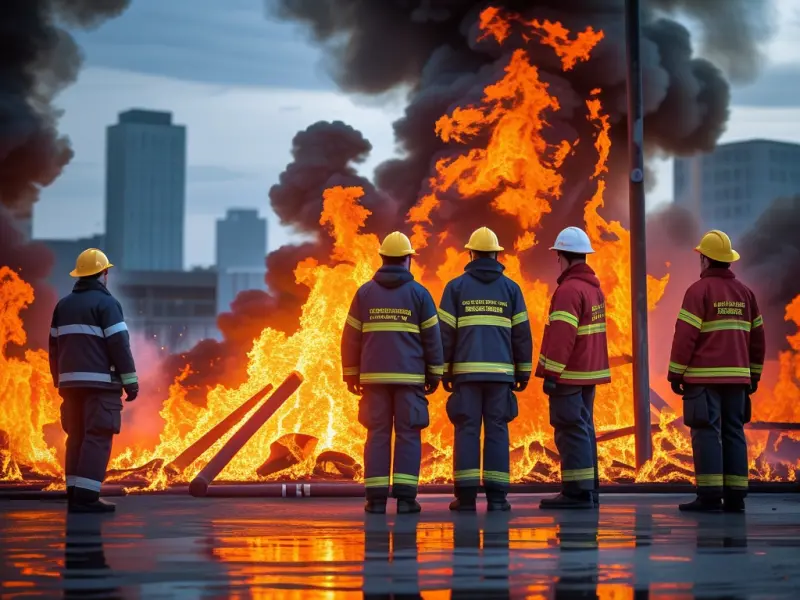
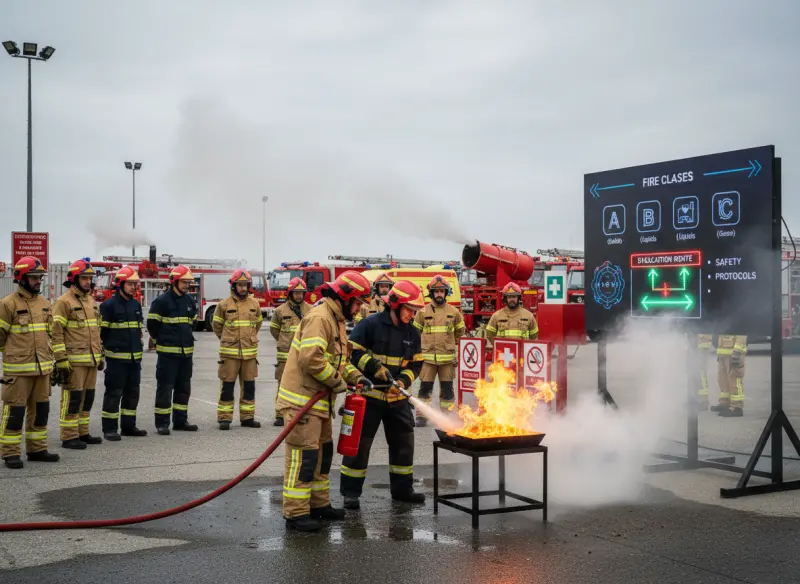
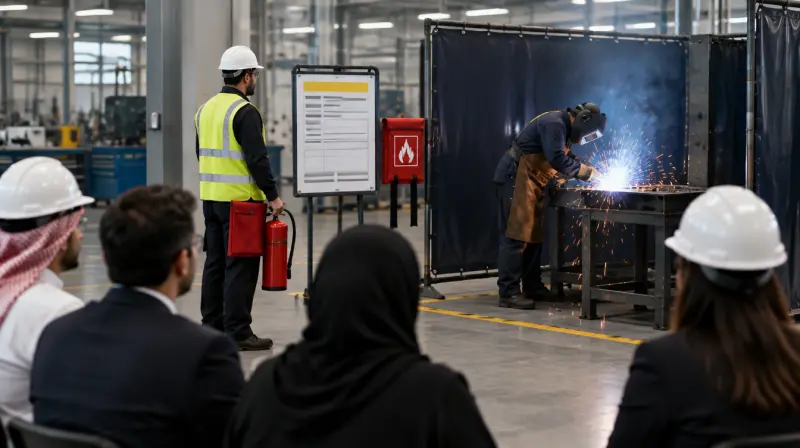
Fire Watch Training: Hot Work Safety & Fire Prevention is a practical five-day corporate safety course designed to prepare personnel to safely monitor welding, cutting, grinding, brazing, soldering, and other hot-work activities. The course focuses on Fire Watcher Roles and Responsibilities, fire hazard identification, hot-work controls, permit requirements, emergency response, and Post Hot Work Monitoring.
Participants learn how fires start and spread, how sparks and heat can travel beyond the immediate work area, and how to identify unsafe conditions before work begins. The course also develops practical knowledge of Fire Watch Duties, Fire Watch inspection, Fire Watch procedures, combustible-material control, extinguisher selection, communication with hot-work personnel, and stop-work authority.
By combining Fire Watch Training, Hot Work Safety Training, Fire Prevention Training, and Industrial Fire Safety Training, the program helps participants understand what to check, what to monitor, when to stop work, and how to maintain safe conditions before, during, and after hot work.
Target Audience
- Fire Watchers and Spark Watch personnel
- Welders and welding assistants
- Maintenance technicians
- Mechanical and fabrication personnel
- HSE officers and safety supervisors
- Permit receivers and permit issuers
- Construction and operations personnel
- Contractor safety representatives
Targeted Organizational Departments
- Health, Safety & Environment
- Maintenance
- Engineering
- Operations
- Mechanical and Fabrication
- Construction and Projects
- Facilities Management
- Emergency Response
Targeted Industries
- Oil and gas
- Petrochemical and refining
- Construction
- Manufacturing
- Power and utilities
- Mining
- Marine and shipyards
- Metal fabrication
- Industrial maintenance
- Facility management
Course Offerings
By the end of this course, participants will be able to:
- Explain Fire Watch requirements and responsibilities.
- Identify fire and hot-work hazards.
- Recognize welding, cutting, and grinding risks.
- Review and follow Hot Work Permit requirements.
- Conduct Fire Watch inspections before work begins.
- Control combustible materials and spark migration.
- Monitor changing worksite conditions.
- Apply stop-work authority when unsafe conditions develop.
- Select appropriate fire extinguishers.
- Respond correctly to fire emergencies and evacuation requirements.
- Apply Fire Watch checklists and procedures.
- Conduct effective Post Hot Work Monitoring.
Training Methodology
The course combines short instructor-led sessions with practical workplace examples, group discussions, hazard-identification activities, permit reviews, Fire Watch scenarios, and industrial case studies.
Participants examine typical hot-work situations and identify hazards such as combustible materials, sparks, flammable vapours, openings, drains, concealed spaces, and unsafe equipment. Group activities focus on reviewing Hot Work Permits, applying Fire Watch checklists, selecting appropriate controls, and deciding when work should be stopped.
The methodology also includes guided discussions on Fire Watch positioning, communication, extinguisher readiness, emergency evacuation, and post-work monitoring. Daily reflection sessions reinforce the most important Fire Watch and fire prevention practices for workplace application.
Course Toolbox
- Fire Watch Checklist examples
- Hot Work Permit examples
- Fire hazard identification guide
- Fire Watch inspection checklist
- Fire extinguisher selection guide
- Welding and grinding hazard examples
- Post Hot Work Monitoring checklist
- Emergency response scenarios
- Stop-work decision examples
- Hot-work case studies
Note: Physical tools and equipment are not provided. The course provides insights, examples, and guidance on relevant Fire Watch and hot-work safety tools.
Course Agenda
Day 1: Fire Fundamentals & Hot Work Hazards
- Topic 1: Fire Watch Training fundamentals and Fire Watcher responsibilities
- Topic 2: Combustion, fire tetrahedron, and fire development
- Topic 3: Heat transfer: conduction, convection, and radiation
- Topic 4: Flammable materials, vapours, gases, and ignition sources
- Topic 5: Welding, cutting, grinding, and other hot-work hazards
- Topic 6: LEL, UEL, and atmospheric fire hazards
- Reflection & Review: Recognizing common fire and ignition hazards
Day 2: Fire Prevention & Hot Work Controls
- Topic 1: Fire Prevention Training and hierarchy of controls
- Topic 2: Cold-work alternatives and hot-work designated areas
- Topic 3: Hot Work Permit requirements
- Topic 4: Fire Hazard Identification around the work area
- Topic 5: Combustible-material removal, isolation, and protection
- Topic 6: Spark migration, welding blankets, barriers, and housekeeping
- Reflection & Review: Selecting effective hot-work fire controls
Day 3: Fire Watch Duties & Inspection
- Topic 1: Fire Watch Duties before, during, and after hot work
- Topic 2: Fire Watch Inspection and work-area preparation
- Topic 3: Reviewing Hot Work Permits and hazard assessments
- Topic 4: Fire Watch positioning, communication, and line of sight
- Topic 5: Monitoring changing conditions and nearby activities
- Topic 6: Stop-work authority and restoring safe conditions
- Reflection & Review: Applying the Fire Watch Checklist
Day 4: High-Risk Hot Work & Fire Watch Operations
- Topic 1: Continuous Fire Watch during hot work
- Topic 2: Welding Safety Training
- Topic 3: Cutting and Grinding Safety
- Topic 4: Hot work around tanks, piping, equipment, and enclosed areas
- Topic 5: Gas testing and atmospheric monitoring awareness
- Topic 6: High-risk areas, concealed spaces, and impaired fire protection
- Reflection & Review: Learning from hot-work incidents
Day 5: Fire Extinguishers, Emergency Response & Monitoring
- Topic 1: Fire classes and extinguisher selection
- Topic 2: Fire Extinguisher Training and PASS technique
- Topic 3: Fire extinguisher inspection and readiness
- Topic 4: Fire Emergency Response Training and evacuation
- Topic 5: Post Hot Work Monitoring and hidden fire hazards
- Topic 6: Final Fire Watch inspection and permit closeout
- Reflection & Review: Applying the full Fire Watch Procedure
FAQ
What specific qualifications or prerequisites are needed for participants before enrolling in the course?
No advanced qualification is required. Participants should be able to follow workplace safety instructions, communicate effectively, and understand basic site emergency procedures.
How long is each day's session, and is there a total number of hours required for the entire course?
Each day's session is generally structured to last around 4–5 hours, with breaks and interactive activities included. The total course duration spans five days, approximately 20–25 hours of instruction.
How long should Fire Watch monitoring continue after hot work?
The duration depends on the applicable site procedure, permit requirements, workplace conditions, and fire risk. Fire Watch personnel should remain in position for the required monitoring period and continue checking for smoldering materials, hidden ignition, or re-ignition before the area is formally released.
How This Course is Different from Other Fire Watch Training Courses
This course focuses on the complete Fire Watch process, not only basic fire extinguisher use. Participants learn how to identify hazards, review Hot Work Permits, prepare the work area, monitor welding and grinding activities, stop unsafe work, respond to emergencies, and complete Post Hot Work Monitoring.
The course combines Fire Watch Training, Hot Work Safety Training, Fire Prevention Training, and Industrial Fire Safety Training in one practical program. It emphasizes workplace observation, hazard control, communication, permit discipline, decision-making, and emergency response.
The result is a concise and practical Fire Watch Safety Course that prepares personnel to understand what to check, what to monitor, when to stop work, and how to maintain safe conditions before, during, and after hot work.
credits: 5 credit per day
Course Mode: full-time
Provider: Agile Leaders Training Center
-
Events for this Course
-
Trabzon 4 – 8 October 2026
-
Chicago 11 – 15 October 2026
-
Zanzibar 25 – 29 October 2026
-
Milan 9 – 13 November 2026
-
Rome 23 – 27 November 2026
-
Madrid 30 November – 4 December 2026
-
Kuala Lumpur 7 – 11 December 2026
-
Riyadh 13 – 17 December 2026
-
Amsterdam 14 – 18 December 2026
-
London 21 – 25 December 2026
-
San Diego 21 – 25 December 2026
-
Dubai 28 December 2026 – 1 January 2027
-
Berlin 28 December 2026 – 1 January 2027
-
Phuket 3 – 7 January 2027
-
Vienna 11 – 15 January 2027
-
Lisbon 11 – 15 January 2027
-
Manama 17 – 21 January 2027
-
Geneva 24 – 28 January 2027
-
Abu Dhabi 1 – 5 February 2027
-
Dubai 8 – 12 February 2027
-
London 15 – 19 February 2027
-
Al Jubail 21 – 25 February 2027
-
Cairo 1 – 5 March 2027
-
Frankfurt 8 – 12 March 2027
-
Istanbul 15 – 19 March 2027
-
Paris 22 – 26 March 2027
-
Marbella 28 March – 1 April 2027
-
Abu Dhabi 29 March – 2 April 2027
-
Nairobi 11 – 15 April 2027
-
Tashkent 25 – 29 April 2027
-
Barcelona 10 – 14 May 2027
-
New York 17 – 21 May 2027
-
Abu Dhabi 31 May – 4 June 2027
-
London 7 – 11 June 2027
-
Porto 7 – 11 June 2027
-
Bali 13 – 17 June 2027
-
Dubai 21 – 25 June 2027
-
Montreux 28 June – 2 July 2027
-
Bangkok 4 – 8 July 2027
-
Amsterdam 12 – 16 July 2027
-
Nice 19 – 23 July 2027
-
Langkawi 25 – 29 July 2027
-
Singapore 9 – 13 August 2027
-
Toronto 22 – 26 August 2027
-
Accra 5 – 9 September 2027
-
Doha 19 – 23 September 2027
-
Manama 19 – 23 September 2027
-
Amman 19 – 23 September 2027
-
Cape town 19 – 23 September 2027
-
Johannesburg 19 – 23 September 2027
-
Kuwait 19 – 23 September 2027
-
Muscat 19 – 23 September 2027
-
Dubai 20 – 24 September 2027
-
Cairo 20 – 24 September 2027
-
Casablanca 20 – 24 September 2027
-
London 20 – 24 September 2027
-
Sharm El-Sheikh 20 – 24 September 2027
-
Kuala Lumpur 20 – 24 September 2027
-
Istanbul 20 – 24 September 2027
-
Paris 20 – 24 September 2027
-
Barcelona 20 – 24 September 2027
-
Rome 20 – 24 September 2027
-
Zoom 20 – 24 September 2027
-
Tokyo 20 – 24 September 2027
-
Amsterdam 20 – 24 September 2027
-
Vienna 20 – 24 September 2027
-
Tbilisi 20 – 24 September 2027
-
Baku 20 – 24 September 2027
-
Madrid 20 – 24 September 2027
-
Milan 20 – 24 September 2027
-
Prague 20 – 24 September 2027
-
Jakarta 20 – 24 September 2027
-
Athens 20 – 24 September 2027
-
Seoul 20 – 24 September 2027
-
Abu Dhabi 20 – 24 September 2027
-
Munich 27 September – 1 October 2027
| Image | Location | Dates | Duration | Mode | Price | Actions |
|---|---|---|---|---|---|---|

|
London |
Week 07, 2027 15 – 19 February 2027 |
5 Days | Onsite | €5,700 | |
|
Al Jubail |
Week 07, 2027 21 – 25 February 2027 |
5 Days | Onsite | €5,700 | |

|
Cairo |
Week 09, 2027 1 – 5 March 2027 |
5 Days | Onsite | €4,100 | |

|
Frankfurt |
Week 10, 2027 8 – 12 March 2027 |
5 Days | Onsite | €5,700 | |

|
Istanbul |
Week 11, 2027 15 – 19 March 2027 |
5 Days | Onsite | €4,500 | |

|
Paris |
Week 12, 2027 22 – 26 March 2027 |
5 Days | Onsite | €5,700 | |

|
Marbella |
Week 12, 2027 28 March – 1 April 2027 |
5 Days | Onsite | €5,700 | |

|
Abu Dhabi |
Week 13, 2027 29 March – 2 April 2027 |
5 Days | Onsite | €4,700 | |

|
Nairobi |
Week 14, 2027 11 – 15 April 2027 |
5 Days | Onsite | €4,500 | |

|
Tashkent |
Week 16, 2027 25 – 29 April 2027 |
5 Days | Onsite | €4,500 | |

|
Barcelona |
Week 19, 2027 10 – 14 May 2027 |
5 Days | Onsite | €5,700 | |

|
New York |
Week 20, 2027 17 – 21 May 2027 |
5 Days | Onsite | €12,000 | |
|
|
Abu Dhabi |
Week 22, 2027 31 May – 4 June 2027 |
5 Days | Onsite | €4,700 | |
|
|
London |
Week 23, 2027 7 – 11 June 2027 |
5 Days | Onsite | €5,700 | |

|
Porto |
Week 23, 2027 7 – 11 June 2027 |
5 Days | Onsite | €5,700 | |

|
Bali |
Week 23, 2027 13 – 17 June 2027 |
5 Days | Onsite | €5,700 | |

|
Dubai |
Week 25, 2027 21 – 25 June 2027 |
5 Days | Onsite | €4,500 | |

|
Montreux |
Week 26, 2027 28 June – 2 July 2027 |
5 Days | Onsite | €7,500 | |

|
Bangkok |
Week 26, 2027 4 – 8 July 2027 |
5 Days | Onsite | €6,000 | |

|
Amsterdam |
Week 28, 2027 12 – 16 July 2027 |
5 Days | Onsite | €5,700 |
Frequently asked questions
Are training dates available?
Yes. Available dates and destinations are listed in the course dates section on this page.
How can I register?
Choose an available date on this page and complete the registration form, or send a programme enquiry.
Can I download the course brochure?
Yes. Use the brochure download link provided on this page.
This course by city
- Occupational Health, Safety and Security Training Courses in Abu Dhabi
- Occupational Health, Safety and Security Training Courses in Accra
- Occupational Health, Safety and Security Training Courses in Al Jubail
- Occupational Health, Safety and Security Training Courses in Amman
- Occupational Health, Safety and Security Training Courses in Amsterdam
- Occupational Health, Safety and Security Training Courses in Athens
- Occupational Health, Safety and Security Training Courses in Baku
- Occupational Health, Safety and Security Training Courses in Bali
- Occupational Health, Safety and Security Training Courses in Bangkok
- Occupational Health, Safety and Security Training Courses in Barcelona
- Occupational Health, Safety and Security Training Courses in Berlin
- Occupational Health, Safety and Security Training Courses in Cairo
- Occupational Health, Safety and Security Training Courses in Cape town
- Occupational Health, Safety and Security Training Courses in Casablanca
- Occupational Health, Safety and Security Training Courses in Chicago
- Occupational Health, Safety and Security Training Courses in Doha
- Occupational Health, Safety and Security Training Courses in Dubai
- Occupational Health, Safety and Security Training Courses in Frankfurt
- Occupational Health, Safety and Security Training Courses in Geneva
- Occupational Health, Safety and Security Training Courses in Istanbul
- Occupational Health, Safety and Security Training Courses in Jakarta
- Occupational Health, Safety and Security Training Courses in Johannesburg
- Occupational Health, Safety and Security Training Courses in Kuala Lumpur
- Occupational Health, Safety and Security Training Courses in Kuwait
- Occupational Health, Safety and Security Training Courses in Langkawi
- Occupational Health, Safety and Security Training Courses in Lisbon
- Occupational Health, Safety and Security Training Courses in London
- Occupational Health, Safety and Security Training Courses in Madrid
- Occupational Health, Safety and Security Training Courses in Manama
- Occupational Health, Safety and Security Training Courses in Marbella
- Occupational Health, Safety and Security Training Courses in Milan
- Occupational Health, Safety and Security Training Courses in Montreux
- Occupational Health, Safety and Security Training Courses in Munich
- Occupational Health, Safety and Security Training Courses in Muscat
- Occupational Health, Safety and Security Training Courses in Nairobi
- Occupational Health, Safety and Security Training Courses in New York
- Occupational Health, Safety and Security Training Courses in Nice
- Occupational Health, Safety and Security Training Courses in Paris
- Occupational Health, Safety and Security Training Courses in Phuket
- Occupational Health, Safety and Security Training Courses in Porto
- Occupational Health, Safety and Security Training Courses in Prague
- Occupational Health, Safety and Security Training Courses in Riyadh
- Occupational Health, Safety and Security Training Courses in Rome
- Occupational Health, Safety and Security Training Courses in San Diego
- Occupational Health, Safety and Security Training Courses in Seoul
- Occupational Health, Safety and Security Training Courses in Sharm El-Sheikh
- Occupational Health, Safety and Security Training Courses in Singapore
- Occupational Health, Safety and Security Training Courses in Tashkent
- Occupational Health, Safety and Security Training Courses in Tbilisi
- Occupational Health, Safety and Security Training Courses in Tokyo
- Occupational Health, Safety and Security Training Courses in Toronto
- Occupational Health, Safety and Security Training Courses in Trabzon
- Occupational Health, Safety and Security Training Courses in Vienna
- Occupational Health, Safety and Security Training Courses in Zanzibar
- Occupational Health, Safety and Security Training Courses in Zoom