Generator Excitation and AVR Diagnostics Course

At a glance
- Duration
- 1 Week
- Format
- Classroom
- Cities
- Doha, Nairobi, Madrid, Tashkent, Jakarta, Chicago and more
- Next session
- 8 – 12 November 2026, Doha
- Average fee
- 7,500 €
Overview
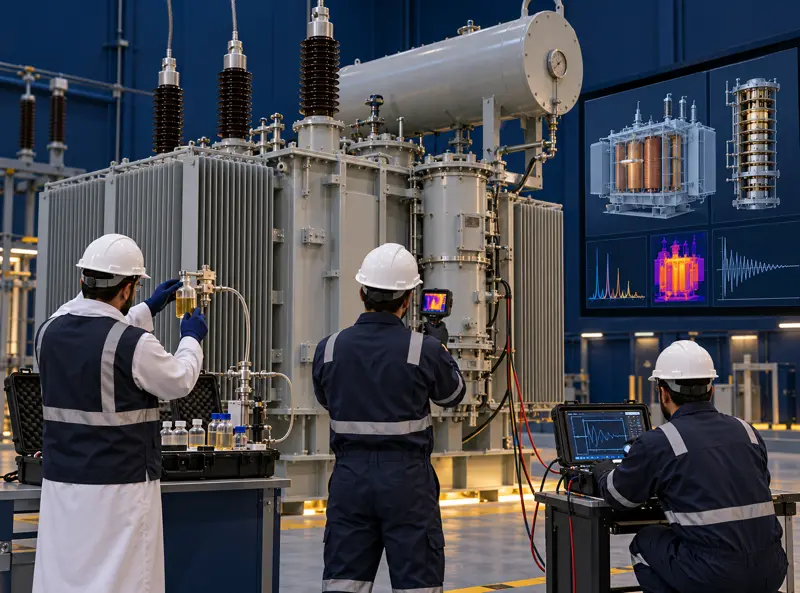
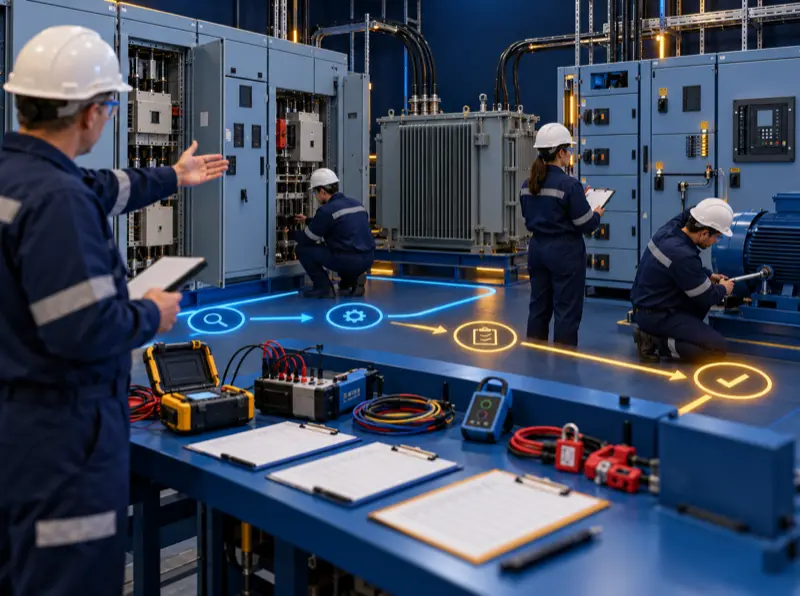
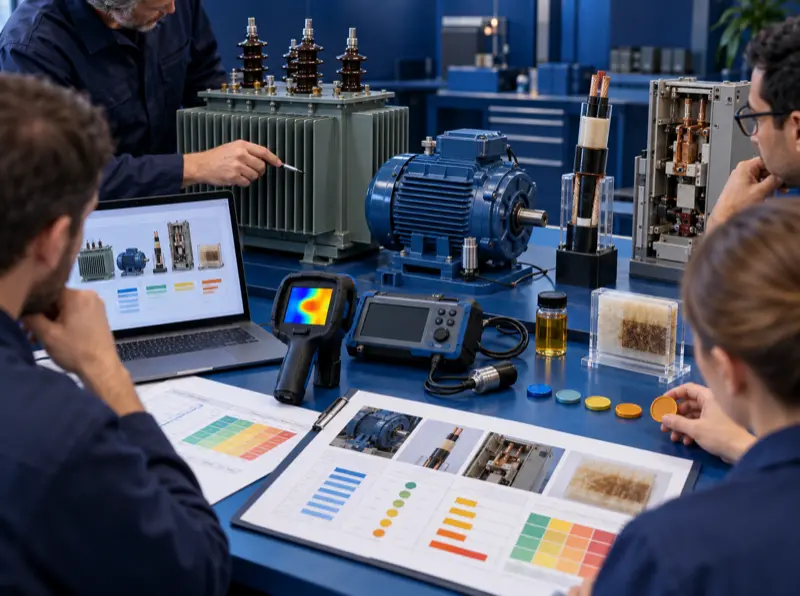
Generator Excitation and AVR Diagnostics Training Course is a one-week advanced course for electrical maintenance, commissioning, and power-plant teams who leave with an Excitation Commissioning and Fault-Isolation Dossier. The course connects generator excitation systems, automatic voltage regulator diagnostics, AVR commissioning tests, voltage stability analysis, excitation limiter verification, alarm evidence, and safe return-to-service decisions. Agile Leaders Training Center delivers this course on generator excitation and AVR diagnostics.
Who Should Attend
- Teams responsible for generator excitation operation, voltage control, and reactive-power performance
- Functions responsible for automatic voltage regulator maintenance, configuration records, and fault response
- Teams responsible for generator commissioning, functional testing, and acceptance evidence
- Functions responsible for electrical protection, control-system interfaces, and operating-limit verification
- Teams responsible for outage diagnostics, event analysis, maintenance planning, and return-to-service approval
The course assumes participants already work with synchronous generators, electrical measurements, control diagrams, or maintenance records and leaves out general generator construction, prime-mover maintenance, and live switching authorization.
Departments and Industries
The course supports excitation and AVR decisions across power generation and asset-intensive operations.
- Electrical maintenance, reliability, commissioning, and technical services
- Power generation, utilities, industrial energy, and captive-power operations
- Oil and gas, petrochemical, mining, metals, and process manufacturing
- Marine, infrastructure, transport, and large-facility power systems
- Engineering projects, outage management, protection, and control functions
Learning Objectives
By the end of this course, participants will be able to:
- Compare excitation topologies, control modes, and feedback paths.
- Apply safe AVR commissioning and measurement-verification sequences.
- Analyze limiters, reactive-power control, and voltage-stability symptoms.
- Diagnose voltage buildup, sensing, oscillation, alarm, and component faults.
- Prioritize corrective actions and return-to-service evidence.
- Build an excitation commissioning and fault-isolation dossier.
Course Agenda
Day 1: Map Excitation Control
- Synchronous Generator Excitation Energy, Field, Terminal-Voltage, and Reactive-Power Map
- Static, Brushless, and Rotating Exciter Topology Comparison Matrix
- AUTO Voltage-Regulator, MAN Field-Current, VAR, and Power-Factor Control Model
- Voltage Sensing, Current Compensation, Feedback, Setpoint, and Reference Signal Diagram
- Excitation Transformer, Rectifier Bridge, Field Circuit, Crowbar, and De-Excitation Path
Day 2: Assess Limits and Stability
- Over-Excitation, Under-Excitation, Stator-Current, and Volt-per-Hertz Limiter Map
- Generator Capability Curve and Excitation Operating-Point Assessment Method
- Droop, Reactive-Load Sharing, Power-Factor, and Supervisory Control Interaction Matrix
- PID Gain, Response Time, Overshoot, Damping, and Oscillation Evidence Sheet
- Power System Stabilizer Signal, Function, Boundary, and Symptom Review
Day 3: Plan Commissioning Tests
- Excitation Safety Boundary, Isolation, Stored-Energy, Discharge, and Permit Checklist
- Standstill Wiring, Resistance, Polarity, Input-Output, and Configuration Verification Record
- No-Load Manual Buildup, Measurement Comparison, and Setpoint Progression Procedure
- AUTO-MAN Step-Response, Transfer, Follow-Up, and Limiter Functional Test Plan
- Grid-Connected Reactive Response, Droop Direction, and Protection Interface Check
Day 4: Diagnose AVR Faults
- No Voltage Buildup, Residual Flux, Field Flashing, Supply, and Field-Circuit Fault Tree
- High, Low, Unstable, and Hunting Voltage Symptom-to-Cause Matrix
- Frequency, Speed, Sensing, Phase, Loading, and Compensation Diagnostic Sequence
- Alarm Log, Event Sequence, Trend, Transient Recorder, and Oscillography Evidence Review
- Regulator, Exciter, Generator, Protection, Wiring, and Configuration Fault-Boundary Test
Day 5: Practice Diagnostic Decisions
- Exercise: Map Excitation Topology, Signals, Modes, and Operating Boundaries
- Exercise: Evaluate Limiter Operation, Capability-Curve Position, and Stability Evidence
- Exercise: Build the Commissioning Test Sequence and Acceptance-Evidence Record
- Exercise: Isolate Voltage Buildup, Oscillation, Sensing, and Alarm Scenarios
- Capstone Exercise: Build the Excitation Commissioning and Fault-Isolation Dossier
Practical Exercises
The course uses suggested activities to connect excitation evidence with controlled maintenance decisions.
- Suggested activity: trace excitation power and signal paths from drawings and sample operating records.
- Suggested activity: interpret step-response plots, capability-curve positions, limiter actions, trends, and alarms.
- Suggested activity: apply fault trees to no-build, unstable-voltage, sensing, and control-transfer scenarios.
- Suggested activity: assemble test results, corrective actions, acceptance criteria, and return-to-service evidence.
FAQs
Who should attend generator excitation and AVR diagnostics training?
Generator excitation and AVR diagnostics training suits experienced electrical maintenance, commissioning, protection, and power-plant teams and assumes familiarity with synchronous generators, control diagrams, measurements, and safe electrical work boundaries.
How does AVR diagnostics differ from general generator maintenance training?
AVR diagnostics focuses on excitation power paths, sensing, control modes, limiters, stability, commissioning tests, trends, alarms, and fault isolation, while general generator maintenance covers wider mechanical, winding, cooling, bearing, and prime-mover concerns.
How are automatic voltage regulator faults isolated?
Automatic voltage regulator faults are isolated by confirming the symptom, establishing safe boundaries, checking speed and frequency, tracing supply and sensing paths, comparing measured signals, reviewing logs and trends, and testing the regulator, exciter, field, wiring, and protection interfaces.
What evidence supports AVR return-to-service decisions?
AVR return-to-service decisions use verified configuration, completed safety checks, calibrated measurement comparisons, functional control-mode and limiter tests, acceptable response evidence, resolved alarms, documented corrective actions, and authorized acceptance criteria.
Conclusion
Participants take back an Excitation Commissioning and Fault-Isolation Dossier. The dossier connects topology, signals, operating limits, commissioning tests, response plots, alarms, fault trees, corrective actions, and acceptance evidence. It changes scattered excitation observations into a traceable basis for diagnosis, maintenance, and return-to-service decisions.
credits: 5 credit per day
Course Mode: full-time
Provider: Agile Leaders Training Center
-
Events for this Course
-
Doha 8 – 12 November 2026
-
Nairobi 15 – 19 November 2026
-
Madrid 23 – 27 November 2026
-
Tashkent 6 – 10 December 2026
-
Jakarta 7 – 11 December 2026
-
Chicago 13 – 17 December 2026
-
Zoom 21 – 25 December 2026
-
Singapore 28 December 2026 – 1 January 2027
-
Tokyo 4 – 8 January 2027
-
Nice 4 – 8 January 2027
-
Amsterdam 11 – 15 January 2027
-
Lisbon 11 – 15 January 2027
-
Kuwait 17 – 21 January 2027
-
Sharm El-Sheikh 25 – 29 January 2027
-
Bali 31 January – 4 February 2027
-
Marbella 28 February – 4 March 2027
-
Milan 1 – 5 March 2027
-
Accra 7 – 11 March 2027
-
Frankfurt 8 – 12 March 2027
-
Langkawi 14 – 18 March 2027
-
Athens 22 – 26 March 2027
-
Berlin 22 – 26 March 2027
-
Paris 29 March – 2 April 2027
-
New York 29 March – 2 April 2027
-
Zanzibar 4 – 8 April 2027
-
Prague 12 – 16 April 2027
-
Trabzon 18 – 22 April 2027
-
Montreux 19 – 23 April 2027
-
Muscat 25 – 29 April 2027
-
Amman 2 – 6 May 2027
-
London 10 – 14 May 2027
-
Cape town 16 – 20 May 2027
-
Dubai 24 – 28 May 2027
-
Abu Dhabi 24 – 28 May 2027
-
Vienna 7 – 11 June 2027
-
Tbilisi 14 – 18 June 2027
-
Barcelona 21 – 25 June 2027
-
Cairo 28 June – 2 July 2027
-
Rome 12 – 16 July 2027
-
Seoul 12 – 16 July 2027
-
Munich 26 – 30 July 2027
-
Addis Ababa 26 – 30 July 2027
-
Dubai 2 – 6 August 2027
-
Lagos 8 – 12 August 2027
-
Casablanca 16 – 20 August 2027
-
Johannesburg 22 – 26 August 2027
-
Bangkok 29 August – 2 September 2027
-
Porto 6 – 10 September 2027
-
Toronto 19 – 23 September 2027
-
Kuala Lumpur 20 – 24 September 2027
-
Baku 27 September – 1 October 2027
-
San Diego 4 – 8 October 2027
-
Abu Dhabi 4 – 8 October 2027
-
Manama 10 – 14 October 2027
-
Istanbul 18 – 22 October 2027
-
Phuket 24 – 28 October 2027
-
London 1 – 5 November 2027
-
Geneva 7 – 11 November 2027
| Image | Location | Dates | Duration | Mode | Price | Actions |
|---|---|---|---|---|---|---|

|
Athens |
Week 12, 2027 22 – 26 March 2027 |
1 Week | Onsite | €7,500 | |

|
Berlin |
Week 12, 2027 22 – 26 March 2027 |
1 Week | Onsite | €6,500 | |

|
Paris |
Week 13, 2027 29 March – 2 April 2027 |
1 Week | Onsite | €6,500 | |

|
New York |
Week 13, 2027 29 March – 2 April 2027 |
1 Week | Onsite | €16,000 | |

|
Zanzibar |
Week 13, 2027 4 – 8 April 2027 |
1 Week | Onsite | €6,000 | |

|
Prague |
Week 15, 2027 12 – 16 April 2027 |
1 Week | Onsite | €7,500 | |

|
Trabzon |
Week 15, 2027 18 – 22 April 2027 |
1 Week | Onsite | €8,000 | |

|
Montreux |
Week 16, 2027 19 – 23 April 2027 |
1 Week | Onsite | €8,000 | |

|
Muscat |
Week 16, 2027 25 – 29 April 2027 |
1 Week | Onsite | €6,500 | |

|
Amman |
Week 17, 2027 2 – 6 May 2027 |
1 Week | Onsite | €6,000 | |

|
London |
Week 19, 2027 10 – 14 May 2027 |
1 Week | Onsite | €6,500 | |

|
Cape town |
Week 19, 2027 16 – 20 May 2027 |
1 Week | Onsite | €6,000 | |

|
Dubai |
Week 21, 2027 24 – 28 May 2027 |
1 Week | Onsite | €6,500 | |

|
Abu Dhabi |
Week 21, 2027 24 – 28 May 2027 |
1 Week | Onsite | €6,500 | |

|
Vienna |
Week 23, 2027 7 – 11 June 2027 |
1 Week | Onsite | €7,500 | |

|
Tbilisi |
Week 24, 2027 14 – 18 June 2027 |
1 Week | Onsite | €5,700 | |

|
Barcelona |
Week 25, 2027 21 – 25 June 2027 |
1 Week | Onsite | €6,500 | |

|
Cairo |
Week 26, 2027 28 June – 2 July 2027 |
1 Week | Onsite | €5,200 | |

|
Rome |
Week 28, 2027 12 – 16 July 2027 |
1 Week | Onsite | €6,500 | |

|
Seoul |
Week 28, 2027 12 – 16 July 2027 |
1 Week | Onsite | €12,000 |
Frequently asked questions
What does this course cover?
OverviewGenerator Excitation and AVR Diagnostics Training Course is a one-week advanced course for electrical maintenance, commissioning, and power-plant teams who leave with an Excitation Commissioning and Fault-Isolation Dossier. The course connects generator excitation systems, automatic voltage regulator diagnostics, AVR commissioning tests, voltage s…
Are training dates available?
Yes. Available dates and destinations are listed in the course dates section on this page.
How can I register?
Choose an available date on this page and complete the registration form, or send a programme enquiry.
Can I download the course brochure?
Yes. Use the brochure download link provided on this page.
This course by city
- Maintenance Training and Engineering Training Courses in Abu Dhabi
- Maintenance Training and Engineering Training Courses in Accra
- Maintenance Training and Engineering Training Courses in Addis Ababa
- Maintenance Training and Engineering Training Courses in Amman
- Maintenance Training and Engineering Training Courses in Amsterdam
- Maintenance Training and Engineering Training Courses in Athens
- Maintenance Training and Engineering Training Courses in Baku
- Maintenance Training and Engineering Training Courses in Bali
- Maintenance Training and Engineering Training Courses in Bangkok
- Maintenance Training and Engineering Training Courses in Barcelona
- Maintenance Training and Engineering Training Courses in Berlin
- Maintenance Training and Engineering Training Courses in Cairo
- Maintenance Training and Engineering Training Courses in Cape town
- Maintenance Training and Engineering Training Courses in Casablanca
- Maintenance Training and Engineering Training Courses in Chicago
- Maintenance Training and Engineering Training Courses in Doha
- Maintenance Training and Engineering Training Courses in Dubai
- Maintenance Training and Engineering Training Courses in Frankfurt
- Maintenance Training and Engineering Training Courses in Geneva
- Maintenance Training and Engineering Training Courses in Istanbul
- Maintenance Training and Engineering Training Courses in Jakarta
- Maintenance Training and Engineering Training Courses in Johannesburg
- Maintenance Training and Engineering Training Courses in Kuala Lumpur
- Maintenance Training and Engineering Training Courses in Kuwait
- Maintenance Training and Engineering Training Courses in Lagos
- Maintenance Training and Engineering Training Courses in Langkawi
- Maintenance Training and Engineering Training Courses in Lisbon
- Maintenance Training and Engineering Training Courses in London
- Maintenance Training and Engineering Training Courses in Madrid
- Maintenance Training and Engineering Training Courses in Manama
- Maintenance Training and Engineering Training Courses in Marbella
- Maintenance Training and Engineering Training Courses in Milan
- Maintenance Training and Engineering Training Courses in Montreux
- Maintenance Training and Engineering Training Courses in Munich
- Maintenance Training and Engineering Training Courses in Muscat
- Maintenance Training and Engineering Training Courses in Nairobi
- Maintenance Training and Engineering Training Courses in New York
- Maintenance Training and Engineering Training Courses in Nice
- Maintenance Training and Engineering Training Courses in Paris
- Maintenance Training and Engineering Training Courses in Phuket
- Maintenance Training and Engineering Training Courses in Porto
- Maintenance Training and Engineering Training Courses in Prague
- Maintenance Training and Engineering Training Courses in Rome
- Maintenance Training and Engineering Training Courses in San Diego
- Maintenance Training and Engineering Training Courses in Seoul
- Maintenance Training and Engineering Training Courses in Sharm El-Sheikh
- Maintenance Training and Engineering Training Courses in Singapore
- Maintenance Training and Engineering Training Courses in Tashkent
- Maintenance Training and Engineering Training Courses in Tbilisi
- Maintenance Training and Engineering Training Courses in Tokyo
- Maintenance Training and Engineering Training Courses in Toronto
- Maintenance Training and Engineering Training Courses in Trabzon
- Maintenance Training and Engineering Training Courses in Vienna
- Maintenance Training and Engineering Training Courses in Zanzibar
- Maintenance Training and Engineering Training Courses in Zoom