Global Health Diplomacy and Negotiation Course
This 1-week course has 76 dates from November 2026 to November 2027 in 54 cities and live online. The next date runs 23 – 27 November 2026 in London. Fees per participant run from €4,100 (Lagos) to €14,000 (San Diego) in a classroom, and from €1,500 live online.

- Duration
- 1 Week5 days
- Next start
- London
- Scheduled dates
- 76
- Classroom cities
- 54London, Bangkok, Amsterdam, Seoul and more
- Format
- Classroom and live online
- Fee per participant
- €1,500–€14,000Average €5,750
What does this course cover?
Overview
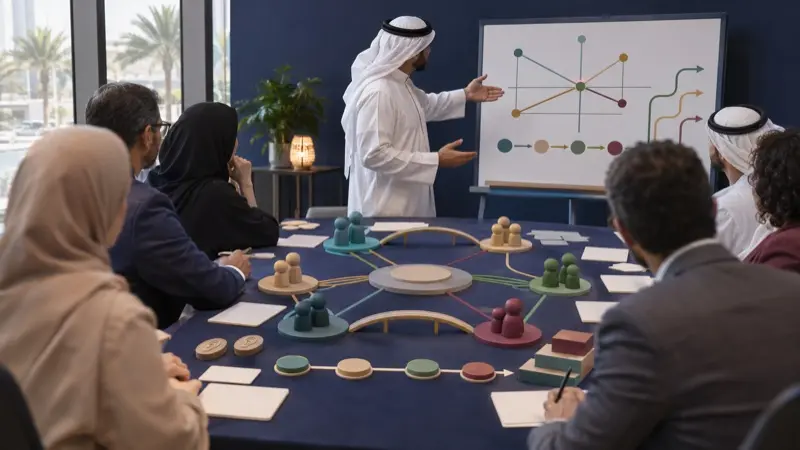
Advanced Global Health Diplomacy and Negotiation Course is a one-week course for health officials, diplomats, policy leaders, international cooperation teams, advisers, and program directors who need a Global Health Diplomacy Action Portfolio. Participants connect health and foreign policy, map global health governance actors, prepare evidence briefs and negotiating positions, build coalitions, conduct multilateral negotiation, draft agreements, and plan implementation. Agile Leaders Training Center presents global health diplomacy as evidence-informed policy coordination across institutions and sectors.
Who Should Attend
- Teams responsible for aligning health priorities with foreign-policy positions
- Units preparing participation in bilateral and multilateral health negotiations
- Leaders coordinating public health partnerships and international cooperation
- Advisers developing evidence briefs, mandates, and diplomatic messages
- Directors overseeing agreements, commitments, and implementation governance
The course assumes participants already contribute to health policy, diplomacy, international cooperation, or program governance and leaves out clinical care and legal advice.
Departments and Industries
The course supports departments and industries that coordinate cross-border health policy and international partnerships.
- Health policy and international relations departments
- Foreign affairs and diplomatic missions
- Public health agencies and health systems
- Humanitarian and development organizations
- Academic policy centers and professional associations
Learning Objectives
By the end of this course, participants will be able to:
- Analyze global health governance actors, venues, interests, and decision pathways
- Build evidence briefs, national positions, mandates, and issue narratives
- Apply negotiation methods to interests, options, coalitions, and trade-offs
- Use diplomatic communication methods in formal and informal settings
- Evaluate draft agreements for clarity, feasibility, accountability, and implementation
- Build an implementation governance plan with milestones, roles, and review mechanisms
Course Agenda
Day 1: Diplomacy Landscape and Policy Context
- Health–Foreign Policy Interface Analysis Framework
- Global Health Governance Actor and Venue Map
- Cross-Border Health Issue Framing Method
- Political Economy and Interest Analysis Matrix
- Whole-of-Government Coordination Charter
Day 2: Evidence, Positions, and Mandates
- Evidence-to-Policy Brief Template
- Stakeholder Power and Influence Grid
- National and Institutional Position Canvas
- Negotiation Mandate and Red-Line Register
- Diplomatic Narrative and Message House
Day 3: Negotiation and Coalition Strategy
- Interest-Based Negotiation Preparation Sheet
- Options, Trade-Offs, and Concession Matrix
- Coalition Architecture and Partner Map
- Multilateral Process and Rules-of-Procedure Checklist
- Negotiation Team Roles and Coordination Protocol
Day 4: Communication, Agreements, and Delivery
- Formal Statement and Intervention Builder
- Informal Consultation and Corridor Diplomacy Plan
- Draft Agreement and Decision Text Checklist
- Commitment-to-Implementation Results Chain
- Accountability, Risk, and Review Dashboard
Day 5: Global Health Diplomacy Simulation
- Suggested Exercise: Actor Map and Issue-Framing Clinic
- Suggested Exercise: Evidence Brief and Position Defense
- Suggested Exercise: Coalition and Concession Strategy Drill
- Suggested Exercise: Agreement Text and Implementation Review
- Capstone Exercise: Multilateral Global Health Negotiation Simulation
Practical Exercises
The course uses suggested activities based on fictional cross-border health, humanitarian, financing, and access-to-services scenarios.
- Suggested activity: produce an actor map, issue frame, and whole-of-government coordination charter.
- Suggested activity: prepare an evidence brief, negotiating mandate, red lines, and diplomatic message house.
- Suggested activity: run a coalition-building and multilateral negotiation simulation with recorded concessions.
- Suggested activity: draft decision text and an implementation governance dashboard.
FAQs
Who should attend an advanced global health diplomacy course, and what does it assume?
It suits officials, diplomats, public health leaders, advisers, cooperation teams, and directors who already contribute to policy or international engagement. It assumes professional experience and does not provide clinical training or legal advice.
How does global health diplomacy training differ from a general international relations course?
Global health diplomacy training applies negotiation, coalition, evidence, and governance tools specifically to health priorities and cross-border policy decisions, while general international relations training usually covers a wider diplomatic field.
What practical tools are used in global health negotiation?
Participants use actor maps, evidence briefs, position canvases, mandate registers, interest matrices, coalition maps, concession logs, statement builders, agreement checklists, results chains, and accountability dashboards.
How does global health diplomacy turn agreements into implementation?
It connects negotiated commitments to named roles, milestones, resources, risks, accountability measures, reporting arrangements, and review points so responsible teams can coordinate delivery after diplomatic agreement.
Conclusion
Participants leave with a Global Health Diplomacy Action Portfolio containing their issue map, evidence brief, position, mandate, coalition strategy, agreement text, and delivery dashboard. The portfolio creates a shared preparation and coordination method for health and foreign-policy teams. It also supports more consistent negotiation, communication, and implementation review.
credits: 5 credit per day
Course Mode: full-time
Provider: Agile Leaders Training Center
-
Events for this Course
-
London 23 – 27 November 2026
-
Bangkok 29 November – 3 December 2026
-
Amsterdam 30 November – 4 December 2026
-
Seoul 7 – 11 December 2026
-
Phuket 13 – 17 December 2026
-
Barcelona 21 – 25 December 2026
-
Lisbon 21 – 25 December 2026
-
Dubai 28 December 2026 – 1 January 2027
-
London 4 – 8 January 2027
-
San Diego 4 – 8 January 2027
-
Madrid 11 – 15 January 2027
-
Nice 11 – 15 January 2027
-
New York 18 – 22 January 2027
-
Tokyo 25 – 29 January 2027
-
Langkawi 31 January – 4 February 2027
-
Trabzon 7 – 11 February 2027
-
Paris 8 – 12 February 2027
-
Lagos 14 – 18 February 2027
-
Amsterdam 15 – 19 February 2027
-
Manama 21 – 25 February 2027
-
Kuala Lumpur 22 – 26 February 2027
-
Marbella 7 – 11 March 2027
-
Madrid 8 – 12 March 2027
-
Nairobi 21 – 25 March 2027
-
Rome 29 March – 2 April 2027
-
Athens 12 – 16 April 2027
-
Baku 19 – 23 April 2027
-
Singapore 19 – 23 April 2027
-
Doha 25 – 29 April 2027
-
Dubai 26 – 30 April 2027
-
Istanbul 3 – 7 May 2027
-
Toronto 9 – 13 May 2027
-
Barcelona 10 – 14 May 2027
-
Amsterdam 17 – 21 May 2027
-
Abu Dhabi 17 – 21 May 2027
-
Muscat 23 – 27 May 2027
-
Rome 24 – 28 May 2027
-
Milan 31 May – 4 June 2027
-
Kuala Lumpur 7 – 11 June 2027
-
Munich 7 – 11 June 2027
-
Cairo 14 – 18 June 2027
-
Amman 20 – 24 June 2027
-
London 21 – 25 June 2027
-
Cape town 27 June – 1 July 2027
-
Vienna 5 – 9 July 2027
-
Berlin 5 – 9 July 2027
-
Tashkent 11 – 15 July 2027
-
Zoom 12 – 16 July 2027
-
Abu Dhabi 19 – 23 July 2027
-
Dubai 26 – 30 July 2027
-
Montreux 2 – 6 August 2027
-
Chicago 8 – 12 August 2027
-
London 16 – 20 August 2027
-
Frankfurt 16 – 20 August 2027
-
Bali 22 – 26 August 2027
-
Geneva 29 August – 2 September 2027
-
Casablanca 30 August – 3 September 2027
-
Milan 6 – 10 September 2027
-
Johannesburg 12 – 16 September 2027
-
Cairo 20 – 24 September 2027
-
Abu Dhabi 20 – 24 September 2027
-
Addis Ababa 27 September – 1 October 2027
-
Kuwait 3 – 7 October 2027
-
Dubai 4 – 8 October 2027
-
Jakarta 11 – 15 October 2027
-
Zanzibar 17 – 21 October 2027
-
Manama 24 – 28 October 2027
-
Vienna 25 – 29 October 2027
-
Sharm El-Sheikh 1 – 5 November 2027
-
Accra 1 – 5 November 2027
-
Tbilisi 8 – 12 November 2027
-
Porto 8 – 12 November 2027
-
Paris 15 – 19 November 2027
-
Abu Dhabi 15 – 19 November 2027
-
Istanbul 22 – 26 November 2027
-
Prague 22 – 26 November 2027
When and where does this course run?
| Image | Location | Dates | Duration | Mode | Price | Actions |
|---|---|---|---|---|---|---|

|
London |
Week 48, 2026 23 – 27 November 2026 |
1 Week | Onsite | €5,700 | |

|
Bangkok |
Week 48, 2026 29 November – 3 December 2026 |
1 Week | Onsite | €6,000 | |

|
Amsterdam |
Week 49, 2026 30 November – 4 December 2026 |
1 Week | Onsite | €5,700 | |

|
Seoul |
Week 50, 2026 7 – 11 December 2026 |
1 Week | Onsite | €10,000 | |
|
Phuket |
Week 50, 2026 13 – 17 December 2026 |
1 Week | Onsite | €6,000 | |

|
Barcelona |
Week 52, 2026 21 – 25 December 2026 |
1 Week | Onsite | €5,700 | |

|
Lisbon |
Week 52, 2026 21 – 25 December 2026 |
1 Week | Onsite | €5,700 | |

|
Dubai |
Week 53, 2026 28 December 2026 – 1 January 2027 |
1 Week | Onsite | €4,500 | |
|
|
London |
Week 01, 2027 4 – 8 January 2027 |
1 Week | Onsite | €5,700 | |

|
San Diego |
Week 01, 2027 4 – 8 January 2027 |
1 Week | Onsite | €14,000 | |

|
Madrid |
Week 02, 2027 11 – 15 January 2027 |
1 Week | Onsite | €5,700 | |

|
Nice |
Week 02, 2027 11 – 15 January 2027 |
1 Week | Onsite | €5,700 | |

|
New York |
Week 03, 2027 18 – 22 January 2027 |
1 Week | Onsite | €12,000 | |

|
Tokyo |
Week 04, 2027 25 – 29 January 2027 |
1 Week | Onsite | €10,000 | |

|
Langkawi |
Week 04, 2027 31 January – 4 February 2027 |
1 Week | Onsite | €6,000 | |

|
Trabzon |
Week 05, 2027 7 – 11 February 2027 |
1 Week | Onsite | €6,800 | |

|
Paris |
Week 06, 2027 8 – 12 February 2027 |
1 Week | Onsite | €5,700 | |
|
Lagos |
Week 06, 2027 14 – 18 February 2027 |
1 Week | Onsite | €4,100 | |
|
|
Amsterdam |
Week 07, 2027 15 – 19 February 2027 |
1 Week | Onsite | €5,700 | |

|
Manama |
Week 07, 2027 21 – 25 February 2027 |
1 Week | Onsite | €4,700 |
Frequently asked questions
When does this course next run?
The next date runs 23 – 27 November 2026 in London. It is one of 76 dates scheduled up to November 2027.
Where is this course held?
In a classroom in 54 cities: London, Bangkok, Amsterdam, Seoul, Phuket, Barcelona, Lisbon, Dubai, and more. It is also scheduled as live online sessions.
Can I attend this course online?
Yes. One date is scheduled as a live online session: 12 – 16 July 2027, from €1,500 per participant.
How long is the course?
1 Week. Each date shows its start and end dates.
How much does the course cost?
Fees per participant run from €4,100 (Lagos) to €14,000 (San Diego) in a classroom, and from €1,500 live online. Each date shows its own fee.
What does this course cover?
OverviewAdvanced Global Health Diplomacy and Negotiation Course is a one-week course for health officials, diplomats, policy leaders, international cooperation teams, advisers, and program directors who need a Global Health Diplomacy Action Portfolio. Participants connect health and foreign policy, map global health governance actors, prepare evidence bri…
Are training dates available?
Yes. Available dates and destinations are listed in the course dates section on this page.
How can I register?
Choose an available date on this page and complete the registration form, or send a programme enquiry.
Can I download the course brochure?
Yes. Use the brochure download link provided on this page.
Can this course be run for our team?
Yes. Tell us the number of participants and your preferred dates and city through our training request form.
This course by city
- Healthcare Management Training Courses in Abu Dhabi
- Healthcare Management Training Courses in Accra
- Healthcare Management Training Courses in Addis Ababa
- Healthcare Management Training Courses in Amman
- Healthcare Management Training Courses in Amsterdam
- Healthcare Management Training Courses in Athens
- Healthcare Management Training Courses in Baku
- Healthcare Management Training Courses in Bali
- Healthcare Management Training Courses in Bangkok
- Healthcare Management Training Courses in Barcelona
- Healthcare Management Training Courses in Berlin
- Healthcare Management Training Courses in Cairo
- Healthcare Management Training Courses in Cape town
- Healthcare Management Training Courses in Casablanca
- Healthcare Management Training Courses in Chicago
- Healthcare Management Training Courses in Doha
- Healthcare Management Training Courses in Dubai
- Healthcare Management Training Courses in Frankfurt
- Healthcare Management Training Courses in Geneva
- Healthcare Management Training Courses in Istanbul
- Healthcare Management Training Courses in Jakarta
- Healthcare Management Training Courses in Johannesburg
- Healthcare Management Training Courses in Kuala Lumpur
- Healthcare Management Training Courses in Kuwait
- Healthcare Management Training Courses in Lagos
- Healthcare Management Training Courses in Langkawi
- Healthcare Management Training Courses in Lisbon
- Healthcare Management Training Courses in London
- Healthcare Management Training Courses in Madrid
- Healthcare Management Training Courses in Manama
- Healthcare Management Training Courses in Marbella
- Healthcare Management Training Courses in Milan
- Healthcare Management Training Courses in Montreux
- Healthcare Management Training Courses in Munich
- Healthcare Management Training Courses in Muscat
- Healthcare Management Training Courses in Nairobi
- Healthcare Management Training Courses in New York
- Healthcare Management Training Courses in Nice
- Healthcare Management Training Courses in Paris
- Healthcare Management Training Courses in Phuket
- Healthcare Management Training Courses in Porto
- Healthcare Management Training Courses in Prague
- Healthcare Management Training Courses in Rome
- Healthcare Management Training Courses in San Diego
- Healthcare Management Training Courses in Seoul
- Healthcare Management Training Courses in Sharm El-Sheikh
- Healthcare Management Training Courses in Singapore
- Healthcare Management Training Courses in Tashkent
- Healthcare Management Training Courses in Tbilisi
- Healthcare Management Training Courses in Tokyo
- Healthcare Management Training Courses in Toronto
- Healthcare Management Training Courses in Trabzon
- Healthcare Management Training Courses in Vienna
- Healthcare Management Training Courses in Zanzibar
- Healthcare Management Training Courses in Zoom
More ways to train
- Every date of this courseAll cities and months, with fees
- Healthcare Management Training CoursesEvery course in this subject
- Live online coursesTrain from wherever you are
- Training citiesCourses in each city
- All upcoming datesThe course calendar by month
- Training for your teamTell us the course, the number of participants and your dates
- Contact usAsk us about this course