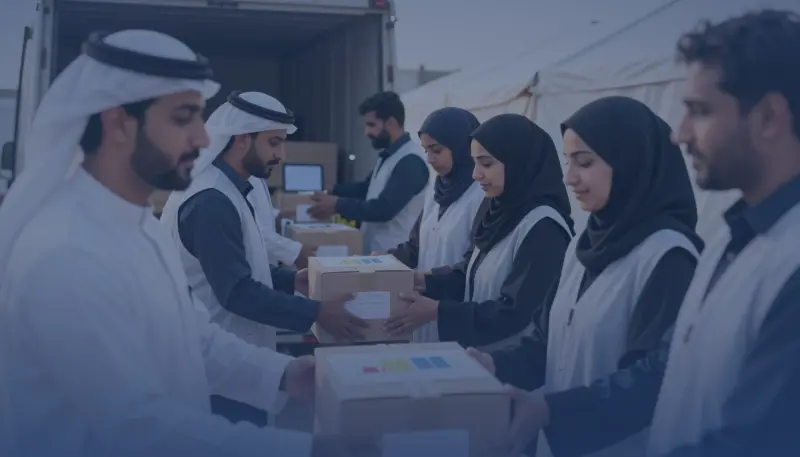
Humanitarian Logistics and Emergency Supply Course

At a glance
- Duration
- 1 Week
- Format
- Classroom
- Cities
- Vienna, London, Istanbul, Dubai, Nice, Kuala Lumpur and more
- Next session
- 9 – 13 November 2026, Vienna
- Average fee
- 5,750 €
Overview
Humanitarian Logistics and Emergency Supply Chain Training Course is a one-week course for logistics, supply, procurement, warehouse, transport, program, and field teams who leave with a Humanitarian Logistics Response Control Pack. The course connects humanitarian logistics preparedness, emergency supply chain assessment, emergency procurement, humanitarian warehousing, last-mile distribution, pipeline visibility, accountability, and recovery transition. It addresses disrupted capacity, access constraints, urgent relief flows, and coordination gaps. Agile Leaders Training Center delivers this course on humanitarian logistics and emergency supply chains.
Who Should Attend
- Teams responsible for emergency supply planning, preparedness stocks, and relief-item pipelines
- Functions responsible for emergency sourcing, procurement, suppliers, customs, and access interfaces
- Teams responsible for humanitarian warehouses, inventory, cold-chain interfaces, and dispatch
- Functions responsible for transport capacity, fleet coordination, route access, and last-mile delivery
- Teams responsible for field distribution, partner coordination, accountability, and recovery transition
The course assumes participants support humanitarian, development, public-service, or emergency operations and leaves out clinical supply protocols, legal advice, security tactics, and software configuration.
Departments and Industries
The course supports emergency supply decisions across humanitarian response, public services, community organizations, and essential-service operations.
- Humanitarian logistics, supply, procurement, and emergency operations
- Warehousing, inventory, transport, fleet, and distribution coordination
- Program delivery, field operations, partner management, and accountability
- Public services, health response, shelter, food assistance, and community relief
- Preparedness, resilience, recovery, sustainability, and information management
Learning Objectives
By the end of this course, participants will be able to:
- Analyze logistics capacity, needs, constraints, and priorities.
- Build preparedness stock and emergency sourcing controls.
- Apply warehouse, cold-chain, and relief-item accountability tools.
- Evaluate transport, access, and last-mile options.
- Prioritize pipeline, coordination, and distribution decisions.
- Build a Humanitarian Logistics Response Control Pack.
Course Agenda
Day 1: Preparedness and Logistics Assessment
- Emergency Scenario and Supply-Need Assumption Map
- Logistics Capacity Assessment and Constraint Register
- Preparedness Enabler's Guide Stakeholder-System Map
- Relief-Item Criticality and Pre-Positioning Matrix
- Contingency Supply Plan and Activation Triggers
Day 2: Emergency Sourcing and Transport Capacity
- Emergency Procurement Route and Approval Matrix
- Supplier Capacity and Rapid-Due-Diligence Checklist
- Transport Mode, Fleet, and Load Planning Tool
- Customs, Border, and Access Constraint Tracker
- Service Agreement and Mobilization Control Log
Day 3: Warehousing and Relief-Item Control
- Humanitarian Warehouse Layout and Flow Plan
- Receipt, Inspection, Lot, and Expiry Register
- Cold-Chain Interface and Temperature Exception Log
- Stock Status, Loss, Damage, and Adjustment Controls
- Picking, Dispatch, and Handover Evidence File
Day 4: Distribution, Coordination, and Recovery
- Pipeline Visibility and Supply-Gap Dashboard
- Coordination Forum and Information-Sharing Protocol
- Last-Mile Distribution Site and Route Matrix
- Relief-Item Accountability and Reconciliation Sheet
- Reverse Logistics and Recovery Transition Map
Day 5: Humanitarian Logistics Practice
- Exercise: Assess Capacity and Set Preparedness Priorities
- Exercise: Mobilize Emergency Sourcing and Transport
- Exercise: Control Warehouse, Cold-Chain, and Dispatch Evidence
- Exercise: Balance Pipeline, Access, and Distribution Decisions
- Capstone Exercise: Build the Humanitarian Logistics Response Control Pack
Practical Exercises
The course uses suggested activities to connect emergency needs, capacity evidence, relief-item flow, and field decisions.
- Suggested activity: convert a disaster scenario into supply assumptions, capacity gaps, pre-positioning priorities, and activation triggers.
- Suggested activity: compare suppliers and transport modes under urgency, access, capacity, accountability, and sustainability constraints.
- Suggested activity: reconcile warehouse receipts, stock status, dispatch evidence, partner handover, and distribution records for relief items.
- Suggested activity: design a reverse-flow and recovery transition for reusable assets, residual stocks, waste, and closed response sites.
FAQs
Who suits humanitarian logistics training, and what does it assume?
Humanitarian logistics training suits supply, procurement, warehouse, transport, program, field, and emergency coordination teams and assumes practical exposure to humanitarian, development, public-service, or emergency operations.
How does humanitarian logistics training differ from general crisis management training?
Humanitarian logistics training controls relief-item sourcing, transport, storage, pipelines, distribution, accountability, and recovery flows, while general crisis management training centers on leadership, decisions, communications, continuity, and organizational response.
How should an emergency supply chain assess logistics capacity?
An emergency supply chain should map suppliers, warehouses, transport assets, routes, borders, handling equipment, cold-chain interfaces, workforce, partners, information systems, and access constraints against priority needs and response scenarios.
What records support relief-item accountability in humanitarian logistics?
Relief-item accountability uses purchase and donation records, receipt and inspection evidence, lot and expiry data, stock adjustments, pick and dispatch records, partner handovers, distribution lists, reconciliations, loss reports, and closure records.
Conclusion
Participants take back a Humanitarian Logistics Response Control Pack. It connects preparedness assumptions, capacity evidence, emergency sourcing, transport, warehouse controls, cold-chain interfaces, pipeline gaps, last-mile distribution, accountability, reverse flows, and recovery transition. The pack changes fragmented relief movements into a documented operating flow with defined triggers, owners, evidence, exceptions, and coordination points.
credits: 5 credit per day
Course Mode: full-time
Provider: Agile Leaders Training Center
-
Events for this Course
-
Vienna 9 – 13 November 2026
-
London 16 – 20 November 2026
-
Istanbul 23 – 27 November 2026
-
Dubai 30 November – 4 December 2026
-
Nice 30 November – 4 December 2026
-
Kuala Lumpur 7 – 11 December 2026
-
Lisbon 7 – 11 December 2026
-
Jakarta 14 – 18 December 2026
-
Rome 21 – 25 December 2026
-
Tokyo 28 December 2026 – 1 January 2027
-
Dubai 4 – 8 January 2027
-
Amsterdam 4 – 8 January 2027
-
Madrid 11 – 15 January 2027
-
Seoul 11 – 15 January 2027
-
Muscat 17 – 21 January 2027
-
London 18 – 22 January 2027
-
Bangkok 24 – 28 January 2027
-
Singapore 25 – 29 January 2027
-
Zanzibar 31 January – 4 February 2027
-
Abu Dhabi 1 – 5 February 2027
-
Barcelona 8 – 12 February 2027
-
Manama 14 – 18 February 2027
-
Frankfurt 15 – 19 February 2027
-
Athens 22 – 26 February 2027
-
Marbella 28 February – 4 March 2027
-
Baku 1 – 5 March 2027
-
Phuket 7 – 11 March 2027
-
Sharm El-Sheikh 15 – 19 March 2027
-
Vienna 22 – 26 March 2027
-
Doha 28 March – 1 April 2027
-
New York 29 March – 2 April 2027
-
Cape town 4 – 8 April 2027
-
Abu Dhabi 5 – 9 April 2027
-
Dubai 12 – 16 April 2027
-
Addis Ababa 12 – 16 April 2027
-
Montreux 19 – 23 April 2027
-
Berlin 19 – 23 April 2027
-
Milan 26 – 30 April 2027
-
Toronto 2 – 6 May 2027
-
Amsterdam 3 – 7 May 2027
-
London 10 – 14 May 2027
-
Tashkent 16 – 20 May 2027
-
Cairo 17 – 21 May 2027
-
Manama 23 – 27 May 2027
-
Paris 31 May – 4 June 2027
-
Nairobi 6 – 10 June 2027
-
Lagos 13 – 17 June 2027
-
Tbilisi 14 – 18 June 2027
-
Accra 20 – 24 June 2027
-
Madrid 28 June – 2 July 2027
-
Istanbul 5 – 9 July 2027
-
Porto 5 – 9 July 2027
-
Geneva 11 – 15 July 2027
-
Cairo 12 – 16 July 2027
-
Kuala Lumpur 19 – 23 July 2027
-
Trabzon 25 – 29 July 2027
-
Kuwait 1 – 5 August 2027
-
Paris 2 – 6 August 2027
-
Dubai 9 – 13 August 2027
-
London 9 – 13 August 2027
-
Abu Dhabi 9 – 13 August 2027
-
Johannesburg 15 – 19 August 2027
-
Bali 22 – 26 August 2027
-
Amman 29 August – 2 September 2027
-
Casablanca 30 August – 3 September 2027
-
San Diego 6 – 10 September 2027
-
Rome 13 – 17 September 2027
-
Prague 20 – 24 September 2027
-
Zoom 27 September – 1 October 2027
-
Munich 4 – 8 October 2027
-
Barcelona 11 – 15 October 2027
-
Milan 18 – 22 October 2027
-
Amsterdam 25 – 29 October 2027
-
Langkawi 31 October – 4 November 2027
-
Chicago 7 – 11 November 2027
-
Abu Dhabi 8 – 12 November 2027
| Image | Location | Dates | Duration | Mode | Price | Actions |
|---|---|---|---|---|---|---|

|
Barcelona |
Week 06, 2027 8 – 12 February 2027 |
1 Week | Onsite | €5,700 | |

|
Manama |
Week 06, 2027 14 – 18 February 2027 |
1 Week | Onsite | €4,700 | |

|
Frankfurt |
Week 07, 2027 15 – 19 February 2027 |
1 Week | Onsite | €5,700 | |

|
Athens |
Week 08, 2027 22 – 26 February 2027 |
1 Week | Onsite | €6,700 | |

|
Marbella |
Week 08, 2027 28 February – 4 March 2027 |
1 Week | Onsite | €5,700 | |

|
Baku |
Week 09, 2027 1 – 5 March 2027 |
1 Week | Onsite | €5,000 | |

|
Phuket |
Week 09, 2027 7 – 11 March 2027 |
1 Week | Onsite | €6,000 | |

|
Sharm El-Sheikh |
Week 11, 2027 15 – 19 March 2027 |
1 Week | Onsite | €4,100 | |

|
Vienna |
Week 12, 2027 22 – 26 March 2027 |
1 Week | Onsite | €5,700 | |

|
Doha |
Week 12, 2027 28 March – 1 April 2027 |
1 Week | Onsite | €5,500 | |

|
New York |
Week 13, 2027 29 March – 2 April 2027 |
1 Week | Onsite | €12,000 | |

|
Cape town |
Week 13, 2027 4 – 8 April 2027 |
1 Week | Onsite | €4,500 | |

|
Abu Dhabi |
Week 14, 2027 5 – 9 April 2027 |
1 Week | Onsite | €4,700 | |

|
Dubai |
Week 15, 2027 12 – 16 April 2027 |
1 Week | Onsite | €4,500 | |

|
Addis Ababa |
Week 15, 2027 12 – 16 April 2027 |
1 Week | Onsite | €4,500 | |

|
Montreux |
Week 16, 2027 19 – 23 April 2027 |
1 Week | Onsite | €7,500 | |

|
Berlin |
Week 16, 2027 19 – 23 April 2027 |
1 Week | Onsite | €5,700 | |

|
Milan |
Week 17, 2027 26 – 30 April 2027 |
1 Week | Onsite | €5,700 | |

|
Toronto |
Week 17, 2027 2 – 6 May 2027 |
1 Week | Onsite | €12,000 | |

|
Amsterdam |
Week 18, 2027 3 – 7 May 2027 |
1 Week | Onsite | €5,700 |
Frequently asked questions
What does this course cover?
OverviewHumanitarian Logistics and Emergency Supply Chain Training Course is a one-week course for logistics, supply, procurement, warehouse, transport, program, and field teams who leave with a Humanitarian Logistics Response Control Pack. The course connects humanitarian logistics preparedness, emergency supply chain assessment, emergency procurement, h…
Are training dates available?
Yes. Available dates and destinations are listed in the course dates section on this page.
How can I register?
Choose an available date on this page and complete the registration form, or send a programme enquiry.
Can I download the course brochure?
Yes. Use the brochure download link provided on this page.
This course by city
- NGO, Humanitarian and Development Management Training Courses in Abu Dhabi
- NGO, Humanitarian and Development Management Training Courses in Accra
- NGO, Humanitarian and Development Management Training Courses in Addis Ababa
- NGO, Humanitarian and Development Management Training Courses in Amman
- NGO, Humanitarian and Development Management Training Courses in Amsterdam
- NGO, Humanitarian and Development Management Training Courses in Athens
- NGO, Humanitarian and Development Management Training Courses in Baku
- NGO, Humanitarian and Development Management Training Courses in Bali
- NGO, Humanitarian and Development Management Training Courses in Bangkok
- NGO, Humanitarian and Development Management Training Courses in Barcelona
- NGO, Humanitarian and Development Management Training Courses in Berlin
- NGO, Humanitarian and Development Management Training Courses in Cairo
- NGO, Humanitarian and Development Management Training Courses in Cape town
- NGO, Humanitarian and Development Management Training Courses in Casablanca
- NGO, Humanitarian and Development Management Training Courses in Chicago
- NGO, Humanitarian and Development Management Training Courses in Doha
- NGO, Humanitarian and Development Management Training Courses in Dubai
- NGO, Humanitarian and Development Management Training Courses in Frankfurt
- NGO, Humanitarian and Development Management Training Courses in Geneva
- NGO, Humanitarian and Development Management Training Courses in Istanbul
- NGO, Humanitarian and Development Management Training Courses in Jakarta
- NGO, Humanitarian and Development Management Training Courses in Johannesburg
- NGO, Humanitarian and Development Management Training Courses in Kuala Lumpur
- NGO, Humanitarian and Development Management Training Courses in Kuwait
- NGO, Humanitarian and Development Management Training Courses in Lagos
- NGO, Humanitarian and Development Management Training Courses in Langkawi
- NGO, Humanitarian and Development Management Training Courses in Lisbon
- NGO, Humanitarian and Development Management Training Courses in London
- NGO, Humanitarian and Development Management Training Courses in Madrid
- NGO, Humanitarian and Development Management Training Courses in Manama
- NGO, Humanitarian and Development Management Training Courses in Marbella
- NGO, Humanitarian and Development Management Training Courses in Milan
- NGO, Humanitarian and Development Management Training Courses in Montreux
- NGO, Humanitarian and Development Management Training Courses in Munich
- NGO, Humanitarian and Development Management Training Courses in Muscat
- NGO, Humanitarian and Development Management Training Courses in Nairobi
- NGO, Humanitarian and Development Management Training Courses in New York
- NGO, Humanitarian and Development Management Training Courses in Nice
- NGO, Humanitarian and Development Management Training Courses in Paris
- NGO, Humanitarian and Development Management Training Courses in Phuket
- NGO, Humanitarian and Development Management Training Courses in Porto
- NGO, Humanitarian and Development Management Training Courses in Prague
- NGO, Humanitarian and Development Management Training Courses in Rome
- NGO, Humanitarian and Development Management Training Courses in San Diego
- NGO, Humanitarian and Development Management Training Courses in Seoul
- NGO, Humanitarian and Development Management Training Courses in Sharm El-Sheikh
- NGO, Humanitarian and Development Management Training Courses in Singapore
- NGO, Humanitarian and Development Management Training Courses in Tashkent
- NGO, Humanitarian and Development Management Training Courses in Tbilisi
- NGO, Humanitarian and Development Management Training Courses in Tokyo
- NGO, Humanitarian and Development Management Training Courses in Toronto
- NGO, Humanitarian and Development Management Training Courses in Trabzon
- NGO, Humanitarian and Development Management Training Courses in Vienna
- NGO, Humanitarian and Development Management Training Courses in Zanzibar
- NGO, Humanitarian and Development Management Training Courses in Zoom