ICU Infection Prevention and Device Safety Course
This 1-week course has 76 dates from November 2026 to November 2027 in 54 cities and live online. The next date runs 23 – 27 November 2026 in London. Fees per participant run from €4,100 (Casablanca) to €14,000 (San Diego) in a classroom, and from €1,500 live online.
- Duration
- 1 Week5 days
- Next start
- London
- Scheduled dates
- 76
- Classroom cities
- 54London, Amsterdam, Manama, Dubai and more
- Format
- Classroom and live online
- Fee per participant
- €1,500–€14,000Average €5,750
What does this course cover?
Overview
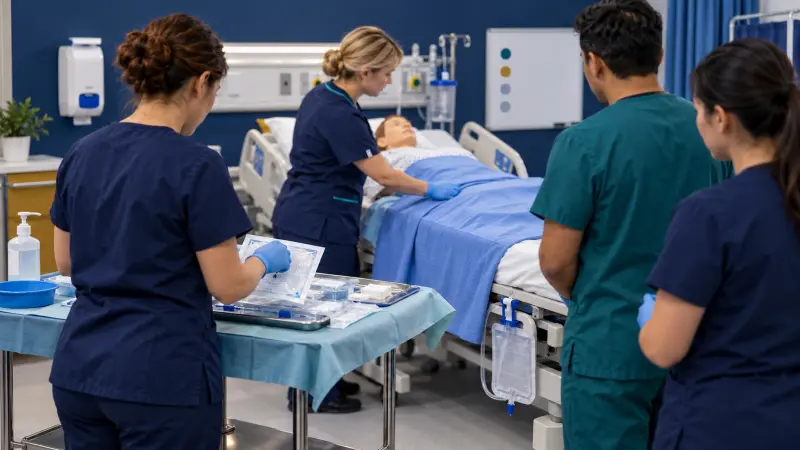
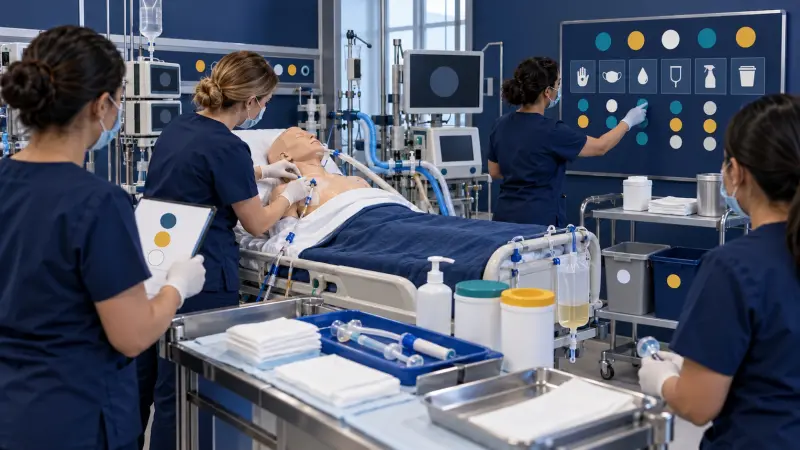
Advanced ICU Infection Prevention and Device Safety Course is a one-week advanced course for ICU nurses, critical care managers, infection prevention staff, respiratory care leaders, quality teams, and healthcare professionals. Participants build an ICU Device Infection Prevention Pack through ICU infection prevention and device safety, central line insertion and maintenance controls, urinary catheter necessity and maintenance review, ventilator and respiratory equipment infection controls, and ICU device-associated infection surveillance. Agile Leaders Training Center presents infection prevention around critical-care devices, high-acuity workflows, shared equipment, isolation, and surveillance.
Who Should Attend
- Intensive care and critical care nursing teams
- ICU managers and clinical operations leaders
- Infection prevention and surveillance personnel
- Respiratory care and equipment leads
- Quality, safety, and improvement teams supporting intensive care
The course assumes practical critical-care or infection-prevention experience. It does not confer clinical licensure, certification, treatment authority, or regulator approval.
Departments and Industries
The course supports adult, specialty, and mixed critical-care services managing invasive devices and high-risk care pathways.
- Hospital intensive and critical care units
- High-dependency and step-down services
- Respiratory care and ventilator support teams
- Infection prevention and healthcare quality functions
- Clinical engineering and environmental services interfaces
Learning Objectives
By the end of this course, participants will be able to:
- Map ICU infection risks across devices, contacts, equipment, and environment
- Apply insertion and maintenance controls for central and urinary catheters
- Coordinate respiratory-device and ventilator-interface precautions
- Control shared equipment, surfaces, isolation, and MDRO pathways
- Interpret device-day surveillance and verify infection signals
- Audit reliability and prioritize corrective improvement actions
Course Agenda
Day 1: ICU Risk Pathways and Control Governance
- Critical Care Infection Risk Pathway Map
- Device, Contact, and Environment Interface Review
- ICU Infection Prevention Responsibility Matrix
- High-Risk Patient and Procedure Profile
- Escalation and Stop-Process Decision Chart
Day 2: Central and Urinary Catheter Controls
- Central Line Insertion Readiness Checklist
- Maximal Barrier and Aseptic Practice Observation
- Central Line Maintenance Reliability Tool
- Urinary Catheter Indication and Necessity Review
- Device Access, Handover, and Removal Record
Day 3: Ventilation, Respiratory Devices, and Equipment
- Ventilator and Respiratory Circuit Interface Map
- Airway Equipment Handling Checklist
- Shared Noncritical Equipment Status Board
- Cleaning and Reprocessing Handover Log
- Condensate, Moisture, and Contamination Exception Record
Day 4: Isolation, Surveillance, and Response
- MDRO Precaution and Cohorting Decision Map
- Device-Day Denominator and Event Data Sheet
- ICU Infection Signal Verification Tool
- Cluster and Transmission Pathway Review
- Corrective Bundle and Feedback Tracker
Day 5: ICU Reliability and Improvement
- Suggested Exercise: ICU Infection Risk Mapping
- Suggested Exercise: Central Line and Catheter Observation
- Suggested Exercise: Respiratory Equipment Interface Review
- Suggested Exercise: Surveillance and Cluster Decisions
- Capstone Exercise: ICU Device Infection Prevention Pack
Practical Exercises
The course uses suggested activities with fictional medical, surgical, respiratory, and mixed intensive-care scenarios.
- Suggested activity: identify device, contact, environmental, and handover risks in an ICU pathway.
- Suggested activity: observe central-line controls and review urinary-catheter necessity.
- Suggested activity: trace respiratory equipment handling, shared-device status, and reprocessing handoffs.
- Suggested activity: calculate device-day measures, verify a signal, and coordinate corrective action.
FAQs
Who should attend advanced ICU infection prevention training?
The course suits ICU nurses, managers, infection preventionists, respiratory care personnel, quality teams, and professionals who oversee device, environment, isolation, surveillance, or improvement controls in critical care.
How does ICU infection prevention differ from general hospital IPC?
ICU prevention focuses on high device exposure, frequent access, invasive support, vulnerable patients, shared equipment, close contact, complex handoffs, intensive surveillance, and rapid escalation of control failures.
How are central-line and urinary-catheter risks controlled?
Teams use appropriate indications, trained personnel, insertion readiness, aseptic technique, maintenance observations, access control, daily necessity review, reliable handover, and prompt removal when no longer needed.
What belongs in respiratory-device infection control?
Controls cover equipment status, handling boundaries, circuit and airway interfaces, moisture and condensate risks, cleaning, reprocessing handoffs, storage, staff responsibilities, and escalation of contamination concerns.
How does surveillance support ICU improvement?
Surveillance uses clear definitions, device-day denominators, validated data, signal verification, trend review, cluster assessment, feedback, and corrective bundles while remaining distinct from bedside clinical diagnosis.
Conclusion
Participants leave with an ICU Device Infection Prevention Pack containing risk maps, insertion and maintenance tools, respiratory-equipment controls, device-status records, surveillance sheets, response arrangements, and improvement actions. The pack connects high-risk critical-care work with observable reliability. It helps multidisciplinary teams coordinate prevention around patients, devices, people, equipment, and data.
credits: 5 credit per day
Course Mode: full-time
Provider: Agile Leaders Training Center
-
Events for this Course
-
London 23 – 27 November 2026
-
Amsterdam 23 – 27 November 2026
-
Manama 29 November – 3 December 2026
-
Dubai 30 November – 4 December 2026
-
Abu Dhabi 30 November – 4 December 2026
-
Bangkok 6 – 10 December 2026
-
Casablanca 7 – 11 December 2026
-
Kuala Lumpur 14 – 18 December 2026
-
Tokyo 14 – 18 December 2026
-
Madrid 21 – 25 December 2026
-
Paris 28 December 2026 – 1 January 2027
-
Seoul 4 – 8 January 2027
-
Barcelona 11 – 15 January 2027
-
Milan 18 – 22 January 2027
-
Cape town 24 – 28 January 2027
-
Dubai 25 – 29 January 2027
-
Amman 31 January – 4 February 2027
-
Sharm El-Sheikh 1 – 5 February 2027
-
Madrid 8 – 12 February 2027
-
Doha 14 – 18 February 2027
-
Abu Dhabi 15 – 19 February 2027
-
Prague 22 – 26 February 2027
-
Porto 22 – 26 February 2027
-
Geneva 28 February – 4 March 2027
-
London 8 – 12 March 2027
-
Amsterdam 8 – 12 March 2027
-
Kuala Lumpur 15 – 19 March 2027
-
Montreux 22 – 26 March 2027
-
Rome 29 March – 2 April 2027
-
Lisbon 29 March – 2 April 2027
-
Marbella 4 – 8 April 2027
-
Dubai 5 – 9 April 2027
-
Vienna 12 – 16 April 2027
-
Langkawi 18 – 22 April 2027
-
Frankfurt 19 – 23 April 2027
-
Tashkent 25 – 29 April 2027
-
Jakarta 3 – 7 May 2027
-
Abu Dhabi 3 – 7 May 2027
-
Manama 9 – 13 May 2027
-
Barcelona 17 – 21 May 2027
-
Bali 23 – 27 May 2027
-
Amsterdam 31 May – 4 June 2027
-
London 7 – 11 June 2027
-
Singapore 7 – 11 June 2027
-
Rome 14 – 18 June 2027
-
Zanzibar 20 – 24 June 2027
-
Nice 28 June – 2 July 2027
-
Chicago 4 – 8 July 2027
-
Dubai 5 – 9 July 2027
-
Athens 12 – 16 July 2027
-
New York 19 – 23 July 2027
-
Cairo 26 – 30 July 2027
-
Accra 26 – 30 July 2027
-
Istanbul 2 – 6 August 2027
-
Munich 9 – 13 August 2027
-
Baku 16 – 20 August 2027
-
Phuket 22 – 26 August 2027
-
Lagos 22 – 26 August 2027
-
Nairobi 29 August – 2 September 2027
-
Abu Dhabi 6 – 10 September 2027
-
Vienna 13 – 17 September 2027
-
Addis Ababa 13 – 17 September 2027
-
Tbilisi 20 – 24 September 2027
-
Kuwait 26 – 30 September 2027
-
London 27 September – 1 October 2027
-
Berlin 27 September – 1 October 2027
-
Toronto 3 – 7 October 2027
-
Zoom 4 – 8 October 2027
-
Paris 11 – 15 October 2027
-
Trabzon 17 – 21 October 2027
-
Muscat 24 – 28 October 2027
-
San Diego 1 – 5 November 2027
-
Johannesburg 7 – 11 November 2027
-
Cairo 15 – 19 November 2027
-
Istanbul 15 – 19 November 2027
-
Milan 22 – 26 November 2027
When and where does this course run?
| Image | Location | Dates | Duration | Mode | Price | Actions |
|---|---|---|---|---|---|---|

|
London |
Week 48, 2026 23 – 27 November 2026 |
1 Week | Onsite | €5,700 | |

|
Amsterdam |
Week 48, 2026 23 – 27 November 2026 |
1 Week | Onsite | €5,700 | |

|
Manama |
Week 48, 2026 29 November – 3 December 2026 |
1 Week | Onsite | €4,700 | |

|
Dubai |
Week 49, 2026 30 November – 4 December 2026 |
1 Week | Onsite | €4,500 | |

|
Abu Dhabi |
Week 49, 2026 30 November – 4 December 2026 |
1 Week | Onsite | €4,700 | |

|
Bangkok |
Week 49, 2026 6 – 10 December 2026 |
1 Week | Onsite | €6,000 | |

|
Casablanca |
Week 50, 2026 7 – 11 December 2026 |
1 Week | Onsite | €4,100 | |

|
Kuala Lumpur |
Week 51, 2026 14 – 18 December 2026 |
1 Week | Onsite | €5,200 | |

|
Tokyo |
Week 51, 2026 14 – 18 December 2026 |
1 Week | Onsite | €10,000 | |

|
Madrid |
Week 52, 2026 21 – 25 December 2026 |
1 Week | Onsite | €5,700 | |

|
Paris |
Week 53, 2026 28 December 2026 – 1 January 2027 |
1 Week | Onsite | €5,700 | |

|
Seoul |
Week 01, 2027 4 – 8 January 2027 |
1 Week | Onsite | €10,000 | |

|
Barcelona |
Week 02, 2027 11 – 15 January 2027 |
1 Week | Onsite | €5,700 | |

|
Milan |
Week 03, 2027 18 – 22 January 2027 |
1 Week | Onsite | €5,700 | |

|
Cape town |
Week 03, 2027 24 – 28 January 2027 |
1 Week | Onsite | €4,500 | |
|
|
Dubai |
Week 04, 2027 25 – 29 January 2027 |
1 Week | Onsite | €4,500 | |

|
Amman |
Week 04, 2027 31 January – 4 February 2027 |
1 Week | Onsite | €4,100 | |

|
Sharm El-Sheikh |
Week 05, 2027 1 – 5 February 2027 |
1 Week | Onsite | €4,100 | |
|
|
Madrid |
Week 06, 2027 8 – 12 February 2027 |
1 Week | Onsite | €5,700 | |

|
Doha |
Week 06, 2027 14 – 18 February 2027 |
1 Week | Onsite | €5,500 |
Frequently asked questions
When does this course next run?
The next date runs 23 – 27 November 2026 in London. It is one of 76 dates scheduled up to November 2027.
Where is this course held?
In a classroom in 54 cities: London, Amsterdam, Manama, Dubai, Abu Dhabi, Bangkok, Casablanca, Kuala Lumpur, and more. It is also scheduled as live online sessions.
Can I attend this course online?
Yes. One date is scheduled as a live online session: 4 – 8 October 2027, from €1,500 per participant.
How long is the course?
1 Week. Each date shows its start and end dates.
How much does the course cost?
Fees per participant run from €4,100 (Casablanca) to €14,000 (San Diego) in a classroom, and from €1,500 live online. Each date shows its own fee.
What does this course cover?
OverviewAdvanced ICU Infection Prevention and Device Safety Course is a one-week advanced course for ICU nurses, critical care managers, infection prevention staff, respiratory care leaders, quality teams, and healthcare professionals. Participants build an ICU Device Infection Prevention Pack through ICU infection prevention and device safety, central li…
Are training dates available?
Yes. Available dates and destinations are listed in the course dates section on this page.
How can I register?
Choose an available date on this page and complete the registration form, or send a programme enquiry.
Can I download the course brochure?
Yes. Use the brochure download link provided on this page.
Can this course be run for our team?
Yes. Tell us the number of participants and your preferred dates and city through our training request form.
This course by city
- Healthcare Management Training Courses in Abu Dhabi
- Healthcare Management Training Courses in Accra
- Healthcare Management Training Courses in Addis Ababa
- Healthcare Management Training Courses in Amman
- Healthcare Management Training Courses in Amsterdam
- Healthcare Management Training Courses in Athens
- Healthcare Management Training Courses in Baku
- Healthcare Management Training Courses in Bali
- Healthcare Management Training Courses in Bangkok
- Healthcare Management Training Courses in Barcelona
- Healthcare Management Training Courses in Berlin
- Healthcare Management Training Courses in Cairo
- Healthcare Management Training Courses in Cape town
- Healthcare Management Training Courses in Casablanca
- Healthcare Management Training Courses in Chicago
- Healthcare Management Training Courses in Doha
- Healthcare Management Training Courses in Dubai
- Healthcare Management Training Courses in Frankfurt
- Healthcare Management Training Courses in Geneva
- Healthcare Management Training Courses in Istanbul
- Healthcare Management Training Courses in Jakarta
- Healthcare Management Training Courses in Johannesburg
- Healthcare Management Training Courses in Kuala Lumpur
- Healthcare Management Training Courses in Kuwait
- Healthcare Management Training Courses in Lagos
- Healthcare Management Training Courses in Langkawi
- Healthcare Management Training Courses in Lisbon
- Healthcare Management Training Courses in London
- Healthcare Management Training Courses in Madrid
- Healthcare Management Training Courses in Manama
- Healthcare Management Training Courses in Marbella
- Healthcare Management Training Courses in Milan
- Healthcare Management Training Courses in Montreux
- Healthcare Management Training Courses in Munich
- Healthcare Management Training Courses in Muscat
- Healthcare Management Training Courses in Nairobi
- Healthcare Management Training Courses in New York
- Healthcare Management Training Courses in Nice
- Healthcare Management Training Courses in Paris
- Healthcare Management Training Courses in Phuket
- Healthcare Management Training Courses in Porto
- Healthcare Management Training Courses in Prague
- Healthcare Management Training Courses in Rome
- Healthcare Management Training Courses in San Diego
- Healthcare Management Training Courses in Seoul
- Healthcare Management Training Courses in Sharm El-Sheikh
- Healthcare Management Training Courses in Singapore
- Healthcare Management Training Courses in Tashkent
- Healthcare Management Training Courses in Tbilisi
- Healthcare Management Training Courses in Tokyo
- Healthcare Management Training Courses in Toronto
- Healthcare Management Training Courses in Trabzon
- Healthcare Management Training Courses in Vienna
- Healthcare Management Training Courses in Zanzibar
- Healthcare Management Training Courses in Zoom
More ways to train
- Every date of this courseAll cities and months, with fees
- Healthcare Management Training CoursesEvery course in this subject
- Live online coursesTrain from wherever you are
- Training citiesCourses in each city
- All upcoming datesThe course calendar by month
- Training for your teamTell us the course, the number of participants and your dates
- Contact usAsk us about this course