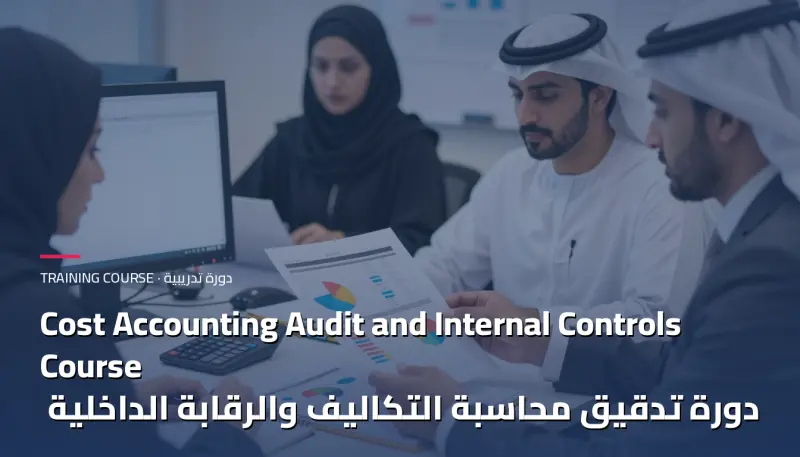
Inventory and Stock Accounting Control Course
At a glance
- Duration
- 1 Week
- Format
- Classroom
- Cities
- Amman, Abu Dhabi, London, Jakarta, Montreux, Berlin and more
- Next session
- 25 – 29 October 2026, Amman
- Average fee
- 5,750 €
Overview
Advanced Inventory and Stock Accounting Control Course is a one-week course for accounting managers, inventory controllers, operations finance, warehouse finance, business partners, and control teams that need a Stock Accounting Control and Reporting Pack. Participants connect inventory transaction accounting, inventory costing methods, physical stock reconciliation, net realizable value assessment, and inventory management reporting across manufacturing and distribution flows. Agile Leaders Training Center develops inventory accounting control practice.
Who Should Attend
Teams responsible for inventory accounting, period-end close, and financial reporting
Teams responsible for stock records, warehouse controls, and physical counts
Teams responsible for manufacturing cost, material movements, and production accounting
Teams responsible for finance business partnering, operations analysis, and management reporting
Teams responsible for internal control, reconciliation, assurance support, and remediation
The course assumes participants can interpret inventory records, accounting entries, movement documents, and count results; it leaves out warehouse engineering, tax advice, and equity-securities accounting.
Departments and Industries
The course supports departments and industries that hold, transform, move, or account for physical inventory.
Accounting, finance, cost control, internal control, and reporting departments
Inventory control, warehousing, procurement, production, and supply-chain teams
Manufacturing, industrial equipment, automotive, and consumer-product businesses
Retail, wholesale, distribution, transport, and logistics organizations
Healthcare, hospitality, construction, energy, and maintenance operations
Learning Objectives
By the end of this course, participants will be able to:
Build inventory-accounting lifecycle and ownership controls
Apply purchase, conversion, and movement accounting rules
Compare specific-identification, FIFO, and weighted-average costing
Analyze count differences and reconcile stock records
Evaluate net realizable value, obsolescence, and write-down evidence
Use controls, analytics, and reports to govern inventory adjustments
Course Agenda
Day 1: Inventory Lifecycle and Records
Procure-to-Stock and Stock-to-Consumption Process Map
Inventory Ownership, Location, and Status Matrix
Item Master and Unit-of-Measure Control Checklist
Perpetual Inventory Subledger Architecture
Document Flow and Accounting Evidence Register
Day 2: Transactions and Costing
Receipt, Transfer, Issue, and Return Entry Map
Production Movement and Conversion-Cost Model
Specific-Identification Cost Assignment Method
FIFO and Weighted-Average Cost Comparison
Inventory Cut-Off and Goods-in-Transit Schedule
Day 3: Counts and Reconciliation
Physical Count Instruction and Responsibility Plan
Blind Count, Test Count, and Recount Protocol
Stock Movement Freeze and Cut-Off Control Log
Subledger, General Ledger, and Physical Reconciliation
Inventory Variance Root-Cause Matrix
Day 4: Valuation, Adjustments, and Reporting
Net Realizable Value Assessment Worksheet
Slow-Moving, Obsolete, Damaged, and Excess Stock Matrix
Write-Down, Reversal, and Write-Off Approval Bridge
Segregation, Access, and Adjustment Control Matrix
Inventory Close and Management Reporting Dashboard
Day 5: Integrated Stock Accounting Practice
Exercise: Map Inventory Transactions and Accounting Evidence
Exercise: Apply Cost Formulas and Conversion Allocation
Exercise: Reconcile Counts and Investigate Variances
Exercise: Evaluate Valuation and Govern Adjustments
Capstone Exercise: Stock Accounting Control and Reporting Pack
Practical Exercises
The course uses suggested activities that connect warehouse evidence, accounting records, valuation judgments, and management decisions.
Suggested activity: trace receipts, transfers, production issues, returns, and cut-off entries for a manufacturing operation
Suggested activity: reconcile perpetual records, general-ledger balances, and physical counts for a distributor
Suggested activity: assess slow-moving and damaged items using net realizable value evidence
Suggested activity: present adjustment recommendations with approvals, control findings, and management measures
FAQs
Who suits advanced inventory accounting control training?
Accounting managers, inventory controllers, operations finance, warehouse finance, business partners, and control teams suit the training. Participants should already interpret inventory records, accounting entries, movement documents, and count results.
How does inventory accounting control differ from warehouse management training?
Inventory accounting control focuses on recognition, costing, records, counts, reconciliation, valuation, adjustments, controls, and reporting, while warehouse management training focuses on physical layout, handling, storage, replenishment, and logistics execution.
Which inventory costing methods does stock accounting use?
Stock accounting may use specific identification for suitable items and FIFO or weighted-average cost formulas for ordinarily interchangeable items, with consistent application and documented treatment of purchase and conversion costs.
How are physical stock differences reconciled?
Physical differences are reconciled by validating count instructions and results, controlling movement cut-off, comparing physical quantities with perpetual records, tracing transactions and ownership, investigating causes, approving adjustments, and monitoring repeat variances.
How is net realizable value used in inventory accounting?
Net realizable value is compared with inventory cost using supportable selling-price, completion-cost, and selling-cost evidence. The assessment identifies required write-downs, documents judgments, governs approvals, and supports later reassessment.
Conclusion
Participants take back a Stock Accounting Control and Reporting Pack containing lifecycle maps, master-data controls, transaction entries, costing models, count procedures, reconciliations, valuation worksheets, adjustment governance, analytics, and reports. The pack makes inventory balances and changes traceable. It also aligns accounting, operations, warehousing, and control owners around evidence and accountability.
credits: 5 credit per day
Course Mode: full-time
Provider: Agile Leaders Training Center
-
Events for this Course
-
Amman 25 – 29 October 2026
-
Abu Dhabi 26 – 30 October 2026
-
London 2 – 6 November 2026
-
Jakarta 9 – 13 November 2026
-
Montreux 16 – 20 November 2026
-
Berlin 16 – 20 November 2026
-
Istanbul 23 – 27 November 2026
-
Porto 23 – 27 November 2026
-
Kuala Lumpur 30 November – 4 December 2026
-
Phuket 6 – 10 December 2026
-
Paris 14 – 18 December 2026
-
Amsterdam 21 – 25 December 2026
-
New York 21 – 25 December 2026
-
Langkawi 27 – 31 December 2026
-
Lagos 27 – 31 December 2026
-
Dubai 4 – 8 January 2027
-
Rome 4 – 8 January 2027
-
Manama 10 – 14 January 2027
-
Marbella 10 – 14 January 2027
-
Geneva 17 – 21 January 2027
-
Amsterdam 25 – 29 January 2027
-
Chicago 31 January – 4 February 2027
-
Milan 8 – 12 February 2027
-
Kuala Lumpur 15 – 19 February 2027
-
Singapore 15 – 19 February 2027
-
Trabzon 21 – 25 February 2027
-
Abu Dhabi 22 – 26 February 2027
-
Accra 28 February – 4 March 2027
-
Dubai 1 – 5 March 2027
-
Kuwait 7 – 11 March 2027
-
Doha 14 – 18 March 2027
-
Toronto 14 – 18 March 2027
-
Johannesburg 21 – 25 March 2027
-
Rome 29 March – 2 April 2027
-
Manama 4 – 8 April 2027
-
London 12 – 16 April 2027
-
Madrid 12 – 16 April 2027
-
Muscat 18 – 22 April 2027
-
Barcelona 26 – 30 April 2027
-
Casablanca 3 – 7 May 2027
-
Sharm El-Sheikh 3 – 7 May 2027
-
Vienna 10 – 14 May 2027
-
Cairo 17 – 21 May 2027
-
Milan 17 – 21 May 2027
-
Bangkok 23 – 27 May 2027
-
Tashkent 23 – 27 May 2027
-
Dubai 31 May – 4 June 2027
-
Istanbul 31 May – 4 June 2027
-
London 7 – 11 June 2027
-
Cape town 13 – 17 June 2027
-
Amsterdam 21 – 25 June 2027
-
Bali 27 June – 1 July 2027
-
Abu Dhabi 28 June – 2 July 2027
-
Prague 5 – 9 July 2027
-
Nice 12 – 16 July 2027
-
Barcelona 19 – 23 July 2027
-
Tbilisi 26 – 30 July 2027
-
Athens 2 – 6 August 2027
-
Zanzibar 8 – 12 August 2027
-
Lisbon 9 – 13 August 2027
-
Paris 16 – 20 August 2027
-
London 23 – 27 August 2027
-
Zoom 30 August – 3 September 2027
-
Abu Dhabi 30 August – 3 September 2027
-
Munich 6 – 10 September 2027
-
Seoul 13 – 17 September 2027
-
Frankfurt 13 – 17 September 2027
-
San Diego 20 – 24 September 2027
-
Baku 27 September – 1 October 2027
-
Nairobi 3 – 7 October 2027
-
Cairo 4 – 8 October 2027
-
Dubai 11 – 15 October 2027
-
Madrid 11 – 15 October 2027
-
Vienna 18 – 22 October 2027
-
Tokyo 25 – 29 October 2027
| Image | Location | Dates | Duration | Mode | Price | Actions |
|---|---|---|---|---|---|---|

|
Sharm El-Sheikh |
Week 18, 2027 3 – 7 May 2027 |
1 Week | Onsite | €4,100 | |

|
Vienna |
Week 19, 2027 10 – 14 May 2027 |
1 Week | Onsite | €5,700 | |

|
Cairo |
Week 20, 2027 17 – 21 May 2027 |
1 Week | Onsite | €4,100 | |

|
Milan |
Week 20, 2027 17 – 21 May 2027 |
1 Week | Onsite | €5,700 | |

|
Bangkok |
Week 20, 2027 23 – 27 May 2027 |
1 Week | Onsite | €6,000 | |

|
Tashkent |
Week 20, 2027 23 – 27 May 2027 |
1 Week | Onsite | €4,500 | |

|
Dubai |
Week 22, 2027 31 May – 4 June 2027 |
1 Week | Onsite | €4,500 | |

|
Istanbul |
Week 22, 2027 31 May – 4 June 2027 |
1 Week | Onsite | €4,500 | |

|
London |
Week 23, 2027 7 – 11 June 2027 |
1 Week | Onsite | €5,700 | |

|
Cape town |
Week 23, 2027 13 – 17 June 2027 |
1 Week | Onsite | €4,500 | |

|
Amsterdam |
Week 25, 2027 21 – 25 June 2027 |
1 Week | Onsite | €5,700 | |

|
Bali |
Week 25, 2027 27 June – 1 July 2027 |
1 Week | Onsite | €5,700 | |

|
Abu Dhabi |
Week 26, 2027 28 June – 2 July 2027 |
1 Week | Onsite | €4,700 | |

|
Prague |
Week 27, 2027 5 – 9 July 2027 |
1 Week | Onsite | €6,000 | |

|
Nice |
Week 28, 2027 12 – 16 July 2027 |
1 Week | Onsite | €5,700 | |

|
Barcelona |
Week 29, 2027 19 – 23 July 2027 |
1 Week | Onsite | €5,700 | |

|
Tbilisi |
Week 30, 2027 26 – 30 July 2027 |
1 Week | Onsite | €5,000 | |

|
Athens |
Week 31, 2027 2 – 6 August 2027 |
1 Week | Onsite | €6,700 | |

|
Zanzibar |
Week 31, 2027 8 – 12 August 2027 |
1 Week | Onsite | €5,500 | |

|
Lisbon |
Week 32, 2027 9 – 13 August 2027 |
1 Week | Onsite | €5,700 |
Frequently asked questions
What does this course cover?
OverviewAdvanced Inventory and Stock Accounting Control Course is a one-week course for accounting managers, inventory controllers, operations finance, warehouse finance, business partners, and control teams that need a Stock Accounting Control and Reporting Pack. Participants connect inventory transaction accounting, inventory costing methods, physical s…
Are training dates available?
Yes. Available dates and destinations are listed in the course dates section on this page.
How can I register?
Choose an available date on this page and complete the registration form, or send a programme enquiry.
Can I download the course brochure?
Yes. Use the brochure download link provided on this page.
This course by city
- Finance and Accounting Training Courses in Abu Dhabi
- Finance and Accounting Training Courses in Accra
- Finance and Accounting Training Courses in Amman
- Finance and Accounting Training Courses in Amsterdam
- Finance and Accounting Training Courses in Athens
- Finance and Accounting Training Courses in Baku
- Finance and Accounting Training Courses in Bali
- Finance and Accounting Training Courses in Bangkok
- Finance and Accounting Training Courses in Barcelona
- Finance and Accounting Training Courses in Berlin
- Finance and Accounting Training Courses in Cairo
- Finance and Accounting Training Courses in Cape town
- Finance and Accounting Training Courses in Casablanca
- Finance and Accounting Training Courses in Chicago
- Finance and Accounting Training Courses in Doha
- Finance and Accounting Training Courses in Dubai
- Finance and Accounting Training Courses in Frankfurt
- Finance and Accounting Training Courses in Geneva
- Finance and Accounting Training Courses in Istanbul
- Finance and Accounting Training Courses in Jakarta
- Finance and Accounting Training Courses in Johannesburg
- Finance and Accounting Training Courses in Kuala Lumpur
- Finance and Accounting Training Courses in Kuwait
- Finance and Accounting Training Courses in Lagos
- Finance and Accounting Training Courses in Langkawi
- Finance and Accounting Training Courses in Lisbon
- Finance and Accounting Training Courses in London
- Finance and Accounting Training Courses in Madrid
- Finance and Accounting Training Courses in Manama
- Finance and Accounting Training Courses in Marbella
- Finance and Accounting Training Courses in Milan
- Finance and Accounting Training Courses in Montreux
- Finance and Accounting Training Courses in Munich
- Finance and Accounting Training Courses in Muscat
- Finance and Accounting Training Courses in Nairobi
- Finance and Accounting Training Courses in New York
- Finance and Accounting Training Courses in Nice
- Finance and Accounting Training Courses in Paris
- Finance and Accounting Training Courses in Phuket
- Finance and Accounting Training Courses in Porto
- Finance and Accounting Training Courses in Prague
- Finance and Accounting Training Courses in Rome
- Finance and Accounting Training Courses in San Diego
- Finance and Accounting Training Courses in Seoul
- Finance and Accounting Training Courses in Sharm El-Sheikh
- Finance and Accounting Training Courses in Singapore
- Finance and Accounting Training Courses in Tashkent
- Finance and Accounting Training Courses in Tbilisi
- Finance and Accounting Training Courses in Tokyo
- Finance and Accounting Training Courses in Toronto
- Finance and Accounting Training Courses in Trabzon
- Finance and Accounting Training Courses in Vienna
- Finance and Accounting Training Courses in Zanzibar
- Finance and Accounting Training Courses in Zoom