ISO 13485 Lead Auditor Training for Medical Device QMS
At a glance
- Duration
- 1 Week
- Format
- Classroom
- Cities
- Abu Dhabi, Sharm El-Sheikh, New York, Lagos, Munich, Marbella and more
- Next session
- 2 – 6 November 2026, Abu Dhabi
- Average fee
- 7,450 €
Course Overview
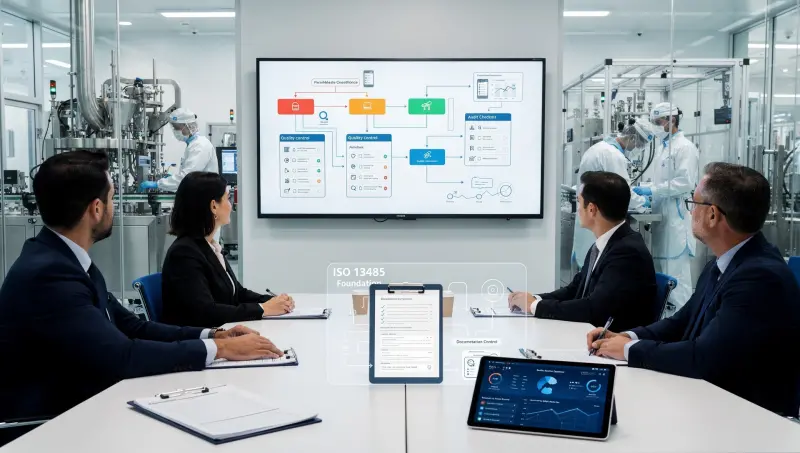
The ISO 13485 Lead Auditor course is a specialized corporate training program designed to prepare professionals to audit Medical Devices Quality Management Systems (MDQMS) against ISO 13485:2016 requirements. This ISO 13485 Lead Auditor Training Course focuses on the complete ISO 13485 Audit Process, from understanding medical device regulatory expectations to planning, conducting, closing, and following up on audits. ISO 13485 is recognized as the key quality management standard for the medical device industry, covering the full device lifecycle from design and development to production, installation, servicing, and post-market activities.
Participants will explore how Medical Device Quality Management System Training supports patient safety, regulatory compliance, supplier control, risk-based thinking, documentation discipline, and audit readiness. The course integrates ISO 13485:2016, ISO 19011:2018 audit guidelines, and the certification audit approach aligned with ISO/IEC 17021-1. It is suitable for professionals seeking ISO 13485 Lead Auditor Certification, ISO 13485 Auditor Certification, ISO 13485 Compliance Training, or PECB ISO 13485 Lead Auditor Training.
Through practical examples, audit scenarios, case-based exercises, and exam-focused review, participants will build the competence required to perform internal and external MDQMS audits, lead audit teams, draft nonconformity reports, evaluate corrective actions, and prepare for the ISO 13485 Lead Auditor Exam Preparation pathway. The PECB exam covers seven competency domains, including MDQMS principles, ISO 13485 audit preparation, audit execution, audit closure, and audit program management.
Target Audience
- Quality Managers and Quality Assurance Professionals
- Internal Auditors and Lead Auditors
- Medical Device QMS Auditors
- Regulatory Affairs Managers and Specialists
- Compliance Officers in medical device organizations
- Quality Engineers and Validation Engineers
- Supplier Quality Engineers and Supplier Auditors
- Production, Manufacturing, and Operations Managers
- Risk Management and Post-Market Surveillance Professionals
- Consultants supporting ISO 13485 certification projects
- Technical experts preparing for a Medical Device QMS audit
- Professionals seeking ISO 13485 Lead Auditor Certification Course
- Professionals involved in ISO 13485 Internal Auditor or supplier audit programs
Targeted Organizational Departments
- Quality Assurance and Quality Control: For teams responsible for maintaining ISO 13485:2016 compliance, audit readiness, CAPA, documentation, and product quality assurance.
- Regulatory Affairs: For professionals aligning MDQMS requirements with medical device regulations, market access expectations, and regulatory audit requirements.
- Internal Audit and Compliance: For teams conducting ISO 13485 Audit Training, internal audits, supplier audits, and certification audit preparation.
- Manufacturing and Production: For departments managing controlled production, process validation, equipment controls, traceability, and nonconforming outputs.
- Research, Design, and Development: For teams involved in design controls, risk management, product realization, design verification, and design validation.
- Supplier Quality and Procurement: For departments responsible for supplier qualification, risk-based supplier control, outsourced processes, and supplier audit programs.
- Risk Management and Patient Safety: For teams applying risk-based thinking, ISO 14971 alignment, complaint handling, and post-market monitoring.
- Document Control and QMS Administration: For staff managing procedures, records, audit evidence, document review, and QMS process control.
Targeted Industries
- Medical device manufacturing
- In vitro diagnostic device manufacturing
- Medical device software and digital health solutions
- Sterilization and validation service providers
- Contract manufacturing organizations
- Medical device component and material suppliers
- Healthcare technology companies
- Medical equipment distribution and installation services
- Calibration and testing laboratories supporting medical devices
- Regulatory consulting and certification preparation firms
- Hospital engineering and biomedical equipment departments
- Pharmaceutical and life sciences companies with medical device divisions
Course Offerings
By the end of this course, participants will be able to:
- Interpret ISO 13485:2016 requirements within the context of a Medical Devices Quality Management System.
- Explain the relationship between ISO 13485, ISO 19011, ISO/IEC 17021-1, and regulatory expectations for medical devices.
- Apply audit principles, evidence-based auditing, risk-based auditing, and process-based auditing in an MDQMS environment.
- Plan and prepare an ISO 13485 audit, including audit scope, criteria, objectives, audit team roles, checklists, and working documents.
- Conduct opening meetings, audit interviews, document reviews, site observations, and sampling activities.
- Collect and verify audit evidence across design, production, supplier control, validation, traceability, complaints, and CAPA processes.
- Draft clear audit findings, nonconformity statements, opportunities for improvement, and audit conclusions.
- Lead audit teams and manage communication with auditees, process owners, senior management, and certification stakeholders.
- Evaluate corrective action plans and follow-up evidence after an ISO 13485 audit.
- Manage an ISO 13485 internal audit program using audit program planning, auditor competence, audit frequency, and risk-based prioritization.
- Prepare for the PECB ISO 13485 Lead Auditor exam by reviewing the seven examination competency domains.
- Strengthen professional readiness for Medical Device QMS Lead Auditor Training and Medical Device Quality Audit Training roles.
Training Methodology
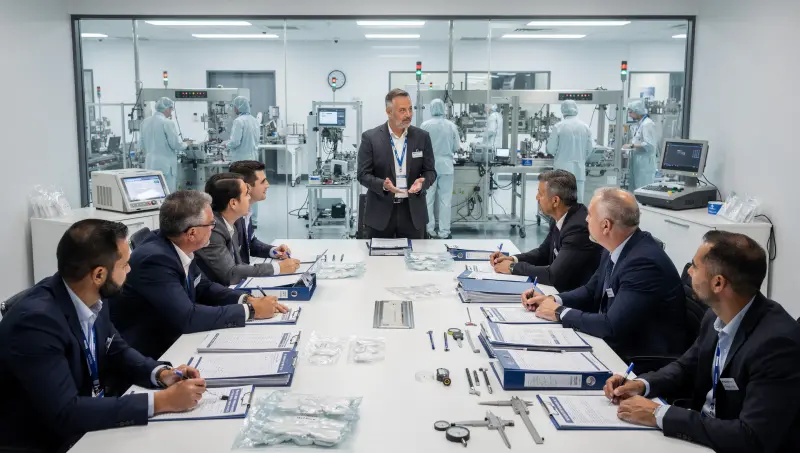
This ISO 13485 Lead Auditor Course uses a practical, audit-centered methodology that combines instructor-led explanation, structured discussions, case studies, audit simulations, and exam-focused review. The training begins with ISO 13485:2016 fundamentals, medical device lifecycle expectations, QMS process controls, regulatory purpose, and risk-based thinking. It then moves into the operational audit cycle, including audit program management, audit planning, stage 1 and stage 2 audit activities, on-site evidence collection, audit reporting, and follow-up.
Participants will work with realistic medical device scenarios involving supplier qualification, process validation, design and development controls, documented information, CAPA, complaint handling, traceability, and post-market surveillance. The methodology reflects the practical audit techniques referenced in the uploaded materials, including ISO 19011:2018 audit principles, interviewing, listening, sampling, evidence collection, nonconformity reporting, and corrective action follow-up.
The course includes group work, guided interpretation exercises, audit planning tasks, role-play for opening and closing meetings, and case-based nonconformity writing. Participants also review sample exam-style questions to strengthen ISO 13485 Lead Auditor Exam Preparation. Tools are not provided as software or licensed systems; however, participants receive insights, examples, templates, and practical references relevant to audit planning, audit checklists, audit reports, corrective action forms, and MDQMS audit program management.
Course Toolbox
- ISO 13485:2016 clause interpretation guide
- ISO 13485 audit planning checklist examples
- MDQMS process audit map examples
- Audit program planning reference structure
- Stage 1 and Stage 2 audit preparation examples
- Opening meeting and closing meeting guide
- Audit interview question bank examples
- Audit evidence collection and sampling examples
- Nonconformity writing examples
- Corrective action follow-up review examples
- Supplier audit checklist insights
- Risk-based audit planning examples
- ISO 19011:2018 audit principles reference notes
- PECB exam domain review guide
- Sample exam-style discussion questions
- Case study scenarios for medical device QMS audits
- Examples related to design control, supplier control, validation, complaint handling, and CAPA
Note: Tools are not provided as ready-made software or official licensed templates. The course provides insights, examples, frameworks, and practical references relevant to ISO 13485 auditing.
Course Agenda
Day 1: Introduction to Medical Devices Quality Management Systems (MDQMS) and ISO 13485
- Topic 1: Course orientation, learning objectives, ISO 13485 Lead Auditor Certification pathway, and expectations for the ISO 13485 Lead Auditor Training Course.
- Topic 2: Introduction to Medical Devices Quality Management Systems, regulatory purpose, patient safety, product effectiveness, and the role of MDQMS in global medical device compliance.
- Topic 3: ISO 13485:2016 structure, scope, applicability, exclusions, documented information, and relationship with ISO 9001 and medical device regulations.
- Topic 4: Medical device lifecycle auditing: design, development, manufacturing, distribution, installation, servicing, complaint handling, and post-market surveillance.
- Topic 5: Risk-based thinking in ISO 13485, including ISO 14971 alignment, supplier risk, process risk, product risk, and patient safety considerations.
- Topic 6: Key MDQMS clauses and audit focus areas, including management responsibility, resource management, product realization, measurement, analysis, and improvement.
- Reflection & Review: Review of ISO 13485 Compliance Training concepts, MDQMS terminology, regulatory expectations, and exam Domain 1 and Domain 2 links.
Day 2: Audit Principles, Preparation and Launching of an Audit
- Topic 1: Fundamental audit concepts, audit terminology, audit objectives, audit scope, audit criteria, audit evidence, audit findings, and audit conclusions.
- Topic 2: ISO 19011:2018 audit principles, auditor behavior, independence, evidence-based decision-making, confidentiality, and professional judgment.
- Topic 3: Audit program management for ISO 13485 audits, including risk-based scheduling, auditor competence, audit resources, and audit priorities.
- Topic 4: Preparing an ISO 13485 audit: reviewing documentation, understanding process interactions, defining audit criteria, and preparing working documents.
- Topic 5: Launching the audit: audit notification, audit team assignment, opening meeting preparation, communication rules, and auditee responsibilities.
- Topic 6: Stage 1 audit and preparation for Stage 2 audit, including readiness review, documentation review, audit plan development, and risk-based sampling strategy.
- Reflection & Review: Review of ISO 13485 Audit Training principles, audit preparation steps, audit planning outputs, and exam Domain 3 and Domain 4 requirements.
Day 3: On-Site Audit Activities
- Topic 1: Conducting Stage 2 audit activities using a process-based and risk-based approach for Medical Device QMS Auditor Training.
- Topic 2: Opening meeting execution, audit agenda confirmation, communication expectations, confidentiality, escalation routes, and audit logistics.
- Topic 3: Collecting and verifying audit evidence through interviews, document review, record sampling, process observation, and site tour techniques.
- Topic 4: Auditing critical ISO 13485 processes, including design control, production control, supplier control, validation, traceability, sterilization, and monitoring activities.
- Topic 5: Managing difficult audit situations, auditee communication, interview errors, conflicting evidence, time pressure, and audit team coordination.
- Topic 6: Drafting audit findings, classifying nonconformities, writing evidence-based nonconformity statements, and linking findings to ISO 13485 criteria.
- Reflection & Review: Review of on-site audit execution, audit evidence quality, nonconformity drafting, and exam Domain 5 requirements for conducting an ISO 13485 audit.
Day 4: Closing the Audit
- Topic 1: Finalizing audit findings, consolidating audit evidence, verifying audit conclusions, and preparing for closing meeting communication.
- Topic 2: Conducting the closing meeting, presenting audit results, explaining nonconformities, managing disagreement, and confirming next steps.
- Topic 3: ISO 13485 audit report writing, including report structure, audit scope, audit criteria, audit summary, findings, conclusions, and follow-up expectations.
- Topic 4: Evaluating corrective action plans, root cause analysis quality, correction versus corrective action, evidence review, and follow-up audit requirements.
- Topic 5: Managing an ISO 13485 internal audit program, including audit frequency, auditor competence, audit records, performance monitoring, and continual improvement.
- Topic 6: Competence and evaluation of auditors, Lead Auditor responsibilities, audit team leadership, ethical conduct, and preparation for professional certification.
- Reflection & Review: Review of ISO 13485 audit closure, audit reporting, corrective action follow-up, audit program management, and exam Domain 6 and Domain 7 requirements.
Day 5: Certification Exam and Exam Preparation Review
- Topic 1: Overview of the PECB ISO 13485 Lead Auditor exam structure, examination expectations, candidate responsibilities, and certification process.
- Topic 2: Exam Domain 1 review: fundamental principles and concepts of a Medical Devices Quality Management System.
- Topic 3: Exam Domain 2 review: ISO 13485 MDQMS requirements, clause interpretation, process controls, documentation, and continual improvement.
- Topic 4: Exam Domains 3 and 4 review: audit principles, audit concepts, audit planning, audit scope, audit criteria, and audit preparation.
- Topic 5: Exam Domains 5, 6, and 7 review: conducting audits, closing audits, reporting findings, corrective action follow-up, and managing audit programs.
- Topic 6: Certification Exam: Participants sit for the ISO 13485 Lead Auditor Certification Exam according to the applicable examination rules and policies.
- Reflection & Review: Final recap of ISO 13485 Lead Auditor Exam Preparation, key audit techniques, MDQMS audit judgment, and certification readiness.
FAQ
What specific qualifications or prerequisites are needed for participants before enrolling in the course?
Participants should have a basic understanding of quality management systems, ISO 13485:2016 requirements, medical device regulatory expectations, or auditing principles. Prior experience in quality assurance, regulatory affairs, internal audit, supplier quality, medical device manufacturing, validation, compliance, or QMS documentation is strongly recommended. For the PECB ISO 13485 Lead Auditor Certification, participants should also review PECB’s candidate handbook for certification, examination, experience, audit-hour, and credential requirements.
How long is each day's session, and is there a total number of hours required for the entire course?
Each day's session is generally structured to last around 4-5 hours, with breaks and interactive activities included. The total course duration spans one week, approximately 20-25 hours of instruction.
Is ISO 13485 Lead Auditor the same as ISO 13485 Internal Auditor?
No. ISO 13485 Internal Auditor training usually focuses on conducting first-party audits within an organization’s own Medical Devices Quality Management System. ISO 13485 Lead Auditor training goes further by preparing participants to plan, lead, conduct, report, and follow up on internal and external audits, including audit team leadership, audit program management, supplier audits, and certification audit concepts. The Lead Auditor pathway is more advanced and aligns with broader audit competencies such as ISO 19011 audit principles, ISO/IEC 17021-1 certification audit concepts, and PECB examination domains.
How This Course is Different from Other ISO 13485 Lead Auditor Courses
This ISO 13485 Lead Auditor Course stands out because it is designed as a practical corporate audit capability program, not only a standard-awareness course. Many ISO 13485 courses focus heavily on clause explanation, while this course connects the standard directly to real audit decisions in medical device organizations. Participants learn how to interpret ISO 13485:2016 requirements, but also how to prepare audit plans, assess process effectiveness, conduct interviews, verify evidence, write defensible findings, lead audit teams, and evaluate corrective action plans.
The course integrates three essential perspectives: medical device regulatory compliance, MDQMS process effectiveness, and professional audit execution. It reflects the PECB agenda and exam domains, including MDQMS fundamentals, audit principles, audit preparation, conducting audits, closing audits, and managing audit programs. It also includes practical focus areas from the uploaded syllabus, such as ISO 19011:2018 guidelines, risk-based audit planning, interviewing techniques, supplier audits, evidence collection, nonconformity reporting, and corrective action follow-up.
Another differentiator is the strong medical device application focus. Participants examine audit implications for design and development, supplier control, production, validation, traceability, complaint handling, advisory notices, and post-market monitoring. This makes the course suitable for quality professionals, regulatory teams, supplier auditors, and technical experts who need more than exam preparation; they need workplace-ready competence for ISO 13485 audits in regulated medical device environments.
credits: 5 credit per day
Course Mode: full-time
Provider: Agile Leaders Training Center
-
Events for this Course
-
Abu Dhabi 2 – 6 November 2026
-
Sharm El-Sheikh 9 – 13 November 2026
-
New York 9 – 13 November 2026
-
Lagos 15 – 19 November 2026
-
Munich 23 – 27 November 2026
-
Marbella 29 November – 3 December 2026
-
Dubai 30 November – 4 December 2026
-
Bali 6 – 10 December 2026
-
Geneva 13 – 17 December 2026
-
Baku 21 – 25 December 2026
-
Johannesburg 27 – 31 December 2026
-
Lisbon 28 December 2026 – 1 January 2027
-
Chicago 3 – 7 January 2027
-
Tbilisi 18 – 22 January 2027
-
Accra 24 – 28 January 2027
-
London 1 – 5 February 2027
-
Phuket 7 – 11 February 2027
-
Berlin 8 – 12 February 2027
-
Vienna 15 – 19 February 2027
-
Kuala Lumpur 22 – 26 February 2027
-
Amsterdam 8 – 12 March 2027
-
Tokyo 15 – 19 March 2027
-
Langkawi 21 – 25 March 2027
-
Seoul 5 – 9 April 2027
-
Nice 19 – 23 April 2027
-
Manama 9 – 13 May 2027
-
Madrid 24 – 28 May 2027
-
San Diego 31 May – 4 June 2027
-
Zanzibar 6 – 10 June 2027
-
Doha 20 – 24 June 2027
-
Toronto 20 – 24 June 2027
-
Cape town 27 June – 1 July 2027
-
Milan 5 – 9 July 2027
-
Athens 12 – 16 July 2027
-
Bangkok 18 – 22 July 2027
-
Abu Dhabi 19 – 23 July 2027
-
Singapore 19 – 23 July 2027
-
Tashkent 25 – 29 July 2027
-
Jakarta 26 – 30 July 2027
-
Muscat 1 – 5 August 2027
-
Zoom 9 – 13 August 2027
-
Barcelona 16 – 20 August 2027
-
Amman 22 – 26 August 2027
-
Istanbul 23 – 27 August 2027
-
Frankfurt 23 – 27 August 2027
-
Cairo 30 August – 3 September 2027
-
Paris 30 August – 3 September 2027
-
Dubai 6 – 10 September 2027
-
Nairobi 12 – 16 September 2027
-
Sharm El-Sheikh 13 – 17 September 2027
-
Casablanca 13 – 17 September 2027
-
Prague 20 – 24 September 2027
-
Kuwait 26 – 30 September 2027
-
Trabzon 3 – 7 October 2027
-
Montreux 11 – 15 October 2027
-
London 18 – 22 October 2027
-
Istanbul 18 – 22 October 2027
-
Porto 18 – 22 October 2027
-
Rome 25 – 29 October 2027
| Image | Location | Dates | Duration | Mode | Price | Actions |
|---|---|---|---|---|---|---|

|
Abu Dhabi |
Week 45, 2026 2 – 6 November 2026 |
1 Week | Onsite | €6,500 | |

|
Sharm El-Sheikh |
Week 46, 2026 9 – 13 November 2026 |
1 Week | Onsite | €5,200 | |

|
New York |
Week 46, 2026 9 – 13 November 2026 |
1 Week | Onsite | €16,000 | |

|
Lagos |
Week 46, 2026 15 – 19 November 2026 |
1 Week | Onsite | €6,000 | |

|
Munich |
Week 48, 2026 23 – 27 November 2026 |
1 Week | Onsite | €6,500 | |

|
Marbella |
Week 48, 2026 29 November – 3 December 2026 |
1 Week | Onsite | €6,500 | |

|
Dubai |
Week 49, 2026 30 November – 4 December 2026 |
1 Week | Onsite | €6,500 | |

|
Bali |
Week 49, 2026 6 – 10 December 2026 |
1 Week | Onsite | €6,500 | |

|
Geneva |
Week 50, 2026 13 – 17 December 2026 |
1 Week | Onsite | €8,000 | |

|
Baku |
Week 52, 2026 21 – 25 December 2026 |
1 Week | Onsite | €8,000 | |

|
Johannesburg |
Week 52, 2026 27 – 31 December 2026 |
1 Week | Onsite | €6,000 | |

|
Lisbon |
Week 53, 2026 28 December 2026 – 1 January 2027 |
1 Week | Onsite | €6,500 | |

|
Chicago |
Week 53, 2027 3 – 7 January 2027 |
1 Week | Onsite | €16,000 | |

|
Tbilisi |
Week 03, 2027 18 – 22 January 2027 |
1 Week | Onsite | €5,700 | |

|
Accra |
Week 03, 2027 24 – 28 January 2027 |
1 Week | Onsite | €6,000 | |

|
London |
Week 05, 2027 1 – 5 February 2027 |
1 Week | Onsite | €6,500 | |
|
Phuket |
Week 05, 2027 7 – 11 February 2027 |
1 Week | Onsite | €8,000 | |

|
Berlin |
Week 06, 2027 8 – 12 February 2027 |
1 Week | Onsite | €6,500 | |

|
Vienna |
Week 07, 2027 15 – 19 February 2027 |
1 Week | Onsite | €7,500 | |

|
Kuala Lumpur |
Week 08, 2027 22 – 26 February 2027 |
1 Week | Onsite | €6,500 |
Frequently asked questions
Are training dates available?
Yes. Available dates and destinations are listed in the course dates section on this page.
How can I register?
Choose an available date on this page and complete the registration form, or send a programme enquiry.
Can I download the course brochure?
Yes. Use the brochure download link provided on this page.
This course by city
- Certified Courses By International Bodies in Abu Dhabi
- Certified Courses By International Bodies in Accra
- Certified Courses By International Bodies in Amman
- Certified Courses By International Bodies in Amsterdam
- Certified Courses By International Bodies in Athens
- Certified Courses By International Bodies in Baku
- Certified Courses By International Bodies in Bali
- Certified Courses By International Bodies in Bangkok
- Certified Courses By International Bodies in Barcelona
- Certified Courses By International Bodies in Berlin
- Certified Courses By International Bodies in Cairo
- Certified Courses By International Bodies in Cape town
- Certified Courses By International Bodies in Casablanca
- Certified Courses By International Bodies in Chicago
- Certified Courses By International Bodies in Doha
- Certified Courses By International Bodies in Dubai
- Certified Courses By International Bodies in Frankfurt
- Certified Courses By International Bodies in Geneva
- Certified Courses By International Bodies in Istanbul
- Certified Courses By International Bodies in Jakarta
- Certified Courses By International Bodies in Johannesburg
- Certified Courses By International Bodies in Kuala Lumpur
- Certified Courses By International Bodies in Kuwait
- Certified Courses By International Bodies in Lagos
- Certified Courses By International Bodies in Langkawi
- Certified Courses By International Bodies in Lisbon
- Certified Courses By International Bodies in London
- Certified Courses By International Bodies in Madrid
- Certified Courses By International Bodies in Manama
- Certified Courses By International Bodies in Marbella
- Certified Courses By International Bodies in Milan
- Certified Courses By International Bodies in Montreux
- Certified Courses By International Bodies in Munich
- Certified Courses By International Bodies in Muscat
- Certified Courses By International Bodies in Nairobi
- Certified Courses By International Bodies in New York
- Certified Courses By International Bodies in Nice
- Certified Courses By International Bodies in Paris
- Certified Courses By International Bodies in Phuket
- Certified Courses By International Bodies in Porto
- Certified Courses By International Bodies in Prague
- Certified Courses By International Bodies in Rome
- Certified Courses By International Bodies in San Diego
- Certified Courses By International Bodies in Seoul
- Certified Courses By International Bodies in Sharm El-Sheikh
- Certified Courses By International Bodies in Singapore
- Certified Courses By International Bodies in Tashkent
- Certified Courses By International Bodies in Tbilisi
- Certified Courses By International Bodies in Tokyo
- Certified Courses By International Bodies in Toronto
- Certified Courses By International Bodies in Trabzon
- Certified Courses By International Bodies in Vienna
- Certified Courses By International Bodies in Zanzibar
- Certified Courses By International Bodies in Zoom