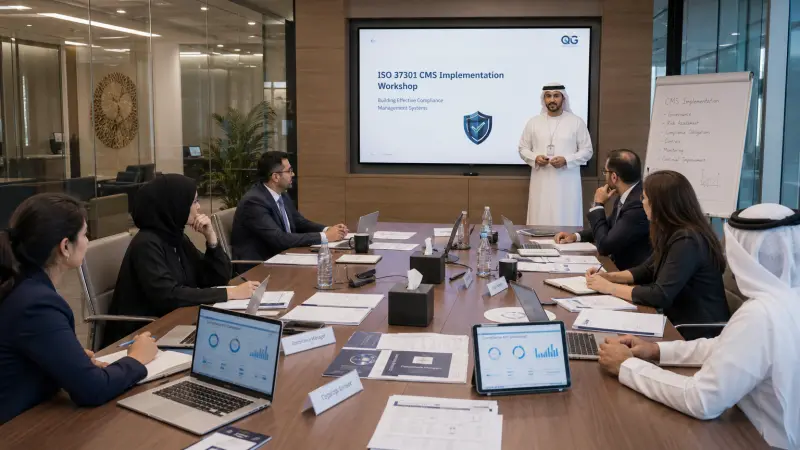
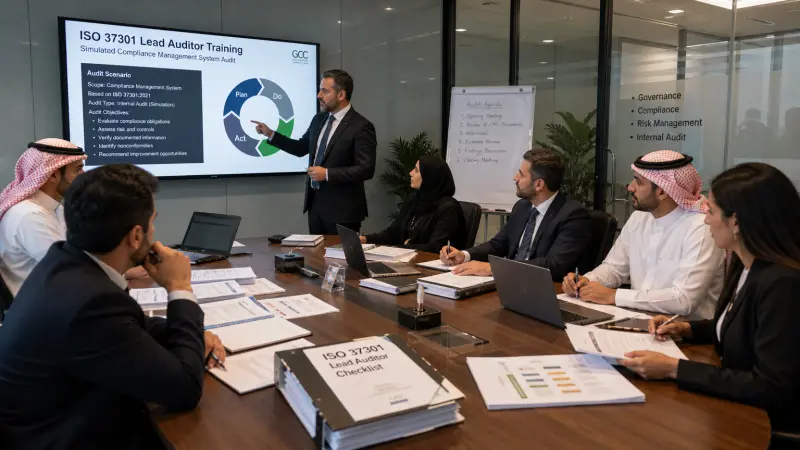
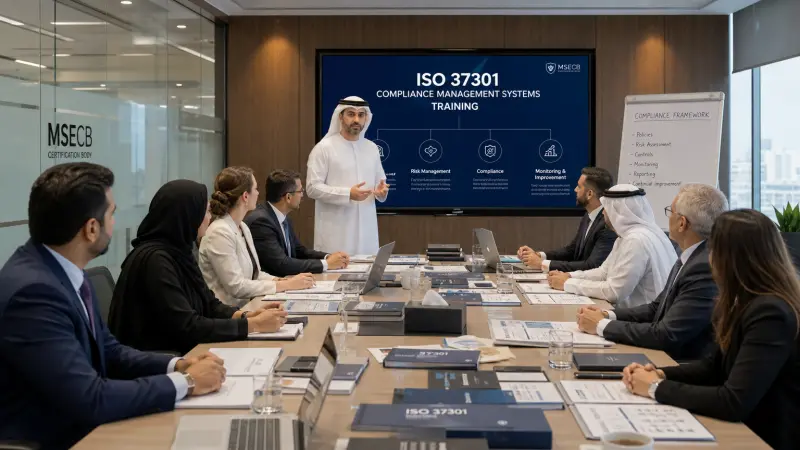
ISO 37301 Compliance Management Systems Foundation
At a glance
- Duration
- 1 Week
- Format
- Classroom
- Cities
- Abu Dhabi, Lagos, Langkawi, Trabzon, Cairo, London and more
- Next session
- 30 November – 4 December 2026, Abu Dhabi
- Average fee
- 7,500 €
Overview
The ISO 37301 Compliance Management Systems Foundation course provides a structured introduction to the principles, vocabulary, requirements, and organizational use of ISO 37301:2021. Organizations operating across regulated sectors require systematic frameworks to address legal responsibilities, contractual commitments, and corporate codes of conduct. This one-week programme clarifies how an organization identifies compliance obligations, conducts compliance risk assessment, and embeds ethical behaviour across operational units. Participants explore the structure of an effective compliance management system without delving into complex lead auditor techniques or project deployment plans. This course is delivered by Agile Leaders Training Center.
Who Should Attend
- Compliance officers, analysts, and ethics team members seeking structured knowledge of ISO 37301:2021.
- Governance, risk management, and internal control specialists aiming to align compliance practices with international standards.
- Internal auditors and legal counsel responsible for evaluating regulatory exposure and corporate integrity frameworks.
- Quality and management system coordinators expanding their remit to cover regulatory risk and ethical conduct.
- Supervisors and administrative managers responsible for promoting compliant behavior across operating departments.
Departments and Industries
This course supports professionals across sectors requiring rigorous adherence to statutory, voluntary, and organizational mandates.
- Compliance, Legal, and Corporate Governance Departments
- Internal Audit and Risk Management Divisions
- Banking, Financial Services, and Insurance Institutions
- Energy, Utilities, and Infrastructure Operators
- Healthcare, Pharmaceuticals, and Medical Technology Providers
- Manufacturing, Logistics, and Global Supply Chain Networks
Learning Objectives
By the end of this course, participants will be able to:
- Explain core concepts, terminology, and governance value of a compliance management system.
- Identify compliance obligations derived from legal, regulatory, contractual, and voluntary sources.
- Conduct foundational compliance risk identification, consequence analysis, and prioritization.
- Interpret the practical requirements of ISO 37301 Clauses 4 through 10.
- Distinguish governance responsibilities among the governing body, top management, and the compliance function.
- Evaluate operational controls, whistleblower reporting mechanisms, and investigation workflows.
- Prepare for advanced compliance studies through structured review of core standard principles.
Training Methodology
Instruction relies on interactive presentations, practical case analyses, and scenario-based group activities. Participants examine real-world regulatory risk cycles, mapping activities to compliance mandates and control evidence. Structured quizzes and guided discussions reinforce terminology, distinguishing noncompliance from management system nonconformity. Facilitators guide reviews of Clauses 4 to 10 using practical organizational examples.
Course Toolbox
- ISO 37301 clause interpretation reference sheets
- Compliance obligations register template
- Compliance risk assessment matrix guide
- Interested party expectations mapping tool
- Compliance policy outline and roles matrix example
Course Agenda
Day 1: Fundamentals of Compliance and ISO 37301
- Introduction to compliance principles, compliance obligations, and corporate integrity
- Purpose, scope, and organizational benefits of ISO 37301:2021
- High-level structure and core principles of a compliance management system
- Interactions among compliance, risk management, internal controls, and governance
- Structural compliance pillars and common organizational barriers to compliance
- Alignment between ISO 37301 and other management system standards
- Reflection and review of fundamental compliance terminology and concepts
Day 2: Organizational Context, Leadership, and Compliance Culture
- Analyzing internal and external context factors affecting compliance performance
- Identifying interested parties and documenting their compliance expectations
- Defining boundaries and application scope of the compliance management system
- Leadership commitments expected of the governing body and top management
- Formulating compliance policy and assigning compliance roles and authorities
- Fostering an organizational compliance culture that supports ethical decision-making
- Reflection and review on establishing organizational context and leadership commitment
Day 3: Compliance Obligations, Risk Assessment, Planning, and Support
- Identifying, tracking, and updating legal, regulatory, and voluntary compliance obligations
- Methodologies for compliance risk identification and consequence evaluation
- Prioritizing compliance risks based on likelihood and severity of impact
- Establishing measurable compliance objectives and mitigation plans
- Resource allocation, staff competence development, and awareness programmes
- Documented information management and compliance evidence retention
- Reflection and review on connecting obligations to risk planning and support
Day 4: Operational Compliance Controls, Raising Concerns, and Investigations
- Operational planning and implementation of preventive compliance controls
- Embedding compliance rules into day-to-day business processes and contracts
- Third-party due diligence and monitoring external partner compliance
- Establishing confidential channels for raising concerns without fear of retaliation
- Handling reports of suspected misconduct through structured investigation protocols
- Remediation steps, disciplinary procedures, and corrective action plans
- Reflection and review on managing operational controls, reporting, and investigations
Day 5: Performance Evaluation, Continual Improvement, and Foundation Review
- Monitoring, measurement, and reporting using key compliance indicators
- Gathering compliance feedback from operational units and interested parties
- Internal audit requirements within a compliance management system
- Conducting top management reviews to evaluate system adequacy and effectiveness
- Managing nonconformities, correcting systemic deficiencies, and continual improvement
- Scenario-based practice questions covering core standard domains
- Reflection and review integrating Clauses 4 through 10 into an ongoing system
Practical Exercises
- Formulate a baseline compliance obligations register for an operational department.
- Conduct a sample compliance risk assessment evaluating likelihood and severity of non-compliance.
- Develop a procedure outline for handling reports received through a confidential whistleblowing mechanism.
- Construct a management review agenda evaluating key compliance performance indicators.
FAQs
What specific qualifications or prerequisites are needed for participants before enrolling in the course?
No formal qualifications or prior certifications are required. The course serves professionals new to compliance management as well as those seeking a clear overview of ISO 37301 requirements. Familiarity with business administration, governance, or risk concepts is useful but not mandatory.
How long is each day's session, and is there a total number of hours required for the entire course?
Daily sessions run for approximately four to five hours, including instruction, practical discussions, and scheduled breaks. The entire one-week course comprises twenty to twenty-five hours of structured learning.
Is ISO 37301 only for compliance departments, and does implementing it guarantee that an organization will never experience noncompliance?
The standard applies across entire organizations, engaging governing bodies, executive leadership, and operational personnel alongside compliance teams. Implementation does not guarantee that violations will never occur, but it establishes systematic controls to prevent, detect, respond to, and mitigate noncompliance issues.
Course Differentiation
Unlike programmes centered on lead auditor assessment methodologies or technical implementation projects, this course provides an accessible, balanced foundation. Participants gain an understanding of Clauses 4 through 10, exploring how compliance obligations, ethical leadership, risk assessments, and performance evaluation fit together into an effective operational framework.
credits: 5 credit per day
Course Mode: full-time
Provider: Agile Leaders Training Center
-
Events for this Course
-
Abu Dhabi 30 November – 4 December 2026
-
Lagos 13 – 17 December 2026
-
Langkawi 27 – 31 December 2026
-
Trabzon 27 – 31 December 2026
-
Cairo 28 December 2026 – 1 January 2027
-
London 4 – 8 January 2027
-
Prague 4 – 8 January 2027
-
San Diego 4 – 8 January 2027
-
Doha 10 – 14 January 2027
-
Muscat 10 – 14 January 2027
-
Istanbul 11 – 15 January 2027
-
Casablanca 18 – 22 January 2027
-
Baku 18 – 22 January 2027
-
New York 18 – 22 January 2027
-
Amman 24 – 28 January 2027
-
Frankfurt 25 – 29 January 2027
-
Barcelona 1 – 5 February 2027
-
Bangkok 7 – 11 February 2027
-
Geneva 14 – 18 February 2027
-
Paris 15 – 19 February 2027
-
Athens 15 – 19 February 2027
-
Kuwait 21 – 25 February 2027
-
Kuala Lumpur 22 – 26 February 2027
-
Rome 22 – 26 February 2027
-
Tbilisi 1 – 5 March 2027
-
Lisbon 1 – 5 March 2027
-
Accra 7 – 11 March 2027
-
Amsterdam 8 – 12 March 2027
-
Nairobi 21 – 25 March 2027
-
Tokyo 29 March – 2 April 2027
-
Montreux 29 March – 2 April 2027
-
Seoul 5 – 9 April 2027
-
Cape town 11 – 15 April 2027
-
Phuket 18 – 22 April 2027
-
Nice 26 – 30 April 2027
-
Tashkent 2 – 6 May 2027
-
Zoom 3 – 7 May 2027
-
London 3 – 7 May 2027
-
Milan 3 – 7 May 2027
-
Manama 9 – 13 May 2027
-
Zanzibar 9 – 13 May 2027
-
Chicago 16 – 20 May 2027
-
Madrid 24 – 28 May 2027
-
Porto 24 – 28 May 2027
-
Dubai 7 – 11 June 2027
-
Toronto 13 – 17 June 2027
-
Sharm El-Sheikh 21 – 25 June 2027
-
Vienna 21 – 25 June 2027
-
Berlin 21 – 25 June 2027
-
Marbella 4 – 8 July 2027
-
Jakarta 5 – 9 July 2027
-
Abu Dhabi 12 – 16 July 2027
-
Johannesburg 1 – 5 August 2027
-
Singapore 16 – 20 August 2027
-
Munich 30 August – 3 September 2027
-
Bali 5 – 9 September 2027
-
Dubai 4 – 8 October 2027
| Image | Location | Dates | Duration | Mode | Price | Actions |
|---|---|---|---|---|---|---|

|
Abu Dhabi |
Week 49, 2026 30 November – 4 December 2026 |
1 Week | Onsite | €6,500 | |

|
Lagos |
Week 50, 2026 13 – 17 December 2026 |
1 Week | Onsite | €6,000 | |

|
Langkawi |
Week 52, 2026 27 – 31 December 2026 |
1 Week | Onsite | €8,000 | |

|
Trabzon |
Week 52, 2026 27 – 31 December 2026 |
1 Week | Onsite | €8,000 | |

|
Cairo |
Week 53, 2026 28 December 2026 – 1 January 2027 |
1 Week | Onsite | €5,200 | |

|
London |
Week 01, 2027 4 – 8 January 2027 |
1 Week | Onsite | €6,500 | |

|
Prague |
Week 01, 2027 4 – 8 January 2027 |
1 Week | Onsite | €7,500 | |

|
San Diego |
Week 01, 2027 4 – 8 January 2027 |
1 Week | Onsite | €16,000 | |

|
Doha |
Week 01, 2027 10 – 14 January 2027 |
1 Week | Onsite | €7,000 | |

|
Muscat |
Week 01, 2027 10 – 14 January 2027 |
1 Week | Onsite | €6,500 | |

|
Istanbul |
Week 02, 2027 11 – 15 January 2027 |
1 Week | Onsite | €6,000 | |

|
Casablanca |
Week 03, 2027 18 – 22 January 2027 |
1 Week | Onsite | €6,000 | |

|
Baku |
Week 03, 2027 18 – 22 January 2027 |
1 Week | Onsite | €8,000 | |

|
New York |
Week 03, 2027 18 – 22 January 2027 |
1 Week | Onsite | €16,000 | |

|
Amman |
Week 03, 2027 24 – 28 January 2027 |
1 Week | Onsite | €6,000 | |

|
Frankfurt |
Week 04, 2027 25 – 29 January 2027 |
1 Week | Onsite | €6,500 | |

|
Barcelona |
Week 05, 2027 1 – 5 February 2027 |
1 Week | Onsite | €6,500 | |

|
Bangkok |
Week 05, 2027 7 – 11 February 2027 |
1 Week | Onsite | €8,000 | |

|
Geneva |
Week 06, 2027 14 – 18 February 2027 |
1 Week | Onsite | €8,000 | |

|
Paris |
Week 07, 2027 15 – 19 February 2027 |
1 Week | Onsite | €6,500 |
Frequently asked questions
What does this course cover?
OverviewThe ISO 37301 Compliance Management Systems Foundation course provides a structured introduction to the principles, vocabulary, requirements, and organizational use of ISO 37301:2021. Organizations operating across regulated sectors require systematic frameworks to address legal responsibilities, contractual commitments, and corporate codes of con…
Are training dates available?
Yes. Available dates and destinations are listed in the course dates section on this page.
How can I register?
Choose an available date on this page and complete the registration form, or send a programme enquiry.
Can I download the course brochure?
Yes. Use the brochure download link provided on this page.
This course by city
- Certified Courses By International Bodies in Abu Dhabi
- Certified Courses By International Bodies in Accra
- Certified Courses By International Bodies in Amman
- Certified Courses By International Bodies in Amsterdam
- Certified Courses By International Bodies in Athens
- Certified Courses By International Bodies in Baku
- Certified Courses By International Bodies in Bali
- Certified Courses By International Bodies in Bangkok
- Certified Courses By International Bodies in Barcelona
- Certified Courses By International Bodies in Berlin
- Certified Courses By International Bodies in Cairo
- Certified Courses By International Bodies in Cape town
- Certified Courses By International Bodies in Casablanca
- Certified Courses By International Bodies in Chicago
- Certified Courses By International Bodies in Doha
- Certified Courses By International Bodies in Dubai
- Certified Courses By International Bodies in Frankfurt
- Certified Courses By International Bodies in Geneva
- Certified Courses By International Bodies in Istanbul
- Certified Courses By International Bodies in Jakarta
- Certified Courses By International Bodies in Johannesburg
- Certified Courses By International Bodies in Kuala Lumpur
- Certified Courses By International Bodies in Kuwait
- Certified Courses By International Bodies in Lagos
- Certified Courses By International Bodies in Langkawi
- Certified Courses By International Bodies in Lisbon
- Certified Courses By International Bodies in London
- Certified Courses By International Bodies in Madrid
- Certified Courses By International Bodies in Manama
- Certified Courses By International Bodies in Marbella
- Certified Courses By International Bodies in Milan
- Certified Courses By International Bodies in Montreux
- Certified Courses By International Bodies in Munich
- Certified Courses By International Bodies in Muscat
- Certified Courses By International Bodies in Nairobi
- Certified Courses By International Bodies in New York
- Certified Courses By International Bodies in Nice
- Certified Courses By International Bodies in Paris
- Certified Courses By International Bodies in Phuket
- Certified Courses By International Bodies in Porto
- Certified Courses By International Bodies in Prague
- Certified Courses By International Bodies in Rome
- Certified Courses By International Bodies in San Diego
- Certified Courses By International Bodies in Seoul
- Certified Courses By International Bodies in Sharm El-Sheikh
- Certified Courses By International Bodies in Singapore
- Certified Courses By International Bodies in Tashkent
- Certified Courses By International Bodies in Tbilisi
- Certified Courses By International Bodies in Tokyo
- Certified Courses By International Bodies in Toronto
- Certified Courses By International Bodies in Trabzon
- Certified Courses By International Bodies in Vienna
- Certified Courses By International Bodies in Zanzibar
- Certified Courses By International Bodies in Zoom