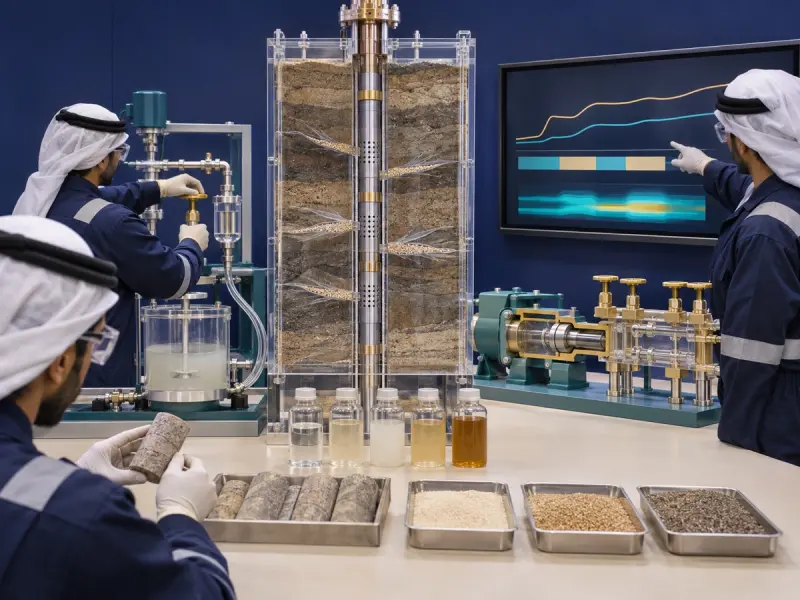
Natural Fracture Analysis in Basins Course

At a glance
- Duration
- 1 Week
- Format
- Classroom
- Cities
- Doha, Casablanca, Munich, New York, Abu Dhabi, Chicago and more
- Next session
- 8 – 12 November 2026, Doha
- Average fee
- 7,500 €
Overview
Natural Fracture Analysis in Compressional and Extensional Basins Training Course is a one-week advanced course for structural and reservoir geoscientists, geomechanics specialists, interpreters, and modelers who leave with a Basin Fracture Interpretation and Reservoir Integration File. Participants connect compressional basin fracture analysis, extensional basin fracture analysis, borehole image fracture interpretation, fracture intensity and connectivity, and discrete fracture network inputs across scales, evidence types, uncertainty, and well decisions. Agile Leaders Training Center presents natural fracture analysis and reservoir integration.
Who Should Attend
- Structural interpretation functions responsible for folds, faults, stress history, and fracture chronology
- Exploration functions responsible for seismic evidence, basin architecture, and structural uncertainty
- Reservoir characterization functions responsible for core, image-log, and fracture property integration
- Geomechanics functions responsible for stress, strain, fracture reactivation, and well implications
- Subsurface modeling and field-development functions responsible for static models, connectivity, and well decisions
The course assumes participants can interpret structural geology, well, core, and seismic data, and it leaves out fault-seal prediction, hydraulic-fracture design, generic geology instruction, and dynamic reservoir simulation.
Departments and Industries
The course supports departments and industries that characterize natural fractures and use them in subsurface decisions.
- Oil and gas exploration, appraisal, and field development
- Geothermal reservoir characterization and well planning
- Carbon storage site characterization and containment studies
- Mining and engineering-geology structural assessment
- Geoscience consulting, geomechanics, and subsurface modeling
Learning Objectives
By the end of this course, participants will be able to:
- Analyze stress, strain, and tectonic controls on fracture systems
- Compare fracture patterns in compressional and extensional basins
- Use outcrop, core, image-log, and seismic evidence together
- Evaluate fracture sets, chronology, intensity, and connectivity
- Build uncertainty-aware inputs for static reservoir models
- Prioritize fracture evidence for well and development decisions
Course Agenda
Day 1: Establish Fracture Mechanics and Evidence
- Stress, Strain, and Failure Concept Map
- Natural Fracture Type and Origin Classification
- Joint, Vein, and Shear-Fracture Description Sheet
- Fracture Set and Relative Chronology Matrix
- Multi-Scale Fracture Evidence Register
Day 2: Interpret Compressional Basin Fractures
- Fold-Thrust Belt Structural Position Map
- Fold Curvature and Fracture Orientation Analysis
- Thrust Damage-Zone Fracture Concept Model
- Compression-Related Fracture Sequence Diagram
- Compressional Basin Fracture Prediction Matrix
Day 3: Interpret Extensional Basin Fractures
- Rift Architecture and Normal-Fault System Map
- Fault-Block Rotation and Fracture Orientation Analysis
- Normal-Fault Damage-Zone Fracture Concept Model
- Extension-Related Fracture Sequence Diagram
- Extensional Basin Fracture Prediction Matrix
Day 4: Integrate Measurements and Models
- Outcrop Scanline and Sampling-Bias Worksheet
- Core Fracture Description and Scaling Table
- Borehole Image Dip-Azimuth and Stereonet Plot
- Seismic Attribute and Fracture Proxy Evidence Map
- Fracture Intensity, Connectivity, and DFN Input Register
Day 5: Practice Reservoir Integration
- Suggested Exercise: Correlate Fracture Sets and Chronology
- Suggested Exercise: Compare Compressional and Extensional Predictions
- Suggested Exercise: Reconcile Core, Image-Log, and Seismic Evidence
- Suggested Exercise: Rank Scale, Connectivity, and Uncertainty Effects
- Capstone Exercise: Complete the Basin Fracture Interpretation and Reservoir Integration File
Practical Exercises
The course uses suggested activities to connect tectonic setting, measured evidence, scale, uncertainty, and reservoir use.
- Suggested activity: classify joints, veins, and shear fractures and establish relative chronology from field and core records.
- Suggested activity: predict fracture orientations and structural positions in fold-thrust and rift examples.
- Suggested activity: compare scanline, core, image-log, stereonet, and seismic evidence while recording sampling limits.
- Suggested activity: define fracture properties, uncertainty ranges, model inputs, and well implications in one file.
FAQs
Who suits natural fracture analysis in basins training, and what does it assume?
Natural fracture analysis training suits structural, exploration, reservoir, geomechanics, seismic, modeling, and field-development functions. It assumes participants can interpret structural geology, well, core, and seismic data.
How does natural fracture analysis differ from fault seal and trap integrity assessment?
Natural fracture analysis evaluates fracture origin, sets, chronology, orientation, intensity, connectivity, scale, and reservoir integration. Fault seal and trap integrity assessment concentrates on juxtaposition, fault-rock properties, column containment, leakage risk, and trap preservation.
How do compressional and extensional basins produce different fracture patterns?
Compressional settings link fractures with shortening, folds, thrusts, curvature, and damage zones. Extensional settings link fractures with rifting, normal faults, fault-block rotation, relay structures, and evolving stress orientation.
How are borehole images used in natural fracture analysis?
Borehole images support fracture identification, dip and azimuth measurement, set grouping, open-versus-healed interpretation, structural-dip analysis, and comparison with core, seismic, and well evidence.
How are natural fracture uncertainties carried into reservoir models?
Natural fracture uncertainties are carried through data-quality records, sampling-bias checks, scale ranges, alternative set interpretations, intensity and connectivity ranges, calibration evidence, and explicit static-model scenarios.
Conclusion
Participants take back a Basin Fracture Interpretation and Reservoir Integration File linking tectonic setting, fracture mechanics, sets, chronology, measurements, connectivity, scale, uncertainty, and model inputs. The file changes separate observations into one traceable interpretation. It supports static-model reviews, well placement, data acquisition, geomechanics, and field-development decisions.
credits: 5 credit per day
Course Mode: full-time
Provider: Agile Leaders Training Center
-
Events for this Course
-
Doha 8 – 12 November 2026
-
Casablanca 16 – 20 November 2026
-
Munich 16 – 20 November 2026
-
New York 30 November – 4 December 2026
-
Abu Dhabi 7 – 11 December 2026
-
Chicago 13 – 17 December 2026
-
Dubai 21 – 25 December 2026
-
Addis Ababa 21 – 25 December 2026
-
Amsterdam 28 December 2026 – 1 January 2027
-
Bangkok 3 – 7 January 2027
-
Nice 11 – 15 January 2027
-
Baku 18 – 22 January 2027
-
Frankfurt 25 – 29 January 2027
-
Zanzibar 31 January – 4 February 2027
-
London 1 – 5 February 2027
-
Geneva 7 – 11 February 2027
-
Amman 14 – 18 February 2027
-
Zoom 15 – 19 February 2027
-
Johannesburg 21 – 25 February 2027
-
Singapore 1 – 5 March 2027
-
Athens 8 – 12 March 2027
-
Prague 15 – 19 March 2027
-
Dubai 22 – 26 March 2027
-
Porto 22 – 26 March 2027
-
Nairobi 4 – 8 April 2027
-
Sharm El-Sheikh 5 – 9 April 2027
-
Manama 11 – 15 April 2027
-
Tashkent 18 – 22 April 2027
-
Istanbul 19 – 23 April 2027
-
London 3 – 7 May 2027
-
Bali 9 – 13 May 2027
-
Barcelona 17 – 21 May 2027
-
Jakarta 24 – 28 May 2027
-
Abu Dhabi 31 May – 4 June 2027
-
Tbilisi 7 – 11 June 2027
-
Trabzon 13 – 17 June 2027
-
Marbella 20 – 24 June 2027
-
Phuket 4 – 8 July 2027
-
Milan 12 – 16 July 2027
-
Kuwait 18 – 22 July 2027
-
Seoul 26 – 30 July 2027
-
Tokyo 2 – 6 August 2027
-
Vienna 9 – 13 August 2027
-
Rome 16 – 20 August 2027
-
Madrid 16 – 20 August 2027
-
Paris 23 – 27 August 2027
-
Lisbon 23 – 27 August 2027
-
Cape town 29 August – 2 September 2027
-
Toronto 5 – 9 September 2027
-
Kuala Lumpur 6 – 10 September 2027
-
Muscat 12 – 16 September 2027
-
Langkawi 19 – 23 September 2027
-
Cairo 4 – 8 October 2027
-
Berlin 4 – 8 October 2027
-
Montreux 11 – 15 October 2027
-
Accra 17 – 21 October 2027
-
Lagos 24 – 28 October 2027
-
San Diego 8 – 12 November 2027
| Image | Location | Dates | Duration | Mode | Price | Actions |
|---|---|---|---|---|---|---|

|
Athens |
Week 10, 2027 8 – 12 March 2027 |
1 Week | Onsite | €7,500 | |

|
Prague |
Week 11, 2027 15 – 19 March 2027 |
1 Week | Onsite | €7,500 | |

|
Dubai |
Week 12, 2027 22 – 26 March 2027 |
1 Week | Onsite | €6,500 | |

|
Porto |
Week 12, 2027 22 – 26 March 2027 |
1 Week | Onsite | €6,500 | |

|
Nairobi |
Week 13, 2027 4 – 8 April 2027 |
1 Week | Onsite | €6,000 | |

|
Sharm El-Sheikh |
Week 14, 2027 5 – 9 April 2027 |
1 Week | Onsite | €5,200 | |

|
Manama |
Week 14, 2027 11 – 15 April 2027 |
1 Week | Onsite | €6,500 | |

|
Tashkent |
Week 15, 2027 18 – 22 April 2027 |
1 Week | Onsite | €8,000 | |

|
Istanbul |
Week 16, 2027 19 – 23 April 2027 |
1 Week | Onsite | €6,000 | |

|
London |
Week 18, 2027 3 – 7 May 2027 |
1 Week | Onsite | €6,500 | |

|
Bali |
Week 18, 2027 9 – 13 May 2027 |
1 Week | Onsite | €6,500 | |

|
Barcelona |
Week 20, 2027 17 – 21 May 2027 |
1 Week | Onsite | €6,500 | |

|
Jakarta |
Week 21, 2027 24 – 28 May 2027 |
1 Week | Onsite | €8,000 | |

|
Abu Dhabi |
Week 22, 2027 31 May – 4 June 2027 |
1 Week | Onsite | €6,500 | |

|
Tbilisi |
Week 23, 2027 7 – 11 June 2027 |
1 Week | Onsite | €5,700 | |

|
Trabzon |
Week 23, 2027 13 – 17 June 2027 |
1 Week | Onsite | €8,000 | |

|
Marbella |
Week 24, 2027 20 – 24 June 2027 |
1 Week | Onsite | €6,500 | |

|
Phuket |
Week 26, 2027 4 – 8 July 2027 |
1 Week | Onsite | €8,000 | |

|
Milan |
Week 28, 2027 12 – 16 July 2027 |
1 Week | Onsite | €7,000 | |

|
Kuwait |
Week 28, 2027 18 – 22 July 2027 |
1 Week | Onsite | €7,000 |
Frequently asked questions
What does this course cover?
OverviewNatural Fracture Analysis in Compressional and Extensional Basins Training Course is a one-week advanced course for structural and reservoir geoscientists, geomechanics specialists, interpreters, and modelers who leave with a Basin Fracture Interpretation and Reservoir Integration File. Participants connect compressional basin fracture analysis, e…
Are training dates available?
Yes. Available dates and destinations are listed in the course dates section on this page.
How can I register?
Choose an available date on this page and complete the registration form, or send a programme enquiry.
Can I download the course brochure?
Yes. Use the brochure download link provided on this page.
This course by city
- Oil & Gas Training and Other Technical Courses in Abu Dhabi
- Oil & Gas Training and Other Technical Courses in Accra
- Oil & Gas Training and Other Technical Courses in Addis Ababa
- Oil & Gas Training and Other Technical Courses in Amman
- Oil & Gas Training and Other Technical Courses in Amsterdam
- Oil & Gas Training and Other Technical Courses in Athens
- Oil & Gas Training and Other Technical Courses in Baku
- Oil & Gas Training and Other Technical Courses in Bali
- Oil & Gas Training and Other Technical Courses in Bangkok
- Oil & Gas Training and Other Technical Courses in Barcelona
- Oil & Gas Training and Other Technical Courses in Berlin
- Oil & Gas Training and Other Technical Courses in Cairo
- Oil & Gas Training and Other Technical Courses in Cape town
- Oil & Gas Training and Other Technical Courses in Casablanca
- Oil & Gas Training and Other Technical Courses in Chicago
- Oil & Gas Training and Other Technical Courses in Doha
- Oil & Gas Training and Other Technical Courses in Dubai
- Oil & Gas Training and Other Technical Courses in Frankfurt
- Oil & Gas Training and Other Technical Courses in Geneva
- Oil & Gas Training and Other Technical Courses in Istanbul
- Oil & Gas Training and Other Technical Courses in Jakarta
- Oil & Gas Training and Other Technical Courses in Johannesburg
- Oil & Gas Training and Other Technical Courses in Kuala Lumpur
- Oil & Gas Training and Other Technical Courses in Kuwait
- Oil & Gas Training and Other Technical Courses in Lagos
- Oil & Gas Training and Other Technical Courses in Langkawi
- Oil & Gas Training and Other Technical Courses in Lisbon
- Oil & Gas Training and Other Technical Courses in London
- Oil & Gas Training and Other Technical Courses in Madrid
- Oil & Gas Training and Other Technical Courses in Manama
- Oil & Gas Training and Other Technical Courses in Marbella
- Oil & Gas Training and Other Technical Courses in Milan
- Oil & Gas Training and Other Technical Courses in Montreux
- Oil & Gas Training and Other Technical Courses in Munich
- Oil & Gas Training and Other Technical Courses in Muscat
- Oil & Gas Training and Other Technical Courses in Nairobi
- Oil & Gas Training and Other Technical Courses in New York
- Oil & Gas Training and Other Technical Courses in Nice
- Oil & Gas Training and Other Technical Courses in Paris
- Oil & Gas Training and Other Technical Courses in Phuket
- Oil & Gas Training and Other Technical Courses in Porto
- Oil & Gas Training and Other Technical Courses in Prague
- Oil & Gas Training and Other Technical Courses in Rome
- Oil & Gas Training and Other Technical Courses in San Diego
- Oil & Gas Training and Other Technical Courses in Seoul
- Oil & Gas Training and Other Technical Courses in Sharm El-Sheikh
- Oil & Gas Training and Other Technical Courses in Singapore
- Oil & Gas Training and Other Technical Courses in Tashkent
- Oil & Gas Training and Other Technical Courses in Tbilisi
- Oil & Gas Training and Other Technical Courses in Tokyo
- Oil & Gas Training and Other Technical Courses in Toronto
- Oil & Gas Training and Other Technical Courses in Trabzon
- Oil & Gas Training and Other Technical Courses in Vienna
- Oil & Gas Training and Other Technical Courses in Zanzibar
- Oil & Gas Training and Other Technical Courses in Zoom