Oil Spill First Responder Training Course
At a glance
- Duration
- 5 days
- Format
- Classroom
- Cities
- Singapore, Kuwait, Porto, San Diego, Cairo, London and more
- Next session
- 12 – 16 October 2026, Singapore
- Average fee
- 7,550 €
Overview
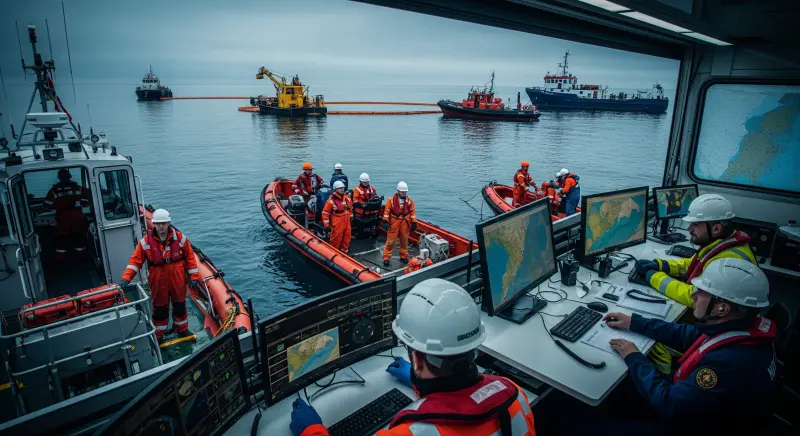
Oil Spill First Responder Operations Training Course is a five-day foundation course for marine terminal crews, port operations teams, vessel response personnel, shoreline responders, and newly assigned spill-team members. Participants learn to work safely, report initial observations, support containment and recovery equipment, protect shoreline priorities, handle recovered materials, and communicate field progress. Agile Leaders Training Center presents first response as coordinated field work under an established response structure.
Who Should Attend
- Marine terminal and jetty personnel assigned to initial spill actions
- Port operations teams supporting containment and recovery deployments
- Vessel personnel who may join an operational response team
- Shoreline teams supporting protection and clean-up tasks
- Newly assigned responders who need foundation field procedures
The course focuses on operational field tasks and assumes work is directed by the responsible response organization. It does not provide an official IMO model course, external accreditation, incident-command authority, or supervisor qualification.
Departments and Industries
The course supports maritime operations where personnel may assist during the initial response to an oil spill.
- Ports, terminals, harbours, and marine logistics
- Shipping, vessel operations, and offshore support
- Petroleum storage, transfer, and coastal facilities
- Environmental response contractors and shoreline teams
- Maritime safety, emergency response, and facility operations
Learning Objectives
By the end of this course, participants will be able to:
- Apply responder safety controls before beginning field tasks
- Record initial spill observations and transmit a clear notification
- Recognize how changing conditions affect containment choices
- Prepare, deploy, monitor, and recover floating boom safely
- Support skimmer, pump, hose, and temporary-storage operations
- Apply shoreline protection and clean-up support priorities
- Segregate recovered oil, oily water, debris, and used materials
- Maintain field communications and complete team exercise records
Course Agenda
Day 1: Safety, Notification, and Initial Assessment
- Responder Safety and Stop-Work Check
- Initial Spill Observation Card
- Source and Release Condition Record
- Oil Movement and Weathering Field Notes
- Initial Notification and Radio Update Format
Day 2: Containment and Boom Deployment
- Boom Type and Configuration Selection
- Anchor, Tow, and Mooring Readiness Check
- Boom Deployment Team Role Card
- Containment Failure Recognition Guide
- Boom Monitoring and Recovery Checklist
Day 3: Recovery Equipment and Temporary Storage
- Skimmer Suitability and Limitation Review
- Pump and Hose Connection Inspection
- Recovery Area Safety Arrangement
- Temporary Storage Capacity Tracker
- Recovered Product Transfer Log
Day 4: Shoreline Protection and Waste Handling
- Shoreline Priority Observation Sheet
- Protection Tactic Selection Card
- Manual Clean-Up Work-Zone Layout
- Recovered Material Segregation Plan
- Waste Container Identification and Handover Log
Day 5: Operational Response Practice
- Exercise: Report and Assess an Initial Spill
- Exercise: Prepare a Boom Deployment Brief
- Exercise: Coordinate Skimmer Support and Storage
- Exercise: Protect a Shoreline Priority and Segregate Waste
- Capstone Exercise: Oil Spill First Responder Field Pack
Practical Exercises
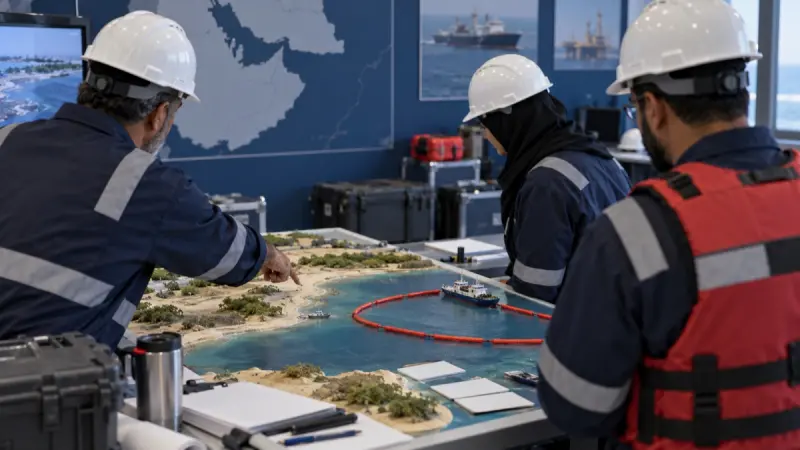
The course uses field-oriented tabletop and equipment-familiarization activities within safe training conditions.
- Suggested activity: complete an initial spill observation and transmit a concise radio update.
- Suggested activity: assign team roles and sequence a boom deployment for changing current and wind.
- Suggested activity: inspect a recovery train from skimmer through pumping and temporary storage.
- Suggested activity: organize a shoreline work zone and segregate recovered materials for handover.
Frequently Asked Questions
How does first-responder training differ from supervisor-level oil-spill training?
First-responder training develops safe field execution, equipment support, observations, communications, and team coordination. Supervisor-level training addresses tactical command, broader resource decisions, and response management.
Is this an official IMO model course?
No. It is independent operational training informed by recognized marine-response terminology and does not claim IMO certification, endorsement, or accreditation.
What equipment is covered?
The course addresses boom, anchors, tow and mooring arrangements, skimmers, pumps, hoses, temporary storage, shoreline tools, and waste containers at a foundation familiarization level.
Does the course include live spill deployment?
Activities use controlled tabletop, dry-deployment, and equipment-familiarization formats selected for the venue. They do not release oil or replace site-specific authorization and supervision.
What will participants take back to work?
Participants leave with an Oil Spill First Responder Field Pack containing safety, observation, notification, deployment, recovery, shoreline, waste, and exercise records.
Conclusion
Participants leave able to support a safe and organized first response under established direction. They connect observations and notifications with containment, recovery, shoreline protection, waste handling, and field communication. The Oil Spill First Responder Field Pack provides a practical basis for team drills and workplace readiness.
credits: 5 credit per day
Course Mode: full-time
Provider: Agile Leaders Training Center
-
Events for this Course
-
Singapore 12 – 16 October 2026
-
Kuwait 18 – 22 October 2026
-
Porto 19 – 23 October 2026
-
San Diego 26 – 30 October 2026
-
Cairo 2 – 6 November 2026
-
London 9 – 13 November 2026
-
Tashkent 15 – 19 November 2026
-
Sharm El-Sheikh 23 – 27 November 2026
-
Geneva 29 November – 3 December 2026
-
Nairobi 6 – 10 December 2026
-
Milan 14 – 18 December 2026
-
Trabzon 20 – 24 December 2026
-
Madrid 28 December 2026 – 1 January 2027
-
Lisbon 28 December 2026 – 1 January 2027
-
Tbilisi 4 – 8 January 2027
-
Rome 11 – 15 January 2027
-
Seoul 18 – 22 January 2027
-
Kuala Lumpur 25 – 29 January 2027
-
Langkawi 31 January – 4 February 2027
-
Phuket 7 – 11 February 2027
-
Frankfurt 8 – 12 February 2027
-
Jakarta 15 – 19 February 2027
-
Chicago 21 – 25 February 2027
-
Athens 1 – 5 March 2027
-
Casablanca 15 – 19 March 2027
-
New York 22 – 26 March 2027
-
Amsterdam 29 March – 2 April 2027
-
Bangkok 4 – 8 April 2027
-
Zoom 12 – 16 April 2027
-
Abu Dhabi 19 – 23 April 2027
-
Marbella 25 – 29 April 2027
-
Muscat 2 – 6 May 2027
-
Istanbul 10 – 14 May 2027
-
Vienna 17 – 21 May 2027
-
Zanzibar 23 – 27 May 2027
-
Nice 31 May – 4 June 2027
-
Dubai 14 – 18 June 2027
-
Munich 21 – 25 June 2027
-
Cape town 27 June – 1 July 2027
-
Baku 5 – 9 July 2027
-
Montreux 12 – 16 July 2027
-
Prague 19 – 23 July 2027
-
Toronto 25 – 29 July 2027
-
London 26 – 30 July 2027
-
Amman 1 – 5 August 2027
-
Berlin 2 – 6 August 2027
-
Doha 8 – 12 August 2027
-
Dubai 16 – 20 August 2027
-
Paris 23 – 27 August 2027
-
Accra 29 August – 2 September 2027
-
Bali 5 – 9 September 2027
-
Manama 12 – 16 September 2027
-
Barcelona 20 – 24 September 2027
-
Tokyo 27 September – 1 October 2027
-
Johannesburg 3 – 7 October 2027
-
Abu Dhabi 11 – 15 October 2027
| Image | Location | Dates | Duration | Mode | Price | Actions |
|---|---|---|---|---|---|---|

|
Singapore |
Week 42, 2026 12 – 16 October 2026 |
5 Days | Onsite | €6,500 | |

|
Kuwait |
Week 42, 2026 18 – 22 October 2026 |
5 Days | Onsite | €7,000 | |

|
Porto |
Week 43, 2026 19 – 23 October 2026 |
5 Days | Onsite | €6,500 | |
|
San Diego |
Week 44, 2026 26 – 30 October 2026 |
5 Days | Onsite | €16,000 | |

|
Cairo |
Week 45, 2026 2 – 6 November 2026 |
5 Days | Onsite | €5,200 | |

|
London |
Week 46, 2026 9 – 13 November 2026 |
5 Days | Onsite | €6,500 | |

|
Tashkent |
Week 46, 2026 15 – 19 November 2026 |
5 Days | Onsite | €8,000 | |

|
Sharm El-Sheikh |
Week 48, 2026 23 – 27 November 2026 |
5 Days | Onsite | €5,200 | |

|
Geneva |
Week 48, 2026 29 November – 3 December 2026 |
5 Days | Onsite | €8,000 | |

|
Nairobi |
Week 49, 2026 6 – 10 December 2026 |
5 Days | Onsite | €6,000 | |

|
Milan |
Week 51, 2026 14 – 18 December 2026 |
5 Days | Onsite | €7,000 | |
|
Trabzon |
Week 51, 2026 20 – 24 December 2026 |
5 Days | Onsite | €8,000 | |

|
Madrid |
Week 53, 2026 28 December 2026 – 1 January 2027 |
5 Days | Onsite | €6,500 | |

|
Lisbon |
Week 53, 2026 28 December 2026 – 1 January 2027 |
5 Days | Onsite | €6,500 | |

|
Tbilisi |
Week 01, 2027 4 – 8 January 2027 |
5 Days | Onsite | €5,700 | |

|
Rome |
Week 02, 2027 11 – 15 January 2027 |
5 Days | Onsite | €6,500 | |

|
Seoul |
Week 03, 2027 18 – 22 January 2027 |
5 Days | Onsite | €12,000 | |

|
Kuala Lumpur |
Week 04, 2027 25 – 29 January 2027 |
5 Days | Onsite | €6,500 | |

|
Langkawi |
Week 04, 2027 31 January – 4 February 2027 |
5 Days | Onsite | €8,000 | |

|
Phuket |
Week 05, 2027 7 – 11 February 2027 |
5 Days | Onsite | €8,000 |
Frequently asked questions
What does this course cover?
OverviewOil Spill First Responder Operations Training Course is a five-day foundation course for marine terminal crews, port operations teams, vessel response personnel, shoreline responders, and newly assigned spill-team members. Participants learn to work safely, report initial observations, support containment and recovery equipment, protect shoreline…
Are training dates available?
Yes. Available dates and destinations are listed in the course dates section on this page.
How can I register?
Choose an available date on this page and complete the registration form, or send a programme enquiry.
Can I download the course brochure?
Yes. Use the brochure download link provided on this page.
This course by city
- Shipping, Maritime and Ports Training Courses in Abu Dhabi
- Shipping, Maritime and Ports Training Courses in Accra
- Shipping, Maritime and Ports Training Courses in Amman
- Shipping, Maritime and Ports Training Courses in Amsterdam
- Shipping, Maritime and Ports Training Courses in Athens
- Shipping, Maritime and Ports Training Courses in Baku
- Shipping, Maritime and Ports Training Courses in Bali
- Shipping, Maritime and Ports Training Courses in Bangkok
- Shipping, Maritime and Ports Training Courses in Barcelona
- Shipping, Maritime and Ports Training Courses in Berlin
- Shipping, Maritime and Ports Training Courses in Cairo
- Shipping, Maritime and Ports Training Courses in Cape town
- Shipping, Maritime and Ports Training Courses in Casablanca
- Shipping, Maritime and Ports Training Courses in Chicago
- Shipping, Maritime and Ports Training Courses in Doha
- Shipping, Maritime and Ports Training Courses in Dubai
- Shipping, Maritime and Ports Training Courses in Frankfurt
- Shipping, Maritime and Ports Training Courses in Geneva
- Shipping, Maritime and Ports Training Courses in Istanbul
- Shipping, Maritime and Ports Training Courses in Jakarta
- Shipping, Maritime and Ports Training Courses in Johannesburg
- Shipping, Maritime and Ports Training Courses in Kuala Lumpur
- Shipping, Maritime and Ports Training Courses in Kuwait
- Shipping, Maritime and Ports Training Courses in Langkawi
- Shipping, Maritime and Ports Training Courses in Lisbon
- Shipping, Maritime and Ports Training Courses in London
- Shipping, Maritime and Ports Training Courses in Madrid
- Shipping, Maritime and Ports Training Courses in Manama
- Shipping, Maritime and Ports Training Courses in Marbella
- Shipping, Maritime and Ports Training Courses in Milan
- Shipping, Maritime and Ports Training Courses in Montreux
- Shipping, Maritime and Ports Training Courses in Munich
- Shipping, Maritime and Ports Training Courses in Muscat
- Shipping, Maritime and Ports Training Courses in Nairobi
- Shipping, Maritime and Ports Training Courses in New York
- Shipping, Maritime and Ports Training Courses in Nice
- Shipping, Maritime and Ports Training Courses in Paris
- Shipping, Maritime and Ports Training Courses in Phuket
- Shipping, Maritime and Ports Training Courses in Porto
- Shipping, Maritime and Ports Training Courses in Prague
- Shipping, Maritime and Ports Training Courses in Rome
- Shipping, Maritime and Ports Training Courses in San Diego
- Shipping, Maritime and Ports Training Courses in Seoul
- Shipping, Maritime and Ports Training Courses in Sharm El-Sheikh
- Shipping, Maritime and Ports Training Courses in Singapore
- Shipping, Maritime and Ports Training Courses in Tashkent
- Shipping, Maritime and Ports Training Courses in Tbilisi
- Shipping, Maritime and Ports Training Courses in Tokyo
- Shipping, Maritime and Ports Training Courses in Toronto
- Shipping, Maritime and Ports Training Courses in Trabzon
- Shipping, Maritime and Ports Training Courses in Vienna
- Shipping, Maritime and Ports Training Courses in Zanzibar
- Shipping, Maritime and Ports Training Courses in Zoom