Olefins Value Chain and Commercial Analysis Course

At a glance
- Duration
- 1 Week
- Format
- Classroom
- Cities
- Bali, Prague, Rome, Lisbon, Doha, Chicago and more
- Next session
- 8 – 12 November 2026, Bali
- Average fee
- 7,500 €
Overview
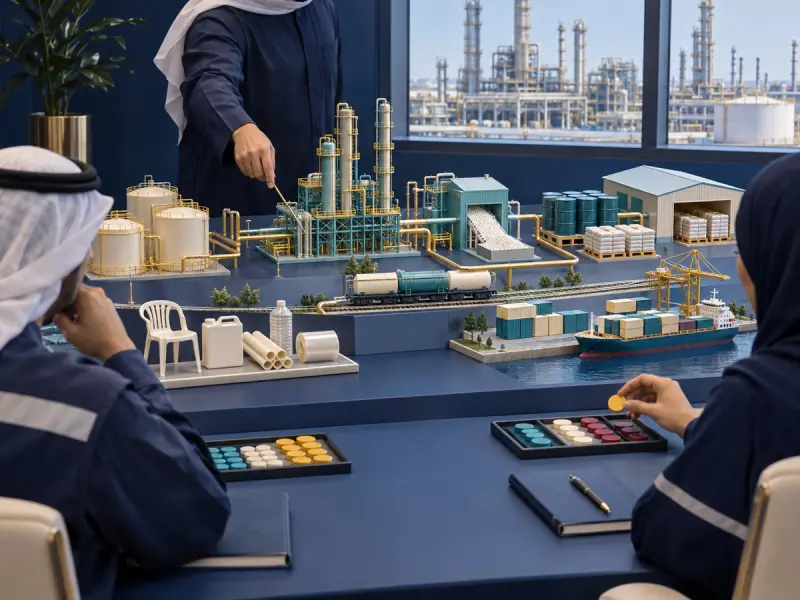
Olefins Value Chain and Commercial Analysis Training Course is a one-week intermediate course for petrochemical commercial, planning, operations, supply-chain, marketing, investment, and strategy professionals who leave with an Olefins Value Chain Decision Book. Participants connect feedstocks, cracking routes, ethylene and propylene derivatives, polymers, logistics, capacity, market balances, and margins. The course uses chain maps, conversion trees, balance models, cost bridges, and scenario comparisons. Agile Leaders Training Center presents this course on olefins value-chain and commercial analysis.
Who Should Attend
- Teams responsible for petrochemical commercial strategy and market analysis
- Functions responsible for feedstock, production, capacity, and operations planning
- Professionals responsible for polymer sales, marketing, and product portfolios
- Supply-chain teams responsible for storage, transport, and inventory decisions
- Analysts responsible for investment, economics, and margin evaluation
- Leaders responsible for downstream strategy and value-chain integration
The course assumes participants can interpret basic production, cost, or market information; it leaves out detailed reactor design, catalyst engineering, and unsupported price forecasting.
Departments and Industries
The course supports departments and industries that make decisions across olefins and polymer chains.
- Petrochemical, refining, and integrated energy companies
- Polymer, plastics, packaging, construction-material, and automotive suppliers
- Commercial, marketing, sales, and business-development departments
- Operations, planning, supply-chain, and logistics functions
- Strategy, investment, finance, and corporate-development teams
- Market intelligence, procurement, and portfolio-management groups
Learning Objectives
By the end of this course, participants will be able to:
- Analyze olefins feedstocks and production routes
- Build ethylene and propylene derivative maps
- Compare polyethylene, polypropylene, and PVC chains
- Evaluate capacity, balance, and logistics constraints
- Apply cost and margin bridge methods
- Prioritize commercial and investment choices
Course Agenda
Day 1: Map Olefins Feedstocks and Production
- Hydrocarbon Feedstock and Yield Comparison Matrix
- Steam Cracking Process and Co-Product Flow Map
- Ethylene and Propylene Supply Route Diagram
- Refinery-Petrochemical Integration Interface Map
- Olefins Value Chain Boundary and Assumption Register
Day 2: Trace Derivatives and Polymer Routes
- Ethylene Derivative and End-Use Tree
- Propylene Derivative and End-Use Tree
- Polyethylene and Polypropylene Grade Portfolio Map
- Ethylene-to-EDC-VCM-PVC Chain Diagram
- Intermediate, Polymer, and Downstream Conversion Matrix
Day 3: Read Capacity and Market Balances
- Nameplate, Effective, and Operating Capacity Bridge
- Supply, Demand, Trade, and Inventory Balance Model
- Plant Outage and Availability Impact Tracker
- Regional Flow and Logistics Constraint Map
- Derivative Substitution and Demand-Sensitivity Matrix
Day 4: Analyze Costs, Prices, and Margins
- Feedstock-to-Product Variable Cost Bridge
- Co-Product Credit and Allocation Method
- Transfer Price and Integrated Margin Waterfall
- Price Spread and Chain Margin Dashboard
- Commercial Scenario and Decision Criteria Matrix
Day 5: Practice Value Chain Decisions
- Suggested Exercise: Compare Feedstock and Yield Positions
- Suggested Exercise: Map an Ethylene-to-PVC Chain
- Suggested Exercise: Reconcile an Olefins Market Balance
- Suggested Exercise: Test a Chain Margin Scenario
- Capstone Exercise: Present an Olefins Value Chain Decision Book
Practical Exercises
The course uses suggested activities to connect production evidence with commercial and investment choices.
- Suggested activity: compare feedstock, yield, co-product, capacity, and operating assumptions for two production routes.
- Suggested activity: map ethylene and propylene into polymers, intermediates, end uses, and logistics requirements.
- Suggested activity: reconcile capacity, outages, trade, inventory, and demand into a market-balance view.
- Suggested activity: build a margin bridge and recommend a commercial response under alternative scenarios.
FAQs
Who suits olefins value chain and commercial analysis training, and what does it assume?
Commercial, planning, operations, supply-chain, marketing, investment, and strategy professionals suit the training. It assumes familiarity with basic petrochemical production, cost, or market information.
How does olefins value-chain analysis differ from polymerization reactor training?
Olefins value-chain analysis connects feedstocks, production routes, derivatives, markets, logistics, capacity, costs, and margins. Polymerization reactor training concentrates on reactor technology, catalysts, process control, product quality, and operating response.
How are ethylene and propylene value chains mapped?
Ethylene and propylene chains are mapped from feedstock and production route through intermediates, polymers, co-products, end uses, logistics, capacity, trade, and commercial ownership.
What drives olefins and polymer margins?
Margins depend on feedstock cost, yield, energy, operating rate, co-product credits, logistics, product mix, contract and spot pricing, market balance, and integration across the chain.
How does PVC fit within the ethylene value chain?
PVC connects to ethylene through the ethylene-to-EDC-to-VCM route, followed by polymer production and downstream conversion into products for sectors such as construction and manufacturing.
Conclusion
Participants take an Olefins Value Chain Decision Book back to their organization. It combines feedstock routes, derivative maps, capacity balances, logistics constraints, cost bridges, margin scenarios, and decision criteria. Teams can use it to align commercial, operating, supply-chain, and investment choices around shared value-chain evidence.
credits: 5 credit per day
Course Mode: full-time
Provider: Agile Leaders Training Center
-
Events for this Course
-
Bali 8 – 12 November 2026
-
Prague 16 – 20 November 2026
-
Rome 23 – 27 November 2026
-
Lisbon 23 – 27 November 2026
-
Doha 6 – 10 December 2026
-
Chicago 13 – 17 December 2026
-
London 28 December 2026 – 1 January 2027
-
Baku 4 – 8 January 2027
-
Athens 11 – 15 January 2027
-
Cape town 24 – 28 January 2027
-
Johannesburg 31 January – 4 February 2027
-
Berlin 1 – 5 February 2027
-
Dubai 8 – 12 February 2027
-
Casablanca 15 – 19 February 2027
-
Paris 22 – 26 February 2027
-
Nairobi 28 February – 4 March 2027
-
Langkawi 7 – 11 March 2027
-
Milan 22 – 26 March 2027
-
Kuwait 28 March – 1 April 2027
-
Madrid 5 – 9 April 2027
-
Nice 5 – 9 April 2027
-
Addis Ababa 12 – 16 April 2027
-
London 19 – 23 April 2027
-
Tokyo 26 – 30 April 2027
-
Porto 26 – 30 April 2027
-
Zanzibar 2 – 6 May 2027
-
Seoul 10 – 14 May 2027
-
Singapore 17 – 21 May 2027
-
Sharm El-Sheikh 24 – 28 May 2027
-
Lagos 30 May – 3 June 2027
-
Cairo 31 May – 4 June 2027
-
Abu Dhabi 7 – 11 June 2027
-
Amman 13 – 17 June 2027
-
Marbella 20 – 24 June 2027
-
Barcelona 21 – 25 June 2027
-
Dubai 28 June – 2 July 2027
-
San Diego 5 – 9 July 2027
-
Muscat 11 – 15 July 2027
-
Vienna 12 – 16 July 2027
-
Trabzon 18 – 22 July 2027
-
Jakarta 26 – 30 July 2027
-
Zoom 2 – 6 August 2027
-
Tashkent 15 – 19 August 2027
-
Tbilisi 16 – 20 August 2027
-
Bangkok 29 August – 2 September 2027
-
Toronto 29 August – 2 September 2027
-
Accra 5 – 9 September 2027
-
Montreux 6 – 10 September 2027
-
Munich 13 – 17 September 2027
-
New York 13 – 17 September 2027
-
Geneva 19 – 23 September 2027
-
Kuala Lumpur 27 September – 1 October 2027
-
Istanbul 4 – 8 October 2027
-
Frankfurt 4 – 8 October 2027
-
Manama 17 – 21 October 2027
-
Amsterdam 1 – 5 November 2027
-
Abu Dhabi 1 – 5 November 2027
-
Phuket 7 – 11 November 2027
| Image | Location | Dates | Duration | Mode | Price | Actions |
|---|---|---|---|---|---|---|

|
Nice |
Week 14, 2027 5 – 9 April 2027 |
1 Week | Onsite | €8,000 | |

|
Addis Ababa |
Week 15, 2027 12 – 16 April 2027 |
1 Week | Onsite | €6,000 | |

|
London |
Week 16, 2027 19 – 23 April 2027 |
1 Week | Onsite | €6,500 | |

|
Tokyo |
Week 17, 2027 26 – 30 April 2027 |
1 Week | Onsite | €12,000 | |

|
Porto |
Week 17, 2027 26 – 30 April 2027 |
1 Week | Onsite | €6,500 | |

|
Zanzibar |
Week 17, 2027 2 – 6 May 2027 |
1 Week | Onsite | €6,000 | |

|
Seoul |
Week 19, 2027 10 – 14 May 2027 |
1 Week | Onsite | €12,000 | |

|
Singapore |
Week 20, 2027 17 – 21 May 2027 |
1 Week | Onsite | €6,500 | |

|
Sharm El-Sheikh |
Week 21, 2027 24 – 28 May 2027 |
1 Week | Onsite | €5,200 | |

|
Lagos |
Week 21, 2027 30 May – 3 June 2027 |
1 Week | Onsite | €6,000 | |

|
Cairo |
Week 22, 2027 31 May – 4 June 2027 |
1 Week | Onsite | €5,200 | |

|
Abu Dhabi |
Week 23, 2027 7 – 11 June 2027 |
1 Week | Onsite | €6,500 | |

|
Amman |
Week 23, 2027 13 – 17 June 2027 |
1 Week | Onsite | €6,000 | |

|
Marbella |
Week 24, 2027 20 – 24 June 2027 |
1 Week | Onsite | €6,500 | |

|
Barcelona |
Week 25, 2027 21 – 25 June 2027 |
1 Week | Onsite | €6,500 | |

|
Dubai |
Week 26, 2027 28 June – 2 July 2027 |
1 Week | Onsite | €6,500 | |

|
San Diego |
Week 27, 2027 5 – 9 July 2027 |
1 Week | Onsite | €16,000 | |

|
Muscat |
Week 27, 2027 11 – 15 July 2027 |
1 Week | Onsite | €6,500 | |

|
Vienna |
Week 28, 2027 12 – 16 July 2027 |
1 Week | Onsite | €7,500 | |

|
Trabzon |
Week 28, 2027 18 – 22 July 2027 |
1 Week | Onsite | €8,000 |
Frequently asked questions
What does this course cover?
OverviewOlefins Value Chain and Commercial Analysis Training Course is a one-week intermediate course for petrochemical commercial, planning, operations, supply-chain, marketing, investment, and strategy professionals who leave with an Olefins Value Chain Decision Book. Participants connect feedstocks, cracking routes, ethylene and propylene derivatives,…
Are training dates available?
Yes. Available dates and destinations are listed in the course dates section on this page.
How can I register?
Choose an available date on this page and complete the registration form, or send a programme enquiry.
Can I download the course brochure?
Yes. Use the brochure download link provided on this page.
This course by city
- Oil & Gas Training and Other Technical Courses in Abu Dhabi
- Oil & Gas Training and Other Technical Courses in Accra
- Oil & Gas Training and Other Technical Courses in Addis Ababa
- Oil & Gas Training and Other Technical Courses in Amman
- Oil & Gas Training and Other Technical Courses in Amsterdam
- Oil & Gas Training and Other Technical Courses in Athens
- Oil & Gas Training and Other Technical Courses in Baku
- Oil & Gas Training and Other Technical Courses in Bali
- Oil & Gas Training and Other Technical Courses in Bangkok
- Oil & Gas Training and Other Technical Courses in Barcelona
- Oil & Gas Training and Other Technical Courses in Berlin
- Oil & Gas Training and Other Technical Courses in Cairo
- Oil & Gas Training and Other Technical Courses in Cape town
- Oil & Gas Training and Other Technical Courses in Casablanca
- Oil & Gas Training and Other Technical Courses in Chicago
- Oil & Gas Training and Other Technical Courses in Doha
- Oil & Gas Training and Other Technical Courses in Dubai
- Oil & Gas Training and Other Technical Courses in Frankfurt
- Oil & Gas Training and Other Technical Courses in Geneva
- Oil & Gas Training and Other Technical Courses in Istanbul
- Oil & Gas Training and Other Technical Courses in Jakarta
- Oil & Gas Training and Other Technical Courses in Johannesburg
- Oil & Gas Training and Other Technical Courses in Kuala Lumpur
- Oil & Gas Training and Other Technical Courses in Kuwait
- Oil & Gas Training and Other Technical Courses in Lagos
- Oil & Gas Training and Other Technical Courses in Langkawi
- Oil & Gas Training and Other Technical Courses in Lisbon
- Oil & Gas Training and Other Technical Courses in London
- Oil & Gas Training and Other Technical Courses in Madrid
- Oil & Gas Training and Other Technical Courses in Manama
- Oil & Gas Training and Other Technical Courses in Marbella
- Oil & Gas Training and Other Technical Courses in Milan
- Oil & Gas Training and Other Technical Courses in Montreux
- Oil & Gas Training and Other Technical Courses in Munich
- Oil & Gas Training and Other Technical Courses in Muscat
- Oil & Gas Training and Other Technical Courses in Nairobi
- Oil & Gas Training and Other Technical Courses in New York
- Oil & Gas Training and Other Technical Courses in Nice
- Oil & Gas Training and Other Technical Courses in Paris
- Oil & Gas Training and Other Technical Courses in Phuket
- Oil & Gas Training and Other Technical Courses in Porto
- Oil & Gas Training and Other Technical Courses in Prague
- Oil & Gas Training and Other Technical Courses in Rome
- Oil & Gas Training and Other Technical Courses in San Diego
- Oil & Gas Training and Other Technical Courses in Seoul
- Oil & Gas Training and Other Technical Courses in Sharm El-Sheikh
- Oil & Gas Training and Other Technical Courses in Singapore
- Oil & Gas Training and Other Technical Courses in Tashkent
- Oil & Gas Training and Other Technical Courses in Tbilisi
- Oil & Gas Training and Other Technical Courses in Tokyo
- Oil & Gas Training and Other Technical Courses in Toronto
- Oil & Gas Training and Other Technical Courses in Trabzon
- Oil & Gas Training and Other Technical Courses in Vienna
- Oil & Gas Training and Other Technical Courses in Zanzibar
- Oil & Gas Training and Other Technical Courses in Zoom