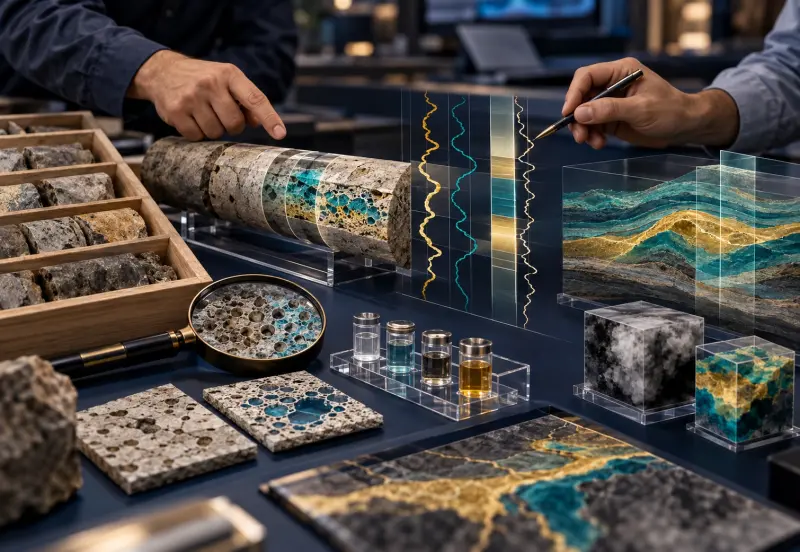
Petrophysics Fundamentals Training Course

At a glance
- Duration
- 1 Week
- Format
- Classroom
- Cities
- Muscat, Manama, Dubai, San Diego, Vienna, Amman and more
- Next session
- 15 – 19 November 2026, Muscat
- Average fee
- 7,500 €
Overview
Petrophysics Fundamentals and Well Log Interpretation Training Course is a one-week foundation course for graduate geoscientists, junior petrophysicists, engineers, and subsurface staff who leave with a Foundation Petrophysical Evaluation Workbook. Participants connect basic well log interpretation, formation evaluation workflow, lithology and shale volume, porosity and water saturation, and core log integration with data quality, net-reservoir decisions, and uncertainty. Agile Leaders Training Center presents foundation petrophysics and formation evaluation.
Who Should Attend
- Early-career geoscience functions responsible for describing formations and supporting reservoir studies
- Junior petrophysics functions responsible for log quality checks and basic interpretation
- Reservoir engineering functions responsible for using porosity, saturation, and net-pay inputs
- Drilling and completions functions responsible for recognizing formation-evaluation data and limitations
- Technical data functions responsible for preparing well logs, core results, and interpretation records
The course assumes participants can read basic geological and engineering data, and it leaves out advanced multimineral inversion, cased-hole evaluation, geomechanical modeling, and software-specific operation.
Departments and Industries
The course supports departments and industries that use petrophysical evidence to describe subsurface formations.
- Oil and gas exploration, appraisal, and reservoir studies
- Geothermal resource evaluation and well planning
- Carbon storage site characterization and monitoring design
- Groundwater, mining, and engineering-geology investigations
- Geoscience consulting, laboratory services, and technical data management
Learning Objectives
By the end of this course, participants will be able to:
- Apply log-data quality and depth-reference checks
- Analyze conventional log responses for lithology and fluids
- Build shale-volume, porosity, and saturation calculations
- Use crossplots, core data, and permeability indicators
- Evaluate net-reservoir and net-pay cutoffs
- Compare deterministic results and uncertainty ranges
Course Agenda
Day 1: Prepare Formation-Evaluation Data
- Petrophysical Data Inventory and LAS File Checklist
- Measured-Depth and Datum Reference Alignment Sheet
- Caliper and Borehole-Condition Quality-Control Track
- Environmental Correction and Tool-Response Register
- Log Header, Units, Gaps, and Splice Review Method
Day 2: Read Conventional Well Logs
- Gamma Ray and Spontaneous Potential Response Chart
- Deep and Shallow Resistivity Separation Display
- Density, Neutron, and Sonic Measurement Comparison
- Lithology Indicator and Fluid-Effect Crossplot
- Conventional Log Interpretation Evidence Panel
Day 3: Calculate Reservoir Properties
- Clean-Formation and Shale-Volume Calculation Sheet
- Density-Neutron Crossplot Porosity Method
- Formation-Water Resistivity Estimation Worksheet
- Archie Water-Saturation Equation and Assumption Log
- Porosity-Saturation Sensitivity Table
Day 4: Integrate Reservoir Evidence
- Routine Core Analysis and Log Calibration Table
- Porosity-Permeability Relationship Screening Plot
- Reservoir and Nonreservoir Cutoff Decision Matrix
- Net-Reservoir and Net-Pay Summation Sheet
- Petrophysical Uncertainty and Data-Limit Register
Day 5: Practice Petrophysical Evaluation
- Suggested Exercise: Audit Log Quality and Depth Alignment
- Suggested Exercise: Interpret Lithology and Shale Volume
- Suggested Exercise: Calculate Porosity and Water Saturation
- Suggested Exercise: Apply Net-Pay Cutoffs and Core Checks
- Capstone Exercise: Complete the Foundation Petrophysical Evaluation Workbook
Practical Exercises
The course uses suggested activities to turn conventional logs and core measurements into a traceable formation evaluation.
- Suggested activity: identify borehole effects, missing curves, unit problems, and depth mismatches in a well-log set.
- Suggested activity: estimate lithology, shale volume, porosity, and water saturation from conventional curves and crossplots.
- Suggested activity: compare log-derived properties with routine core analysis and document scale differences.
- Suggested activity: calculate net reservoir and net pay while recording cutoff and uncertainty assumptions.
FAQs
Who suits petrophysics fundamentals and well log interpretation training, and what does it assume?
Petrophysics fundamentals training suits early-career geoscience, engineering, petrophysics, drilling, completions, and technical-data functions. It assumes participants can read basic geological and engineering information.
How does foundation petrophysics differ from advanced integrated formation evaluation?
Foundation petrophysics establishes conventional log responses, basic calculations, quality checks, and a first reservoir summary. Advanced integrated evaluation addresses complex mineral systems, probabilistic workflows, specialized measurements, and multidisciplinary reconciliation.
How are porosity and water saturation calculated from well logs?
Porosity is estimated from density, neutron, sonic, or crossplot responses after environmental and lithology checks. Water saturation combines resistivity, porosity, formation-water resistivity, and documented saturation-model assumptions.
Why is core log integration important in formation evaluation?
Core log integration compares laboratory porosity, permeability, saturation, and lithology with continuous log-derived properties. Differences reveal scale, sampling, depth, borehole, and measurement effects that influence interpretation confidence.
How are net reservoir and net pay selected in basic petrophysics?
Net reservoir and net pay are selected with documented property and fluid cutoffs, applied consistently by interval and tested against data quality, core evidence, sensitivity, and the intended reservoir decision.
Conclusion
Participants take back a Foundation Petrophysical Evaluation Workbook containing quality checks, conventional-log displays, calculations, crossplots, core comparisons, cutoff decisions, and uncertainty notes. The workbook changes separate curves and measurements into a traceable first interpretation. It supports reservoir summaries, data reviews, multidisciplinary discussions, and decisions about further evaluation.
credits: 5 credit per day
Course Mode: full-time
Provider: Agile Leaders Training Center
-
Events for this Course
-
Muscat 15 – 19 November 2026
-
Manama 22 – 26 November 2026
-
Dubai 23 – 27 November 2026
-
San Diego 30 November – 4 December 2026
-
Vienna 7 – 11 December 2026
-
Amman 13 – 17 December 2026
-
Addis Ababa 21 – 25 December 2026
-
Nairobi 27 – 31 December 2026
-
Nice 4 – 8 January 2027
-
New York 11 – 15 January 2027
-
Milan 18 – 22 January 2027
-
Toronto 24 – 28 January 2027
-
Porto 1 – 5 February 2027
-
Paris 8 – 12 February 2027
-
Accra 14 – 18 February 2027
-
Frankfurt 22 – 26 February 2027
-
Phuket 28 February – 4 March 2027
-
Geneva 7 – 11 March 2027
-
Singapore 15 – 19 March 2027
-
Rome 22 – 26 March 2027
-
Trabzon 28 March – 1 April 2027
-
Cairo 29 March – 2 April 2027
-
Lisbon 5 – 9 April 2027
-
Munich 12 – 16 April 2027
-
Baku 19 – 23 April 2027
-
Kuala Lumpur 26 – 30 April 2027
-
Jakarta 26 – 30 April 2027
-
London 3 – 7 May 2027
-
Tokyo 10 – 14 May 2027
-
Sharm El-Sheikh 17 – 21 May 2027
-
Tbilisi 17 – 21 May 2027
-
Istanbul 24 – 28 May 2027
-
Athens 31 May – 4 June 2027
-
Chicago 6 – 10 June 2027
-
Abu Dhabi 14 – 18 June 2027
-
Prague 21 – 25 June 2027
-
Dubai 28 June – 2 July 2027
-
Montreux 28 June – 2 July 2027
-
Marbella 4 – 8 July 2027
-
Kuwait 11 – 15 July 2027
-
Amsterdam 19 – 23 July 2027
-
Zoom 26 – 30 July 2027
-
Bangkok 1 – 5 August 2027
-
Barcelona 9 – 13 August 2027
-
Seoul 16 – 20 August 2027
-
Langkawi 22 – 26 August 2027
-
Madrid 30 August – 3 September 2027
-
Lagos 12 – 16 September 2027
-
Cape town 19 – 23 September 2027
-
Casablanca 27 September – 1 October 2027
-
Berlin 27 September – 1 October 2027
-
Zanzibar 3 – 7 October 2027
-
Tashkent 10 – 14 October 2027
-
Johannesburg 17 – 21 October 2027
-
Bali 24 – 28 October 2027
-
London 1 – 5 November 2027
-
Abu Dhabi 1 – 5 November 2027
-
Doha 7 – 11 November 2027
| Image | Location | Dates | Duration | Mode | Price | Actions |
|---|---|---|---|---|---|---|

|
Trabzon |
Week 12, 2027 28 March – 1 April 2027 |
1 Week | Onsite | €8,000 | |

|
Cairo |
Week 13, 2027 29 March – 2 April 2027 |
1 Week | Onsite | €5,200 | |

|
Lisbon |
Week 14, 2027 5 – 9 April 2027 |
1 Week | Onsite | €6,500 | |

|
Munich |
Week 15, 2027 12 – 16 April 2027 |
1 Week | Onsite | €6,500 | |

|
Baku |
Week 16, 2027 19 – 23 April 2027 |
1 Week | Onsite | €8,000 | |

|
Kuala Lumpur |
Week 17, 2027 26 – 30 April 2027 |
1 Week | Onsite | €6,500 | |

|
Jakarta |
Week 17, 2027 26 – 30 April 2027 |
1 Week | Onsite | €8,000 | |

|
London |
Week 18, 2027 3 – 7 May 2027 |
1 Week | Onsite | €6,500 | |

|
Tokyo |
Week 19, 2027 10 – 14 May 2027 |
1 Week | Onsite | €12,000 | |

|
Sharm El-Sheikh |
Week 20, 2027 17 – 21 May 2027 |
1 Week | Onsite | €5,200 | |

|
Tbilisi |
Week 20, 2027 17 – 21 May 2027 |
1 Week | Onsite | €5,700 | |

|
Istanbul |
Week 21, 2027 24 – 28 May 2027 |
1 Week | Onsite | €6,000 | |

|
Athens |
Week 22, 2027 31 May – 4 June 2027 |
1 Week | Onsite | €7,500 | |

|
Chicago |
Week 22, 2027 6 – 10 June 2027 |
1 Week | Onsite | €16,000 | |

|
Abu Dhabi |
Week 24, 2027 14 – 18 June 2027 |
1 Week | Onsite | €6,500 | |

|
Prague |
Week 25, 2027 21 – 25 June 2027 |
1 Week | Onsite | €7,500 | |

|
Dubai |
Week 26, 2027 28 June – 2 July 2027 |
1 Week | Onsite | €6,500 | |

|
Montreux |
Week 26, 2027 28 June – 2 July 2027 |
1 Week | Onsite | €8,000 | |

|
Marbella |
Week 26, 2027 4 – 8 July 2027 |
1 Week | Onsite | €6,500 | |

|
Kuwait |
Week 27, 2027 11 – 15 July 2027 |
1 Week | Onsite | €7,000 |
Frequently asked questions
What does this course cover?
OverviewPetrophysics Fundamentals and Well Log Interpretation Training Course is a one-week foundation course for graduate geoscientists, junior petrophysicists, engineers, and subsurface staff who leave with a Foundation Petrophysical Evaluation Workbook. Participants connect basic well log interpretation, formation evaluation workflow, lithology and sha…
Are training dates available?
Yes. Available dates and destinations are listed in the course dates section on this page.
How can I register?
Choose an available date on this page and complete the registration form, or send a programme enquiry.
Can I download the course brochure?
Yes. Use the brochure download link provided on this page.
This course by city
- Oil & Gas Training and Other Technical Courses in Abu Dhabi
- Oil & Gas Training and Other Technical Courses in Accra
- Oil & Gas Training and Other Technical Courses in Addis Ababa
- Oil & Gas Training and Other Technical Courses in Amman
- Oil & Gas Training and Other Technical Courses in Amsterdam
- Oil & Gas Training and Other Technical Courses in Athens
- Oil & Gas Training and Other Technical Courses in Baku
- Oil & Gas Training and Other Technical Courses in Bali
- Oil & Gas Training and Other Technical Courses in Bangkok
- Oil & Gas Training and Other Technical Courses in Barcelona
- Oil & Gas Training and Other Technical Courses in Berlin
- Oil & Gas Training and Other Technical Courses in Cairo
- Oil & Gas Training and Other Technical Courses in Cape town
- Oil & Gas Training and Other Technical Courses in Casablanca
- Oil & Gas Training and Other Technical Courses in Chicago
- Oil & Gas Training and Other Technical Courses in Doha
- Oil & Gas Training and Other Technical Courses in Dubai
- Oil & Gas Training and Other Technical Courses in Frankfurt
- Oil & Gas Training and Other Technical Courses in Geneva
- Oil & Gas Training and Other Technical Courses in Istanbul
- Oil & Gas Training and Other Technical Courses in Jakarta
- Oil & Gas Training and Other Technical Courses in Johannesburg
- Oil & Gas Training and Other Technical Courses in Kuala Lumpur
- Oil & Gas Training and Other Technical Courses in Kuwait
- Oil & Gas Training and Other Technical Courses in Lagos
- Oil & Gas Training and Other Technical Courses in Langkawi
- Oil & Gas Training and Other Technical Courses in Lisbon
- Oil & Gas Training and Other Technical Courses in London
- Oil & Gas Training and Other Technical Courses in Madrid
- Oil & Gas Training and Other Technical Courses in Manama
- Oil & Gas Training and Other Technical Courses in Marbella
- Oil & Gas Training and Other Technical Courses in Milan
- Oil & Gas Training and Other Technical Courses in Montreux
- Oil & Gas Training and Other Technical Courses in Munich
- Oil & Gas Training and Other Technical Courses in Muscat
- Oil & Gas Training and Other Technical Courses in Nairobi
- Oil & Gas Training and Other Technical Courses in New York
- Oil & Gas Training and Other Technical Courses in Nice
- Oil & Gas Training and Other Technical Courses in Paris
- Oil & Gas Training and Other Technical Courses in Phuket
- Oil & Gas Training and Other Technical Courses in Porto
- Oil & Gas Training and Other Technical Courses in Prague
- Oil & Gas Training and Other Technical Courses in Rome
- Oil & Gas Training and Other Technical Courses in San Diego
- Oil & Gas Training and Other Technical Courses in Seoul
- Oil & Gas Training and Other Technical Courses in Sharm El-Sheikh
- Oil & Gas Training and Other Technical Courses in Singapore
- Oil & Gas Training and Other Technical Courses in Tashkent
- Oil & Gas Training and Other Technical Courses in Tbilisi
- Oil & Gas Training and Other Technical Courses in Tokyo
- Oil & Gas Training and Other Technical Courses in Toronto
- Oil & Gas Training and Other Technical Courses in Trabzon
- Oil & Gas Training and Other Technical Courses in Vienna
- Oil & Gas Training and Other Technical Courses in Zanzibar
- Oil & Gas Training and Other Technical Courses in Zoom