Plastics Injection and Blow Moulding Course for Maintenance

At a glance
- Duration
- 1 Week
- Format
- Classroom
- Cities
- Porto, Rome, Abu Dhabi, New York, Athens, Langkawi and more
- Next session
- 7 – 11 December 2026, Porto
- Average fee
- 7,500 €
Overview
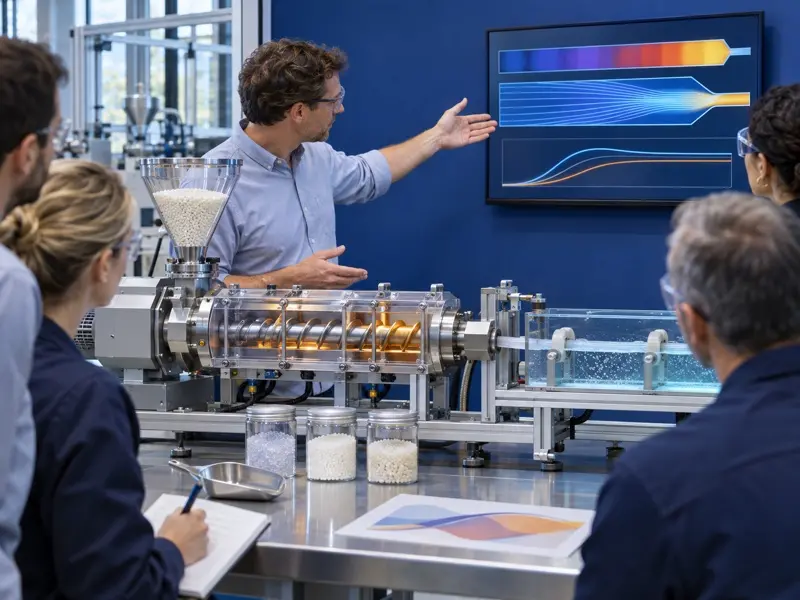
Plastics Injection and Blow Moulding Course: Process Optimization and Mould Care is a one-week course for process technicians, tooling specialists, and manufacturing engineers who require structured methods to stabilize polymer processing operations and preserve production tooling. Inconsistent melt viscosity, uncontrolled shrinkage, parison sag, and tool wear lead to high defect rates and unplanned downtime across plant operations. This course resolves these issues through systematic parameter optimization, decoupled molding practices, and disciplined mold maintenance following ISO 294-1:2017 and ISO 1133-1 standards. Agile Leaders Training Center delivers the Plastics Injection and Blow Moulding Course: Process Optimization and Mould Care.
Who Should Attend
- Process technicians responsible for setting machine parameters and stabilizing cycle times across production shifts.
- Tooling engineers tasked with mold preventative maintenance, cavity repairs, and cooling channel preservation.
- Quality control inspectors examining dimensional tolerances, weld line integrity, and wall thickness uniformity.
- Production supervisors managing machine uptime, scrap reduction initiatives, and material changeover efficiency.
- Maintenance mechanics servicing hydraulic clamping units, hot runner systems, and blow pin assemblies.
The course assumes participants actively operate polymer machinery and inspect molded components, and it leaves out fundamental machine shop safety and basic polymer chemistry.
Departments and Industries
The course draws practical processing cases from polymer conversion and industrial packaging facilities across commercial sectors.
- Rigid packaging production and bottle blow molding departments
- Automotive interior trim and technical component molding divisions
- Consumer goods manufacturing and closure fabrication operations
- Medical container forming and laboratory plasticware lines
- Industrial chemical container extrusion blow molding facilities
Learning Objectives
By the end of this course, participants will be able to:
- Apply decoupled molding principles and cavity pressure monitoring to establish repeatable process windows.
- Analyze polymer melt flow rate data per ISO 1133-1 to adjust injection speeds and prevent short shots.
- Prioritize extrusion blow molding parameters to stabilize parison wall thickness and minimize container drop failures.
- Evaluate mold cooling circuit efficiency and thermal balance to prevent post-molding shrinkage under ISO 294-4:2018.
- Diagnose surface flash, jetting, sink marks, and parison sag through structured root-cause troubleshooting matrices.
- Build preventative tooling care protocols covering hot runner cleaning, parting line refurbishment, and vent maintenance.
Course Agenda
Day 1: Polymer Rheology and Scientific Molding Principles
- Thermoplastic melt behavior, viscosity curves, and shear thinning analysis per ISO 1133-1
- Decoupled molding architecture separating filling, packing, holding, and cooling stages
- Machine dynamic capability assessments and injection velocity linearity calibration
- Cavity balance audits and short-shot testing for multi-cavity runner balancing
- Process window development and gate seal study execution using part weight measurement
Day 2: Injection Molding Optimization and Defect Resolution
- Pack and hold pressure profiling to manage volumetric shrinkage per ISO 294-4:2018
- Clamping force calculations, projected area assessments, and parting line stress prevention
- Root-cause diagnostics for sink marks, flash, burn marks, and flow lines
- Hot runner manifold thermal balancing and valve-gate sequential timing optimization
- In-cavity pressure transducer data interpretation for automated part sorting
Day 3: Blow Molding Process Control and Parison Management
- Extrusion blow molding fundamentals and parison wall thickness control programming
- Stretch blow molding reheat oven profiling, preform temperature mapping, and stretch rod speed
- Blow-up ratio calculations and bottle neck finish calibration following ASTM D2911
- Drop impact resistance testing procedures and container failure analysis under ASTM D2463
- Defect mitigation for parison sag, uneven wall distribution, haze, and rocker bottoms
Day 4: Mold Tooling Care, Cooling, and Preventative Maintenance
- Mold cooling channel descaling, flow rate monitoring, and turbulent flow Reynolds number validation
- Venting design standards, gas trap clearing, and parting line crush inspection
- Hot runner system teardown, heater band resistance testing, and tip replacement protocols
- Toolroom preventative maintenance scheduling, ultrasonic cleaning, and corrosion prevention
- Computer-aided engineering simulation parameters for mold thermal warpage per ISO 17282:2004
Day 5: Process Optimization and Tooling Maintenance Capstone
- Exercise: establish a decoupled injection molding process sheet using gate seal and viscosity data
- Exercise: calibrate parison wall thickness profiles to resolve container drop test failures
- Exercise: execute a mold parting line audit and design a preventative cleaning schedule
- Exercise: diagnose multi-cavity part defects using cavity pressure curves and weight balance sheets
- Capstone exercise: present an integrated process optimization and mold maintenance action plan
Practical Exercises
The course uses real production parameter logs, tooling inspection records, and defect samples from high-volume conversion plants.
- Suggested activity: Construct an in-cavity pressure profile and calculate optimum transfer position for an injection molded housing.
- Suggested activity: Calibrate a parison programming curve to correct thin corners on a blow molded container.
- Suggested activity: Formulate a mold preventative maintenance checklist targeting vent cleaning and water jacket descaling.
FAQs
Who suits the Plastics Injection and Blow Moulding Course: Process Optimization and Mould Care?
The Plastics Injection and Blow Moulding Course: Process Optimization and Mould Care suits process technicians, manufacturing engineers, and tooling supervisors. The course assumes active involvement in plastics manufacturing environments, leaving out introductory general chemistry and manual machining basics.
How does this course differ from basic plastics setter training?
Basic setter courses focus on manual machine navigation and simple start-stop procedures. This course delivers engineering-grade decoupled molding principles, parison thickness control, systematic defect diagnostics, and mold preservation techniques backed by ISO and ASTM testing standards.
How does decoupled molding improve process capability?
Decoupled molding isolates the fast mold-filling phase from the pack-and-hold phase. This separation prevents machine hydraulic fluctuations and polymer viscosity changes from altering part dimensions, establishing consistent part weight and cycle stability across production batches.
Why is mold cooling water circuit maintenance critical for cycle times?
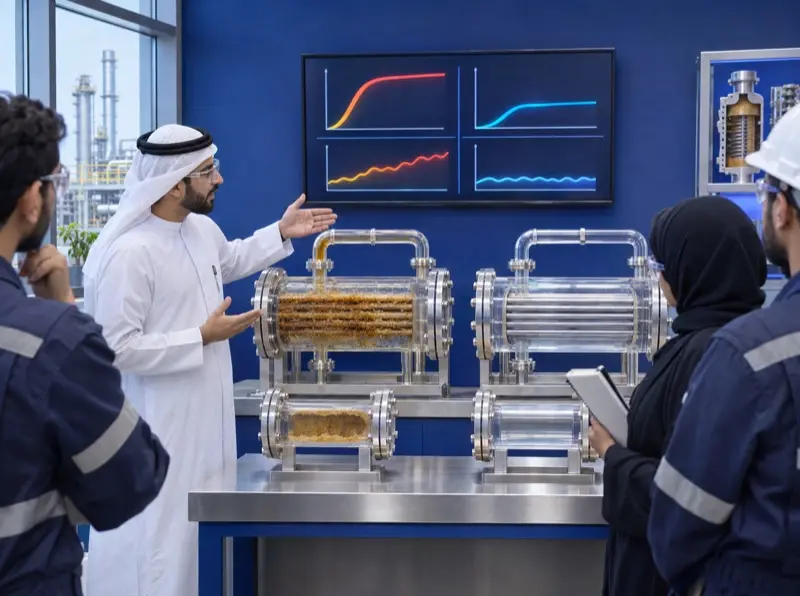
Scale accumulation and corroded cooling channels reduce thermal transfer efficiency and create laminar coolant flow. Maintaining turbulent flow and descaling circuits ensures rapid, uniform heat extraction, preventing part warpage and cutting overall cooling cycle durations.
Conclusion
Participants return to their organizations equipped with an integrated process optimization and mold maintenance action plan. This tangible operational framework enables molding plants to resolve recurring surface defects and significantly reduce mold changeover delays. Production and tooling teams immediately apply these standardized methods to stabilize machine cycles and prolong tool life across high-volume production operations.
credits: 5 credit per day
Course Mode: full-time
Provider: Agile Leaders Training Center
-
Events for this Course
-
Porto 7 – 11 December 2026
-
Rome 14 – 18 December 2026
-
Abu Dhabi 4 – 8 January 2027
-
New York 11 – 15 January 2027
-
Athens 18 – 22 January 2027
-
Langkawi 24 – 28 January 2027
-
Dubai 25 – 29 January 2027
-
Bali 31 January – 4 February 2027
-
Bangkok 7 – 11 February 2027
-
Vienna 8 – 12 February 2027
-
Sharm El-Sheikh 15 – 19 February 2027
-
Seoul 15 – 19 February 2027
-
Johannesburg 21 – 25 February 2027
-
Doha 28 February – 4 March 2027
-
San Diego 1 – 5 March 2027
-
Cape town 7 – 11 March 2027
-
Singapore 15 – 19 March 2027
-
Accra 22 – 26 March 2027
-
Tbilisi 29 March – 2 April 2027
-
Nairobi 18 – 22 April 2027
-
Muscat 2 – 6 May 2027
-
London 3 – 7 May 2027
-
Lagos 9 – 13 May 2027
-
Milan 10 – 14 May 2027
-
Paris 17 – 21 May 2027
-
Marbella 23 – 27 May 2027
-
Barcelona 24 – 28 May 2027
-
Kuala Lumpur 7 – 11 June 2027
-
Nice 7 – 11 June 2027
-
Kuwait 13 – 17 June 2027
-
Chicago 20 – 24 June 2027
-
Dubai 5 – 9 July 2027
-
Jakarta 5 – 9 July 2027
-
Frankfurt 12 – 16 July 2027
-
Trabzon 18 – 22 July 2027
-
Casablanca 19 – 23 July 2027
-
Montreux 26 – 30 July 2027
-
Tokyo 2 – 6 August 2027
-
Geneva 8 – 12 August 2027
-
Phuket 15 – 19 August 2027
-
Cairo 16 – 20 August 2027
-
Toronto 22 – 26 August 2027
-
Madrid 30 August – 3 September 2027
-
Addis Ababa 30 August – 3 September 2027
-
Amman 5 – 9 September 2027
-
Istanbul 13 – 17 September 2027
-
Munich 13 – 17 September 2027
-
Zoom 20 – 24 September 2027
-
Baku 27 September – 1 October 2027
-
Berlin 27 September – 1 October 2027
-
Prague 4 – 8 October 2027
-
Amsterdam 11 – 15 October 2027
-
Lisbon 11 – 15 October 2027
-
Zanzibar 17 – 21 October 2027
-
Abu Dhabi 25 – 29 October 2027
-
Manama 31 October – 4 November 2027
-
Tashkent 31 October – 4 November 2027
-
London 15 – 19 November 2027
| Image | Location | Dates | Duration | Mode | Price | Actions |
|---|---|---|---|---|---|---|

|
Muscat |
Week 17, 2027 2 – 6 May 2027 |
1 Week | Onsite | €6,500 | |

|
London |
Week 18, 2027 3 – 7 May 2027 |
1 Week | Onsite | €6,500 | |

|
Lagos |
Week 18, 2027 9 – 13 May 2027 |
1 Week | Onsite | €6,000 | |

|
Milan |
Week 19, 2027 10 – 14 May 2027 |
1 Week | Onsite | €7,000 | |

|
Paris |
Week 20, 2027 17 – 21 May 2027 |
1 Week | Onsite | €6,500 | |

|
Marbella |
Week 20, 2027 23 – 27 May 2027 |
1 Week | Onsite | €6,500 | |

|
Barcelona |
Week 21, 2027 24 – 28 May 2027 |
1 Week | Onsite | €6,500 | |

|
Kuala Lumpur |
Week 23, 2027 7 – 11 June 2027 |
1 Week | Onsite | €6,500 | |

|
Nice |
Week 23, 2027 7 – 11 June 2027 |
1 Week | Onsite | €8,000 | |

|
Kuwait |
Week 23, 2027 13 – 17 June 2027 |
1 Week | Onsite | €7,000 | |

|
Chicago |
Week 24, 2027 20 – 24 June 2027 |
1 Week | Onsite | €16,000 | |

|
Dubai |
Week 27, 2027 5 – 9 July 2027 |
1 Week | Onsite | €6,500 | |

|
Jakarta |
Week 27, 2027 5 – 9 July 2027 |
1 Week | Onsite | €8,000 | |

|
Frankfurt |
Week 28, 2027 12 – 16 July 2027 |
1 Week | Onsite | €6,500 | |

|
Trabzon |
Week 28, 2027 18 – 22 July 2027 |
1 Week | Onsite | €8,000 | |

|
Casablanca |
Week 29, 2027 19 – 23 July 2027 |
1 Week | Onsite | €6,000 | |

|
Montreux |
Week 30, 2027 26 – 30 July 2027 |
1 Week | Onsite | €8,000 | |

|
Tokyo |
Week 31, 2027 2 – 6 August 2027 |
1 Week | Onsite | €12,000 | |

|
Geneva |
Week 31, 2027 8 – 12 August 2027 |
1 Week | Onsite | €8,000 | |

|
Phuket |
Week 32, 2027 15 – 19 August 2027 |
1 Week | Onsite | €8,000 |
Frequently asked questions
What does this course cover?
OverviewPlastics Injection and Blow Moulding Course: Process Optimization and Mould Care is a one-week course for process technicians, tooling specialists, and manufacturing engineers who require structured methods to stabilize polymer processing operations and preserve production tooling. Inconsistent melt viscosity, uncontrolled shrinkage, parison sag,…
Are training dates available?
Yes. Available dates and destinations are listed in the course dates section on this page.
How can I register?
Choose an available date on this page and complete the registration form, or send a programme enquiry.
Can I download the course brochure?
Yes. Use the brochure download link provided on this page.
This course by city
- Maintenance Training and Engineering Training Courses in Abu Dhabi
- Maintenance Training and Engineering Training Courses in Accra
- Maintenance Training and Engineering Training Courses in Addis Ababa
- Maintenance Training and Engineering Training Courses in Amman
- Maintenance Training and Engineering Training Courses in Amsterdam
- Maintenance Training and Engineering Training Courses in Athens
- Maintenance Training and Engineering Training Courses in Baku
- Maintenance Training and Engineering Training Courses in Bali
- Maintenance Training and Engineering Training Courses in Bangkok
- Maintenance Training and Engineering Training Courses in Barcelona
- Maintenance Training and Engineering Training Courses in Berlin
- Maintenance Training and Engineering Training Courses in Cairo
- Maintenance Training and Engineering Training Courses in Cape town
- Maintenance Training and Engineering Training Courses in Casablanca
- Maintenance Training and Engineering Training Courses in Chicago
- Maintenance Training and Engineering Training Courses in Doha
- Maintenance Training and Engineering Training Courses in Dubai
- Maintenance Training and Engineering Training Courses in Frankfurt
- Maintenance Training and Engineering Training Courses in Geneva
- Maintenance Training and Engineering Training Courses in Istanbul
- Maintenance Training and Engineering Training Courses in Jakarta
- Maintenance Training and Engineering Training Courses in Johannesburg
- Maintenance Training and Engineering Training Courses in Kuala Lumpur
- Maintenance Training and Engineering Training Courses in Kuwait
- Maintenance Training and Engineering Training Courses in Lagos
- Maintenance Training and Engineering Training Courses in Langkawi
- Maintenance Training and Engineering Training Courses in Lisbon
- Maintenance Training and Engineering Training Courses in London
- Maintenance Training and Engineering Training Courses in Madrid
- Maintenance Training and Engineering Training Courses in Manama
- Maintenance Training and Engineering Training Courses in Marbella
- Maintenance Training and Engineering Training Courses in Milan
- Maintenance Training and Engineering Training Courses in Montreux
- Maintenance Training and Engineering Training Courses in Munich
- Maintenance Training and Engineering Training Courses in Muscat
- Maintenance Training and Engineering Training Courses in Nairobi
- Maintenance Training and Engineering Training Courses in New York
- Maintenance Training and Engineering Training Courses in Nice
- Maintenance Training and Engineering Training Courses in Paris
- Maintenance Training and Engineering Training Courses in Phuket
- Maintenance Training and Engineering Training Courses in Porto
- Maintenance Training and Engineering Training Courses in Prague
- Maintenance Training and Engineering Training Courses in Rome
- Maintenance Training and Engineering Training Courses in San Diego
- Maintenance Training and Engineering Training Courses in Seoul
- Maintenance Training and Engineering Training Courses in Sharm El-Sheikh
- Maintenance Training and Engineering Training Courses in Singapore
- Maintenance Training and Engineering Training Courses in Tashkent
- Maintenance Training and Engineering Training Courses in Tbilisi
- Maintenance Training and Engineering Training Courses in Tokyo
- Maintenance Training and Engineering Training Courses in Toronto
- Maintenance Training and Engineering Training Courses in Trabzon
- Maintenance Training and Engineering Training Courses in Vienna
- Maintenance Training and Engineering Training Courses in Zanzibar
- Maintenance Training and Engineering Training Courses in Zoom