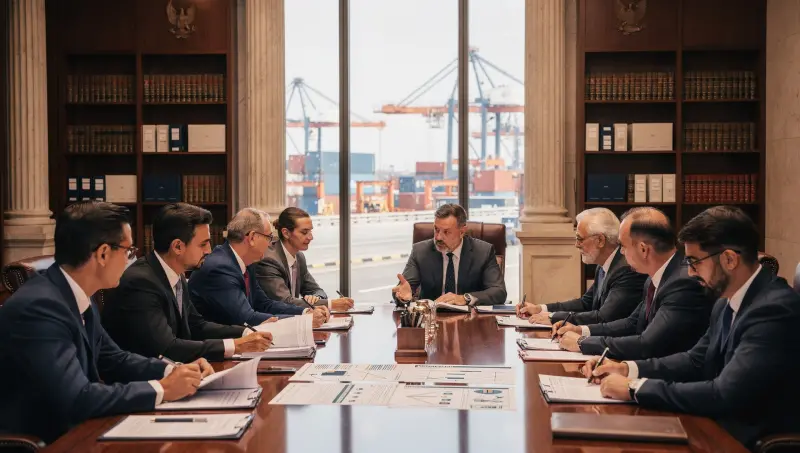
Customs Risk Management & Trade Facilitation Course

At a glance
- Duration
- 5 days
- Format
- Classroom
- Cities
- Zanzibar, New York, Tashkent, Nairobi, Bangkok, Frankfurt and more
- Next session
- 11 – 15 October 2026, Zanzibar
- Average fee
- 5,750 €
Course Overview
This five-day training course provides a comprehensive exploration of risk management in customs controls with a strong focus on international frameworks, trade facilitation, and compliance. In an era of globalized trade, customs administrations face mounting challenges: from preventing fraud, smuggling, and terrorism financing, to balancing border security with legitimate trade facilitation. This course bridges theory and practice by drawing on the WCO Risk Management Compendium, the WTO Trade Facilitation Agreement (TFA), the SAFE Framework of Standards, the Revised Kyoto Convention (RKC), and case studies from the OIC Member States.
Participants will master methods for risk identification, profiling, analysis, and evaluation, while also exploring advanced topics such as data-driven decision-making, behavioral risk analysis, and collaborative border management. They will gain insights into how customs risk management improves revenue collection, enhances supply chain security, and reduces clearance times and costs. By the end of the course, participants will have the knowledge and tools to strengthen compliance frameworks, align with global standards, and design effective national Customs Risk Management (CRM) systems.
Target Audience
- Customs officers, inspectors, and managers
- Policy advisors in ministries of finance, trade, and border control
- Trade compliance and enforcement officers
- Supply chain and logistics professionals
- Risk management specialists in customs and taxation
Targeted Organizational Departments
- Customs administration (risk, enforcement, compliance)
- Trade facilitation and logistics departments
- Revenue and taxation authorities
- Legal and policy divisions in trade ministries
- Border security and compliance management units
Targeted Industries
- International trade and customs
- Shipping, freight forwarding, and logistics
- Import/export companies and e-commerce platforms
- Government and intergovernmental agencies (WCO, WTO, OIC)
- Security and border management services
Course Offerings
- By the end of this course, participants will be able to:
- Apply risk management frameworks in customs operations.
- Identify, profile, and prioritize risks effectively.
- Design and implement pre-clearance and post-clearance audit systems.
- Apply behavioral and transactional risk analysis.
- Integrate compliance management through AEO (Authorized Economic Operator) programs.
- Align customs practices with WCO, WTO, and RKC standards.
- Monitor, evaluate, and improve national CRM strategies.
Training Methodology
The course uses a mix of interactive lectures, real case studies, group work, role-play scenarios, and simulation exercises. Participants will analyze best practices from global leaders such as Turkey, Australia, and New Zealand, while also reviewing lessons learned from OIC member states. Data-driven tools such as business intelligence, data mining, and predictive analytics will be conceptually demonstrated. Daily reflection and review sessions will ensure that participants consolidate their learning, link global insights to local contexts, and develop practical action plans.
Course Toolbox
- Training manual and workbook with case studies
- Templates for risk registers, profiling checklists, and compliance monitoring
- Reference documents from WCO, WTO, and OIC
- Practical exercises on risk profiling and targeting
- Access to reading lists and online resources
Course Agenda
Day 1: Foundations of Customs Risk Management
- Topic 1: Introduction to customs risk management and global trade challenges
- Topic 2: The role of customs in trade facilitation and compliance enforcement
- Topic 3: International frameworks: WTO TFA, RKC, and SAFE standards
- Topic 4: Evolution from gatekeeper models to risk-based compliance systems
- Topic 5: Types of customs risks: revenue, security, environment, health, and competition
- Topic 6: Benefits of effective customs risk management for government and trade
- Reflection & Review: Key takeaways on foundations and strategic role of CRM
Day 2: Risk Identification and Profiling
- Topic 1: Establishing the context for customs risk management
- Topic 2: Sources of risk information: intelligence, stakeholders, and data systems
- Topic 3: Developing and using risk indicators in customs controls
- Topic 4: Profiling methods for high-risk consignments, goods, and passengers
- Topic 5: Tools for pre-arrival and pre-departure information in risk targeting
- Topic 6: Case examples of effective profiling systems in OIC and global practices
- Reflection & Review: Lessons from global profiling methods and their application
Day 3: Risk Analysis, Evaluation, and Treatment
- Topic 1: Risk analysis techniques: probability, consequences, and prioritization
- Topic 2: Risk management cycle: identification, analysis, profiling, targeting, and feedback
- Topic 3: Transactional vs. behavioral risk analysis approaches
- Topic 4: Control measures: green, yellow, red, blue, and orange channels
- Topic 5: Using data mining, business intelligence, and predictive analytics in CRM
- Topic 6: Designing and maintaining effective risk registers for customs administration
- Reflection & Review: Practical exercise on quantifying and prioritizing customs risks
Day 4: Compliance Management and Trade Facilitation
- Topic 1: Compliance management models: voluntary, assisted, directed, and enforced compliance
- Topic 2: Authorized Economic Operator (AEO) programs and trusted trader frameworks
- Topic 3: Post-clearance audits and investigations as risk mitigation tools
- Topic 4: Collaborative border management and inter-agency cooperation
- Topic 5: Integrating international agreements into national CRM strategies
- Topic 6: Case study analysis: balancing trade facilitation and enforcement in practice
- Reflection & Review: Group debate on facilitation vs. control in customs operations
Day 5: Global Practices and Future Trends
- Topic 1: Global best practices: lessons from Turkey, New Zealand, and Australia
- Topic 2: Case studies from OIC member states: challenges and progress
- Topic 3: Monitoring and evaluating CRM effectiveness with KPIs and feedback systems
- Topic 4: Emerging technologies: AI, blockchain, e-commerce risk management
- Topic 5: Strategic policy options for developing and implementing national CRM systems
- Topic 6: Designing a roadmap for continuous improvement in customs risk management
- Reflection & Review: Final group presentations and course synthesis
FAQ
What specific qualifications or prerequisites are needed for participants before enrolling in the course?
No formal prerequisites are required. A background in customs, trade, or compliance is beneficial.
How long is each day's session, and is there a total number of hours required for the entire course?
Each day runs 4–5 hours with interactive sessions. The full course is 20–25 hours over 5 days.
Why can’t customs administrations physically inspect all goods, and how does risk management solve this?
Because of globalization and high trade volumes, 100% checks are impractical. Risk management enables customs to target high-risk consignments while expediting low-risk trade, ensuring efficiency and compliance simultaneously.
How This Course is Different from Other Customs Risk Management Courses
This course is unique because it integrates WCO, WTO, and OIC frameworks with practical global and regional case studies. It emphasizes not only compliance theory but also data-driven approaches, profiling methods, and innovative technology applications. Participants will leave with ready-to-use templates, practical tools, and actionable strategies to implement or upgrade their national customs risk management systems, making it far more applied and impactful than standard compliance training.
credits: 5 credit per day
Course Mode: full-time
Provider: Agile Leaders Training Center
-
Events for this Course
-
Zanzibar 11 – 15 October 2026
-
New York 12 – 16 October 2026
-
Tashkent 18 – 22 October 2026
-
Nairobi 25 – 29 October 2026
-
Bangkok 1 – 5 November 2026
-
Frankfurt 2 – 6 November 2026
-
Cairo 16 – 20 November 2026
-
Johannesburg 22 – 26 November 2026
-
Abu Dhabi 23 – 27 November 2026
-
Singapore 23 – 27 November 2026
-
Chicago 29 November – 3 December 2026
-
Munich 7 – 11 December 2026
-
Montreux 14 – 18 December 2026
-
Nice 21 – 25 December 2026
-
Amsterdam 28 December 2026 – 1 January 2027
-
Zoom 4 – 8 January 2027
-
Vienna 11 – 15 January 2027
-
Singapore 11 – 15 January 2027
-
Amman 17 – 21 January 2027
-
London 18 – 22 January 2027
-
Istanbul 25 – 29 January 2027
-
Tbilisi 25 – 29 January 2027
-
Tokyo 1 – 5 February 2027
-
Baku 8 – 12 February 2027
-
Dubai 15 – 19 February 2027
-
Milan 15 – 19 February 2027
-
Manama 21 – 25 February 2027
-
Cairo 22 – 26 February 2027
-
Paris 1 – 5 March 2027
-
Athens 1 – 5 March 2027
-
Vienna 8 – 12 March 2027
-
Seoul 8 – 12 March 2027
-
Muscat 14 – 18 March 2027
-
Barcelona 15 – 19 March 2027
-
Doha 21 – 25 March 2027
-
Istanbul 22 – 26 March 2027
-
Kuala Lumpur 29 March – 2 April 2027
-
Marbella 4 – 8 April 2027
-
Riyadh 11 – 15 April 2027
-
Sharm El-Sheikh 12 – 16 April 2027
-
Geneva 18 – 22 April 2027
-
Rome 19 – 23 April 2027
-
Porto 19 – 23 April 2027
-
London 26 – 30 April 2027
-
Madrid 26 – 30 April 2027
-
Cairo 3 – 7 May 2027
-
Milan 3 – 7 May 2027
-
Al Jubail 9 – 13 May 2027
-
Toronto 9 – 13 May 2027
-
Dubai 10 – 14 May 2027
-
Barcelona 17 – 21 May 2027
-
Amsterdam 17 – 21 May 2027
-
Manama 30 May – 3 June 2027
-
San Diego 31 May – 4 June 2027
-
Casablanca 7 – 11 June 2027
-
Abu Dhabi 7 – 11 June 2027
-
Phuket 13 – 17 June 2027
-
London 21 – 25 June 2027
-
Prague 21 – 25 June 2027
-
Kuwait 27 June – 1 July 2027
-
Langkawi 27 June – 1 July 2027
-
Madrid 5 – 9 July 2027
-
Accra 11 – 15 July 2027
-
Kuala Lumpur 19 – 23 July 2027
-
Jakarta 19 – 23 July 2027
-
Dubai 26 – 30 July 2027
-
Abu Dhabi 2 – 6 August 2027
-
Bali 8 – 12 August 2027
-
Paris 16 – 20 August 2027
-
Amsterdam 16 – 20 August 2027
-
Trabzon 22 – 26 August 2027
-
Cape town 29 August – 2 September 2027
-
Rome 6 – 10 September 2027
-
Berlin 13 – 17 September 2027
-
London 27 September – 1 October 2027
-
Abu Dhabi 4 – 8 October 2027
-
Dubai 11 – 15 October 2027
-
Cairo 11 – 15 October 2027
-
Singapore 11 – 15 October 2027
-
Lisbon 11 – 15 October 2027
| Image | Location | Dates | Duration | Mode | Price | Actions |
|---|---|---|---|---|---|---|

|
Istanbul |
Week 04, 2027 25 – 29 January 2027 |
5 Days | Onsite | €4,500 | |

|
Tbilisi |
Week 04, 2027 25 – 29 January 2027 |
5 Days | Onsite | €5,000 | |

|
Tokyo |
Week 05, 2027 1 – 5 February 2027 |
5 Days | Onsite | €10,000 | |

|
Baku |
Week 06, 2027 8 – 12 February 2027 |
5 Days | Onsite | €5,000 | |

|
Dubai |
Week 07, 2027 15 – 19 February 2027 |
5 Days | Onsite | €4,500 | |

|
Milan |
Week 07, 2027 15 – 19 February 2027 |
5 Days | Onsite | €5,700 | |

|
Manama |
Week 07, 2027 21 – 25 February 2027 |
5 Days | Onsite | €4,700 | |

|
Cairo |
Week 08, 2027 22 – 26 February 2027 |
5 Days | Onsite | €4,100 | |

|
Paris |
Week 09, 2027 1 – 5 March 2027 |
5 Days | Onsite | €5,700 | |

|
Athens |
Week 09, 2027 1 – 5 March 2027 |
5 Days | Onsite | €6,700 | |

|
Vienna |
Week 10, 2027 8 – 12 March 2027 |
5 Days | Onsite | €5,700 | |

|
Seoul |
Week 10, 2027 8 – 12 March 2027 |
5 Days | Onsite | €10,000 | |

|
Muscat |
Week 10, 2027 14 – 18 March 2027 |
5 Days | Onsite | €5,700 | |

|
Barcelona |
Week 11, 2027 15 – 19 March 2027 |
5 Days | Onsite | €5,700 | |

|
Doha |
Week 11, 2027 21 – 25 March 2027 |
5 Days | Onsite | €5,500 | |
|
|
Istanbul |
Week 12, 2027 22 – 26 March 2027 |
5 Days | Onsite | €4,500 | |

|
Kuala Lumpur |
Week 13, 2027 29 March – 2 April 2027 |
5 Days | Onsite | €5,200 | |

|
Marbella |
Week 13, 2027 4 – 8 April 2027 |
5 Days | Onsite | €5,700 | |

|
Riyadh |
Week 14, 2027 11 – 15 April 2027 |
5 Days | Onsite | €5,700 | |

|
Sharm El-Sheikh |
Week 15, 2027 12 – 16 April 2027 |
5 Days | Onsite | €4,100 |
Frequently asked questions
Are training dates available?
Yes. Available dates and destinations are listed in the course dates section on this page.
How can I register?
Choose an available date on this page and complete the registration form, or send a programme enquiry.
Can I download the course brochure?
Yes. Use the brochure download link provided on this page.
This course by city
- Finance and Accounting Training Courses in Abu Dhabi
- Finance and Accounting Training Courses in Accra
- Finance and Accounting Training Courses in Al Jubail
- Finance and Accounting Training Courses in Amman
- Finance and Accounting Training Courses in Amsterdam
- Finance and Accounting Training Courses in Athens
- Finance and Accounting Training Courses in Baku
- Finance and Accounting Training Courses in Bali
- Finance and Accounting Training Courses in Bangkok
- Finance and Accounting Training Courses in Barcelona
- Finance and Accounting Training Courses in Berlin
- Finance and Accounting Training Courses in Cairo
- Finance and Accounting Training Courses in Cape town
- Finance and Accounting Training Courses in Casablanca
- Finance and Accounting Training Courses in Chicago
- Finance and Accounting Training Courses in Doha
- Finance and Accounting Training Courses in Dubai
- Finance and Accounting Training Courses in Frankfurt
- Finance and Accounting Training Courses in Geneva
- Finance and Accounting Training Courses in Istanbul
- Finance and Accounting Training Courses in Jakarta
- Finance and Accounting Training Courses in Johannesburg
- Finance and Accounting Training Courses in Kuala Lumpur
- Finance and Accounting Training Courses in Kuwait
- Finance and Accounting Training Courses in Langkawi
- Finance and Accounting Training Courses in Lisbon
- Finance and Accounting Training Courses in London
- Finance and Accounting Training Courses in Madrid
- Finance and Accounting Training Courses in Manama
- Finance and Accounting Training Courses in Marbella
- Finance and Accounting Training Courses in Milan
- Finance and Accounting Training Courses in Montreux
- Finance and Accounting Training Courses in Munich
- Finance and Accounting Training Courses in Muscat
- Finance and Accounting Training Courses in Nairobi
- Finance and Accounting Training Courses in New York
- Finance and Accounting Training Courses in Nice
- Finance and Accounting Training Courses in Paris
- Finance and Accounting Training Courses in Phuket
- Finance and Accounting Training Courses in Porto
- Finance and Accounting Training Courses in Prague
- Finance and Accounting Training Courses in Riyadh
- Finance and Accounting Training Courses in Rome
- Finance and Accounting Training Courses in San Diego
- Finance and Accounting Training Courses in Seoul
- Finance and Accounting Training Courses in Sharm El-Sheikh
- Finance and Accounting Training Courses in Singapore
- Finance and Accounting Training Courses in Tashkent
- Finance and Accounting Training Courses in Tbilisi
- Finance and Accounting Training Courses in Tokyo
- Finance and Accounting Training Courses in Toronto
- Finance and Accounting Training Courses in Trabzon
- Finance and Accounting Training Courses in Vienna
- Finance and Accounting Training Courses in Zanzibar
- Finance and Accounting Training Courses in Zoom