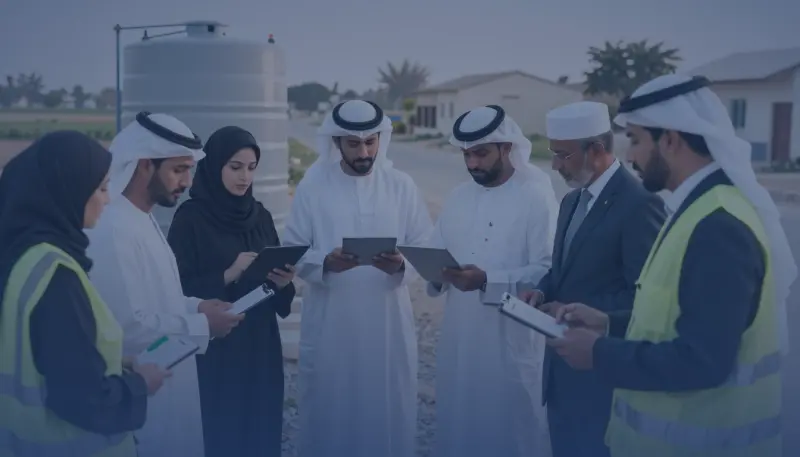
Rural Livelihoods and Social Protection Course

At a glance
- Duration
- 1 Week
- Format
- Classroom
- Cities
- London, Nice, Muscat, Paris, Prague, Langkawi and more
- Next session
- 9 – 13 November 2026, London
- Average fee
- 5,750 €
Overview
Rural Livelihoods and Social Protection Delivery Training Course is a one-week intermediate course for rural development, local government, NGO, humanitarian, social protection, and community teams who leave with a Rural Livelihoods Delivery Plan. Participants connect livelihood assessment, asset mapping, vulnerability and inclusion analysis, social protection delivery systems, rural institutions, market access, resilience actions, and monitoring to coordinate practical support for rural households. Agile Leaders Training Center develops rural livelihoods and social protection delivery capability.
Who Should Attend
- Rural development teams responsible for household livelihoods and community action
- Local government teams responsible for service coordination and rural inclusion
- NGO and humanitarian teams responsible for livelihoods recovery and social assistance
- Social protection teams responsible for outreach, registration, referrals, and case pathways
- Community development teams responsible for local institutions and participation
The course assumes participants already manage rural development, livelihoods, or social support activity and leaves legal eligibility decisions, platform procurement, and organization-specific benefit rules outside its scope.
Departments and Industries
The course supports departments and industries that coordinate rural livelihoods, services, protection, and market access.
- Local government and rural development
- Humanitarian and development organizations
- Social protection and community services
- Agriculture, cooperatives, and producer organizations
- Microfinance, market development, and value-chain support
Learning Objectives
By the end of this course, participants will be able to:
- Apply the Sustainable Livelihoods Framework to rural contexts.
- Analyze household assets, vulnerabilities, institutions, and strategies.
- Build inclusive social protection delivery pathways.
- Evaluate rural institutions and market-access constraints.
- Prioritize resilience actions and coordinated referrals.
- Build a Rural Livelihoods Delivery Plan.
Course Agenda
Day 1: Assess Rural Livelihood Systems
- Sustainable Livelihoods Framework Context Map
- Household Livelihood Asset Pentagon
- Participatory Livelihood Assessment Question Set
- Seasonal Calendar and Income Pattern Matrix
- Vulnerability, Shock, and Coping Strategy Profile
Day 2: Map Inclusion and Service Access
- Community Stakeholder and Institution Map
- Gender, Age, and Disability Inclusion Lens
- Rural Service-Access Barrier Analysis
- Household Outreach and Registration Journey
- Social Registry Data and Update Checklist
Day 3: Design Protection Delivery Pathways
- Eligibility and Referral Decision Pathway
- Benefit and Service Coordination Matrix
- Case Management Responsibility Map
- Grievance and Feedback Response Flow
- Multi-Channel Rural Delivery Access Plan
Day 4: Strengthen Institutions and Resilience
- Producer Organization Capacity Assessment
- Market and Value-Chain Access Map
- Rural Finance and Resource Linkage Matrix
- Livelihood Diversification Options Grid
- Resilience Action and Monitoring Dashboard
Day 5: Practice Rural Livelihoods Delivery
- Suggested Exercise: Diagnose a Household Livelihood System
- Suggested Exercise: Map an Inclusive Service Journey
- Suggested Exercise: Design a Protection Referral Pathway
- Suggested Exercise: Prioritize Market and Resilience Actions
- Capstone Exercise: Complete a Rural Livelihoods Delivery Plan
Practical Exercises
The course uses suggested activities based on anonymized agriculture, local government, humanitarian response, and community-service cases.
- Suggested activity: assess household assets, seasonal patterns, vulnerabilities, institutions, and coping strategies.
- Suggested activity: map outreach, registration, eligibility, referrals, case management, and grievance channels.
- Suggested activity: compare producer-organization, finance, market, and livelihood-diversification options.
- Suggested activity: present a Rural Livelihoods Delivery Plan with responsibilities, indicators, and coordination points.
FAQs
Who suits rural livelihoods and social protection delivery training, and what does it assume?
Rural livelihoods and social protection delivery training suits development, local government, humanitarian, protection, and community teams. It assumes participants already coordinate livelihoods or social support activity.
How does rural livelihoods delivery differ from general community development training?
Rural livelihoods delivery connects household assets, vulnerability, protection pathways, rural institutions, markets, resilience, and monitoring. General community development training usually addresses broader participation and local development topics.
What is a rural livelihood assessment?
A rural livelihood assessment examines household assets, income patterns, institutions, vulnerability, coping strategies, and desired outcomes to support practical intervention choices.
How do social protection delivery systems support rural livelihoods?
Social protection delivery systems connect outreach, registration, eligibility, benefits, referrals, case management, payments, grievances, and monitoring so rural households can access coordinated support.
Why do rural institutions matter for livelihood resilience?
Rural institutions help households share knowledge, organize collective action, access services and finance, strengthen market connections, and represent community priorities.
Conclusion
Participants take back a Rural Livelihoods Delivery Plan. It combines livelihood and asset assessments, inclusion checks, service pathways, institutional roles, market linkages, resilience actions, monitoring indicators, and coordination responsibilities. The plan helps teams align household evidence with practical protection, service, market, and community-development decisions.
credits: 5 credit per day
Course Mode: full-time
Provider: Agile Leaders Training Center
-
Events for this Course
-
London 9 – 13 November 2026
-
Nice 9 – 13 November 2026
-
Muscat 15 – 19 November 2026
-
Paris 23 – 27 November 2026
-
Prague 23 – 27 November 2026
-
Langkawi 29 November – 3 December 2026
-
Doha 6 – 10 December 2026
-
Manama 13 – 17 December 2026
-
Toronto 13 – 17 December 2026
-
Istanbul 21 – 25 December 2026
-
Rome 21 – 25 December 2026
-
Amsterdam 28 December 2026 – 1 January 2027
-
Nairobi 3 – 7 January 2027
-
Barcelona 11 – 15 January 2027
-
London 18 – 22 January 2027
-
Munich 25 – 29 January 2027
-
Amsterdam 1 – 5 February 2027
-
Trabzon 7 – 11 February 2027
-
Dubai 8 – 12 February 2027
-
Lisbon 8 – 12 February 2027
-
Zanzibar 14 – 18 February 2027
-
Lagos 21 – 25 February 2027
-
Milan 22 – 26 February 2027
-
Abu Dhabi 1 – 5 March 2027
-
Bangkok 7 – 11 March 2027
-
Casablanca 8 – 12 March 2027
-
Istanbul 15 – 19 March 2027
-
Seoul 15 – 19 March 2027
-
Johannesburg 21 – 25 March 2027
-
London 22 – 26 March 2027
-
Madrid 29 March – 2 April 2027
-
Paris 5 – 9 April 2027
-
Porto 5 – 9 April 2027
-
Singapore 12 – 16 April 2027
-
Addis Ababa 12 – 16 April 2027
-
Dubai 19 – 23 April 2027
-
Baku 19 – 23 April 2027
-
Tbilisi 26 – 30 April 2027
-
Jakarta 3 – 7 May 2027
-
Kuala Lumpur 10 – 14 May 2027
-
Vienna 10 – 14 May 2027
-
Abu Dhabi 17 – 21 May 2027
-
Sharm El-Sheikh 24 – 28 May 2027
-
Rome 24 – 28 May 2027
-
Geneva 30 May – 3 June 2027
-
Cairo 31 May – 4 June 2027
-
Marbella 6 – 10 June 2027
-
Amman 13 – 17 June 2027
-
Manama 20 – 24 June 2027
-
Zoom 28 June – 2 July 2027
-
London 5 – 9 July 2027
-
Madrid 5 – 9 July 2027
-
Phuket 11 – 15 July 2027
-
Dubai 12 – 16 July 2027
-
Kuwait 18 – 22 July 2027
-
Accra 25 – 29 July 2027
-
Cairo 26 – 30 July 2027
-
San Diego 2 – 6 August 2027
-
Berlin 2 – 6 August 2027
-
Vienna 9 – 13 August 2027
-
Abu Dhabi 16 – 20 August 2027
-
Chicago 22 – 26 August 2027
-
Tokyo 30 August – 3 September 2027
-
Tashkent 5 – 9 September 2027
-
Montreux 13 – 17 September 2027
-
Frankfurt 13 – 17 September 2027
-
Amsterdam 20 – 24 September 2027
-
Milan 27 September – 1 October 2027
-
Athens 4 – 8 October 2027
-
New York 11 – 15 October 2027
-
Dubai 18 – 22 October 2027
-
Abu Dhabi 18 – 22 October 2027
-
Bali 24 – 28 October 2027
-
Kuala Lumpur 1 – 5 November 2027
-
Barcelona 1 – 5 November 2027
-
Cape town 7 – 11 November 2027
| Image | Location | Dates | Duration | Mode | Price | Actions |
|---|---|---|---|---|---|---|

|
Vienna |
Week 19, 2027 10 – 14 May 2027 |
1 Week | Onsite | €5,700 | |

|
Abu Dhabi |
Week 20, 2027 17 – 21 May 2027 |
1 Week | Onsite | €4,700 | |

|
Sharm El-Sheikh |
Week 21, 2027 24 – 28 May 2027 |
1 Week | Onsite | €4,100 | |

|
Rome |
Week 21, 2027 24 – 28 May 2027 |
1 Week | Onsite | €5,700 | |

|
Geneva |
Week 21, 2027 30 May – 3 June 2027 |
1 Week | Onsite | €6,200 | |

|
Cairo |
Week 22, 2027 31 May – 4 June 2027 |
1 Week | Onsite | €4,100 | |

|
Marbella |
Week 22, 2027 6 – 10 June 2027 |
1 Week | Onsite | €5,700 | |

|
Amman |
Week 23, 2027 13 – 17 June 2027 |
1 Week | Onsite | €4,100 | |

|
Manama |
Week 24, 2027 20 – 24 June 2027 |
1 Week | Onsite | €4,700 | |

|
Zoom |
Week 26, 2027 28 June – 2 July 2027 |
1 Week | Online | €1,500 | |

|
London |
Week 27, 2027 5 – 9 July 2027 |
1 Week | Onsite | €5,700 | |

|
Madrid |
Week 27, 2027 5 – 9 July 2027 |
1 Week | Onsite | €5,700 | |

|
Phuket |
Week 27, 2027 11 – 15 July 2027 |
1 Week | Onsite | €6,000 | |

|
Dubai |
Week 28, 2027 12 – 16 July 2027 |
1 Week | Onsite | €4,500 | |

|
Kuwait |
Week 28, 2027 18 – 22 July 2027 |
1 Week | Onsite | €5,500 | |

|
Accra |
Week 29, 2027 25 – 29 July 2027 |
1 Week | Onsite | €4,100 | |
|
|
Cairo |
Week 30, 2027 26 – 30 July 2027 |
1 Week | Onsite | €4,100 | |

|
San Diego |
Week 31, 2027 2 – 6 August 2027 |
1 Week | Onsite | €14,000 | |

|
Berlin |
Week 31, 2027 2 – 6 August 2027 |
1 Week | Onsite | €5,700 | |
|
|
Vienna |
Week 32, 2027 9 – 13 August 2027 |
1 Week | Onsite | €5,700 |
Frequently asked questions
What does this course cover?
OverviewRural Livelihoods and Social Protection Delivery Training Course is a one-week intermediate course for rural development, local government, NGO, humanitarian, social protection, and community teams who leave with a Rural Livelihoods Delivery Plan. Participants connect livelihood assessment, asset mapping, vulnerability and inclusion analysis, soci…
Are training dates available?
Yes. Available dates and destinations are listed in the course dates section on this page.
How can I register?
Choose an available date on this page and complete the registration form, or send a programme enquiry.
Can I download the course brochure?
Yes. Use the brochure download link provided on this page.
This course by city
- NGO, Humanitarian and Development Management Training Courses in Abu Dhabi
- NGO, Humanitarian and Development Management Training Courses in Accra
- NGO, Humanitarian and Development Management Training Courses in Addis Ababa
- NGO, Humanitarian and Development Management Training Courses in Amman
- NGO, Humanitarian and Development Management Training Courses in Amsterdam
- NGO, Humanitarian and Development Management Training Courses in Athens
- NGO, Humanitarian and Development Management Training Courses in Baku
- NGO, Humanitarian and Development Management Training Courses in Bali
- NGO, Humanitarian and Development Management Training Courses in Bangkok
- NGO, Humanitarian and Development Management Training Courses in Barcelona
- NGO, Humanitarian and Development Management Training Courses in Berlin
- NGO, Humanitarian and Development Management Training Courses in Cairo
- NGO, Humanitarian and Development Management Training Courses in Cape town
- NGO, Humanitarian and Development Management Training Courses in Casablanca
- NGO, Humanitarian and Development Management Training Courses in Chicago
- NGO, Humanitarian and Development Management Training Courses in Doha
- NGO, Humanitarian and Development Management Training Courses in Dubai
- NGO, Humanitarian and Development Management Training Courses in Frankfurt
- NGO, Humanitarian and Development Management Training Courses in Geneva
- NGO, Humanitarian and Development Management Training Courses in Istanbul
- NGO, Humanitarian and Development Management Training Courses in Jakarta
- NGO, Humanitarian and Development Management Training Courses in Johannesburg
- NGO, Humanitarian and Development Management Training Courses in Kuala Lumpur
- NGO, Humanitarian and Development Management Training Courses in Kuwait
- NGO, Humanitarian and Development Management Training Courses in Lagos
- NGO, Humanitarian and Development Management Training Courses in Langkawi
- NGO, Humanitarian and Development Management Training Courses in Lisbon
- NGO, Humanitarian and Development Management Training Courses in London
- NGO, Humanitarian and Development Management Training Courses in Madrid
- NGO, Humanitarian and Development Management Training Courses in Manama
- NGO, Humanitarian and Development Management Training Courses in Marbella
- NGO, Humanitarian and Development Management Training Courses in Milan
- NGO, Humanitarian and Development Management Training Courses in Montreux
- NGO, Humanitarian and Development Management Training Courses in Munich
- NGO, Humanitarian and Development Management Training Courses in Muscat
- NGO, Humanitarian and Development Management Training Courses in Nairobi
- NGO, Humanitarian and Development Management Training Courses in New York
- NGO, Humanitarian and Development Management Training Courses in Nice
- NGO, Humanitarian and Development Management Training Courses in Paris
- NGO, Humanitarian and Development Management Training Courses in Phuket
- NGO, Humanitarian and Development Management Training Courses in Porto
- NGO, Humanitarian and Development Management Training Courses in Prague
- NGO, Humanitarian and Development Management Training Courses in Rome
- NGO, Humanitarian and Development Management Training Courses in San Diego
- NGO, Humanitarian and Development Management Training Courses in Seoul
- NGO, Humanitarian and Development Management Training Courses in Sharm El-Sheikh
- NGO, Humanitarian and Development Management Training Courses in Singapore
- NGO, Humanitarian and Development Management Training Courses in Tashkent
- NGO, Humanitarian and Development Management Training Courses in Tbilisi
- NGO, Humanitarian and Development Management Training Courses in Tokyo
- NGO, Humanitarian and Development Management Training Courses in Toronto
- NGO, Humanitarian and Development Management Training Courses in Trabzon
- NGO, Humanitarian and Development Management Training Courses in Vienna
- NGO, Humanitarian and Development Management Training Courses in Zanzibar
- NGO, Humanitarian and Development Management Training Courses in Zoom