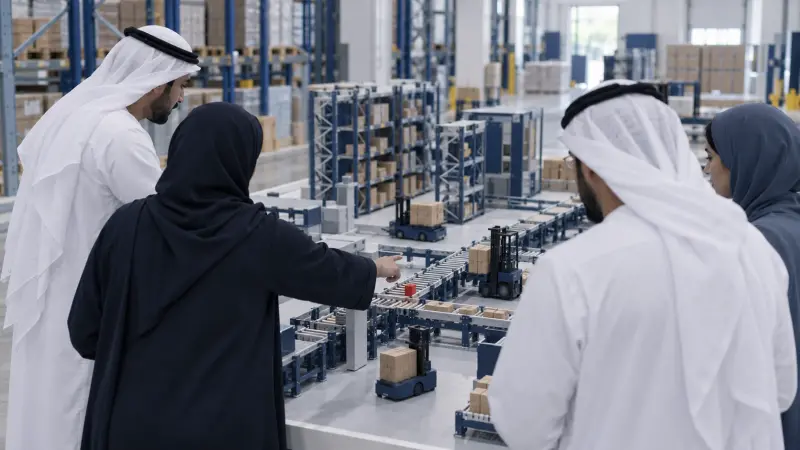
Smart Manufacturing and Industry 4.0 Course

At a glance
- Duration
- 1 Week
- Format
- Classroom
- Cities
- Istanbul, Casablanca, Vienna, Athens, Madrid, Manama and more
- Next session
- 9 – 13 November 2026, Istanbul
- Average fee
- 5,750 €
Overview
Smart Manufacturing and Industry 4.0 Training Course is a one-week practical course for manufacturing managers, industrial engineers, production leaders, automation specialists, maintenance and quality professionals, and transformation teams. Participants build a Smart Factory Roadmap Pack connecting maturity assessment, business priorities, cyber-physical production, industrial IoT, OT/IT integration, manufacturing data, MES and ERP interfaces, digital twins, analytics, cybersecurity, pilot design, KPIs, and scale-up. Agile Leaders Training Center develops governed factory transformation rather than isolated technology demonstrations.
Who Should Attend
- Manufacturing and plant managers responsible for performance, investment, workforce, and transformation priorities
- Industrial and production engineers designing connected workflows and measurable improvement use cases
- Automation, controls, OT, IT, MES, and enterprise-architecture personnel planning system integration
- Maintenance, reliability, quality, energy, and supply-chain professionals using manufacturing data
- Digital transformation, cybersecurity, data, analytics, and programme teams coordinating pilots and scale-up
Participants should understand basic production processes and factory systems. The course does not teach PLC programming, configure a specific vendor platform, build production AI models, or replace detailed cybersecurity engineering and functional-safety studies.
Departments and Industries
The course supports discrete, batch, and continuous manufacturing environments pursuing connected and data-enabled operations.
- Automotive, aerospace, electronics, machinery, and industrial equipment manufacturing
- Food, beverage, pharmaceutical, chemical, metals, cement, and process industries
- Production, industrial engineering, automation, maintenance, quality, and operations excellence
- OT, IT, MES, ERP, data, cybersecurity, and enterprise architecture functions
- Strategy, capital projects, innovation, sustainability, and workforce-development teams
Learning Objectives
By the end of this course, participants will be able to:
- Assess smart-manufacturing maturity across process, technology, data, people, governance, and cybersecurity.
- Map physical production, sensors, controls, manufacturing operations, and enterprise systems using a reference architecture.
- Select IIoT, connectivity, MES, data-platform, digital-twin, analytics, and AI use cases tied to operational value.
- Define information ownership, interoperability, data-quality, cybersecurity, and lifecycle requirements.
- Prioritize a pilot through value, feasibility, risk, readiness, dependencies, and measurable success criteria.
- Build a phased Industry 4.0 roadmap with investment logic, workforce actions, KPIs, governance, and scale-up gates.
Course Agenda
Day 1: Assess Smart Manufacturing Readiness
- Industry 4.0 Value, Scope, and Connected-Factory Boundary
- Process, Technology, Data, People, Governance, and Security Maturity Model
- Current-State Production Flow and Digital Pain-Point Map
- Business Objective, Loss, Constraint, and Opportunity Register
- Smart Manufacturing Vision and Transformation Principles
Day 2: Design the Connected Factory Architecture
- Physical Process, Sensor, Device, Control, Operations, and Enterprise Layers
- Industrial IoT Connectivity, Edge, Gateway, Network, and Platform Options
- MES, SCADA, Historian, QMS, CMMS, ERP, and Planning-System Boundaries
- OT/IT Integration and Manufacturing Information-Exchange Map
- Asset, Product, Process, Work, Quality, and Performance Data Ownership
Day 3: Select Smart Manufacturing Use Cases
- Real-Time Visibility, OEE, Traceability, Quality, Energy, and Flow Use Cases
- Predictive Maintenance, Anomaly, Inspection, Scheduling, and Decision Support
- Digital Twin Purpose, Scope, Model, Data, Verification, and Lifecycle
- Use-Case Value, Feasibility, Data, Integration, Workforce, and Risk Screen
- Portfolio Prioritization and Dependency Map
Day 4: Govern Data, Cybersecurity, and Change
- Manufacturing Data Quality, Context, Master Data, Lineage, and Access Controls
- OT Asset Inventory, Zones, Connections, Identity, Change, and Monitoring
- Cybersecurity Risk and Secure-by-Design Pilot Requirements
- Human-Machine Roles, Skills, Adoption, Work Design, and Operating Procedures
- Architecture, Data, Security, Safety, and Investment Decision Gates
Day 5: Build and Scale the Roadmap
- Suggested Exercise: Complete a Smart Manufacturing Maturity Assessment
- Suggested Exercise: Map OT, MES, Data, and ERP Interfaces
- Suggested Exercise: Prioritize a Digital Twin or IIoT Use Case
- Suggested Exercise: Design a Pilot Charter and Benefits Measurement Plan
- Capstone Exercise: Present a Smart Factory Roadmap Pack
Practical Exercises
The course uses suggested activities based on a factory process, systems landscape, loss profile, data constraints, and investment choices.
- Suggested activity: assess maturity, identify capability gaps, and connect digital opportunities to quality, delivery, cost, safety, energy, and resilience outcomes.
- Suggested activity: map sensors, controls, operations systems, enterprise applications, data exchanges, owners, and cybersecurity boundaries.
- Suggested activity: compare IIoT, digital-twin, analytics, and automation use cases using value, feasibility, risk, readiness, and dependency criteria.
- Suggested activity: define a pilot with baseline, target, scope, architecture, data, security, workforce, governance, acceptance, and scale-up gates.
FAQs
Who suits smart manufacturing and Industry 4.0 training?
Smart manufacturing and Industry 4.0 training suits plant, production, engineering, automation, maintenance, quality, OT, IT, data, cybersecurity, and transformation personnel planning connected-factory improvements.
Does Industry 4.0 mean replacing every existing factory system?
No. A roadmap begins with business needs and the current systems landscape. It can retain, integrate, upgrade, isolate, or replace components according to value, risk, lifecycle, interoperability, and supportability.
How should a smart-manufacturing pilot be selected?
A suitable pilot addresses a meaningful operational problem, has accessible and trustworthy data, manageable integration and cyber risk, committed users, measurable baseline and target, defined ownership, and a plausible path to scale.
What makes a manufacturing digital twin trustworthy?
A trustworthy digital twin has a defined purpose and boundary, traceable source data, validated model behaviour, managed assumptions and uncertainty, controlled interfaces, cybersecurity protections, lifecycle ownership, and evidence that it supports its intended decision.
Conclusion
Participants leave with a Smart Factory Roadmap Pack for their organization. It combines a maturity assessment, current-state map, reference architecture, use-case portfolio, data and cybersecurity controls, pilot charter, benefit model, workforce plan, KPIs, governance, and scale-up gates. The pack turns Industry 4.0 ambition into sequenced and reviewable manufacturing decisions.
credits: 5 credit per day
Course Mode: full-time
Provider: Agile Leaders Training Center
-
Events for this Course
-
Istanbul 9 – 13 November 2026
-
Casablanca 16 – 20 November 2026
-
Vienna 23 – 27 November 2026
-
Athens 23 – 27 November 2026
-
Madrid 30 November – 4 December 2026
-
Manama 6 – 10 December 2026
-
Bangkok 13 – 17 December 2026
-
Montreux 14 – 18 December 2026
-
Paris 21 – 25 December 2026
-
Abu Dhabi 21 – 25 December 2026
-
Cairo 28 December 2026 – 1 January 2027
-
Seoul 28 December 2026 – 1 January 2027
-
Dubai 4 – 8 January 2027
-
London 11 – 15 January 2027
-
Abu Dhabi 11 – 15 January 2027
-
Vienna 18 – 22 January 2027
-
Berlin 18 – 22 January 2027
-
Rome 25 – 29 January 2027
-
Lisbon 25 – 29 January 2027
-
Marbella 31 January – 4 February 2027
-
Amsterdam 1 – 5 February 2027
-
Trabzon 7 – 11 February 2027
-
Istanbul 15 – 19 February 2027
-
Zanzibar 21 – 25 February 2027
-
Kuala Lumpur 22 – 26 February 2027
-
Dubai 1 – 5 March 2027
-
London 8 – 12 March 2027
-
Tbilisi 15 – 19 March 2027
-
Kuwait 21 – 25 March 2027
-
Madrid 22 – 26 March 2027
-
Nairobi 28 March – 1 April 2027
-
Phuket 4 – 8 April 2027
-
Singapore 5 – 9 April 2027
-
Langkawi 25 – 29 April 2027
-
Nice 26 – 30 April 2027
-
London 3 – 7 May 2027
-
Milan 10 – 14 May 2027
-
New York 17 – 21 May 2027
-
Cape town 23 – 27 May 2027
-
Kuala Lumpur 24 – 28 May 2027
-
Manama 30 May – 3 June 2027
-
Doha 6 – 10 June 2027
-
Addis Ababa 7 – 11 June 2027
-
Dubai 14 – 18 June 2027
-
Baku 21 – 25 June 2027
-
Abu Dhabi 21 – 25 June 2027
-
Amsterdam 28 June – 2 July 2027
-
Frankfurt 28 June – 2 July 2027
-
Tashkent 4 – 8 July 2027
-
Milan 5 – 9 July 2027
-
Barcelona 12 – 16 July 2027
-
Porto 12 – 16 July 2027
-
London 19 – 23 July 2027
-
Geneva 25 – 29 July 2027
-
Johannesburg 25 – 29 July 2027
-
Prague 2 – 6 August 2027
-
San Diego 2 – 6 August 2027
-
Tokyo 9 – 13 August 2027
-
Muscat 15 – 19 August 2027
-
Amman 22 – 26 August 2027
-
Lagos 22 – 26 August 2027
-
Chicago 29 August – 2 September 2027
-
Dubai 30 August – 3 September 2027
-
Jakarta 6 – 10 September 2027
-
Rome 13 – 17 September 2027
-
Sharm El-Sheikh 20 – 24 September 2027
-
Abu Dhabi 20 – 24 September 2027
-
Paris 27 September – 1 October 2027
-
Munich 27 September – 1 October 2027
-
Amsterdam 4 – 8 October 2027
-
Zoom 11 – 15 October 2027
-
Barcelona 18 – 22 October 2027
-
Toronto 31 October – 4 November 2027
-
Cairo 1 – 5 November 2027
-
Accra 7 – 11 November 2027
-
Bali 7 – 11 November 2027
| Image | Location | Dates | Duration | Mode | Price | Actions |
|---|---|---|---|---|---|---|

|
Lagos |
Week 33, 2027 22 – 26 August 2027 |
1 Week | Onsite | €4,100 | |

|
Chicago |
Week 34, 2027 29 August – 2 September 2027 |
1 Week | Onsite | €12,000 | |

|
Dubai |
Week 35, 2027 30 August – 3 September 2027 |
1 Week | Onsite | €4,500 | |

|
Jakarta |
Week 36, 2027 6 – 10 September 2027 |
1 Week | Onsite | €5,700 | |

|
Rome |
Week 37, 2027 13 – 17 September 2027 |
1 Week | Onsite | €5,700 | |

|
Sharm El-Sheikh |
Week 38, 2027 20 – 24 September 2027 |
1 Week | Onsite | €4,100 | |

|
Abu Dhabi |
Week 38, 2027 20 – 24 September 2027 |
1 Week | Onsite | €4,700 | |

|
Paris |
Week 39, 2027 27 September – 1 October 2027 |
1 Week | Onsite | €5,700 | |

|
Munich |
Week 39, 2027 27 September – 1 October 2027 |
1 Week | Onsite | €5,700 | |

|
Amsterdam |
Week 40, 2027 4 – 8 October 2027 |
1 Week | Onsite | €5,700 | |

|
Zoom |
Week 41, 2027 11 – 15 October 2027 |
1 Week | Online | €1,500 | |

|
Barcelona |
Week 42, 2027 18 – 22 October 2027 |
1 Week | Onsite | €5,700 | |

|
Toronto |
Week 43, 2027 31 October – 4 November 2027 |
1 Week | Onsite | €12,000 | |

|
Cairo |
Week 44, 2027 1 – 5 November 2027 |
1 Week | Onsite | €4,100 | |

|
Accra |
Week 44, 2027 7 – 11 November 2027 |
1 Week | Onsite | €4,100 | |

|
Bali |
Week 44, 2027 7 – 11 November 2027 |
1 Week | Onsite | €5,700 |
Frequently asked questions
What does this course cover?
OverviewSmart Manufacturing and Industry 4.0 Training Course is a one-week practical course for manufacturing managers, industrial engineers, production leaders, automation specialists, maintenance and quality professionals, and transformation teams. Participants build a Smart Factory Roadmap Pack connecting maturity assessment, business priorities, cyber…
Are training dates available?
Yes. Available dates and destinations are listed in the course dates section on this page.
How can I register?
Choose an available date on this page and complete the registration form, or send a programme enquiry.
Can I download the course brochure?
Yes. Use the brochure download link provided on this page.
This course by city
- Quality and Operations Management Training Courses in Abu Dhabi
- Quality and Operations Management Training Courses in Accra
- Quality and Operations Management Training Courses in Addis Ababa
- Quality and Operations Management Training Courses in Amman
- Quality and Operations Management Training Courses in Amsterdam
- Quality and Operations Management Training Courses in Athens
- Quality and Operations Management Training Courses in Baku
- Quality and Operations Management Training Courses in Bali
- Quality and Operations Management Training Courses in Bangkok
- Quality and Operations Management Training Courses in Barcelona
- Quality and Operations Management Training Courses in Berlin
- Quality and Operations Management Training Courses in Cairo
- Quality and Operations Management Training Courses in Cape town
- Quality and Operations Management Training Courses in Casablanca
- Quality and Operations Management Training Courses in Chicago
- Quality and Operations Management Training Courses in Doha
- Quality and Operations Management Training Courses in Dubai
- Quality and Operations Management Training Courses in Frankfurt
- Quality and Operations Management Training Courses in Geneva
- Quality and Operations Management Training Courses in Istanbul
- Quality and Operations Management Training Courses in Jakarta
- Quality and Operations Management Training Courses in Johannesburg
- Quality and Operations Management Training Courses in Kuala Lumpur
- Quality and Operations Management Training Courses in Kuwait
- Quality and Operations Management Training Courses in Lagos
- Quality and Operations Management Training Courses in Langkawi
- Quality and Operations Management Training Courses in Lisbon
- Quality and Operations Management Training Courses in London
- Quality and Operations Management Training Courses in Madrid
- Quality and Operations Management Training Courses in Manama
- Quality and Operations Management Training Courses in Marbella
- Quality and Operations Management Training Courses in Milan
- Quality and Operations Management Training Courses in Montreux
- Quality and Operations Management Training Courses in Munich
- Quality and Operations Management Training Courses in Muscat
- Quality and Operations Management Training Courses in Nairobi
- Quality and Operations Management Training Courses in New York
- Quality and Operations Management Training Courses in Nice
- Quality and Operations Management Training Courses in Paris
- Quality and Operations Management Training Courses in Phuket
- Quality and Operations Management Training Courses in Porto
- Quality and Operations Management Training Courses in Prague
- Quality and Operations Management Training Courses in Rome
- Quality and Operations Management Training Courses in San Diego
- Quality and Operations Management Training Courses in Seoul
- Quality and Operations Management Training Courses in Sharm El-Sheikh
- Quality and Operations Management Training Courses in Singapore
- Quality and Operations Management Training Courses in Tashkent
- Quality and Operations Management Training Courses in Tbilisi
- Quality and Operations Management Training Courses in Tokyo
- Quality and Operations Management Training Courses in Toronto
- Quality and Operations Management Training Courses in Trabzon
- Quality and Operations Management Training Courses in Vienna
- Quality and Operations Management Training Courses in Zanzibar
- Quality and Operations Management Training Courses in Zoom