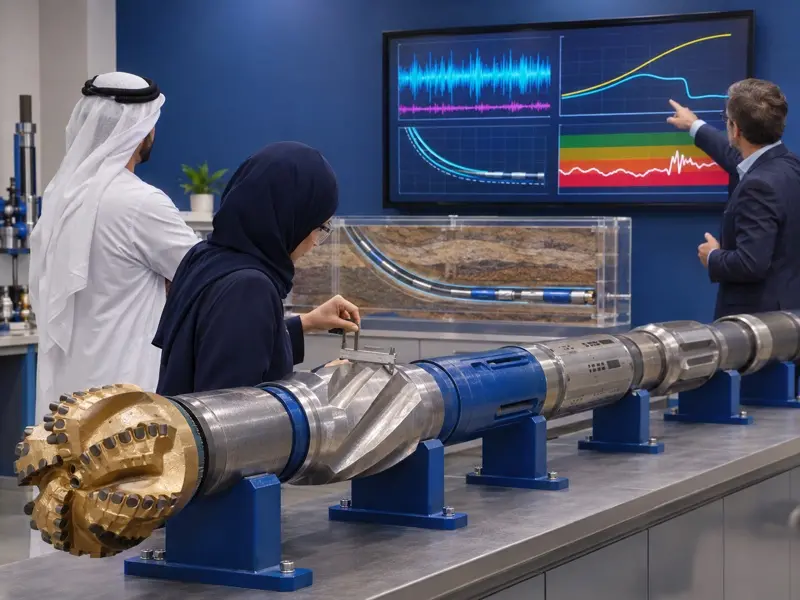
Stuck Pipe Prevention and Fishing Operations Course

At a glance
- Duration
- 1 Week
- Format
- Classroom
- Cities
- Bali, Seoul, New York, Nairobi, Athens, Johannesburg and more
- Next session
- 8 – 12 November 2026, Bali
- Average fee
- 7,500 €
Overview
Stuck Pipe Prevention and Fishing Operations Training Course is a one-week intermediate course for drilling engineers, supervisors, wellsite personnel, directional drillers, mud engineers, toolpushers, and well operations teams who leave with a Stuck Pipe Prevention and Fishing Response Pack. Participants connect warning signs, mechanism diagnosis, preventive drilling controls, freeing decisions, fish description, tool selection, operating limits, and contingency planning. Agile Leaders Training Center delivers this course in stuck-pipe prevention and fishing operations.
Who Should Attend
- Drilling personnel responsible for well planning, drilling parameters, and operational risk controls
- Rig supervisors and toolpushers responsible for safe execution, escalation, and recovery decisions
- Directional-drilling personnel responsible for trajectory, BHA behavior, torque, drag, and hole condition
- Drilling-fluids personnel responsible for rheology, filtration, hydraulics, and hole-cleaning performance
- Well operations and service teams responsible for fishing preparation, tool deployment, and recovery support
The course assumes participants can interpret routine drilling reports and well parameters and leaves out basic rig induction, detailed well-control certification, and vendor-specific tool qualification.
Departments and Industries
The course supports drilling and well-intervention functions where stuck pipe and downhole recovery affect safety, time, and well delivery.
- Oil and gas drilling, exploration, and field-development operations
- Land, offshore, directional, extended-reach, and workover environments
- Drilling engineering, well construction, operations assurance, and technical services
- Drilling fluids, directional drilling, measurement, logging, and rig-site supervision
- Fishing, intervention, rental-tool, and downhole service organizations
Learning Objectives
By the end of this course, participants will be able to:
- Analyze stuck-pipe indicators and classify likely mechanisms.
- Apply hole-cleaning, tripping, stability, and differential-sticking controls.
- Diagnose the stuck point and prioritize immediate freeing actions.
- Build a fish description and compare retrieval-tool options.
- Evaluate jarring, overshot, spear, milling, and washover limits.
- Build a risk-based fishing plan with contingencies and learning actions.
Course Agenda
Day 1: Diagnose Stuck-Pipe Mechanisms
- Stuck-Pipe Event Definition and Mechanism Classification Matrix
- Torque, Drag, Hookload, Pressure, and Return-Flow Warning Trend
- Differential Sticking Force and Contact-Area Model
- Mechanical Sticking, Keyseat, Pack-Off, and Bridging Diagnostic Tree
- Stuck-Point Evidence and Event Timeline Worksheet
Day 2: Apply Prevention Controls
- Hole-Cleaning Hydraulics and Cuttings-Transport Review
- Drilling-Fluid Rheology and Filter-Cake Control Checklist
- Wellbore Stability, Geometry, and BHA Clearance Assessment
- Connection, Reaming, Backreaming, and Tripping Practice Controls
- Stuck-Pipe Prevention Plan and Trigger-Action Register
Day 3: Plan Immediate Freeing Actions
- Stuck-Pipe Mechanism Confirmation Decision Tree
- Working-Torque, Tension, Compression, and Equipment-Limit Envelope
- Circulation, Spotting-Fluid, Pressure, and Mechanical-Freeing Options
- Jar Placement, Direction, Impact, and Operating Sequence
- Escalation, Back-Off, and Fish-Creation Decision Gate
Day 4: Design Fishing Operations
- Fish Description, Top Condition, Dimensions, and Accessibility Sheet
- Impression, Locator, and Diagnostic Fishing-Tool Selection
- Overshot and Spear Grappling Selection Matrix
- Milling, Washover, Cutting, and Debris-Management Options
- Fishing BHA, Procedure, Risk, Contingency, and Acceptance Plan
Day 5: Practice Prevention and Recovery Decisions
- Suggested Exercise: Diagnose a Differential-Sticking Scenario
- Suggested Exercise: Build a Hole-Cleaning and Tripping Control Plan
- Suggested Exercise: Select Overshot, Spear, Jar, or Milling Options
- Suggested Exercise: Review Limits, Contingencies, and Stop Criteria
- Capstone Exercise: Present a Stuck Pipe Prevention and Fishing Response Pack
Practical Exercises
The course uses suggested activities based on drilling trends, well geometry, mud properties, equipment limits, and fish descriptions.
- Suggested activity: interpret torque, drag, hookload, pressure, and returns to classify the most likely sticking mechanism.
- Suggested activity: define preventive controls for cuttings transport, filter cake, wellbore stability, BHA clearance, and tripping.
- Suggested activity: compare freeing and fishing options against contact, access, load, circulation, and retrieval constraints.
- Suggested activity: build a sequenced fishing plan with risks, operating limits, contingencies, stop criteria, and post-job review.
FAQs
Who suits stuck pipe prevention and fishing operations training, and what does it assume?
Drilling and well-operations personnel suit the training. It assumes familiarity with drilling reports, rig operations, well geometry, drilling fluids, and routine downhole terminology.
How does stuck pipe prevention training differ from general drilling engineering training?
Stuck pipe prevention training concentrates on warning signs, mechanism diagnosis, preventive controls, freeing decisions, and fishing response, while general drilling engineering covers the wider well-design and construction lifecycle.
What is the difference between differential sticking and mechanical sticking?
Differential sticking results from pressure and contact forces holding pipe against a permeable filter cake; mechanical sticking arises from physical restriction such as pack-off, bridging, keyseating, geometry, or equipment condition.
How are fishing tools selected for a stuck-pipe recovery?
Fishing tools are selected from the fish top, dimensions, accessibility, condition, load path, circulation needs, well geometry, operating limits, and the planned method of engagement and release.
When should a stuck-pipe response move from freeing attempts to fishing?
The response changes when evidence, equipment limits, time exposure, well risk, and agreed decision gates show that continued freeing attempts are no longer justified and a controlled fish must be created or recovered.
Conclusion
Participants take back a Stuck Pipe Prevention and Fishing Response Pack. It combines a mechanism diagnostic tree, warning indicators, prevention controls, freeing-action limits, fish description, tool-selection matrix, fishing procedure, risk register, contingencies, and learning review. The pack supports faster, traceable decisions while keeping recovery actions within defined well and equipment constraints.
credits: 5 credit per day
Course Mode: full-time
Provider: Agile Leaders Training Center
-
Events for this Course
-
Bali 8 – 12 November 2026
-
Seoul 16 – 20 November 2026
-
New York 23 – 27 November 2026
-
Nairobi 29 November – 3 December 2026
-
Athens 7 – 11 December 2026
-
Johannesburg 13 – 17 December 2026
-
Munich 21 – 25 December 2026
-
Zanzibar 27 – 31 December 2026
-
Barcelona 4 – 8 January 2027
-
Tashkent 10 – 14 January 2027
-
Abu Dhabi 18 – 22 January 2027
-
Cairo 25 – 29 January 2027
-
Madrid 1 – 5 February 2027
-
Zoom 8 – 12 February 2027
-
Trabzon 14 – 18 February 2027
-
Cape town 21 – 25 February 2027
-
Accra 28 February – 4 March 2027
-
Kuala Lumpur 8 – 12 March 2027
-
Jakarta 15 – 19 March 2027
-
Marbella 21 – 25 March 2027
-
Tokyo 29 March – 2 April 2027
-
Istanbul 5 – 9 April 2027
-
Vienna 12 – 16 April 2027
-
Singapore 19 – 23 April 2027
-
Toronto 25 – 29 April 2027
-
San Diego 26 – 30 April 2027
-
Phuket 2 – 6 May 2027
-
Amsterdam 10 – 14 May 2027
-
Baku 17 – 21 May 2027
-
Milan 24 – 28 May 2027
-
Abu Dhabi 31 May – 4 June 2027
-
Kuwait 6 – 10 June 2027
-
Dubai 14 – 18 June 2027
-
Chicago 20 – 24 June 2027
-
London 28 June – 2 July 2027
-
Manama 4 – 8 July 2027
-
Frankfurt 12 – 16 July 2027
-
Rome 19 – 23 July 2027
-
Tbilisi 26 – 30 July 2027
-
Paris 2 – 6 August 2027
-
Montreux 9 – 13 August 2027
-
Geneva 15 – 19 August 2027
-
Lisbon 16 – 20 August 2027
-
Doha 22 – 26 August 2027
-
Lagos 29 August – 2 September 2027
-
Casablanca 30 August – 3 September 2027
-
Nice 6 – 10 September 2027
-
Bangkok 12 – 16 September 2027
-
London 20 – 24 September 2027
-
Sharm El-Sheikh 27 September – 1 October 2027
-
Berlin 4 – 8 October 2027
-
Porto 11 – 15 October 2027
-
Langkawi 17 – 21 October 2027
-
Amman 24 – 28 October 2027
-
Dubai 25 – 29 October 2027
-
Addis Ababa 25 – 29 October 2027
-
Prague 1 – 5 November 2027
-
Muscat 7 – 11 November 2027
| Image | Location | Dates | Duration | Mode | Price | Actions |
|---|---|---|---|---|---|---|

|
Montreux |
Week 32, 2027 9 – 13 August 2027 |
1 Week | Onsite | €8,000 | |

|
Geneva |
Week 32, 2027 15 – 19 August 2027 |
1 Week | Onsite | €8,000 | |

|
Lisbon |
Week 33, 2027 16 – 20 August 2027 |
1 Week | Onsite | €6,500 | |

|
Doha |
Week 33, 2027 22 – 26 August 2027 |
1 Week | Onsite | €7,000 | |

|
Lagos |
Week 34, 2027 29 August – 2 September 2027 |
1 Week | Onsite | €6,000 | |

|
Casablanca |
Week 35, 2027 30 August – 3 September 2027 |
1 Week | Onsite | €6,000 | |

|
Nice |
Week 36, 2027 6 – 10 September 2027 |
1 Week | Onsite | €8,000 | |

|
Bangkok |
Week 36, 2027 12 – 16 September 2027 |
1 Week | Onsite | €8,000 | |

|
London |
Week 38, 2027 20 – 24 September 2027 |
1 Week | Onsite | €6,500 | |

|
Sharm El-Sheikh |
Week 39, 2027 27 September – 1 October 2027 |
1 Week | Onsite | €5,200 | |

|
Berlin |
Week 40, 2027 4 – 8 October 2027 |
1 Week | Onsite | €6,500 | |

|
Porto |
Week 41, 2027 11 – 15 October 2027 |
1 Week | Onsite | €6,500 | |

|
Langkawi |
Week 41, 2027 17 – 21 October 2027 |
1 Week | Onsite | €8,000 | |

|
Amman |
Week 42, 2027 24 – 28 October 2027 |
1 Week | Onsite | €6,000 | |

|
Dubai |
Week 43, 2027 25 – 29 October 2027 |
1 Week | Onsite | €6,500 | |

|
Addis Ababa |
Week 43, 2027 25 – 29 October 2027 |
1 Week | Onsite | €6,000 | |

|
Prague |
Week 44, 2027 1 – 5 November 2027 |
1 Week | Onsite | €7,500 | |

|
Muscat |
Week 44, 2027 7 – 11 November 2027 |
1 Week | Onsite | €6,500 |
Frequently asked questions
What does this course cover?
OverviewStuck Pipe Prevention and Fishing Operations Training Course is a one-week intermediate course for drilling engineers, supervisors, wellsite personnel, directional drillers, mud engineers, toolpushers, and well operations teams who leave with a Stuck Pipe Prevention and Fishing Response Pack. Participants connect warning signs, mechanism diagnosis…
Are training dates available?
Yes. Available dates and destinations are listed in the course dates section on this page.
How can I register?
Choose an available date on this page and complete the registration form, or send a programme enquiry.
Can I download the course brochure?
Yes. Use the brochure download link provided on this page.
This course by city
- Oil & Gas Training and Other Technical Courses in Abu Dhabi
- Oil & Gas Training and Other Technical Courses in Accra
- Oil & Gas Training and Other Technical Courses in Addis Ababa
- Oil & Gas Training and Other Technical Courses in Amman
- Oil & Gas Training and Other Technical Courses in Amsterdam
- Oil & Gas Training and Other Technical Courses in Athens
- Oil & Gas Training and Other Technical Courses in Baku
- Oil & Gas Training and Other Technical Courses in Bali
- Oil & Gas Training and Other Technical Courses in Bangkok
- Oil & Gas Training and Other Technical Courses in Barcelona
- Oil & Gas Training and Other Technical Courses in Berlin
- Oil & Gas Training and Other Technical Courses in Cairo
- Oil & Gas Training and Other Technical Courses in Cape town
- Oil & Gas Training and Other Technical Courses in Casablanca
- Oil & Gas Training and Other Technical Courses in Chicago
- Oil & Gas Training and Other Technical Courses in Doha
- Oil & Gas Training and Other Technical Courses in Dubai
- Oil & Gas Training and Other Technical Courses in Frankfurt
- Oil & Gas Training and Other Technical Courses in Geneva
- Oil & Gas Training and Other Technical Courses in Istanbul
- Oil & Gas Training and Other Technical Courses in Jakarta
- Oil & Gas Training and Other Technical Courses in Johannesburg
- Oil & Gas Training and Other Technical Courses in Kuala Lumpur
- Oil & Gas Training and Other Technical Courses in Kuwait
- Oil & Gas Training and Other Technical Courses in Lagos
- Oil & Gas Training and Other Technical Courses in Langkawi
- Oil & Gas Training and Other Technical Courses in Lisbon
- Oil & Gas Training and Other Technical Courses in London
- Oil & Gas Training and Other Technical Courses in Madrid
- Oil & Gas Training and Other Technical Courses in Manama
- Oil & Gas Training and Other Technical Courses in Marbella
- Oil & Gas Training and Other Technical Courses in Milan
- Oil & Gas Training and Other Technical Courses in Montreux
- Oil & Gas Training and Other Technical Courses in Munich
- Oil & Gas Training and Other Technical Courses in Muscat
- Oil & Gas Training and Other Technical Courses in Nairobi
- Oil & Gas Training and Other Technical Courses in New York
- Oil & Gas Training and Other Technical Courses in Nice
- Oil & Gas Training and Other Technical Courses in Paris
- Oil & Gas Training and Other Technical Courses in Phuket
- Oil & Gas Training and Other Technical Courses in Porto
- Oil & Gas Training and Other Technical Courses in Prague
- Oil & Gas Training and Other Technical Courses in Rome
- Oil & Gas Training and Other Technical Courses in San Diego
- Oil & Gas Training and Other Technical Courses in Seoul
- Oil & Gas Training and Other Technical Courses in Sharm El-Sheikh
- Oil & Gas Training and Other Technical Courses in Singapore
- Oil & Gas Training and Other Technical Courses in Tashkent
- Oil & Gas Training and Other Technical Courses in Tbilisi
- Oil & Gas Training and Other Technical Courses in Tokyo
- Oil & Gas Training and Other Technical Courses in Toronto
- Oil & Gas Training and Other Technical Courses in Trabzon
- Oil & Gas Training and Other Technical Courses in Vienna
- Oil & Gas Training and Other Technical Courses in Zanzibar
- Oil & Gas Training and Other Technical Courses in Zoom