Subsurface Well and Seismic Data Management Course
At a glance
- Duration
- 1 Week
- Format
- Classroom
- Cities
- Geneva, Barcelona, Muscat, Dubai, Langkawi, Kuala Lumpur and more
- Next session
- 18 – 22 October 2026, Geneva
- Average fee
- 5,800 €
Overview
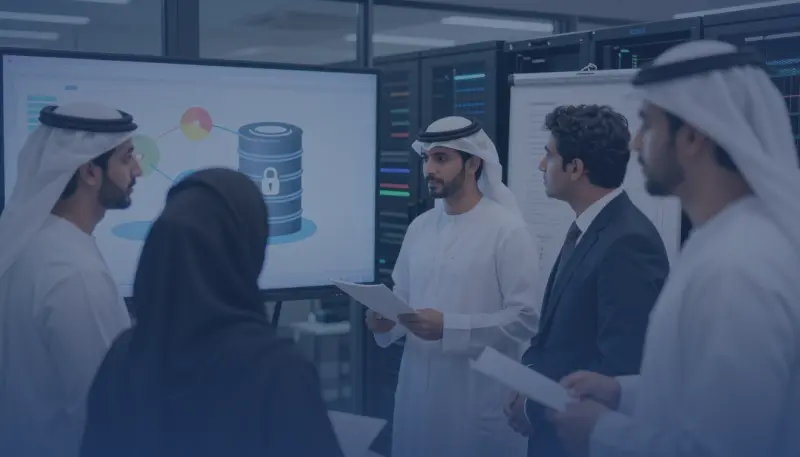
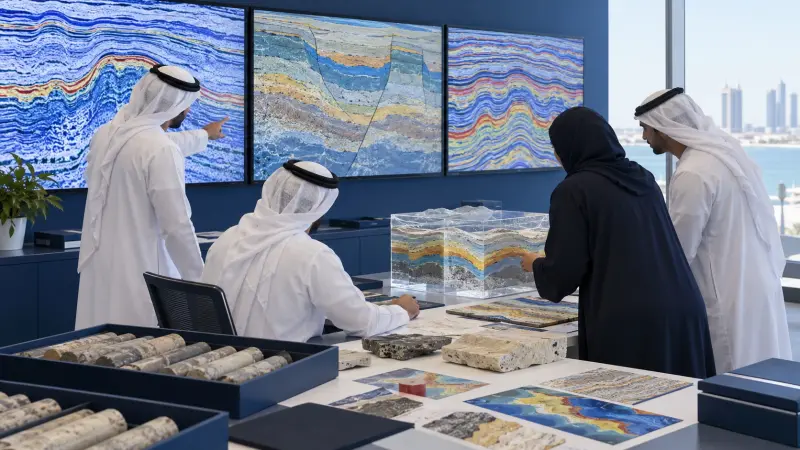
Subsurface Well and Seismic Master Data Management Training Course is a one-week course for subsurface data managers, geoscience information specialists, GIS teams, exploration data professionals, and governance staff, who leave with a Subsurface Master Data Control Pack. Participants govern well identity, spatial references, seismic metadata, quality rules, lineage, ownership, catalogues, exchange, access, and retention. The course connects technical standards with operational controls across data lifecycles. Agile Leaders Training Center develops subsurface data management capability.
Who Should Attend
- Subsurface data functions responsible for technical information quality and availability
- Well information functions responsible for identity, hierarchy, and lifecycle records
- Seismic data functions responsible for survey metadata, formats, and exchange
- GIS functions responsible for coordinates, reference systems, and spatial integration
- Exploration functions responsible for trusted inputs to interpretation workflows
- Data governance functions responsible for ownership, controls, access, and retention
The course assumes participants can interpret basic well, seismic, and spatial records, and leaves out geophysical interpretation, reservoir modelling, survey acquisition, software administration, and certification preparation.
Departments and Industries
The course supports departments and industries that depend on trusted spatial and subsurface technical information.
- Subsurface data, geoscience information, GIS, and data governance
- Exploration, drilling, wells, reservoir, and production
- Energy, mining, geotechnical, and environmental services
- Engineering, infrastructure, utilities, and construction
- Technical consulting, research, archives, and information technology
Learning Objectives
By the end of this course, participants will be able to:
- Build well identity and hierarchy control rules
- Apply coordinate reference system controls and audit trails
- Analyze seismic metadata, headers, formats, and exchange risks
- Build quality rules, issue workflows, and ownership matrices
- Evaluate catalogues, lineage, access, and lifecycle controls
- Build a Subsurface Master Data Control Pack
Course Agenda
Day 1: Govern Subsurface Master Data
- Domain, Asset, Record, and Lifecycle Map
- Master, Reference, Transaction, and File Data
- Data Owner, Steward, Custodian, and User Matrix
- Vocabulary, Definition, and Business Rule Register
- Subsurface Master Data Governance Charter
Day 2: Control Well Identity and Records
- Well, Wellbore, Completion, and Sidetrack Hierarchy
- Global and Internal Well Identifier Principles
- Alias, Duplicate, Merge, and Survivorship Rules
- Well Header and Lifecycle Status Controls
- Well Data Governance Rulebook
Day 3: Control Spatial and Seismic Data
- Coordinate Reference System Controls
- Datum, Units, Axis Order, and Transformation Metadata
- Survey, Line, Volume, Trace, and Position Relationships
- Seismic Metadata Management and Header Validation
- Format, Version, Exchange, and Ingestion Checklist
Day 4: Build Quality, Catalogue, and Lineage
- Completeness, Validity, Consistency, and Uniqueness Rules
- Threshold, Exception, Root Cause, and Remediation Workflow
- Metadata Catalogue and Search Profile
- Subsurface Data Lineage and Transformation Audit
- Quality Scorecard and Issue Ownership Dashboard
Day 5: Operate the Data Lifecycle
- Exercise: Reconcile Well Identity and Hierarchy
- Exercise: Detect Spatial Reference and Seismic Metadata Risks
- Exercise: Trace Source-to-Consumer Lineage
- Exercise: Apply Access, Exchange, and Retention Controls
- Capstone: Subsurface Master Data Control Pack
Practical Exercises
The course uses suggested activities based on well headers, survey records, seismic files, coordinate metadata, catalogues, and technical-data exchanges.
- Suggested activity: reconcile aliases, identifiers, wellbore relationships, lifecycle states, and authoritative sources into a survivorship decision.
- Suggested activity: validate coordinate reference metadata, units, axes, transformations, survey positions, and seismic-header relationships.
- Suggested activity: define quality rules, exception thresholds, owners, remediation steps, evidence, and monitoring measures.
- Suggested activity: assemble catalogue fields, lineage links, access roles, exchange checks, retention rules, and operating reviews.
FAQs
Who suits a subsurface data management course, and what does it assume?
Subsurface data, well information, seismic, GIS, exploration, and governance functions suit the course; it assumes familiarity with basic technical records and spatial concepts.
How does subsurface data management differ from a general GIS course?
It governs well identity, seismic metadata, technical file exchange, spatial references, lineage, and lifecycle controls, while a general GIS course concentrates on spatial datasets, mapping, and analysis.
Why is well data governance dependent on identifiers?
Stable identifiers connect names, aliases, well components, lifecycle events, files, interpretations, and business records without relying on ambiguous labels or locations alone.
Which coordinate reference system controls prevent integration errors?
Controls should capture the reference system identifier, datum, axes, units, epoch when relevant, source coordinates, transformation method, parameters, output system, validation evidence, and audit trail.
What belongs in seismic metadata management?
Useful metadata covers survey identity, acquisition and processing context, coordinate references, units, geometry, lines and volumes, trace headers, format and version, provenance, quality checks, ownership, and access.
Conclusion
Participants take back a Subsurface Master Data Control Pack containing definitions, identities, hierarchies, spatial controls, seismic metadata, quality rules, ownership, catalogue fields, lineage, exchange checks, access, retention, and operating measures. It changes disconnected technical files into governed information. The pack supports integration, discovery, interpretation readiness, controlled exchange, auditability, and lifecycle stewardship.
credits: 5 credit per day
Course Mode: full-time
Provider: Agile Leaders Training Center
-
Events for this Course
-
Geneva 18 – 22 October 2026
-
Barcelona 19 – 23 October 2026
-
Muscat 25 – 29 October 2026
-
Dubai 26 – 30 October 2026
-
Langkawi 1 – 5 November 2026
-
Kuala Lumpur 2 – 6 November 2026
-
Amsterdam 9 – 13 November 2026
-
Nice 9 – 13 November 2026
-
London 16 – 20 November 2026
-
Jakarta 16 – 20 November 2026
-
Montreux 23 – 27 November 2026
-
Trabzon 29 November – 3 December 2026
-
Casablanca 30 November – 4 December 2026
-
New York 7 – 11 December 2026
-
Milan 14 – 18 December 2026
-
Frankfurt 14 – 18 December 2026
-
Bali 27 – 31 December 2026
-
London 4 – 8 January 2027
-
Abu Dhabi 4 – 8 January 2027
-
Madrid 11 – 15 January 2027
-
Dubai 18 – 22 January 2027
-
Rome 25 – 29 January 2027
-
Seoul 1 – 5 February 2027
-
Phuket 7 – 11 February 2027
-
Paris 8 – 12 February 2027
-
Baku 15 – 19 February 2027
-
Barcelona 22 – 26 February 2027
-
Tashkent 28 February – 4 March 2027
-
Cairo 1 – 5 March 2027
-
Toronto 7 – 11 March 2027
-
Kuala Lumpur 8 – 12 March 2027
-
Milan 15 – 19 March 2027
-
Abu Dhabi 15 – 19 March 2027
-
Dubai 22 – 26 March 2027
-
Berlin 22 – 26 March 2027
-
Johannesburg 28 March – 1 April 2027
-
Tbilisi 5 – 9 April 2027
-
San Diego 5 – 9 April 2027
-
Paris 12 – 16 April 2027
-
Bangkok 18 – 22 April 2027
-
Madrid 19 – 23 April 2027
-
Tokyo 26 – 30 April 2027
-
Athens 3 – 7 May 2027
-
Porto 10 – 14 May 2027
-
Zanzibar 16 – 20 May 2027
-
Cairo 17 – 21 May 2027
-
London 24 – 28 May 2027
-
Lisbon 24 – 28 May 2027
-
Chicago 30 May – 3 June 2027
-
Istanbul 31 May – 4 June 2027
-
Manama 6 – 10 June 2027
-
Amsterdam 7 – 11 June 2027
-
Cape town 13 – 17 June 2027
-
Vienna 21 – 25 June 2027
-
Abu Dhabi 5 – 9 July 2027
-
Doha 11 – 15 July 2027
-
Nairobi 11 – 15 July 2027
-
Zoom 19 – 23 July 2027
-
Sharm El-Sheikh 9 – 13 August 2027
-
Kuwait 15 – 19 August 2027
-
Amsterdam 16 – 20 August 2027
-
Manama 22 – 26 August 2027
-
Dubai 23 – 27 August 2027
-
London 30 August – 3 September 2027
-
Singapore 30 August – 3 September 2027
-
Amman 5 – 9 September 2027
-
Marbella 12 – 16 September 2027
-
Prague 20 – 24 September 2027
-
Vienna 27 September – 1 October 2027
-
Accra 3 – 7 October 2027
-
Rome 4 – 8 October 2027
-
Istanbul 11 – 15 October 2027
-
Munich 11 – 15 October 2027
-
Abu Dhabi 18 – 22 October 2027
| Image | Location | Dates | Duration | Mode | Price | Actions |
|---|---|---|---|---|---|---|

|
Dubai |
Week 03, 2027 18 – 22 January 2027 |
1 Week | Onsite | €4,500 | |

|
Rome |
Week 04, 2027 25 – 29 January 2027 |
1 Week | Onsite | €5,700 | |

|
Seoul |
Week 05, 2027 1 – 5 February 2027 |
1 Week | Onsite | €10,000 | |
|
Phuket |
Week 05, 2027 7 – 11 February 2027 |
1 Week | Onsite | €6,000 | |

|
Paris |
Week 06, 2027 8 – 12 February 2027 |
1 Week | Onsite | €5,700 | |

|
Baku |
Week 07, 2027 15 – 19 February 2027 |
1 Week | Onsite | €5,000 | |

|
Barcelona |
Week 08, 2027 22 – 26 February 2027 |
1 Week | Onsite | €5,700 | |

|
Tashkent |
Week 08, 2027 28 February – 4 March 2027 |
1 Week | Onsite | €4,500 | |

|
Cairo |
Week 09, 2027 1 – 5 March 2027 |
1 Week | Onsite | €4,100 | |

|
Toronto |
Week 09, 2027 7 – 11 March 2027 |
1 Week | Onsite | €12,000 | |

|
Kuala Lumpur |
Week 10, 2027 8 – 12 March 2027 |
1 Week | Onsite | €5,200 | |

|
Milan |
Week 11, 2027 15 – 19 March 2027 |
1 Week | Onsite | €5,700 | |

|
Abu Dhabi |
Week 11, 2027 15 – 19 March 2027 |
1 Week | Onsite | €4,700 | |
|
|
Dubai |
Week 12, 2027 22 – 26 March 2027 |
1 Week | Onsite | €4,500 | |

|
Berlin |
Week 12, 2027 22 – 26 March 2027 |
1 Week | Onsite | €5,700 | |
|
Johannesburg |
Week 12, 2027 28 March – 1 April 2027 |
1 Week | Onsite | €4,500 | |
|
Tbilisi |
Week 14, 2027 5 – 9 April 2027 |
1 Week | Onsite | €5,000 | |

|
San Diego |
Week 14, 2027 5 – 9 April 2027 |
1 Week | Onsite | €14,000 | |
|
|
Paris |
Week 15, 2027 12 – 16 April 2027 |
1 Week | Onsite | €5,700 | |

|
Bangkok |
Week 15, 2027 18 – 22 April 2027 |
1 Week | Onsite | €6,000 |
Frequently asked questions
What does this course cover?
OverviewSubsurface Well and Seismic Master Data Management Training Course is a one-week course for subsurface data managers, geoscience information specialists, GIS teams, exploration data professionals, and governance staff, who leave with a Subsurface Master Data Control Pack. Participants govern well identity, spatial references, seismic metadata, qua…
Are training dates available?
Yes. Available dates and destinations are listed in the course dates section on this page.
How can I register?
Choose an available date on this page and complete the registration form, or send a programme enquiry.
Can I download the course brochure?
Yes. Use the brochure download link provided on this page.
This course by city
- Data Analytics Training and Data Science Courses in Abu Dhabi
- Data Analytics Training and Data Science Courses in Accra
- Data Analytics Training and Data Science Courses in Amman
- Data Analytics Training and Data Science Courses in Amsterdam
- Data Analytics Training and Data Science Courses in Athens
- Data Analytics Training and Data Science Courses in Baku
- Data Analytics Training and Data Science Courses in Bali
- Data Analytics Training and Data Science Courses in Bangkok
- Data Analytics Training and Data Science Courses in Barcelona
- Data Analytics Training and Data Science Courses in Berlin
- Data Analytics Training and Data Science Courses in Cairo
- Data Analytics Training and Data Science Courses in Cape town
- Data Analytics Training and Data Science Courses in Casablanca
- Data Analytics Training and Data Science Courses in Chicago
- Data Analytics Training and Data Science Courses in Doha
- Data Analytics Training and Data Science Courses in Dubai
- Data Analytics Training and Data Science Courses in Frankfurt
- Data Analytics Training and Data Science Courses in Geneva
- Data Analytics Training and Data Science Courses in Istanbul
- Data Analytics Training and Data Science Courses in Jakarta
- Data Analytics Training and Data Science Courses in Johannesburg
- Data Analytics Training and Data Science Courses in Kuala Lumpur
- Data Analytics Training and Data Science Courses in Kuwait
- Data Analytics Training and Data Science Courses in Langkawi
- Data Analytics Training and Data Science Courses in Lisbon
- Data Analytics Training and Data Science Courses in London
- Data Analytics Training and Data Science Courses in Madrid
- Data Analytics Training and Data Science Courses in Manama
- Data Analytics Training and Data Science Courses in Marbella
- Data Analytics Training and Data Science Courses in Milan
- Data Analytics Training and Data Science Courses in Montreux
- Data Analytics Training and Data Science Courses in Munich
- Data Analytics Training and Data Science Courses in Muscat
- Data Analytics Training and Data Science Courses in Nairobi
- Data Analytics Training and Data Science Courses in New York
- Data Analytics Training and Data Science Courses in Nice
- Data Analytics Training and Data Science Courses in Paris
- Data Analytics Training and Data Science Courses in Phuket
- Data Analytics Training and Data Science Courses in Porto
- Data Analytics Training and Data Science Courses in Prague
- Data Analytics Training and Data Science Courses in Rome
- Data Analytics Training and Data Science Courses in San Diego
- Data Analytics Training and Data Science Courses in Seoul
- Data Analytics Training and Data Science Courses in Sharm El-Sheikh
- Data Analytics Training and Data Science Courses in Singapore
- Data Analytics Training and Data Science Courses in Tashkent
- Data Analytics Training and Data Science Courses in Tbilisi
- Data Analytics Training and Data Science Courses in Tokyo
- Data Analytics Training and Data Science Courses in Toronto
- Data Analytics Training and Data Science Courses in Trabzon
- Data Analytics Training and Data Science Courses in Vienna
- Data Analytics Training and Data Science Courses in Zanzibar
- Data Analytics Training and Data Science Courses in Zoom