Supply Chain Management and Engineering Training Course
At a glance
- Duration
- 1 Week
- Format
- Classroom
- Cities
- Dubai, Nairobi, Tashkent, Abu Dhabi, Geneva, Nice and more
- Next session
- 2 – 6 November 2026, Dubai
- Average fee
- 5,750 €
Course Overview
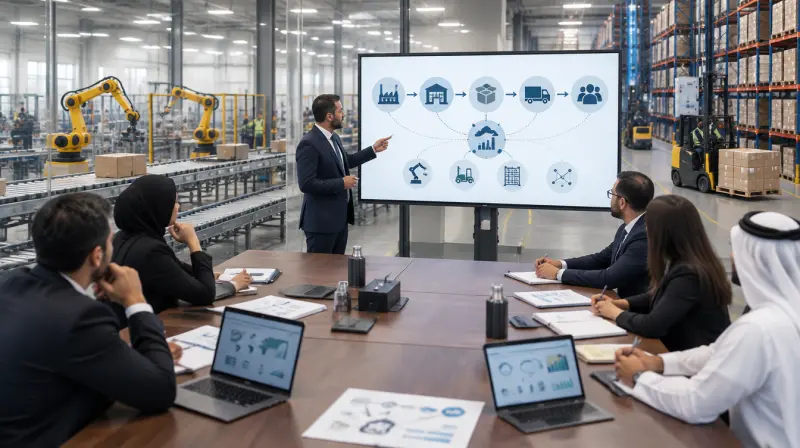
The Supply Chain Management and Engineering Training Course provides a structured, practical approach to designing, managing, and improving complex supply networks. It integrates the managerial principles of Integrated Supply Chain Management with the analytical methods used in Supply Chain Systems Engineering, enabling participants to examine supply chains as interconnected systems of suppliers, production facilities, warehouses, transport operations, information flows, and customers.
The course draws on established developments in Supply Chain Design and Management, including RFID applications, mobile and sensor technologies, agent-based systems, reverse logistics, lean supply chains, decentralized planning, Vendor-Managed Inventory, uncertainty management, network robustness, and available-to-promise processes. These themes reflect the book’s division between emerging technologies and advanced methodologies for supply chain design and management.
Participants will also explore contemporary Digital Supply Chain Technologies, including artificial intelligence, the Internet of Things, blockchain, cloud computing, smart manufacturing, big data analytics, digital twins, and real-time decision-support systems. The course connects these technologies with Supply Chain Optimization, Logistics Network Design, resilience, sustainability, and performance improvement. The accompanying paper further highlights the transition from traditional supply chains toward Supply Chain 4.0 and increasingly human-centred, sustainable Supply Chain 5.0 models.
Through practical exercises and structured analysis, participants will develop actionable capabilities in Supply Chain Network Design, Supply Chain Modeling and Analysis, planning, control, risk management, and engineering-based decision-making.
Target Audience
- Supply Chain Managers and Directors
- Supply Chain Engineers and Industrial Engineers
- Logistics and Distribution Managers
- Operations and Manufacturing Managers
- Procurement and Strategic Sourcing Professionals
- Demand, Inventory, and Production Planners
- Warehouse and Transportation Managers
- Supply Chain Analysts and Business Analysts
- Continuous Improvement and Operational Excellence Professionals
- Digital Transformation and Industry 4.0 Specialists
- Risk, Resilience, and Business Continuity Professionals
- Consultants involved in Supply Chain Design and Optimization
Targeted Organizational Departments
- Supply Chain Management
- Logistics and Distribution
- Operations and Manufacturing
- Procurement and Strategic Sourcing
- Inventory and Materials Management
- Production Planning and Control
- Transportation and Fleet Management
- Warehousing and Fulfilment
- Industrial and Systems Engineering
- Digital Transformation and Information Technology
- Operational Excellence and Process Improvement
- Enterprise Risk and Business Continuity
- Sustainability and Circular Economy
- Data Analytics and Performance Management
Targeted Industries
- Manufacturing and Industrial Production
- Automotive and Aerospace
- Oil, Gas, Petrochemical, and Energy
- Pharmaceuticals and Healthcare
- Food, Beverage, and Fast-Moving Consumer Goods
- Retail, E-commerce, and Wholesale Distribution
- Transportation, Shipping, and Freight Forwarding
- Ports, Aviation, and Maritime Logistics
- Construction and Engineering
- Electronics and Semiconductor Manufacturing
- Government and Public-Sector Supply Networks
- Telecommunications and Technology
- Mining and Natural Resources
- Humanitarian and Emergency Logistics
- Third-Party Logistics and Supply Chain Consulting
Course Offerings
By the end of this course, participants will be able to:
- Explain the principles of Supply Chain Management and Engineering.
- Map product, information, and financial flows across integrated supply networks.
- Apply Supply Chain Systems Engineering principles to complex operational problems.
- Design and evaluate Supply Chain Network Design alternatives.
- Analyse suppliers, factories, warehouses, distribution centres, and transport links.
- Apply Supply Chain Modeling and Analysis to planning and decision-making.
- Compare lean, agile, global, green, digital, and resilient supply chain models.
- Improve inventory, transportation, production, and distribution coordination.
- Evaluate RFID, sensors, IoT, AI, blockchain, cloud platforms, and digital twins.
- Use Supply Chain Optimization concepts to balance service, cost, capacity, and risk.
- Develop reverse logistics and circular supply chain network concepts.
- Analyse decentralized planning, collaboration, negotiation, and Vendor-Managed Inventory.
- Assess supply uncertainty and strengthen Supply Chain Risk and Resilience.
- Establish Supply Chain Performance Management indicators and dashboards.
- Prepare a practical Supply Chain Design and Optimization improvement roadmap.
Training Methodology
This Supply Chain Management Training Course uses an applied learning methodology that combines technical explanation with structured workplace practice. Instructor-led sessions introduce Supply Chain Design and Management concepts, followed by guided exercises that allow participants to apply each method to realistic supply network situations.
Case studies are used to examine RFID implementation, inventory visibility, mobile event management, reverse logistics, lean supply chains, production-distribution models, decentralized planning, Vendor-Managed Inventory, uncertainty, and network robustness. These areas reflect the technology and methodology themes presented in the reference book.
Participants will work in groups to map supply networks, identify critical nodes, analyse logistics flows, compare alternative network configurations, and evaluate cost-service-risk trade-offs. Short modelling exercises will demonstrate how data, assumptions, constraints, and performance measures influence supply chain decisions.
Interactive sessions will also address Supply Chain Technology and Innovation, including AI, IoT, blockchain, smart manufacturing, cloud computing, analytics, digital twins, and real-time decision-support systems. The second reference emphasises digitisation, smart manufacturing, and big data analytics as central pillars of Supply Chain 4.0.
Daily reflection sessions consolidate key lessons, while peer discussions and facilitator feedback help participants convert technical concepts into practical Supply Chain Process Improvement initiatives for their organisations.
Course Toolbox
Participants will receive guidance, examples, and demonstration materials relevant to:
- Supply chain mapping framework
- Supply chain node-and-flow analysis template
- Supply Chain Network Design canvas
- Logistics Network Design comparison matrix
- Supplier, production, warehouse, and distribution mapping template
- Inventory policy analysis guide
- Transportation cost and routing analysis example
- Vendor-Managed Inventory scenario template
- Reverse logistics network design framework
- Supply chain uncertainty register
- Risk and resilience assessment checklist
- Network robustness evaluation model
- Supply chain performance scorecard
- KPI selection and dashboard framework
- Digital supply chain maturity assessment
- Technology evaluation matrix for RFID, IoT, AI, blockchain, and digital twins
- Supply Chain Optimization decision worksheet
- Available-to-promise process analysis example
- Supply chain improvement roadmap template
These tools are not provided as licensed commercial software. The course provides practical insights, demonstrations, templates, and examples of tools and technologies relevant to Supply Chain Management and Engineering.
Course Agenda
Day 1: Integrated Supply Chain Management and Systems Engineering
- Topic 1: Fundamentals of Supply Chain Management and Engineering
- Topic 2: Product, Information, and Financial Flows
- Topic 3: Supply Chain Systems Engineering Principles
- Topic 4: Mapping End-to-End Supply Chain Networks
- Topic 5: Lean, Agile, Global, and Integrated Supply Chains
- Topic 6: Supply Chain Strategy, Cost, Service, and Value
- Reflection & Review: Reviewing supply chain structures, flows, stakeholders, and systems-level improvement opportunities
Day 2: Supply Chain Design, Network Modelling, and Optimization
- Topic 1: Supply Chain Design and Management Decisions
- Topic 2: Supply Chain Network Design Principles
- Topic 3: Logistics Network Design and Facility Location
- Topic 4: Supply Chain Modeling and Analysis
- Topic 5: Production and Distribution Network Alternatives
- Topic 6: Supply Chain Optimization and Trade-Off Analysis
- Reflection & Review: Comparing network configurations using cost, capacity, service, flexibility, and risk criteria
Day 3: Planning, Inventory, Transportation, and Collaboration
- Topic 1: Supply Chain Planning and Control
- Topic 2: Demand, Capacity, and Production Coordination
- Topic 3: Inventory Management and Replenishment Policies
- Topic 4: Transportation Integration and Logistics Planning
- Topic 5: Vendor-Managed Inventory and Collaborative Planning
- Topic 6: Decentralized Supply Chain Decision-Making
- Reflection & Review: Evaluating coordination gaps across planning, inventory, transport, suppliers, and customers
Day 4: Digital Supply Chain Technologies and Smart Operations
- Topic 1: Digital Supply Chain Technologies and Industry 4.0
- Topic 2: RFID, Auto-ID, Sensors, and Real-Time Visibility
- Topic 3: IoT, Cloud Computing, and Connected Supply Networks
- Topic 4: Artificial Intelligence and Big Data Analytics
- Topic 5: Blockchain, Traceability, and Secure Information Sharing
- Topic 6: Digital Twins, Simulation, and Smart Manufacturing
- Reflection & Review: Assessing digital technology applications, requirements, limitations, and organisational readiness
Day 5: Resilience, Sustainability, and Performance Improvement
- Topic 1: Supply Chain Risk and Resilience
- Topic 2: Supply Uncertainty and Network Robustness
- Topic 3: Reverse Logistics and Circular Supply Chains
- Topic 4: Green, Sustainable, and Human-Centred Supply Chains
- Topic 5: Supply Chain Performance Management and KPIs
- Topic 6: Supply Chain Process Improvement Roadmap
- Reflection & Review: Developing priorities for a resilient, digital, sustainable, and high-performing supply chain
FAQ
What specific qualifications or prerequisites are needed for participants before enrolling in the course?
No formal qualifications are required. However, participants will benefit from basic experience in supply chain management, logistics, operations, manufacturing, procurement, inventory management, industrial engineering, or business analysis. Familiarity with operational data, process mapping, or performance indicators will support participation in the course exercises.
How long is each day's session, and is there a total number of hours required for the entire course?
Each day's session is generally structured to last around 4–5 hours, with breaks and interactive activities included. The total course duration spans one week, approximately 20–25 hours of instruction.
What is the difference between supply chain management and supply chain engineering?
Supply chain management focuses on coordinating sourcing, production, inventory, logistics, information, and customer delivery activities. Supply chain engineering applies systems thinking, modelling, optimization, simulation, network design, data analysis, and technology evaluation to improve how these activities are structured and controlled. This course integrates both perspectives so participants can manage current operations while also redesigning supply networks for better cost, service, resilience, and performance.
How This Course is Different from Other Supply Chain Management and Engineering Courses
This course differs from conventional supply chain programmes by integrating operational management, engineering analysis, network design, digital technology, and resilience within one structured learning journey. Rather than treating procurement, logistics, inventory, production, and distribution as isolated functions, it examines the supply chain as an interconnected technical and managerial system.
The course draws directly on technology themes such as RFID, mobile information systems, sensors, and agent-based supply chain management. It also incorporates methodology themes including reverse logistics design, lean supply chains, decentralized planning, dynamic lot-sizing, Vendor-Managed Inventory, supply uncertainty, network robustness, and available-to-promise management.
It extends these foundations by examining Supply Chain 4.0 technologies, including AI, IoT, blockchain, smart manufacturing, cloud computing, big data analytics, and digital twins. Participants also consider the emerging Supply Chain 5.0 emphasis on human-centred operations, sustainability, ethical governance, and societal value.
The programme therefore moves beyond descriptive supply chain theory. Participants practise mapping networks, evaluating design alternatives, analysing operational trade-offs, assessing digital readiness, strengthening resilience, selecting performance indicators, and developing an actionable improvement roadmap. This combination makes the course suitable for both supply chain managers and engineering-oriented professionals responsible for transforming complex supply networks.
credits: 5 credit per day
Course Mode: full-time
Provider: Agile Leaders Training Center
-
Events for this Course
-
Dubai 2 – 6 November 2026
-
Nairobi 8 – 12 November 2026
-
Tashkent 8 – 12 November 2026
-
Abu Dhabi 9 – 13 November 2026
-
Geneva 15 – 19 November 2026
-
Nice 16 – 20 November 2026
-
Cairo 23 – 27 November 2026
-
Milan 23 – 27 November 2026
-
Kuwait 29 November – 3 December 2026
-
London 30 November – 4 December 2026
-
Kuala Lumpur 7 – 11 December 2026
-
San Diego 14 – 18 December 2026
-
Rome 21 – 25 December 2026
-
Amsterdam 21 – 25 December 2026
-
Madrid 28 December 2026 – 1 January 2027
-
Porto 4 – 8 January 2027
-
Sharm El-Sheikh 11 – 15 January 2027
-
Vienna 11 – 15 January 2027
-
Zoom 25 – 29 January 2027
-
Dubai 1 – 5 February 2027
-
Frankfurt 1 – 5 February 2027
-
Bali 7 – 11 February 2027
-
Phuket 14 – 18 February 2027
-
London 22 – 26 February 2027
-
Abu Dhabi 22 – 26 February 2027
-
Zanzibar 28 February – 4 March 2027
-
New York 1 – 5 March 2027
-
Manama 14 – 18 March 2027
-
Istanbul 15 – 19 March 2027
-
Accra 21 – 25 March 2027
-
Toronto 21 – 25 March 2027
-
Cape town 28 March – 1 April 2027
-
Montreux 29 March – 2 April 2027
-
Seoul 5 – 9 April 2027
-
Tokyo 12 – 16 April 2027
-
Baku 19 – 23 April 2027
-
London 19 – 23 April 2027
-
Doha 25 – 29 April 2027
-
Vienna 3 – 7 May 2027
-
Barcelona 10 – 14 May 2027
-
Jakarta 10 – 14 May 2027
-
Chicago 16 – 20 May 2027
-
Abu Dhabi 17 – 21 May 2027
-
Amsterdam 24 – 28 May 2027
-
Manama 30 May – 3 June 2027
-
Lisbon 31 May – 4 June 2027
-
Casablanca 14 – 18 June 2027
-
Dubai 21 – 25 June 2027
-
Singapore 21 – 25 June 2027
-
Istanbul 28 June – 2 July 2027
-
Milan 28 June – 2 July 2027
-
Paris 5 – 9 July 2027
-
Athens 5 – 9 July 2027
-
Marbella 11 – 15 July 2027
-
Abu Dhabi 12 – 16 July 2027
-
Johannesburg 18 – 22 July 2027
-
Rome 19 – 23 July 2027
-
Cairo 26 – 30 July 2027
-
Madrid 26 – 30 July 2027
-
Lagos 1 – 5 August 2027
-
Muscat 8 – 12 August 2027
-
Trabzon 15 – 19 August 2027
-
Dubai 23 – 27 August 2027
-
Amsterdam 30 August – 3 September 2027
-
Kuala Lumpur 6 – 10 September 2027
-
Barcelona 13 – 17 September 2027
-
Prague 13 – 17 September 2027
-
Paris 27 September – 1 October 2027
-
London 4 – 8 October 2027
-
Tbilisi 4 – 8 October 2027
-
Amman 10 – 14 October 2027
-
Bangkok 17 – 21 October 2027
-
Munich 25 – 29 October 2027
-
Berlin 25 – 29 October 2027
-
Langkawi 31 October – 4 November 2027
| Image | Location | Dates | Duration | Mode | Price | Actions |
|---|---|---|---|---|---|---|

|
Dubai |
Week 45, 2026 2 – 6 November 2026 |
1 Week | Onsite | €4,500 | |

|
Nairobi |
Week 45, 2026 8 – 12 November 2026 |
1 Week | Onsite | €4,500 | |

|
Tashkent |
Week 45, 2026 8 – 12 November 2026 |
1 Week | Onsite | €4,500 | |

|
Abu Dhabi |
Week 46, 2026 9 – 13 November 2026 |
1 Week | Onsite | €4,700 | |

|
Geneva |
Week 46, 2026 15 – 19 November 2026 |
1 Week | Onsite | €6,200 | |

|
Nice |
Week 47, 2026 16 – 20 November 2026 |
1 Week | Onsite | €5,700 | |

|
Cairo |
Week 48, 2026 23 – 27 November 2026 |
1 Week | Onsite | €4,100 | |

|
Milan |
Week 48, 2026 23 – 27 November 2026 |
1 Week | Onsite | €5,700 | |

|
Kuwait |
Week 48, 2026 29 November – 3 December 2026 |
1 Week | Onsite | €5,500 | |

|
London |
Week 49, 2026 30 November – 4 December 2026 |
1 Week | Onsite | €5,700 | |

|
Kuala Lumpur |
Week 50, 2026 7 – 11 December 2026 |
1 Week | Onsite | €5,200 | |

|
San Diego |
Week 51, 2026 14 – 18 December 2026 |
1 Week | Onsite | €14,000 | |

|
Rome |
Week 52, 2026 21 – 25 December 2026 |
1 Week | Onsite | €5,700 | |

|
Amsterdam |
Week 52, 2026 21 – 25 December 2026 |
1 Week | Onsite | €5,700 | |

|
Madrid |
Week 53, 2026 28 December 2026 – 1 January 2027 |
1 Week | Onsite | €5,700 | |

|
Porto |
Week 01, 2027 4 – 8 January 2027 |
1 Week | Onsite | €5,700 | |

|
Sharm El-Sheikh |
Week 02, 2027 11 – 15 January 2027 |
1 Week | Onsite | €4,100 | |

|
Vienna |
Week 02, 2027 11 – 15 January 2027 |
1 Week | Onsite | €5,700 | |

|
Zoom |
Week 04, 2027 25 – 29 January 2027 |
1 Week | Online | €1,500 | |
|
|
Dubai |
Week 05, 2027 1 – 5 February 2027 |
1 Week | Onsite | €4,500 |
Frequently asked questions
Are training dates available?
Yes. Available dates and destinations are listed in the course dates section on this page.
How can I register?
Choose an available date on this page and complete the registration form, or send a programme enquiry.
Can I download the course brochure?
Yes. Use the brochure download link provided on this page.
This course by city
- Quality and Operations Management Training Courses in Abu Dhabi
- Quality and Operations Management Training Courses in Accra
- Quality and Operations Management Training Courses in Amman
- Quality and Operations Management Training Courses in Amsterdam
- Quality and Operations Management Training Courses in Athens
- Quality and Operations Management Training Courses in Baku
- Quality and Operations Management Training Courses in Bali
- Quality and Operations Management Training Courses in Bangkok
- Quality and Operations Management Training Courses in Barcelona
- Quality and Operations Management Training Courses in Berlin
- Quality and Operations Management Training Courses in Cairo
- Quality and Operations Management Training Courses in Cape town
- Quality and Operations Management Training Courses in Casablanca
- Quality and Operations Management Training Courses in Chicago
- Quality and Operations Management Training Courses in Doha
- Quality and Operations Management Training Courses in Dubai
- Quality and Operations Management Training Courses in Frankfurt
- Quality and Operations Management Training Courses in Geneva
- Quality and Operations Management Training Courses in Istanbul
- Quality and Operations Management Training Courses in Jakarta
- Quality and Operations Management Training Courses in Johannesburg
- Quality and Operations Management Training Courses in Kuala Lumpur
- Quality and Operations Management Training Courses in Kuwait
- Quality and Operations Management Training Courses in Lagos
- Quality and Operations Management Training Courses in Langkawi
- Quality and Operations Management Training Courses in Lisbon
- Quality and Operations Management Training Courses in London
- Quality and Operations Management Training Courses in Madrid
- Quality and Operations Management Training Courses in Manama
- Quality and Operations Management Training Courses in Marbella
- Quality and Operations Management Training Courses in Milan
- Quality and Operations Management Training Courses in Montreux
- Quality and Operations Management Training Courses in Munich
- Quality and Operations Management Training Courses in Muscat
- Quality and Operations Management Training Courses in Nairobi
- Quality and Operations Management Training Courses in New York
- Quality and Operations Management Training Courses in Nice
- Quality and Operations Management Training Courses in Paris
- Quality and Operations Management Training Courses in Phuket
- Quality and Operations Management Training Courses in Porto
- Quality and Operations Management Training Courses in Prague
- Quality and Operations Management Training Courses in Rome
- Quality and Operations Management Training Courses in San Diego
- Quality and Operations Management Training Courses in Seoul
- Quality and Operations Management Training Courses in Sharm El-Sheikh
- Quality and Operations Management Training Courses in Singapore
- Quality and Operations Management Training Courses in Tashkent
- Quality and Operations Management Training Courses in Tbilisi
- Quality and Operations Management Training Courses in Tokyo
- Quality and Operations Management Training Courses in Toronto
- Quality and Operations Management Training Courses in Trabzon
- Quality and Operations Management Training Courses in Vienna
- Quality and Operations Management Training Courses in Zanzibar
- Quality and Operations Management Training Courses in Zoom