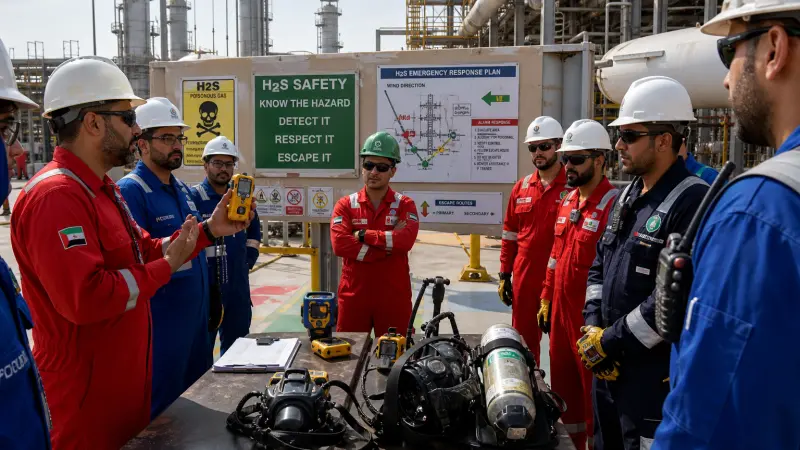
Tank Cleaning Hazards and Confined Space Course

At a glance
- Duration
- 1 Week
- Format
- Classroom
- Cities
- Dubai, Barcelona, Accra, Tashkent, London, Istanbul and more
- Next session
- 2 – 6 November 2026, Dubai
- Average fee
- 5,750 €
Overview
Tank Cleaning Hazards and Confined Space Safety Course is a one-week advanced course for safety leaders, operations teams, maintenance functions, entry supervisors, contractors, and rescue planners who leave with a Tank Cleaning Entry Control Pack. Participants connect hazard analysis, isolation, product removal, degassing, ventilation, atmospheric testing, permits, entry roles, cleaning methods, continuous monitoring, rescue, and recommissioning. The course addresses invisible atmospheres, residual energy, ignition, toxic residues, and improvised rescue. Agile Leaders Training Center treats tank cleaning safety as a controlled lifecycle.
Who Should Attend
- Functions responsible for tank cleaning safety and confined-space programmes
- Operations teams preparing tanks for inspection, maintenance, or repair
- Entry supervisors, attendants, and authorized entrants
- Contractor-management functions coordinating hazardous work
- Teams responsible for atmospheric testing and ventilation
- Emergency and rescue planners supporting permit-space work
The course assumes participants already support industrial operations, maintenance, safety, or emergency response and leaves out vessel design, process engineering calculations, and hands-on rescue certification.
Departments and Industries
The course serves departments and industries that clean, inspect, repair, or recommission enclosed tanks.
- Oil, gas, refining, and petrochemical operations
- Marine, terminals, transport, and bulk storage
- Manufacturing, utilities, and water treatment
- Maintenance, inspection, and reliability functions
- Occupational safety and emergency-response teams
- Contractors providing cleaning, waste, and industrial services
Learning Objectives
By the end of this course, participants will be able to:
- Analyze tank residues, atmospheres, energy, and task hazards
- Apply isolation, degassing, and ventilation controls
- Build permit and role-accountability arrangements
- Use atmospheric testing and continuous monitoring
- Evaluate cleaning methods, equipment, and protective controls
- Prioritize rescue, close-out, and recommissioning checks
Course Agenda
Day 1: Hazard Profile and Planning
- Tank Cleaning Hazard Profile
- Permit-Required Confined Space Assessment
- Residue and Chemical Exposure Inventory
- Fire and Explosion Pathway Map
- Pre-Cleaning Work Coordination Plan
Day 2: Isolation and Atmosphere Control
- Tank Isolation and Lockout Plan
- Product Removal and Drainage Sequence
- Gas Freeing and Degassing Method
- Ventilation Equipment Selection Matrix
- Ignition Source and Static Control Check
Day 3: Entry and Monitoring
- Confined Space Tank Entry Permit
- Atmospheric Testing Order and Sampling Plan
- Acceptable Entry Condition Register
- Entrant, Attendant, and Supervisor Role Cards
- Continuous Monitoring and Evacuation Triggers
Day 4: Cleaning and Emergency Control
- Tank Cleaning Method Risk Assessment
- PPE and Respiratory Protection Decision Matrix
- Sludge, Waste, and Pyrophoric Residue Controls
- Communication and Accountability Protocol
- Non-Entry Rescue and Emergency Plan
Day 5: Tank Cleaning Safety Practice
- Exercise: Build a Tank Hazard Profile
- Exercise: Verify Isolation and Atmosphere Controls
- Exercise: Authorize and Monitor Tank Entry
- Exercise: Respond to an Entry Alarm
- Capstone Exercise: Tank Cleaning Entry Control Pack
Practical Exercises
The course uses suggested activities drawn from storage, process, marine, utility, and industrial-service operations.
- Suggested activity: identify residue, energy, atmosphere, access, heat, equipment, and contractor hazards in a pre-cleaning survey.
- Suggested activity: sequence isolation, drainage, degassing, ventilation, tank atmospheric testing, and permit authorization.
- Suggested activity: assign entry roles, interpret monitor readings, and act on evacuation triggers without improvising rescue.
- Suggested activity: combine permits, controls, tests, rescue arrangements, close-out, and recommissioning evidence in the capstone pack.
FAQs
Who suits tank cleaning safety training, and what does it assume?
Tank cleaning safety training suits experienced operations, maintenance, contractor, safety, testing, and emergency-response personnel who already support hazardous industrial work.
How does tank cleaning safety differ from general confined-space training?
Tank cleaning safety applies confined-space controls to residues, product removal, degassing, ventilation, ignition, cleaning equipment, sludge, waste, tank isolation, and return-to-service decisions.
Why is atmospheric testing essential before confined space tank entry?
Atmospheric testing verifies oxygen, flammable, and toxic conditions at representative locations and supports entry decisions, ventilation changes, continuous monitoring, and evacuation triggers.
What does safe tank isolation require before cleaning?
Safe isolation requires identifying every energy and material pathway, applying effective disconnection or controlled isolation, locking and tagging sources, controlling adjacent systems, and verifying the condition before entry.
Why must tank cleaning rescue be planned before entry?
Preplanned rescue defines capability, response time, communications, equipment, access, retrieval, medical support, and conditions that prevent untrained personnel from making impulsive entries.
Conclusion
The course links preplanning, isolation, atmosphere control, permits, roles, cleaning methods, monitoring, rescue, and return-to-service verification. Participants take back a Tank Cleaning Entry Control Pack containing hazard, isolation, testing, permit, role, rescue, and close-out tools. The pack helps teams replace fragmented precautions with traceable controls across the entire tank-cleaning lifecycle.
credits: 5 credit per day
Course Mode: full-time
Provider: Agile Leaders Training Center
-
Events for this Course
-
Dubai 2 – 6 November 2026
-
Barcelona 2 – 6 November 2026
-
Accra 8 – 12 November 2026
-
Tashkent 15 – 19 November 2026
-
London 16 – 20 November 2026
-
Istanbul 23 – 27 November 2026
-
Madrid 30 November – 4 December 2026
-
Geneva 6 – 10 December 2026
-
Nairobi 13 – 17 December 2026
-
Singapore 14 – 18 December 2026
-
Paris 21 – 25 December 2026
-
Tbilisi 28 December 2026 – 1 January 2027
-
Dubai 4 – 8 January 2027
-
Toronto 10 – 14 January 2027
-
Rome 11 – 15 January 2027
-
Barcelona 18 – 22 January 2027
-
Bangkok 24 – 28 January 2027
-
New York 25 – 29 January 2027
-
Amsterdam 1 – 5 February 2027
-
Athens 8 – 12 February 2027
-
Prague 15 – 19 February 2027
-
Berlin 15 – 19 February 2027
-
Istanbul 22 – 26 February 2027
-
Doha 28 February – 4 March 2027
-
Cairo 1 – 5 March 2027
-
London 8 – 12 March 2027
-
Manama 14 – 18 March 2027
-
Munich 22 – 26 March 2027
-
Lisbon 22 – 26 March 2027
-
Bali 28 March – 1 April 2027
-
Madrid 5 – 9 April 2027
-
Abu Dhabi 5 – 9 April 2027
-
Dubai 12 – 16 April 2027
-
Baku 12 – 16 April 2027
-
Amsterdam 19 – 23 April 2027
-
Sharm El-Sheikh 26 – 30 April 2027
-
Vienna 26 – 30 April 2027
-
London 3 – 7 May 2027
-
Zoom 3 – 7 May 2027
-
Seoul 10 – 14 May 2027
-
Trabzon 16 – 20 May 2027
-
Kuala Lumpur 24 – 28 May 2027
-
Marbella 30 May – 3 June 2027
-
Milan 31 May – 4 June 2027
-
Rome 7 – 11 June 2027
-
Frankfurt 7 – 11 June 2027
-
Manama 13 – 17 June 2027
-
Dubai 14 – 18 June 2027
-
Zanzibar 20 – 24 June 2027
-
Jakarta 28 June – 2 July 2027
-
Phuket 4 – 8 July 2027
-
Abu Dhabi 5 – 9 July 2027
-
Muscat 11 – 15 July 2027
-
Langkawi 18 – 22 July 2027
-
Milan 26 – 30 July 2027
-
San Diego 2 – 6 August 2027
-
Johannesburg 8 – 12 August 2027
-
Tokyo 16 – 20 August 2027
-
Amman 22 – 26 August 2027
-
Montreux 30 August – 3 September 2027
-
Abu Dhabi 30 August – 3 September 2027
-
London 6 – 10 September 2027
-
Kuwait 12 – 16 September 2027
-
Cape town 19 – 23 September 2027
-
Casablanca 27 September – 1 October 2027
-
Nice 27 September – 1 October 2027
-
Amsterdam 4 – 8 October 2027
-
Lagos 10 – 14 October 2027
-
Vienna 11 – 15 October 2027
-
Kuala Lumpur 18 – 22 October 2027
-
Chicago 24 – 28 October 2027
-
Cairo 25 – 29 October 2027
-
Abu Dhabi 25 – 29 October 2027
-
Paris 1 – 5 November 2027
-
Porto 1 – 5 November 2027
| Image | Location | Dates | Duration | Mode | Price | Actions |
|---|---|---|---|---|---|---|

|
Prague |
Week 07, 2027 15 – 19 February 2027 |
1 Week | Onsite | €6,000 | |

|
Berlin |
Week 07, 2027 15 – 19 February 2027 |
1 Week | Onsite | €5,700 | |

|
Istanbul |
Week 08, 2027 22 – 26 February 2027 |
1 Week | Onsite | €4,500 | |

|
Doha |
Week 08, 2027 28 February – 4 March 2027 |
1 Week | Onsite | €5,500 | |

|
Cairo |
Week 09, 2027 1 – 5 March 2027 |
1 Week | Onsite | €4,100 | |

|
London |
Week 10, 2027 8 – 12 March 2027 |
1 Week | Onsite | €5,700 | |

|
Manama |
Week 10, 2027 14 – 18 March 2027 |
1 Week | Onsite | €4,700 | |

|
Munich |
Week 12, 2027 22 – 26 March 2027 |
1 Week | Onsite | €5,700 | |

|
Lisbon |
Week 12, 2027 22 – 26 March 2027 |
1 Week | Onsite | €5,700 | |

|
Bali |
Week 12, 2027 28 March – 1 April 2027 |
1 Week | Onsite | €5,700 | |

|
Madrid |
Week 14, 2027 5 – 9 April 2027 |
1 Week | Onsite | €5,700 | |

|
Abu Dhabi |
Week 14, 2027 5 – 9 April 2027 |
1 Week | Onsite | €4,700 | |

|
Dubai |
Week 15, 2027 12 – 16 April 2027 |
1 Week | Onsite | €4,500 | |

|
Baku |
Week 15, 2027 12 – 16 April 2027 |
1 Week | Onsite | €5,000 | |

|
Amsterdam |
Week 16, 2027 19 – 23 April 2027 |
1 Week | Onsite | €5,700 | |

|
Sharm El-Sheikh |
Week 17, 2027 26 – 30 April 2027 |
1 Week | Onsite | €4,100 | |

|
Vienna |
Week 17, 2027 26 – 30 April 2027 |
1 Week | Onsite | €5,700 | |
|
|
London |
Week 18, 2027 3 – 7 May 2027 |
1 Week | Onsite | €5,700 | |

|
Zoom |
Week 18, 2027 3 – 7 May 2027 |
1 Week | Online | €1,500 | |

|
Seoul |
Week 19, 2027 10 – 14 May 2027 |
1 Week | Onsite | €10,000 |
Frequently asked questions
What does this course cover?
OverviewTank Cleaning Hazards and Confined Space Safety Course is a one-week advanced course for safety leaders, operations teams, maintenance functions, entry supervisors, contractors, and rescue planners who leave with a Tank Cleaning Entry Control Pack. Participants connect hazard analysis, isolation, product removal, degassing, ventilation, atmospheri…
Are training dates available?
Yes. Available dates and destinations are listed in the course dates section on this page.
How can I register?
Choose an available date on this page and complete the registration form, or send a programme enquiry.
Can I download the course brochure?
Yes. Use the brochure download link provided on this page.
This course by city
- Occupational Health, Safety and Security Training Courses in Abu Dhabi
- Occupational Health, Safety and Security Training Courses in Accra
- Occupational Health, Safety and Security Training Courses in Amman
- Occupational Health, Safety and Security Training Courses in Amsterdam
- Occupational Health, Safety and Security Training Courses in Athens
- Occupational Health, Safety and Security Training Courses in Baku
- Occupational Health, Safety and Security Training Courses in Bali
- Occupational Health, Safety and Security Training Courses in Bangkok
- Occupational Health, Safety and Security Training Courses in Barcelona
- Occupational Health, Safety and Security Training Courses in Berlin
- Occupational Health, Safety and Security Training Courses in Cairo
- Occupational Health, Safety and Security Training Courses in Cape town
- Occupational Health, Safety and Security Training Courses in Casablanca
- Occupational Health, Safety and Security Training Courses in Chicago
- Occupational Health, Safety and Security Training Courses in Doha
- Occupational Health, Safety and Security Training Courses in Dubai
- Occupational Health, Safety and Security Training Courses in Frankfurt
- Occupational Health, Safety and Security Training Courses in Geneva
- Occupational Health, Safety and Security Training Courses in Istanbul
- Occupational Health, Safety and Security Training Courses in Jakarta
- Occupational Health, Safety and Security Training Courses in Johannesburg
- Occupational Health, Safety and Security Training Courses in Kuala Lumpur
- Occupational Health, Safety and Security Training Courses in Kuwait
- Occupational Health, Safety and Security Training Courses in Lagos
- Occupational Health, Safety and Security Training Courses in Langkawi
- Occupational Health, Safety and Security Training Courses in Lisbon
- Occupational Health, Safety and Security Training Courses in London
- Occupational Health, Safety and Security Training Courses in Madrid
- Occupational Health, Safety and Security Training Courses in Manama
- Occupational Health, Safety and Security Training Courses in Marbella
- Occupational Health, Safety and Security Training Courses in Milan
- Occupational Health, Safety and Security Training Courses in Montreux
- Occupational Health, Safety and Security Training Courses in Munich
- Occupational Health, Safety and Security Training Courses in Muscat
- Occupational Health, Safety and Security Training Courses in Nairobi
- Occupational Health, Safety and Security Training Courses in New York
- Occupational Health, Safety and Security Training Courses in Nice
- Occupational Health, Safety and Security Training Courses in Paris
- Occupational Health, Safety and Security Training Courses in Phuket
- Occupational Health, Safety and Security Training Courses in Porto
- Occupational Health, Safety and Security Training Courses in Prague
- Occupational Health, Safety and Security Training Courses in Rome
- Occupational Health, Safety and Security Training Courses in San Diego
- Occupational Health, Safety and Security Training Courses in Seoul
- Occupational Health, Safety and Security Training Courses in Sharm El-Sheikh
- Occupational Health, Safety and Security Training Courses in Singapore
- Occupational Health, Safety and Security Training Courses in Tashkent
- Occupational Health, Safety and Security Training Courses in Tbilisi
- Occupational Health, Safety and Security Training Courses in Tokyo
- Occupational Health, Safety and Security Training Courses in Toronto
- Occupational Health, Safety and Security Training Courses in Trabzon
- Occupational Health, Safety and Security Training Courses in Vienna
- Occupational Health, Safety and Security Training Courses in Zanzibar
- Occupational Health, Safety and Security Training Courses in Zoom