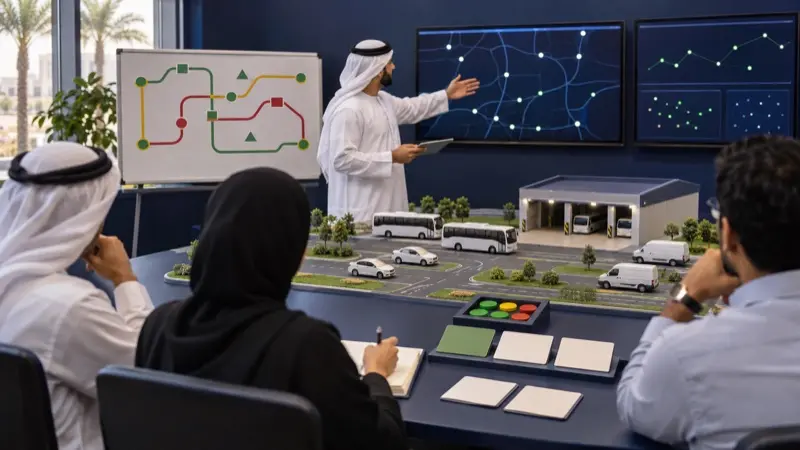
Transportation and Fleet Management Strategies

At a glance
- Duration
- 1 Week
- Format
- Classroom
- Cities
- Addis Ababa, Doha, Phuket, Tbilisi, Abu Dhabi, Trabzon and more
- Next session
- 16 – 20 November 2026, Addis Ababa
- Average fee
- 5,750 €
Overview
Transportation and Fleet Management Strategies is a one-week course for professionals responsible for commercial vehicles, transport services, and distribution performance, giving participants a fleet operating strategy pack they can apply at work. It addresses fragmented vehicle decisions, avoidable downtime, route inefficiency, safety exposure, and weak cost visibility through operating models, planning tools, risk controls, performance measures, and technology choices. Agile Leaders Training Center presents the course as applied development in transportation and fleet management strategies.
Who Should Attend
- Professionals responsible for fleet availability, utilization, maintenance coordination, and replacement decisions
- Teams accountable for transport planning, dispatch, routing, and delivery reliability
- Managers who oversee driver safety, operating risk, and incident controls
- Analysts responsible for fleet costs, fuel use, asset performance, and management reporting
- Supply chain and distribution leaders who coordinate internal fleets and external carriers
The course assumes participants already coordinate transport or vehicle-related work and leaves out basic driving instruction and mechanical repair techniques.
Departments and Industries
The course supports functions that operate or depend on commercial fleets across service, industrial, retail, and distribution settings.
- Fleet and transport operations in distribution and delivery businesses
- Logistics and supply chain functions in manufacturing and retail
- Maintenance planning and asset management in industrial services
- Safety, risk, and operational assurance teams
- Finance and procurement functions responsible for vehicle costs and suppliers
Learning Objectives
By the end of this course, participants will be able to:
- Apply a fleet operating model to clarify service, asset, and stakeholder decisions
- Analyze demand, capacity, routes, and utilization to improve transport planning
- Build cost, maintenance, replacement, and supplier decision controls
- Diagnose fleet safety and operational risks using structured evidence
- Evaluate telematics, powertrain, and artificial intelligence use cases
- Integrate performance, sustainability, and risk priorities into a fleet strategy
Course Agenda
Day 1: Fleet Operating Context
- Fleet Operating Model and Service Responsibility Map
- Stakeholder RACI Matrix for Vehicle and Transport Decisions
- Transportation Market Scan and Trend Assessment Method
- Service-Cost-Availability Performance Matrix
- Fleet Asset Lifecycle and Distribution Flow Map
Day 2: Strategy, Capacity, and Risk
- PESTEL Analysis for the Fleet Operating Environment
- Demand and Capacity Planning Model for Transport Workloads
- Route Optimization Method and Dispatch Constraint Review
- Fleet Risk Register and Mitigation Priority Matrix
- Internal Fleet and Carrier Sourcing Decision Matrix
Day 3: Asset Performance and Technology
- Preventive Maintenance Schedule and Downtime Control Board
- Total Cost of Ownership Model for Vehicle Decisions
- Telematics Dashboard and Fleet Performance Scorecard
- Vehicle Replacement Policy and Capital Priority Method
- Powertrain and Artificial Intelligence Use-Case Evaluation Grid
Day 4: Safety and Sustainable Operations
- Fleet Safety Management System and Responsibility Checklist
- Driver Behavior Monitoring and Coaching Scorecard
- Transport Incident Investigation and Corrective Action Method
- Fleet Emissions Baseline and Reduction Opportunity Map
- Multimodal Transport Integration and Handover Plan
Day 5: Fleet Strategy Practice
- Suggested Route and Capacity Planning Exercise
- Suggested Fleet Risk Scenario and Control Exercise
- Suggested Ownership Cost and Replacement Decision Exercise
- Suggested Safety and Sustainability Review Exercise
- Fleet Operations Strategy Pack Capstone Exercise
Practical Exercises
The course uses suggested activities that connect planning choices with operating evidence.
- Suggested activity: compare route demand, capacity constraints, and dispatch options for a distribution operation
- Suggested activity: build a risk register from vehicle, driver, supplier, and service scenarios
- Suggested activity: assess maintenance, ownership cost, and replacement evidence for an industrial fleet
- Suggested activity: combine safety, performance, technology, and sustainability priorities in a fleet strategy pack
FAQs
Who suits a transportation and fleet management strategies course, and what experience does it assume?
Professionals who coordinate vehicles, transport services, drivers, costs, maintenance, or distribution performance suit the course. It assumes practical exposure to fleet or transport work and does not require mechanical repair expertise.
How does transportation and fleet management differ from a broader logistics management course?
Transportation and fleet management concentrates on vehicles, routes, drivers, maintenance, safety, operating cost, and asset decisions. Broader logistics management also covers inventory, warehousing, order flow, suppliers, and network coordination.
How can a fleet strategy improve cost control without weakening service?
A fleet strategy links demand, utilization, route constraints, maintenance, ownership cost, and replacement evidence. Managers can then compare service consequences before changing capacity, suppliers, vehicle policy, or dispatch rules.
Which measures support transportation and fleet management decisions?
Useful measures connect availability, utilization, downtime, route performance, safety events, fuel or energy use, maintenance cost, and delivery reliability. The course shows how to select a balanced set rather than optimize one measure in isolation.
Conclusion
Participants leave with a fleet operations strategy pack that combines operating responsibilities, capacity choices, cost controls, risk priorities, and performance measures. The work product helps managers align vehicle decisions with transport service requirements. It also provides a repeatable basis for reviewing maintenance, replacement, technology, safety, and sustainability choices.
credits: 5 credit per day
Course Mode: full-time
Provider: Agile Leaders Training Center
-
Events for this Course
-
Addis Ababa 16 – 20 November 2026
-
Doha 29 November – 3 December 2026
-
Phuket 6 – 10 December 2026
-
Tbilisi 7 – 11 December 2026
-
Abu Dhabi 7 – 11 December 2026
-
Trabzon 13 – 17 December 2026
-
Toronto 13 – 17 December 2026
-
Jakarta 14 – 18 December 2026
-
Bali 20 – 24 December 2026
-
Istanbul 28 December 2026 – 1 January 2027
-
Rome 4 – 8 January 2027
-
Nice 4 – 8 January 2027
-
Milan 11 – 15 January 2027
-
Casablanca 18 – 22 January 2027
-
Tashkent 24 – 28 January 2027
-
Dubai 25 – 29 January 2027
-
London 1 – 5 February 2027
-
Baku 1 – 5 February 2027
-
Berlin 8 – 12 February 2027
-
Kuala Lumpur 15 – 19 February 2027
-
Madrid 15 – 19 February 2027
-
Kuwait 21 – 25 February 2027
-
Paris 22 – 26 February 2027
-
Geneva 28 February – 4 March 2027
-
Barcelona 1 – 5 March 2027
-
Vienna 8 – 12 March 2027
-
Athens 15 – 19 March 2027
-
Porto 15 – 19 March 2027
-
Amman 21 – 25 March 2027
-
Cairo 29 March – 2 April 2027
-
Rome 5 – 9 April 2027
-
Manama 11 – 15 April 2027
-
Tokyo 12 – 16 April 2027
-
Frankfurt 12 – 16 April 2027
-
London 19 – 23 April 2027
-
Zoom 26 – 30 April 2027
-
Paris 3 – 7 May 2027
-
Madrid 3 – 7 May 2027
-
Dubai 10 – 14 May 2027
-
Milan 10 – 14 May 2027
-
Istanbul 17 – 21 May 2027
-
Lisbon 17 – 21 May 2027
-
Amsterdam 24 – 28 May 2027
-
Vienna 24 – 28 May 2027
-
San Diego 24 – 28 May 2027
-
New York 24 – 28 May 2027
-
Cape town 30 May – 3 June 2027
-
Chicago 30 May – 3 June 2027
-
Barcelona 31 May – 4 June 2027
-
Bangkok 6 – 10 June 2027
-
Marbella 6 – 10 June 2027
-
Sharm El-Sheikh 14 – 18 June 2027
-
Abu Dhabi 14 – 18 June 2027
-
Accra 21 – 25 June 2027
-
Seoul 5 – 9 July 2027
-
Singapore 5 – 9 July 2027
-
Manama 11 – 15 July 2027
-
Nairobi 11 – 15 July 2027
-
Lagos 18 – 22 July 2027
-
Johannesburg 25 – 29 July 2027
-
London 26 – 30 July 2027
-
Muscat 1 – 5 August 2027
-
Langkawi 8 – 12 August 2027
-
Abu Dhabi 9 – 13 August 2027
-
Dubai 16 – 20 August 2027
-
Amsterdam 23 – 27 August 2027
-
Munich 30 August – 3 September 2027
-
Kuala Lumpur 6 – 10 September 2027
-
Zanzibar 12 – 16 September 2027
-
Cairo 13 – 17 September 2027
-
Abu Dhabi 18 – 22 October 2027
-
Amsterdam 25 – 29 October 2027
-
Prague 25 – 29 October 2027
-
Dubai 1 – 5 November 2027
-
London 1 – 5 November 2027
-
Montreux 8 – 12 November 2027
| Image | Location | Dates | Duration | Mode | Price | Actions |
|---|---|---|---|---|---|---|

|
Addis Ababa |
Week 47, 2026 16 – 20 November 2026 |
1 Week | Onsite | €4,500 | |

|
Doha |
Week 48, 2026 29 November – 3 December 2026 |
1 Week | Onsite | €5,500 | |

|
Phuket |
Week 49, 2026 6 – 10 December 2026 |
1 Week | Onsite | €6,000 | |

|
Tbilisi |
Week 50, 2026 7 – 11 December 2026 |
1 Week | Onsite | €5,000 | |

|
Abu Dhabi |
Week 50, 2026 7 – 11 December 2026 |
1 Week | Onsite | €4,700 | |

|
Trabzon |
Week 50, 2026 13 – 17 December 2026 |
1 Week | Onsite | €6,800 | |

|
Toronto |
Week 50, 2026 13 – 17 December 2026 |
1 Week | Onsite | €12,000 | |

|
Jakarta |
Week 51, 2026 14 – 18 December 2026 |
1 Week | Onsite | €5,700 | |

|
Bali |
Week 51, 2026 20 – 24 December 2026 |
1 Week | Onsite | €5,700 | |

|
Istanbul |
Week 53, 2026 28 December 2026 – 1 January 2027 |
1 Week | Onsite | €4,500 | |

|
Rome |
Week 01, 2027 4 – 8 January 2027 |
1 Week | Onsite | €5,700 | |

|
Nice |
Week 01, 2027 4 – 8 January 2027 |
1 Week | Onsite | €5,700 | |

|
Milan |
Week 02, 2027 11 – 15 January 2027 |
1 Week | Onsite | €5,700 | |

|
Casablanca |
Week 03, 2027 18 – 22 January 2027 |
1 Week | Onsite | €4,100 | |

|
Tashkent |
Week 03, 2027 24 – 28 January 2027 |
1 Week | Onsite | €4,500 | |

|
Dubai |
Week 04, 2027 25 – 29 January 2027 |
1 Week | Onsite | €4,500 | |

|
London |
Week 05, 2027 1 – 5 February 2027 |
1 Week | Onsite | €5,700 | |

|
Baku |
Week 05, 2027 1 – 5 February 2027 |
1 Week | Onsite | €5,000 | |

|
Berlin |
Week 06, 2027 8 – 12 February 2027 |
1 Week | Onsite | €5,700 | |

|
Kuala Lumpur |
Week 07, 2027 15 – 19 February 2027 |
1 Week | Onsite | €5,200 |
Frequently asked questions
What does this course cover?
OverviewTransportation and Fleet Management Strategies is a one-week course for professionals responsible for commercial vehicles, transport services, and distribution performance, giving participants a fleet operating strategy pack they can apply at work. It addresses fragmented vehicle decisions, avoidable downtime, route inefficiency, safety exposure,…
Are training dates available?
Yes. Available dates and destinations are listed in the course dates section on this page.
How can I register?
Choose an available date on this page and complete the registration form, or send a programme enquiry.
Can I download the course brochure?
Yes. Use the brochure download link provided on this page.
This course by city
- Quality and Operations Management Training Courses in Abu Dhabi
- Quality and Operations Management Training Courses in Accra
- Quality and Operations Management Training Courses in Addis Ababa
- Quality and Operations Management Training Courses in Amman
- Quality and Operations Management Training Courses in Amsterdam
- Quality and Operations Management Training Courses in Athens
- Quality and Operations Management Training Courses in Baku
- Quality and Operations Management Training Courses in Bali
- Quality and Operations Management Training Courses in Bangkok
- Quality and Operations Management Training Courses in Barcelona
- Quality and Operations Management Training Courses in Berlin
- Quality and Operations Management Training Courses in Cairo
- Quality and Operations Management Training Courses in Cape town
- Quality and Operations Management Training Courses in Casablanca
- Quality and Operations Management Training Courses in Chicago
- Quality and Operations Management Training Courses in Doha
- Quality and Operations Management Training Courses in Dubai
- Quality and Operations Management Training Courses in Frankfurt
- Quality and Operations Management Training Courses in Geneva
- Quality and Operations Management Training Courses in Istanbul
- Quality and Operations Management Training Courses in Jakarta
- Quality and Operations Management Training Courses in Johannesburg
- Quality and Operations Management Training Courses in Kuala Lumpur
- Quality and Operations Management Training Courses in Kuwait
- Quality and Operations Management Training Courses in Lagos
- Quality and Operations Management Training Courses in Langkawi
- Quality and Operations Management Training Courses in Lisbon
- Quality and Operations Management Training Courses in London
- Quality and Operations Management Training Courses in Madrid
- Quality and Operations Management Training Courses in Manama
- Quality and Operations Management Training Courses in Marbella
- Quality and Operations Management Training Courses in Milan
- Quality and Operations Management Training Courses in Montreux
- Quality and Operations Management Training Courses in Munich
- Quality and Operations Management Training Courses in Muscat
- Quality and Operations Management Training Courses in Nairobi
- Quality and Operations Management Training Courses in New York
- Quality and Operations Management Training Courses in Nice
- Quality and Operations Management Training Courses in Paris
- Quality and Operations Management Training Courses in Phuket
- Quality and Operations Management Training Courses in Porto
- Quality and Operations Management Training Courses in Prague
- Quality and Operations Management Training Courses in Rome
- Quality and Operations Management Training Courses in San Diego
- Quality and Operations Management Training Courses in Seoul
- Quality and Operations Management Training Courses in Sharm El-Sheikh
- Quality and Operations Management Training Courses in Singapore
- Quality and Operations Management Training Courses in Tashkent
- Quality and Operations Management Training Courses in Tbilisi
- Quality and Operations Management Training Courses in Tokyo
- Quality and Operations Management Training Courses in Toronto
- Quality and Operations Management Training Courses in Trabzon
- Quality and Operations Management Training Courses in Vienna
- Quality and Operations Management Training Courses in Zanzibar
- Quality and Operations Management Training Courses in Zoom