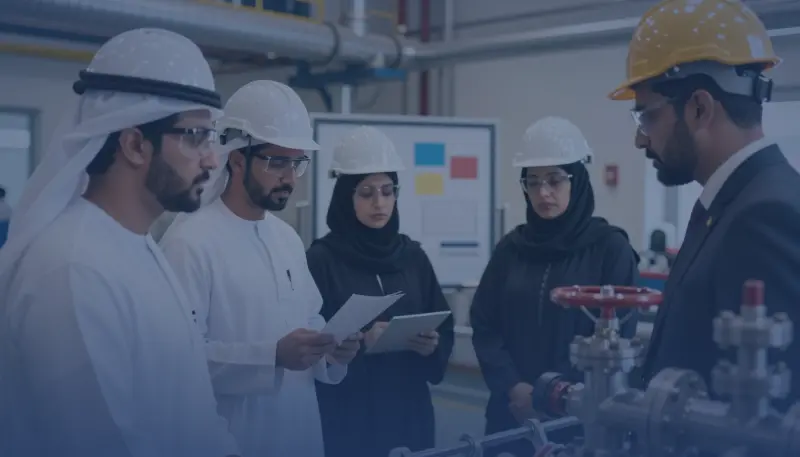
Upstream Oil and Gas Materials Selection Course

At a glance
- Duration
- 1 Week
- Format
- Classroom
- Cities
- Bangkok, Frankfurt, Johannesburg, San Diego, London, Kuwait and more
- Next session
- 15 – 19 November 2026, Bangkok
- Average fee
- 7,500 €
Overview
Advanced Upstream Oil and Gas Materials Selection Training Course is a one-week advanced course for materials, corrosion, mechanical, piping, project, inspection, and integrity teams who leave with an Upstream Materials Selection Basis. Participants connect service conditions, degradation mechanisms, metallic and nonmetallic options, fabrication implications, specifications, life-cycle cost, and technical assurance. The course converts scattered design inputs into traceable oil and gas materials selection decisions. Agile Leaders Training Center presents upstream materials selection practice.
Who Should Attend
- Materials functions responsible for selection philosophy, specifications, and material approval
- Corrosion functions responsible for service-environment assessment and degradation controls
- Mechanical, piping, and pipeline functions responsible for equipment and system design conditions
- Project functions responsible for design interfaces, procurement requirements, and technical queries
- Inspection and integrity functions responsible for verification evidence and life-cycle feedback
- Technical authorities responsible for approving deviations and material-selection records
The course assumes participants review process, design, materials, corrosion, fabrication, or integrity evidence at work, and it leaves out introductory metallurgy, welding technique instruction, detailed inspection practice, and general asset-integrity management.
Departments and Industries
The course supports departments and industries that specify materials for hydrocarbon, utility, and corrosive-fluid service.
- Upstream oil and gas wells, gathering systems, and production facilities
- Flowline, pipeline, piping, and pressure-equipment engineering departments
- Petrochemical, geothermal, carbon-management, and industrial-water projects
- Materials, corrosion, welding, inspection, and asset-integrity functions
- Engineering contractors, equipment suppliers, fabricators, and technical assurance teams
Learning Objectives
By the end of this course, participants will be able to:
- Analyze service conditions and degradation threats
- Compare carbon steel, CRA, polymer, and elastomer options
- Apply ISO 21457:2010 selection and corrosion-control guidance
- Evaluate fabrication, compatibility, and protection implications
- Prioritize life-cycle cost and assurance requirements
- Build an Upstream Materials Selection Basis
Course Agenda
Day 1: Establish the Service Environment
- Process Composition and Design-Condition Data Sheet
- Pressure, Temperature, Phase, and Velocity Operating Envelope
- Water Chemistry, Chloride, CO2, and H2S Evidence Register
- ISO 21457:2010 Materials Selection Scope Map
- Service-Criticality and Design-Life Classification Matrix
Day 2: Screen Materials and Degradation Threats
- General, Localized, Galvanic, and Erosion-Corrosion Threat Matrix
- Hydrogen Damage and Sour-Service Screening Record
- Carbon Steel Corrosion Allowance Decision Model
- Corrosion-Resistant Alloy Candidate Comparison Table
- Material Compatibility and Mixed-Metals Interface Review
Day 3: Select Materials for Production Systems
- Wellhead, Flowline, and Gathering-System Selection Diagram
- Pipeline, Piping, and Pressure-Equipment Materials Map
- Polymer, Composite, Lining, and Coating Suitability Matrix
- Seal, Gasket, and Elastomer Compatibility Worksheet
- Utility, Injection, and Produced-Water Service Selection Sheet
Day 4: Specify and Assure the Selection
- Welding, Heat Treatment, and Fabrication Constraint Register
- Material Specification and Procurement Data Requirement Sheet
- Qualification, Traceability, and Verification Evidence Plan
- Life-Cycle Cost and Maintainability Comparison Model
- Materials Selection Deviation and Technical Query Log
Day 5: Practice Materials Selection Decisions
- Suggested Exercise: Define a Corrosive Service Environment
- Suggested Exercise: Screen Carbon Steel and CRA Options
- Suggested Exercise: Select Nonmetallic Components and Seals
- Suggested Exercise: Review a Material Specification Deviation
- Capstone Exercise: Complete the Upstream Materials Selection Basis
Practical Exercises
The course uses suggested activities to turn process, design, degradation, fabrication, and commercial evidence into documented selection decisions.
- Suggested activity: establish a service envelope and rank credible degradation mechanisms for a production system.
- Suggested activity: compare carbon steel, corrosion-resistant alloys, polymers, coatings, and elastomers against defined conditions.
- Suggested activity: test a material choice against fabrication, compatibility, procurement, verification, and life-cycle implications.
- Suggested activity: defend a selection basis with assumptions, diagrams, specifications, deviations, and assurance actions.
FAQs
Who suits upstream oil and gas materials selection training, and what does it assume?
Materials, corrosion, mechanical, piping, pipeline, project, inspection, integrity, and technical-authority teams suit the course. It assumes experience reviewing engineering data, specifications, equipment, fabrication, or degradation evidence.
How does oil and gas materials selection differ from general corrosion-control training?
Oil and gas materials selection compares candidate materials against service, design, fabrication, compatibility, cost, and assurance requirements. General corrosion-control training focuses more broadly on corrosion mechanisms, monitoring, protection, and mitigation.
What evidence defines an upstream materials selection service environment?
Fluid composition, water chemistry, pressure, temperature, phase behavior, velocity, solids, chlorides, acid gases, operating variation, design life, fabrication constraints, and consequence evidence define the service environment.
When are corrosion-resistant alloys considered in oil and gas materials selection?
Corrosion-resistant alloys are considered when defined service conditions, degradation risks, reliability needs, corrosion-control limits, fabrication feasibility, and life-cycle evidence do not support an acceptable carbon-steel solution.
Why are polymers and elastomers included in upstream materials selection?
Polymers and elastomers influence liners, seals, gaskets, coatings, flexible components, and chemical compatibility. Temperature, pressure, permeation, swelling, aging, decompression, and fluid exposure affect their suitability.
Conclusion
Participants take back an Upstream Materials Selection Basis linking service conditions, threats, candidates, specifications, fabrication, cost, and assurance evidence. It changes isolated material choices into one traceable engineering decision record. Teams can update the basis as process data, operating limits, supplier evidence, and field experience change.
credits: 5 credit per day
Course Mode: full-time
Provider: Agile Leaders Training Center
-
Events for this Course
-
Bangkok 15 – 19 November 2026
-
Frankfurt 16 – 20 November 2026
-
Johannesburg 22 – 26 November 2026
-
San Diego 7 – 11 December 2026
-
London 14 – 18 December 2026
-
Kuwait 20 – 24 December 2026
-
Manama 27 – 31 December 2026
-
Marbella 27 – 31 December 2026
-
Tbilisi 4 – 8 January 2027
-
Geneva 10 – 14 January 2027
-
Zanzibar 10 – 14 January 2027
-
Bali 17 – 21 January 2027
-
London 18 – 22 January 2027
-
Cape town 24 – 28 January 2027
-
Phuket 31 January – 4 February 2027
-
Addis Ababa 8 – 12 February 2027
-
New York 15 – 19 February 2027
-
Nairobi 21 – 25 February 2027
-
Athens 8 – 12 March 2027
-
Singapore 15 – 19 March 2027
-
Casablanca 22 – 26 March 2027
-
Lisbon 22 – 26 March 2027
-
Langkawi 28 March – 1 April 2027
-
Kuala Lumpur 5 – 9 April 2027
-
Muscat 18 – 22 April 2027
-
Baku 26 – 30 April 2027
-
Montreux 26 – 30 April 2027
-
Dubai 3 – 7 May 2027
-
Trabzon 9 – 13 May 2027
-
Jakarta 10 – 14 May 2027
-
Prague 17 – 21 May 2027
-
Rome 24 – 28 May 2027
-
Abu Dhabi 24 – 28 May 2027
-
Munich 31 May – 4 June 2027
-
Milan 7 – 11 June 2027
-
Porto 7 – 11 June 2027
-
Amsterdam 14 – 18 June 2027
-
Barcelona 21 – 25 June 2027
-
Tokyo 5 – 9 July 2027
-
Vienna 12 – 16 July 2027
-
Toronto 18 – 22 July 2027
-
Cairo 19 – 23 July 2027
-
Doha 25 – 29 July 2027
-
Berlin 26 – 30 July 2027
-
Accra 1 – 5 August 2027
-
Lagos 15 – 19 August 2027
-
Paris 16 – 20 August 2027
-
Madrid 30 August – 3 September 2027
-
Nice 6 – 10 September 2027
-
Dubai 13 – 17 September 2027
-
Abu Dhabi 13 – 17 September 2027
-
Seoul 20 – 24 September 2027
-
Tashkent 26 – 30 September 2027
-
Istanbul 27 September – 1 October 2027
-
Zoom 11 – 15 October 2027
-
Chicago 17 – 21 October 2027
-
Sharm El-Sheikh 18 – 22 October 2027
-
Amman 31 October – 4 November 2027
| Image | Location | Dates | Duration | Mode | Price | Actions |
|---|---|---|---|---|---|---|

|
Bangkok |
Week 46, 2026 15 – 19 November 2026 |
1 Week | Onsite | €8,000 | |

|
Frankfurt |
Week 47, 2026 16 – 20 November 2026 |
1 Week | Onsite | €6,500 | |

|
Johannesburg |
Week 47, 2026 22 – 26 November 2026 |
1 Week | Onsite | €6,000 | |

|
San Diego |
Week 50, 2026 7 – 11 December 2026 |
1 Week | Onsite | €16,000 | |

|
London |
Week 51, 2026 14 – 18 December 2026 |
1 Week | Onsite | €6,500 | |

|
Kuwait |
Week 51, 2026 20 – 24 December 2026 |
1 Week | Onsite | €7,000 | |

|
Manama |
Week 52, 2026 27 – 31 December 2026 |
1 Week | Onsite | €6,500 | |

|
Marbella |
Week 52, 2026 27 – 31 December 2026 |
1 Week | Onsite | €6,500 | |

|
Tbilisi |
Week 01, 2027 4 – 8 January 2027 |
1 Week | Onsite | €5,700 | |

|
Geneva |
Week 01, 2027 10 – 14 January 2027 |
1 Week | Onsite | €8,000 | |

|
Zanzibar |
Week 01, 2027 10 – 14 January 2027 |
1 Week | Onsite | €6,000 | |

|
Bali |
Week 02, 2027 17 – 21 January 2027 |
1 Week | Onsite | €6,500 | |
|
|
London |
Week 03, 2027 18 – 22 January 2027 |
1 Week | Onsite | €6,500 | |

|
Cape town |
Week 03, 2027 24 – 28 January 2027 |
1 Week | Onsite | €6,000 | |

|
Phuket |
Week 04, 2027 31 January – 4 February 2027 |
1 Week | Onsite | €8,000 | |

|
Addis Ababa |
Week 06, 2027 8 – 12 February 2027 |
1 Week | Onsite | €6,000 | |

|
New York |
Week 07, 2027 15 – 19 February 2027 |
1 Week | Onsite | €16,000 | |

|
Nairobi |
Week 07, 2027 21 – 25 February 2027 |
1 Week | Onsite | €6,000 | |

|
Athens |
Week 10, 2027 8 – 12 March 2027 |
1 Week | Onsite | €7,500 | |

|
Singapore |
Week 11, 2027 15 – 19 March 2027 |
1 Week | Onsite | €6,500 |
Frequently asked questions
What does this course cover?
OverviewAdvanced Upstream Oil and Gas Materials Selection Training Course is a one-week advanced course for materials, corrosion, mechanical, piping, project, inspection, and integrity teams who leave with an Upstream Materials Selection Basis. Participants connect service conditions, degradation mechanisms, metallic and nonmetallic options, fabrication i…
Are training dates available?
Yes. Available dates and destinations are listed in the course dates section on this page.
How can I register?
Choose an available date on this page and complete the registration form, or send a programme enquiry.
Can I download the course brochure?
Yes. Use the brochure download link provided on this page.
This course by city
- Maintenance Training and Engineering Training Courses in Abu Dhabi
- Maintenance Training and Engineering Training Courses in Accra
- Maintenance Training and Engineering Training Courses in Addis Ababa
- Maintenance Training and Engineering Training Courses in Amman
- Maintenance Training and Engineering Training Courses in Amsterdam
- Maintenance Training and Engineering Training Courses in Athens
- Maintenance Training and Engineering Training Courses in Baku
- Maintenance Training and Engineering Training Courses in Bali
- Maintenance Training and Engineering Training Courses in Bangkok
- Maintenance Training and Engineering Training Courses in Barcelona
- Maintenance Training and Engineering Training Courses in Berlin
- Maintenance Training and Engineering Training Courses in Cairo
- Maintenance Training and Engineering Training Courses in Cape town
- Maintenance Training and Engineering Training Courses in Casablanca
- Maintenance Training and Engineering Training Courses in Chicago
- Maintenance Training and Engineering Training Courses in Doha
- Maintenance Training and Engineering Training Courses in Dubai
- Maintenance Training and Engineering Training Courses in Frankfurt
- Maintenance Training and Engineering Training Courses in Geneva
- Maintenance Training and Engineering Training Courses in Istanbul
- Maintenance Training and Engineering Training Courses in Jakarta
- Maintenance Training and Engineering Training Courses in Johannesburg
- Maintenance Training and Engineering Training Courses in Kuala Lumpur
- Maintenance Training and Engineering Training Courses in Kuwait
- Maintenance Training and Engineering Training Courses in Lagos
- Maintenance Training and Engineering Training Courses in Langkawi
- Maintenance Training and Engineering Training Courses in Lisbon
- Maintenance Training and Engineering Training Courses in London
- Maintenance Training and Engineering Training Courses in Madrid
- Maintenance Training and Engineering Training Courses in Manama
- Maintenance Training and Engineering Training Courses in Marbella
- Maintenance Training and Engineering Training Courses in Milan
- Maintenance Training and Engineering Training Courses in Montreux
- Maintenance Training and Engineering Training Courses in Munich
- Maintenance Training and Engineering Training Courses in Muscat
- Maintenance Training and Engineering Training Courses in Nairobi
- Maintenance Training and Engineering Training Courses in New York
- Maintenance Training and Engineering Training Courses in Nice
- Maintenance Training and Engineering Training Courses in Paris
- Maintenance Training and Engineering Training Courses in Phuket
- Maintenance Training and Engineering Training Courses in Porto
- Maintenance Training and Engineering Training Courses in Prague
- Maintenance Training and Engineering Training Courses in Rome
- Maintenance Training and Engineering Training Courses in San Diego
- Maintenance Training and Engineering Training Courses in Seoul
- Maintenance Training and Engineering Training Courses in Sharm El-Sheikh
- Maintenance Training and Engineering Training Courses in Singapore
- Maintenance Training and Engineering Training Courses in Tashkent
- Maintenance Training and Engineering Training Courses in Tbilisi
- Maintenance Training and Engineering Training Courses in Tokyo
- Maintenance Training and Engineering Training Courses in Toronto
- Maintenance Training and Engineering Training Courses in Trabzon
- Maintenance Training and Engineering Training Courses in Vienna
- Maintenance Training and Engineering Training Courses in Zanzibar
- Maintenance Training and Engineering Training Courses in Zoom