Warehouse Automation and Robotics Training Course

At a glance
- Duration
- 1 Week
- Format
- Classroom
- Cities
- Amsterdam, Trabzon, Accra, Dubai, Nice, Geneva and more
- Next session
- 19 – 23 October 2026, Amsterdam
- Average fee
- 5,800 €
Overview
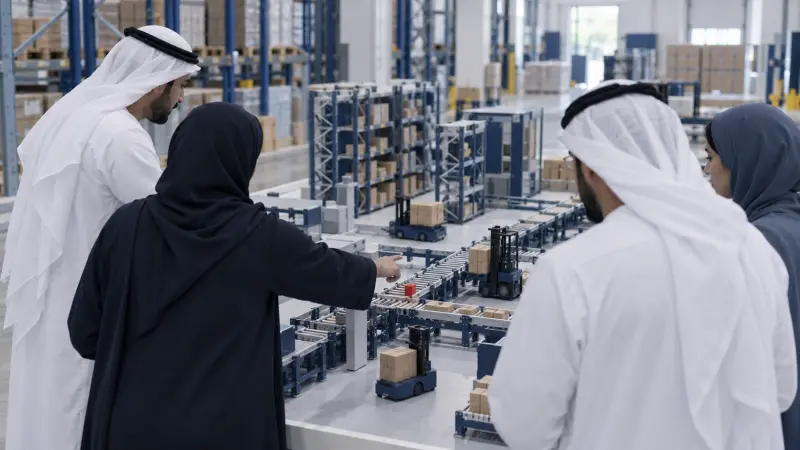
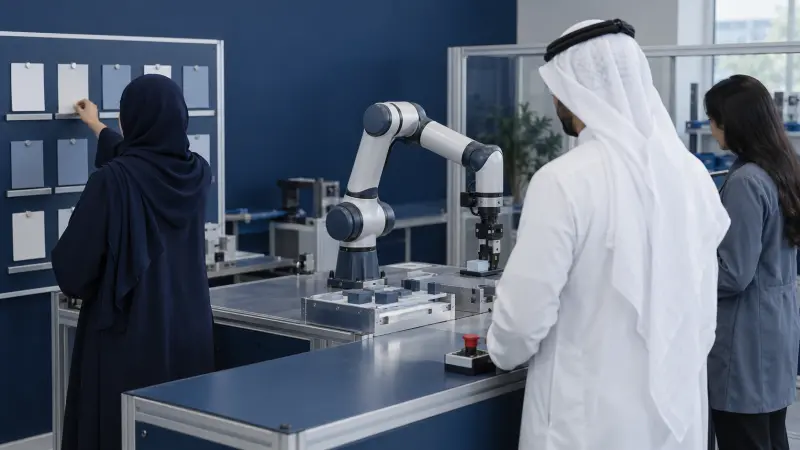
Advanced Warehouse Automation and Robotics Training Course is a one-week course for warehouse operations managers, automation engineers, intralogistics planners, maintenance leads, and supply-chain technology specialists who leave with a Warehouse Automation Deployment Pack. Participants connect material flows, conveyors, AS/RS, AMRs, robotic picking, WMS/WCS/WES interfaces, safety, reliability, and throughput decisions. The course turns equipment choices into an integrated operating model. Agile Leaders Training Center develops warehouse automation and robotics practice.
Who Should Attend
Warehouse operations functions responsible for receiving, storage, picking, packing, and dispatch
Automation engineering functions responsible for equipment selection and systems integration
Intralogistics planning functions responsible for material flow, capacity, and layout decisions
Maintenance functions responsible for availability, fault response, and lifecycle performance
Supply-chain technology functions responsible for WMS, WCS, WES, and data interfaces
The course assumes participants already work with warehouse processes or automation decisions; it leaves out robot programming, equipment installation, and specialist safety certification.
Departments and Industries
The course supports departments and industries that automate storage, movement, picking, and fulfillment.
Warehousing, distribution, ecommerce, and retail fulfillment
Manufacturing, industrial supply, and spare-parts operations
Food, cold-chain, pharmaceutical, and healthcare distribution
Ports, freight terminals, logistics providers, and parcel networks
Automation integrators, equipment suppliers, and maintenance organizations
Learning Objectives
By the end of this course, participants will be able to:
Analyze warehouse flows and identify suitable automation use cases.
Compare conveyors, AS/RS, AMRs, AGVs, and robotic picking options.
Build WMS, WCS, WES, equipment, and data interface maps.
Apply robot safety, exception-handling, and maintenance controls.
Evaluate throughput, availability, risk, and investment evidence.
Build a Warehouse Automation Deployment Pack.
Course Agenda
Day 1: Frame Warehouse Automation
Warehouse Process and Material-Flow Map
Automation Use-Case Selection Matrix
Volume, Order, and SKU Profile
Manual-to-Automated Operating Boundary
Warehouse Automation Stakeholder Canvas
Day 2: Select Robotic Technologies
Conveyor and Sortation Application Grid
AS/RS Capacity and Access Model
AMR and AGV Selection Scorecard
Robotic Picking Task Suitability Matrix
Equipment Layout and Traffic-Flow Diagram
Day 3: Integrate Systems and Workflows
WMS, WCS, and WES Responsibility Model
Order-to-Task Interface and Data Map
Automation Command and Confirmation Sequence
Exception Queue and Recovery Workflow
Inventory, Location, and Equipment Data Controls
Day 4: Govern Safety and Reliability
ISO 3691-4:2023 Driverless Truck Safety Review
Robot Task and Lifecycle Hazard Assessment
Safeguarding and Access-Control Map
Failure Mode and Maintenance Priority Register
Availability, Throughput, and Bottleneck Scorecard
Day 5: Practice Automation Deployment
Exercise: Diagnose a Material-Flow Bottleneck
Exercise: Select an AMR and AS/RS Configuration
Exercise: Resolve a WMS-to-WCS Exception
Exercise: Evaluate a Robot Safety and Reliability Case
Capstone: Warehouse Automation Deployment Pack
Practical Exercises
The course uses suggested activities based on distribution centers, production warehouses, cold-chain facilities, and parcel operations.
Suggested activity: map orders, material movements, decisions, and automation boundaries.
Suggested activity: compare technology options against load, route, capacity, and service requirements.
Suggested activity: trace system messages and recover a failed automated task.
Suggested activity: defend a deployment roadmap using safety, reliability, and throughput evidence.
FAQs
Who suits warehouse automation and robotics training, and what does it assume?
Warehouse operations, automation, intralogistics, maintenance, and supply-chain technology functions suit the training. It assumes regular involvement in warehouse processes or automation decisions.
How does warehouse automation and robotics training differ from general warehouse management training?
Warehouse automation and robotics training focuses on equipment, mobile robots, system interfaces, safety, reliability, and deployment, while general warehouse management training concentrates on inventory, labor, space, and operating procedures.
How are AMRs and AGVs selected for warehouse automation?
AMRs and AGVs are selected by comparing load, route, navigation, traffic, interface, charging, safety, exception, capacity, and operating-environment requirements.
How do WMS, WCS, and WES interact in automated warehousing?
WMS manages inventory and orders, WCS controls automation equipment, and WES coordinates work and task execution across people, systems, and machines.
How is robotic warehouse reliability evaluated?
Robotic warehouse reliability is evaluated through failure modes, availability, recovery time, maintenance priorities, spare-parts needs, exception history, and throughput effects.
Conclusion
Participants take back a Warehouse Automation Deployment Pack containing process maps, selection matrices, interface views, safety controls, reliability records, performance measures, and a deployment roadmap. It changes isolated equipment proposals into an integrated warehouse operating model. The pack supports traceable selection, coordinated implementation, and accountable operations.
credits: 5 credit per day
Course Mode: full-time
Provider: Agile Leaders Training Center
-
Events for this Course
-
Amsterdam 19 – 23 October 2026
-
Trabzon 25 – 29 October 2026
-
Accra 1 – 5 November 2026
-
Dubai 9 – 13 November 2026
-
Nice 9 – 13 November 2026
-
Geneva 15 – 19 November 2026
-
Rome 23 – 27 November 2026
-
Milan 23 – 27 November 2026
-
Bali 29 November – 3 December 2026
-
Abu Dhabi 7 – 11 December 2026
-
Kuwait 13 – 17 December 2026
-
Paris 14 – 18 December 2026
-
Chicago 20 – 24 December 2026
-
Cairo 21 – 25 December 2026
-
London 28 December 2026 – 1 January 2027
-
Singapore 28 December 2026 – 1 January 2027
-
Cape town 3 – 7 January 2027
-
Istanbul 4 – 8 January 2027
-
Jakarta 11 – 15 January 2027
-
Phuket 17 – 21 January 2027
-
Dubai 25 – 29 January 2027
-
Abu Dhabi 25 – 29 January 2027
-
Manama 31 January – 4 February 2027
-
Tokyo 8 – 12 February 2027
-
Nairobi 14 – 18 February 2027
-
Kuala Lumpur 22 – 26 February 2027
-
San Diego 22 – 26 February 2027
-
Muscat 28 February – 4 March 2027
-
Seoul 8 – 12 March 2027
-
Sharm El-Sheikh 15 – 19 March 2027
-
Amsterdam 15 – 19 March 2027
-
Abu Dhabi 22 – 26 March 2027
-
Vienna 29 March – 2 April 2027
-
Berlin 5 – 9 April 2027
-
Munich 12 – 16 April 2027
-
London 19 – 23 April 2027
-
Athens 19 – 23 April 2027
-
New York 26 – 30 April 2027
-
Johannesburg 2 – 6 May 2027
-
Barcelona 10 – 14 May 2027
-
Porto 10 – 14 May 2027
-
Istanbul 17 – 21 May 2027
-
Zoom 17 – 21 May 2027
-
Milan 24 – 28 May 2027
-
Kuala Lumpur 31 May – 4 June 2027
-
Madrid 31 May – 4 June 2027
-
Dubai 7 – 11 June 2027
-
Baku 7 – 11 June 2027
-
Prague 14 – 18 June 2027
-
Zanzibar 20 – 24 June 2027
-
Langkawi 27 June – 1 July 2027
-
Bangkok 4 – 8 July 2027
-
Casablanca 5 – 9 July 2027
-
Barcelona 12 – 16 July 2027
-
Montreux 12 – 16 July 2027
-
London 19 – 23 July 2027
-
Amsterdam 19 – 23 July 2027
-
Madrid 26 – 30 July 2027
-
Dubai 2 – 6 August 2027
-
Tbilisi 2 – 6 August 2027
-
Tashkent 8 – 12 August 2027
-
Toronto 15 – 19 August 2027
-
Paris 23 – 27 August 2027
-
Frankfurt 23 – 27 August 2027
-
Marbella 29 August – 2 September 2027
-
Doha 5 – 9 September 2027
-
Lisbon 13 – 17 September 2027
-
London 20 – 24 September 2027
-
Abu Dhabi 20 – 24 September 2027
-
Amman 26 – 30 September 2027
-
Rome 4 – 8 October 2027
-
Manama 10 – 14 October 2027
-
Cairo 11 – 15 October 2027
-
Vienna 18 – 22 October 2027
| Image | Location | Dates | Duration | Mode | Price | Actions |
|---|---|---|---|---|---|---|

|
Tashkent |
Week 31, 2027 8 – 12 August 2027 |
1 Week | Onsite | €4,500 | |

|
Toronto |
Week 32, 2027 15 – 19 August 2027 |
1 Week | Onsite | €12,000 | |

|
Paris |
Week 34, 2027 23 – 27 August 2027 |
1 Week | Onsite | €5,700 | |

|
Frankfurt |
Week 34, 2027 23 – 27 August 2027 |
1 Week | Onsite | €5,700 | |

|
Marbella |
Week 34, 2027 29 August – 2 September 2027 |
1 Week | Onsite | €5,700 | |

|
Doha |
Week 35, 2027 5 – 9 September 2027 |
1 Week | Onsite | €5,500 | |

|
Lisbon |
Week 37, 2027 13 – 17 September 2027 |
1 Week | Onsite | €5,700 | |

|
London |
Week 38, 2027 20 – 24 September 2027 |
1 Week | Onsite | €5,700 | |

|
Abu Dhabi |
Week 38, 2027 20 – 24 September 2027 |
1 Week | Onsite | €4,700 | |

|
Amman |
Week 38, 2027 26 – 30 September 2027 |
1 Week | Onsite | €4,100 | |

|
Rome |
Week 40, 2027 4 – 8 October 2027 |
1 Week | Onsite | €5,700 | |

|
Manama |
Week 40, 2027 10 – 14 October 2027 |
1 Week | Onsite | €4,700 | |

|
Cairo |
Week 41, 2027 11 – 15 October 2027 |
1 Week | Onsite | €4,100 | |

|
Vienna |
Week 42, 2027 18 – 22 October 2027 |
1 Week | Onsite | €5,700 |
Frequently asked questions
What does this course cover?
OverviewAdvanced Warehouse Automation and Robotics Training Course is a one-week course for warehouse operations managers, automation engineers, intralogistics planners, maintenance leads, and supply-chain technology specialists who leave with a Warehouse Automation Deployment Pack. Participants connect material flows, conveyors, AS/RS, AMRs, robotic pick…
Are training dates available?
Yes. Available dates and destinations are listed in the course dates section on this page.
How can I register?
Choose an available date on this page and complete the registration form, or send a programme enquiry.
Can I download the course brochure?
Yes. Use the brochure download link provided on this page.
This course by city
- Quality and Operations Management Training Courses in Abu Dhabi
- Quality and Operations Management Training Courses in Accra
- Quality and Operations Management Training Courses in Amman
- Quality and Operations Management Training Courses in Amsterdam
- Quality and Operations Management Training Courses in Athens
- Quality and Operations Management Training Courses in Baku
- Quality and Operations Management Training Courses in Bali
- Quality and Operations Management Training Courses in Bangkok
- Quality and Operations Management Training Courses in Barcelona
- Quality and Operations Management Training Courses in Berlin
- Quality and Operations Management Training Courses in Cairo
- Quality and Operations Management Training Courses in Cape town
- Quality and Operations Management Training Courses in Casablanca
- Quality and Operations Management Training Courses in Chicago
- Quality and Operations Management Training Courses in Doha
- Quality and Operations Management Training Courses in Dubai
- Quality and Operations Management Training Courses in Frankfurt
- Quality and Operations Management Training Courses in Geneva
- Quality and Operations Management Training Courses in Istanbul
- Quality and Operations Management Training Courses in Jakarta
- Quality and Operations Management Training Courses in Johannesburg
- Quality and Operations Management Training Courses in Kuala Lumpur
- Quality and Operations Management Training Courses in Kuwait
- Quality and Operations Management Training Courses in Langkawi
- Quality and Operations Management Training Courses in Lisbon
- Quality and Operations Management Training Courses in London
- Quality and Operations Management Training Courses in Madrid
- Quality and Operations Management Training Courses in Manama
- Quality and Operations Management Training Courses in Marbella
- Quality and Operations Management Training Courses in Milan
- Quality and Operations Management Training Courses in Montreux
- Quality and Operations Management Training Courses in Munich
- Quality and Operations Management Training Courses in Muscat
- Quality and Operations Management Training Courses in Nairobi
- Quality and Operations Management Training Courses in New York
- Quality and Operations Management Training Courses in Nice
- Quality and Operations Management Training Courses in Paris
- Quality and Operations Management Training Courses in Phuket
- Quality and Operations Management Training Courses in Porto
- Quality and Operations Management Training Courses in Prague
- Quality and Operations Management Training Courses in Rome
- Quality and Operations Management Training Courses in San Diego
- Quality and Operations Management Training Courses in Seoul
- Quality and Operations Management Training Courses in Sharm El-Sheikh
- Quality and Operations Management Training Courses in Singapore
- Quality and Operations Management Training Courses in Tashkent
- Quality and Operations Management Training Courses in Tbilisi
- Quality and Operations Management Training Courses in Tokyo
- Quality and Operations Management Training Courses in Toronto
- Quality and Operations Management Training Courses in Trabzon
- Quality and Operations Management Training Courses in Vienna
- Quality and Operations Management Training Courses in Zanzibar
- Quality and Operations Management Training Courses in Zoom