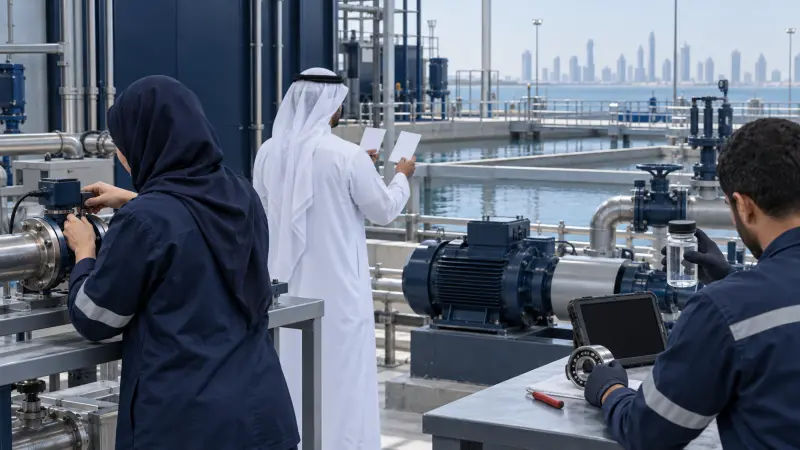
Water Network Design and Hydraulic Analysis Course

At a glance
- Duration
- 1 Week
- Format
- Classroom
- Cities
- Kuwait, Paris, Trabzon, Abu Dhabi, Munich, Seoul and more
- Next session
- 1 – 5 November 2026, Kuwait
- Average fee
- 7,500 €
Overview
Water Network Design and Hydraulic Analysis with Computer Tools Course is a one-week course for water network engineers, hydraulic modelers, utility engineers, design teams, operations teams and technical supervisors, who leave with a Water Network Model and Analysis Report. The course connects water distribution network modeling, hydraulic analysis, demand allocation, pressure and velocity analysis, model calibration and leakage analysis. Participants turn network data into traceable scenarios and decisions. Agile Leaders Training Center develops practical water network modeling capability.
Who Should Attend
- Teams responsible for water network planning and design
- Teams responsible for hydraulic models and data quality
- Teams responsible for utility operations and pressure performance
- Teams responsible for pumps, tanks, valves and controls
- Teams responsible for water-loss analysis and technical reporting
The course assumes participants work with network drawings, asset data, demand data or operating results and leaves out vendor certification, country-specific regulation and software programming.
Departments and Industries
The course supports departments and industries that plan, design, operate or assess pressurized water distribution networks.
- Water utilities and municipal services
- Engineering design and infrastructure consulting
- Industrial and campus utility systems
- Operations, maintenance and asset management
- Planning, capital projects and performance analysis
Learning Objectives
By the end of this course, participants will be able to:
- Build a connected pipe-and-node network model
- Apply demand allocation and hydraulic settings
- Analyze pressure, flow, velocity and headloss
- Evaluate pumps, tanks, controls and scenarios
- Use field evidence to calibrate a model
- Build a water network model and analysis report
Course Agenda
Day 1: Network Data and Model Structure
- Water Network Data Inventory and Quality Register
- Pipe Node Reservoir and Tank Object Model
- Network Topology and Connectivity Validation Map
- Demand Allocation and Pattern Assignment Sheet
- Model Assumption and Coordinate Reference Log
Day 2: Hydraulic Simulation and Results
- Steady-State Flow and Pressure Simulation
- Headloss Method and Roughness Selection Matrix
- Pressure Velocity and Critical Node Dashboard
- Extended-Period Demand and Storage Scenario
- Hydraulic Warning and Convergence Diagnostic Check
Day 3: Pumps, Tanks and Operating Scenarios
- Pump Curve and Operating Point Model
- Tank Level and Storage Balance Profile
- Valve Control and Pressure Zone Logic
- Operating Rule and Time-Control Schedule
- Scenario Comparison and Sensitivity Grid
Day 4: Calibration, Loss and Reporting
- Field Measurement and Calibration Evidence Plan
- Observed-versus-Modeled Performance Plot
- Parameter Adjustment and Calibration Decision Log
- District Flow and Water-Loss Analysis Sheet
- Network Map Table and Technical Report Pack
Day 5: Water Network Modeling Practice
- Exercise: Validate a Pipe-and-Node Model
- Exercise: Run Pressure and Velocity Scenarios
- Exercise: Evaluate Pump and Tank Operations
- Exercise: Calibrate and Diagnose Model Results
- Capstone: Water Network Model and Analysis Report
Practical Exercises
Suggested activities use utility, industrial, campus and growing-demand water-network scenarios.
- Suggested activity: clean asset and demand data, then resolve disconnected nodes and inconsistent pipe properties
- Suggested activity: compare pressure, velocity and headloss under baseline and peak-demand scenarios
- Suggested activity: test pump curves, tank levels, valve settings and operating controls across a simulation period
- Suggested activity: compare model outputs with field observations and document calibrated parameters and remaining uncertainty
FAQs
Who should take water network design and hydraulic analysis training, and what does it assume?
Water network design and hydraulic analysis training suits teams that work with drawings, asset records, demand data, operating information or model results and can apply basic hydraulic calculations.
How does water distribution network modeling differ from general pipe design training?
Water distribution network modeling connects many pipes, nodes, demands, pumps, tanks and controls across operating scenarios; general pipe design training often focuses on individual lines, materials and mechanical sizing.
How does demand allocation affect water network hydraulic analysis?
Demand allocation affects water network hydraulic analysis by placing consumption at model nodes and assigning time patterns, which changes calculated flows, pressures, storage behavior and pump duties.
Why is water network model calibration necessary?
Water network model calibration compares calculated results with field evidence, then adjusts defensible parameters so the model better represents observed system behavior without hiding data gaps.
How can a hydraulic model support water-loss analysis?
A hydraulic model can support water-loss analysis by organizing district inflows, demand estimates, pressure patterns and abnormal results so teams can prioritize investigation and test operating scenarios.
Conclusion
Participants take back a Water Network Model and Analysis Report containing data checks, demand assignments, hydraulic scenarios, pump and tank models, calibration evidence, loss analysis and result displays. The report makes assumptions, uncertainty and operating impacts visible. It helps design, planning and operations teams coordinate model-based water-network decisions.
credits: 5 credit per day
Course Mode: full-time
Provider: Agile Leaders Training Center
-
Events for this Course
-
Kuwait 1 – 5 November 2026
-
Paris 2 – 6 November 2026
-
Trabzon 15 – 19 November 2026
-
Abu Dhabi 16 – 20 November 2026
-
Munich 23 – 27 November 2026
-
Seoul 23 – 27 November 2026
-
Cairo 30 November – 4 December 2026
-
Barcelona 7 – 11 December 2026
-
New York 7 – 11 December 2026
-
Prague 14 – 18 December 2026
-
Montreux 14 – 18 December 2026
-
Dubai 21 – 25 December 2026
-
Berlin 21 – 25 December 2026
-
Marbella 27 – 31 December 2026
-
Tokyo 28 December 2026 – 1 January 2027
-
Chicago 3 – 7 January 2027
-
Rome 11 – 15 January 2027
-
Baku 18 – 22 January 2027
-
Langkawi 24 – 28 January 2027
-
London 1 – 5 February 2027
-
Johannesburg 7 – 11 February 2027
-
Addis Ababa 8 – 12 February 2027
-
Casablanca 22 – 26 February 2027
-
Istanbul 1 – 5 March 2027
-
Madrid 15 – 19 March 2027
-
San Diego 22 – 26 March 2027
-
Nairobi 28 March – 1 April 2027
-
Frankfurt 29 March – 2 April 2027
-
Geneva 4 – 8 April 2027
-
Amsterdam 12 – 16 April 2027
-
Porto 12 – 16 April 2027
-
Kuala Lumpur 26 – 30 April 2027
-
Cape town 2 – 6 May 2027
-
Muscat 9 – 13 May 2027
-
London 10 – 14 May 2027
-
Lagos 23 – 27 May 2027
-
Abu Dhabi 31 May – 4 June 2027
-
Zanzibar 20 – 24 June 2027
-
Nice 21 – 25 June 2027
-
Jakarta 28 June – 2 July 2027
-
Bangkok 4 – 8 July 2027
-
Manama 11 – 15 July 2027
-
Doha 18 – 22 July 2027
-
Tashkent 25 – 29 July 2027
-
Tbilisi 26 – 30 July 2027
-
Sharm El-Sheikh 16 – 20 August 2027
-
Vienna 23 – 27 August 2027
-
Singapore 23 – 27 August 2027
-
Zoom 30 August – 3 September 2027
-
Amman 12 – 16 September 2027
-
Lisbon 13 – 17 September 2027
-
Phuket 19 – 23 September 2027
-
Milan 4 – 8 October 2027
-
Athens 4 – 8 October 2027
-
Bali 10 – 14 October 2027
-
Toronto 17 – 21 October 2027
-
Dubai 25 – 29 October 2027
-
Accra 31 October – 4 November 2027
| Image | Location | Dates | Duration | Mode | Price | Actions |
|---|---|---|---|---|---|---|

|
Kuwait |
Week 44, 2026 1 – 5 November 2026 |
1 Week | Onsite | €7,000 | |

|
Paris |
Week 45, 2026 2 – 6 November 2026 |
1 Week | Onsite | €6,500 | |

|
Trabzon |
Week 46, 2026 15 – 19 November 2026 |
1 Week | Onsite | €8,000 | |

|
Abu Dhabi |
Week 47, 2026 16 – 20 November 2026 |
1 Week | Onsite | €6,500 | |

|
Munich |
Week 48, 2026 23 – 27 November 2026 |
1 Week | Onsite | €6,500 | |

|
Seoul |
Week 48, 2026 23 – 27 November 2026 |
1 Week | Onsite | €12,000 | |

|
Cairo |
Week 49, 2026 30 November – 4 December 2026 |
1 Week | Onsite | €5,200 | |

|
Barcelona |
Week 50, 2026 7 – 11 December 2026 |
1 Week | Onsite | €6,500 | |

|
New York |
Week 50, 2026 7 – 11 December 2026 |
1 Week | Onsite | €16,000 | |

|
Prague |
Week 51, 2026 14 – 18 December 2026 |
1 Week | Onsite | €7,500 | |

|
Montreux |
Week 51, 2026 14 – 18 December 2026 |
1 Week | Onsite | €8,000 | |

|
Dubai |
Week 52, 2026 21 – 25 December 2026 |
1 Week | Onsite | €6,500 | |

|
Berlin |
Week 52, 2026 21 – 25 December 2026 |
1 Week | Onsite | €6,500 | |

|
Marbella |
Week 52, 2026 27 – 31 December 2026 |
1 Week | Onsite | €6,500 | |

|
Tokyo |
Week 53, 2026 28 December 2026 – 1 January 2027 |
1 Week | Onsite | €12,000 | |

|
Chicago |
Week 53, 2027 3 – 7 January 2027 |
1 Week | Onsite | €16,000 | |

|
Rome |
Week 02, 2027 11 – 15 January 2027 |
1 Week | Onsite | €6,500 | |

|
Baku |
Week 03, 2027 18 – 22 January 2027 |
1 Week | Onsite | €8,000 | |

|
Langkawi |
Week 03, 2027 24 – 28 January 2027 |
1 Week | Onsite | €8,000 | |

|
London |
Week 05, 2027 1 – 5 February 2027 |
1 Week | Onsite | €6,500 |
Frequently asked questions
What does this course cover?
OverviewWater Network Design and Hydraulic Analysis with Computer Tools Course is a one-week course for water network engineers, hydraulic modelers, utility engineers, design teams, operations teams and technical supervisors, who leave with a Water Network Model and Analysis Report. The course connects water distribution network modeling, hydraulic analys…
Are training dates available?
Yes. Available dates and destinations are listed in the course dates section on this page.
How can I register?
Choose an available date on this page and complete the registration form, or send a programme enquiry.
Can I download the course brochure?
Yes. Use the brochure download link provided on this page.
This course by city
- Maintenance Training and Engineering Training Courses in Abu Dhabi
- Maintenance Training and Engineering Training Courses in Accra
- Maintenance Training and Engineering Training Courses in Addis Ababa
- Maintenance Training and Engineering Training Courses in Amman
- Maintenance Training and Engineering Training Courses in Amsterdam
- Maintenance Training and Engineering Training Courses in Athens
- Maintenance Training and Engineering Training Courses in Baku
- Maintenance Training and Engineering Training Courses in Bali
- Maintenance Training and Engineering Training Courses in Bangkok
- Maintenance Training and Engineering Training Courses in Barcelona
- Maintenance Training and Engineering Training Courses in Berlin
- Maintenance Training and Engineering Training Courses in Cairo
- Maintenance Training and Engineering Training Courses in Cape town
- Maintenance Training and Engineering Training Courses in Casablanca
- Maintenance Training and Engineering Training Courses in Chicago
- Maintenance Training and Engineering Training Courses in Doha
- Maintenance Training and Engineering Training Courses in Dubai
- Maintenance Training and Engineering Training Courses in Frankfurt
- Maintenance Training and Engineering Training Courses in Geneva
- Maintenance Training and Engineering Training Courses in Istanbul
- Maintenance Training and Engineering Training Courses in Jakarta
- Maintenance Training and Engineering Training Courses in Johannesburg
- Maintenance Training and Engineering Training Courses in Kuala Lumpur
- Maintenance Training and Engineering Training Courses in Kuwait
- Maintenance Training and Engineering Training Courses in Lagos
- Maintenance Training and Engineering Training Courses in Langkawi
- Maintenance Training and Engineering Training Courses in Lisbon
- Maintenance Training and Engineering Training Courses in London
- Maintenance Training and Engineering Training Courses in Madrid
- Maintenance Training and Engineering Training Courses in Manama
- Maintenance Training and Engineering Training Courses in Marbella
- Maintenance Training and Engineering Training Courses in Milan
- Maintenance Training and Engineering Training Courses in Montreux
- Maintenance Training and Engineering Training Courses in Munich
- Maintenance Training and Engineering Training Courses in Muscat
- Maintenance Training and Engineering Training Courses in Nairobi
- Maintenance Training and Engineering Training Courses in New York
- Maintenance Training and Engineering Training Courses in Nice
- Maintenance Training and Engineering Training Courses in Paris
- Maintenance Training and Engineering Training Courses in Phuket
- Maintenance Training and Engineering Training Courses in Porto
- Maintenance Training and Engineering Training Courses in Prague
- Maintenance Training and Engineering Training Courses in Rome
- Maintenance Training and Engineering Training Courses in San Diego
- Maintenance Training and Engineering Training Courses in Seoul
- Maintenance Training and Engineering Training Courses in Sharm El-Sheikh
- Maintenance Training and Engineering Training Courses in Singapore
- Maintenance Training and Engineering Training Courses in Tashkent
- Maintenance Training and Engineering Training Courses in Tbilisi
- Maintenance Training and Engineering Training Courses in Tokyo
- Maintenance Training and Engineering Training Courses in Toronto
- Maintenance Training and Engineering Training Courses in Trabzon
- Maintenance Training and Engineering Training Courses in Vienna
- Maintenance Training and Engineering Training Courses in Zanzibar
- Maintenance Training and Engineering Training Courses in Zoom