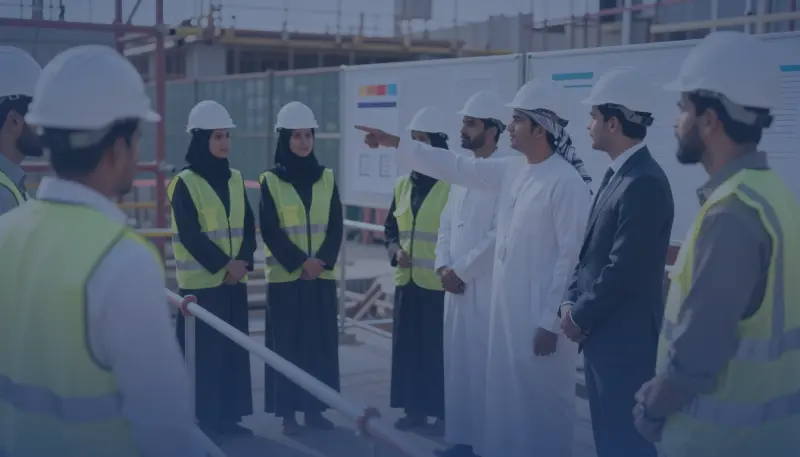
Wind Turbine Safety and Emergency Response Course

Course Details
-
# 956_172955
-
12 – 16 September 2027 16.Sep.2027
-
Muscat
-
5700 €
Overview
Wind Turbine Safety and Emergency Response Course is a 1-week course for turbine technicians, operations and maintenance teams, site supervisors, safety professionals, contractors, and rescue coordinators who leave with a Wind Site Safety and Emergency Control Plan. Participants connect turbine hazard mapping, hazardous-energy isolation, work at height, lifting, fire prevention, rescue coordination, weather decisions, contractor controls, and incident learning to field execution. Agile Leaders Training Center delivers this course on wind turbine safety.
Who Should Attend
Teams responsible for turbine construction, installation, operations, inspection, and maintenance.
Functions responsible for hazardous-energy isolation, permits, and electrical or mechanical safety.
Groups responsible for work at height, confined-space entry, lifting, and access control.
Site leaders responsible for contractors, simultaneous activities, weather decisions, and emergency readiness.
Rescue and response teams responsible for casualty access, recovery, first aid, and handover.
The course assumes participants can read site procedures and turbine work plans, and leaves out equipment-specific authorization and formal certification assessment.
Departments and Industries
The course supports safety decisions across wind-energy assets and related field operations.
Wind farm operations, maintenance, and asset management
Renewable-energy construction, commissioning, and service contractors
Electrical, mechanical, lifting, and access teams
Occupational safety, emergency response, and incident investigation
Utilities, engineering services, and equipment suppliers
Learning Objectives
By the end of this course, participants will be able to:
Analyze turbine hazards across work phases and locations.
Apply electrical and mechanical isolation control methods.
Evaluate work-at-height, confined-space, and lifting controls.
Build fire, severe-weather, rescue, and evacuation decision paths.
Compare contractor plans, permits, interfaces, and verification evidence.
Prioritize corrective actions using incident and assurance findings.
Course Agenda
Day 1: Turbine Risk Foundations
Wind Turbine Work-Phase Hazard Map
Nacelle, Hub, Tower, and Basement Exposure Register
Task Risk Assessment and Control Selection Method
Permit-to-Work and Simultaneous Operations Matrix
Wind Site Safety Responsibility and Communication Map
Day 2: Energy and Access Controls
Electrical and Mechanical Isolation Verification Sheet
Hazardous-Energy Lockout and Tryout Sequence
Work-at-Height Anchor and Fall-Protection Plan
Confined-Space Entry and Atmospheric Control Checklist
Service Lift, Ladder, and Controlled Access Inspection
Day 3: Lifting, Fire, and Weather
Crane, Hoist, and Slinger-Signaller Interface Plan
Manual Handling and Component Movement Method
Nacelle Fire Prevention and Escape Decision Tree
Lightning, Wind, Heat, and Visibility Stop-Work Criteria
Tool, Dropped-Object, and Exclusion-Zone Control Map
Day 4: Emergency and Assurance
Hub, Blade, Nacelle, Tower, and Basement Rescue Map
Casualty Stabilization, Recovery, and Handover Workflow
Contractor Competence and Control Verification Matrix
Incident Learning and Barrier Failure Analysis
Emergency Drill, Debrief, and Action Tracking Sheet
Day 5: Wind Safety Practice
Suggested Exercise: Turbine Hazard and Permit Review
Suggested Exercise: Isolation and Access Verification
Suggested Exercise: Fire and Severe-Weather Response
Suggested Exercise: Rescue and Contractor Coordination
Capstone Exercise: Wind Site Safety and Emergency Control Plan
Practical Exercises
The course uses suggested activities to integrate task controls, access decisions, emergency readiness, and assurance evidence.
Suggested activity: map hazards and interfaces for turbine maintenance involving electrical, lifting, and contractor teams.
Suggested activity: verify an isolation, work-at-height, and confined-space control package.
Suggested activity: select stop-work and evacuation actions for fire, lightning, high wind, and restricted visibility.
Suggested activity: coordinate a turbine rescue scenario, casualty handover, debrief, and corrective-action record.
FAQs
Who suits wind turbine safety training, and what does it assume?
Technician, operations, maintenance, supervision, safety, contractor, and rescue teams suit the course. It assumes participants can follow turbine work plans and site procedures, while equipment-specific authorization and formal certification assessment remain outside scope.
How does wind turbine safety differ from general industrial safety training?
Wind turbine safety applies familiar controls to elevated, enclosed, remote, electrically energized, mechanically stored-energy environments where access, weather, rescue, and contractor interfaces shape the work plan.
How is hazardous energy controlled during wind turbine work?
Hazardous energy is controlled by identifying every source, isolating electrical and mechanical systems, securing stored energy, applying locks and tags, testing the isolation, controlling changes, and verifying restoration before return to service.
What triggers stop-work decisions in wind turbine safety?
Stop-work decisions follow defined limits and observed conditions for wind, lightning, heat, visibility, fire, equipment state, access integrity, communication, competence, and changes that invalidate the approved task controls.
How is emergency rescue prepared for a wind turbine?
Emergency rescue is prepared by mapping access and recovery routes, confirming rescue equipment and competent roles, coordinating communications and external handover, rehearsing scenarios, and recording lessons and corrective actions.
Conclusion
Participants take back a Wind Site Safety and Emergency Control Plan linking hazards, permits, isolation, access, lifting, fire, weather, rescue, contractor interfaces, and assurance evidence. The plan improves coordination among operations, maintenance, contractors, safety, and response teams. It turns site procedures into traceable field decisions and corrective-action records.
Occupational Health, Safety and Security Training Courses
Wind Turbine Safety and Emergency Response Course (956_172955)
Course Details
# 956_172955
12 – 16 September 2027
Muscat
Fees : 5700 €
Wind Turbine Safety and Emergency Response Course runs in Muscat over 5 days, with 1 upcoming date in Muscat. The course fee is 5,700 €.
All dates in Muscat
| Dates | Price | Actions |
|---|---|---|
| 12 – 16 September 2027 | 5,700 € | Register |
Training in Muscat
Join our professional training courses in Muscat, Oman—where rich culture meets modern learning. Advance your career in a world-class coastal setting.
All courses in MuscatThis course in other cities
- Abu Dhabi
- Accra
- Amman
- Amsterdam
- Athens
- Baku
- Bali
- Bangkok
- Barcelona
- Berlin
- Cairo
- Cape town
- Casablanca
- Chicago
- Doha
- Dubai
- Frankfurt
- Geneva
- Istanbul
- Jakarta
- Johannesburg
- Kuala Lumpur
- Kuwait
- Lagos
- Langkawi
- Lisbon
- London
- Madrid
- Manama
- Marbella
- Milan
- Montreux
- Munich
- Nairobi
- New York
- Nice
- Paris
- Phuket
- Porto
- Prague
- Rome
- San Diego
- Seoul
- Sharm El-Sheikh
- Singapore
- Tashkent
- Tbilisi
- Tokyo
- Toronto
- Trabzon
- Vienna
- Zanzibar
- Zoom