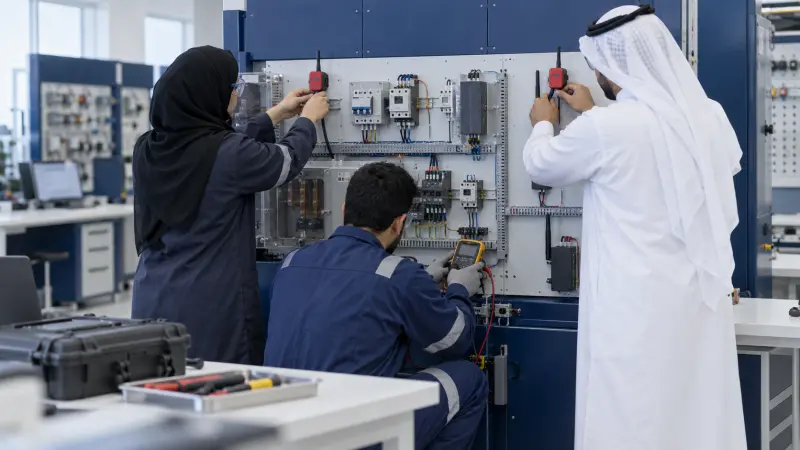
Electrical and Instrumentation Design Fundamentals Course

Course Details
-
# 978_174478
-
6 – 10 December 2026 10.Dec.2026
-
Bali
-
6500 €
Overview
Electrical and Instrumentation Design Fundamentals Course is a one-week foundation course for professionals who need to coordinate electrical power, instrumentation, and control design deliverables. Participants connect design inputs, load and instrument data, single-line diagrams, P&IDs, equipment selection, cabling, earthing, loop documentation, control interfaces, and design reviews. The course resolves gaps between discipline documents through a coordinated Electrical and Instrumentation Design Basis and Drawing Register. Agile Leaders Training Center delivers this electrical and instrumentation design course.
Who Should Attend
Graduate and junior electrical engineers entering project design work
Junior instrumentation engineers developing control documentation
Design technicians who prepare drawings, schedules, and registers
Project engineers coordinating electrical and instrumentation interfaces
Multidisciplinary team members who review design deliverables
The course assumes basic engineering knowledge and familiarity with technical drawings, while detailed power-system studies, safety-instrumented-system design, and certification preparation remain outside scope.
Departments and Industries
The course supports coordinated design work across projects that combine electrical supply, measurement, control, and field installation.
Engineering and project teams in industrial plants and process facilities
Design offices serving utilities, infrastructure, and buildings
Construction and commissioning teams coordinating field packages
Facilities engineering in healthcare, transport, and data centers
Owner engineering and technical assurance functions
Learning Objectives
By the end of this course, participants will be able to:
Define electrical and instrumentation design inputs and boundaries
Prepare core electrical drawings, schedules, and selection records
Build instrument indexes, I/O lists, and loop documentation
Coordinate power, signal, control, cabling, and earthing interfaces
Apply document checking and interdisciplinary review controls
Assemble a coordinated design basis and drawing register
Course Agenda
Day 1: Design Basis and Interfaces
Project Design Input and Requirement Register
Electrical and Instrumentation Scope Boundary Matrix
Equipment Area, Service, and Environmental Data Sheet
Design Standard, Assumption, and Deviation Log
Interdisciplinary Interface and Responsibility Map
Day 2: Electrical Design Deliverables
Electrical Load List and Demand Summary Method
Single-Line Diagram Structure and Review Checklist
Equipment Selection and Rating Data Sheet
Cable Schedule, Routing, and Segregation Register
Earthing and Bonding Design Coordination Plan
Day 3: Instrumentation Design Deliverables
P&ID Instrument Symbol and Tag Review Using ISA-5.1
Instrument Index and Specification Data Register
Input and Output List Development Method
Instrument Loop Diagram and Connection Record
Hook-Up Drawing and Installation Detail Checklist
Day 4: Control and Installation Coordination
Control Narrative and Cause-and-Effect Interface Map
Power Supply, Panel, and Marshaling Coordination Sheet
Signal Type, Shielding, and Cable Interface Matrix
Junction Box, Termination, and Field Location Register
Design Review, Comment, and Revision-Control Workflow
Day 5: Design Review Practice and Capstone
Exercise on Design Inputs and Discipline Boundaries
Exercise on Electrical Drawing and Schedule Consistency
Exercise on Instrument Index and Loop Documentation
Exercise on Cable, Earthing, and Control Interfaces
Capstone Exercise: Electrical and Instrumentation Design Basis and Drawing Register
Practical Exercises
The course uses suggested activities that turn project inputs into coordinated electrical and instrumentation design records.
Suggested activity: reconcile a load list, single-line diagram, and equipment schedule
Suggested activity: build an instrument index and I/O list from a P&ID
Suggested activity: trace power, signal, cable, and earthing interfaces across disciplines
Suggested activity: close design-review comments and update a controlled drawing register
FAQs
Who suits electrical and instrumentation design fundamentals, and what does it assume?
Graduate engineers, junior designers, technicians, and project coordinators suit the course. It assumes basic engineering knowledge and familiarity with technical drawings, while advanced studies and certification preparation remain outside scope.
How does electrical and instrumentation design differ from electrical installation training?
Electrical and instrumentation design defines requirements, selects equipment, develops drawings, and coordinates interfaces before field work. Electrical installation training focuses more on constructing, connecting, inspecting, and maintaining equipment in accordance with approved design documents.
Why must electrical and instrumentation documents be coordinated?
Coordination keeps loads, power supplies, signal types, cables, earthing, panels, tags, and field locations consistent across documents. It prevents one discipline from changing an interface without the related drawings, schedules, and registers being reviewed.
What documents form the foundation of instrumentation design?
Instrumentation design commonly uses P&IDs, instrument indexes, specifications, I/O lists, loop diagrams, hook-up drawings, cable schedules, control narratives, and cause-and-effect records. Each document serves a different design and verification purpose.
How are electrical and instrumentation design changes controlled?
Design changes are controlled through an approved baseline, numbered comments, documented assumptions, discipline checks, interface reviews, revision records, and issue status. The drawing register shows which deliverables changed and what related documents require review.
Conclusion
Participants take back an Electrical and Instrumentation Design Basis and Drawing Register containing inputs, boundaries, drawings, schedules, indexes, interfaces, checks, and revision controls. The file changes disconnected discipline documents into a coordinated design trail. Teams can update it as project information develops and use it to govern reviews and field-package readiness.
Maintenance Training and Engineering Training Courses
Electrical and Instrumentation Design Course (978_174478)
Course Details
# 978_174478
6 – 10 December 2026
Bali
Fees : 6500 €
Electrical and Instrumentation Design Fundamentals Course runs in Bali over 5 days, with 1 upcoming date in Bali. The course fee is 6,500 €.
All dates in Bali
| Dates | Price | Actions |
|---|---|---|
| 6 – 10 December 2026 | 6,500 € | Register |
Training in Bali
Sunset view over rice terraces in Bali with palm trees and mountains in the background, showcasing natural island beauty.
All courses in BaliThis course in other cities
- Abu Dhabi
- Accra
- Amman
- Amsterdam
- Athens
- Baku
- Bangkok
- Barcelona
- Berlin
- Cairo
- Cape town
- Casablanca
- Chicago
- Doha
- Dubai
- Frankfurt
- Geneva
- Istanbul
- Jakarta
- Johannesburg
- Kuala Lumpur
- Kuwait
- Lagos
- Langkawi
- Lisbon
- London
- Madrid
- Manama
- Marbella
- Milan
- Montreux
- Munich
- Muscat
- Nairobi
- New York
- Nice
- Paris
- Phuket
- Porto
- Prague
- Rome
- San Diego
- Seoul
- Sharm El-Sheikh
- Singapore
- Tashkent
- Tbilisi
- Tokyo
- Toronto
- Trabzon
- Vienna
- Zanzibar
- Zoom