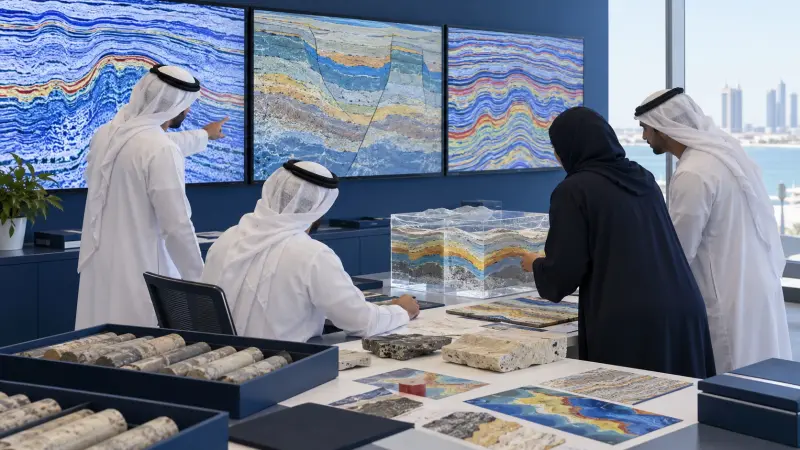
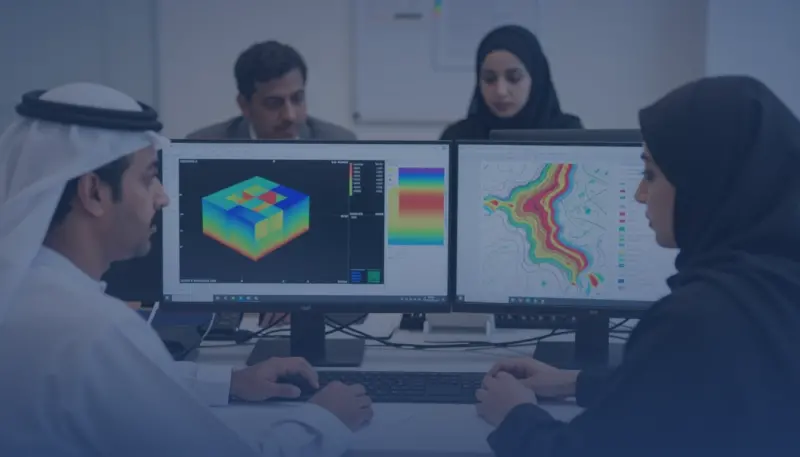
Advanced Integrated Petrophysics and Formation Evaluation Course

Course Details
-
# 1169_186355
-
22 – 26 August 2027 26.Aug.2027
-
Phuket
-
8000 €
Overview
Advanced Integrated Petrophysics and Formation Evaluation Course is a one-week course for petrophysicists, reservoir engineers, geoscientists, drilling and completion engineers, subsurface analysts, and technical managers who need a Formation Evaluation Interpretation Pack. Participants build an integrated petrophysics workflow, a well log interpretation workflow, and a core-log calibration workflow to support reservoir quality decisions while testing data quality and uncertainty. Agile Leaders Training Center develops formation evaluation practice.
Who Should Attend
Subsurface teams responsible for interpreting logs, core measurements, and reservoir properties
Reservoir teams responsible for rock quality, fluid distribution, volumetrics, and development inputs
Geoscience teams responsible for lithology, stratigraphic context, and formation correlation
Drilling and completion teams responsible for acquisition choices, intervals, and technical handoffs
Technical assurance teams responsible for interpretation quality, uncertainty, and decision traceability
The course assumes participants can read common well-log tracks and reservoir-property tables; it leaves out introductory geology, tool engineering, and proprietary software operation.
Departments and Industries
The course supports organizations that evaluate subsurface formations for resource, storage, geothermal, and groundwater decisions.
Petrophysics, reservoir engineering, geology, and geophysics departments
Drilling, formation testing, completion, and production teams
Energy operators, technical service companies, and subsurface consultancies
Carbon storage and geothermal development organizations
Groundwater, geotechnical, research, and technical assurance groups
Learning Objectives
By the end of this course, participants will be able to:
Apply log quality-control and environmental-correction workflows
Analyze lithology, shale volume, porosity, resistivity, and fluid effects
Compare saturation models and document their applicability limits
Build core-log calibration, permeability, and rock-type relationships
Evaluate net-reservoir and net-pay cutoffs with uncertainty ranges
Integrate multidisciplinary evidence into a traceable interpretation pack
Course Agenda
Day 1: Data Conditioning and Interpretation Design
Formation Evaluation Objective and Decision Map
Log Inventory, Depth-Match, and Data-Lineage Sheet
Borehole Environment and Log Quality-Control Checklist
Environmental Correction and Bad-Hole Flag Workflow
Deterministic and Probabilistic Interpretation Design
Day 2: Lithology and Porosity Interpretation
Gamma-Ray and Spontaneous-Potential Lithology Panel
Density-Neutron-Sonic Porosity Crossplot Method
Mineral Volume and Shale Fraction Model
Clean, Shaly-Sand, and Carbonate Response Diagnostic
Effective Porosity and Fluid-Correction Worksheet
Day 3: Resistivity and Saturation Models
Resistivity Profile and Invasion-Zone Diagnostic
Formation-Water Resistivity and Pickett Plot Method
Archie Saturation Model and Applicability Test
Simandoux, Indonesian, and Dual Water Model Comparison
Water-Saturation Sensitivity and Parameter Register
Day 4: Core Integration and Reservoir Quality
Routine Core Analysis Quality and Condition Review
Core-to-Log Depth Alignment and Calibration Matrix
Porosity-Permeability Transform and Rock-Typing Method
Net-Reservoir and Net-Pay Cutoff Decision Table
Reservoir-Quality Ranking and Uncertainty Dashboard
Day 5: Integrated Interpretation Practice
Exercise: Diagnose Log Quality and Apply Correction Flags
Exercise: Build a Lithology and Porosity Interpretation
Exercise: Compare Saturation Models and Sensitivities
Exercise: Calibrate Permeability and Select Pay Cutoffs
Capstone Exercise: Formation Evaluation Interpretation Pack
Practical Exercises
The course uses suggested activities that connect measurements, assumptions, model choices, uncertainty, and technical decisions.
Suggested activity: identify unreliable intervals from borehole and log-quality evidence
Suggested activity: reconcile density-neutron porosity with lithology and core measurements
Suggested activity: test how water resistivity and model choice change saturation estimates
Suggested activity: defend reservoir-quality classes and pay cutoffs using an uncertainty register
FAQs
Who suits advanced integrated petrophysics and formation evaluation training?
Petrophysics, reservoir, geoscience, drilling, completion, and assurance professionals suit the training. Participants should already read common log tracks and reservoir-property tables.
How does integrated petrophysics differ from introductory well logging?
Integrated petrophysics combines conditioned logs, core data, geological context, saturation models, permeability relationships, cutoffs, and uncertainty, while introductory well logging primarily explains measurements and basic responses.
Why does formation evaluation compare several saturation models?
Several models are compared because clean formations, shaly sands, pore structures, water properties, and parameter assumptions affect resistivity responses differently; applicability and sensitivity must be documented.
How does core-log calibration improve reservoir-quality interpretation?
Core-log calibration aligns depths, tests measurement conditions, reconciles porosity and permeability relationships, and identifies scale or sampling differences before core evidence is used to constrain continuous log interpretation.
How should net-pay cutoffs be used in formation evaluation?
Net-pay cutoffs should be tied to the decision, data quality, rock and fluid behavior, completion context, and sensitivity ranges rather than applied as unexplained fixed values.
Conclusion
Participants take back a Formation Evaluation Interpretation Pack containing quality flags, lithology and porosity models, saturation comparisons, core calibrations, permeability transforms, cutoff tables, reservoir-quality rankings, and uncertainty registers. The pack makes assumptions and evidence traceable across subsurface teams. It supports consistent technical review without presenting one model as universally applicable.
Oil & Gas Training and Other Technical Courses
Integrated Petrophysics and Formation Evaluation Course (1169_186355)
Course Details
# 1169_186355
22 – 26 August 2027
Phuket
Fees : 8000 €
Advanced Integrated Petrophysics and Formation Evaluation Course runs in Phuket over 5 days, with 1 upcoming date in Phuket. The course fee is 8,000 €.
All dates in Phuket
| Dates | Price | Actions |
|---|---|---|
| 22 – 26 August 2027 | 8,000 € | Register |
Training in Phuket
Explore new skills in Phukets tropical paradise. Our courses amidst stunning beaches offer a perfect blend of education and relaxation.
All courses in PhuketThis course in other cities
- Abu Dhabi
- Accra
- Amman
- Amsterdam
- Athens
- Baku
- Bali
- Bangkok
- Barcelona
- Berlin
- Cairo
- Cape town
- Casablanca
- Chicago
- Doha
- Dubai
- Frankfurt
- Geneva
- Istanbul
- Jakarta
- Johannesburg
- Kuala Lumpur
- Kuwait
- Lagos
- Langkawi
- Lisbon
- London
- Madrid
- Manama
- Marbella
- Milan
- Montreux
- Munich
- Muscat
- Nairobi
- New York
- Nice
- Paris
- Porto
- Prague
- Rome
- San Diego
- Seoul
- Sharm El-Sheikh
- Singapore
- Tashkent
- Tbilisi
- Tokyo
- Toronto
- Trabzon
- Vienna
- Zanzibar
- Zoom