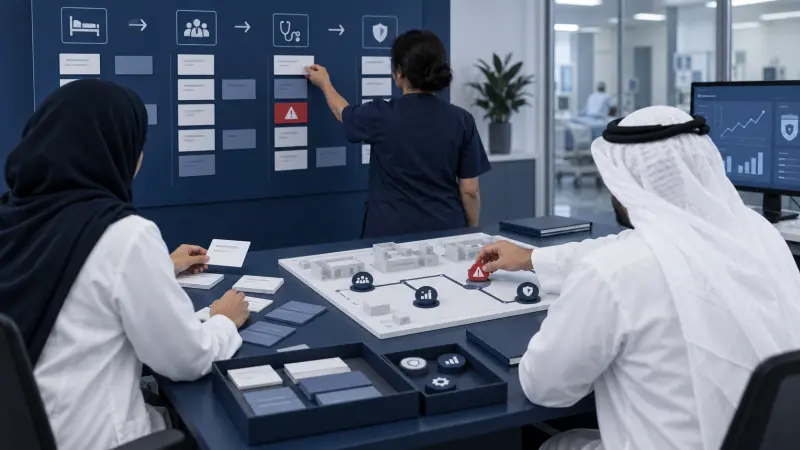
Maternal and Neonatal Patient Safety Training Course

Course Details
-
# 1366_200885
-
25 – 29 January 2027 29.Jan.2027
-
Tokyo
-
10000 €
Overview
Maternal and Neonatal Patient Safety Training Course is a one-week intermediate course for maternity, neonatal, quality, and safety teams who leave with a Maternal-Neonatal Safety Improvement Plan. Participants recognize risk, coordinate escalation, strengthen communication, review medication and infection controls, support safe monitoring, and learn from incidents. The course links clinical teamwork with measurable safety improvement. Agile Leaders Training Center presents maternal and neonatal patient safety through applied team practice.
Who Should Attend
- Teams responsible for maternity and newborn care safety
- Functions responsible for clinical quality and patient safety
- Personnel responsible for escalation and emergency coordination
- Groups responsible for medication and infection controls
- Managers responsible for incident learning and safety performance
The course assumes participants contribute to maternal or neonatal care processes and leaves out specialist diagnosis, prescribing, and procedural competency assessment.
Departments and Industries
The course supports departments and industries responsible for safe maternal and newborn care.
- Maternity, labor, delivery, and postnatal services
- Neonatal, newborn, and pediatric care units
- Hospital quality, risk, and patient safety functions
- Community health and referral services
- Clinical education and workforce development teams
Learning Objectives
By the end of this course, participants will be able to:
- Apply a maternal-neonatal risk recognition method
- Use structured communication and escalation tools
- Analyze medication, infection, and monitoring controls
- Diagnose system factors in incidents and near misses
- Evaluate safety indicators and transition risks
- Build a Maternal-Neonatal Safety Improvement Plan
Course Agenda
Day 1: Safety Foundations
- Maternal-Neonatal Safety System Map
- Care Pathway Risk Recognition Checklist
- Patient and Family Partnership Guide
- Safety Culture Evidence Matrix
- Risk Escalation Responsibility Map
Day 2: Communication and Escalation
- SBAR Structured Communication Card
- Briefing and Huddle Planning Method
- Callout and Closed-Loop Check-Back Technique
- Rapid Response Activation Pathway
- Transition-of-Care Handoff Checklist
Day 3: Clinical Safety Controls
- Medication Safety Verification Checklist
- Infection Prevention Control Review
- Maternal Deterioration Recognition Grid
- Fetal and Newborn Monitoring Escalation Map
- Emergency Readiness Resource Checklist
Day 4: Learning and Measurement
- Incident and Near-Miss Review Method
- Contributing-Factor Analysis Map
- Blame-Free Review Meeting Guide
- Maternal-Neonatal Safety Indicator Dashboard
- Corrective Action Ownership Tracker
Day 5: Maternal-Neonatal Safety Practice
- Exercise: Recognize Risk Across a Care Pathway
- Exercise: Coordinate Escalation With SBAR
- Exercise: Verify Medication and Infection Controls
- Exercise: Review an Incident and Safety Indicators
- Capstone Exercise: Maternal-Neonatal Safety Improvement Plan
Practical Exercises
The course uses suggested activities based on hospital and community-care situations.
- Suggested activity: map maternal and newborn risks, warning cues, responsible roles, and escalation points across a care pathway.
- Suggested activity: conduct a briefing, SBAR escalation, closed-loop check-back, and handoff for a changing clinical situation.
- Suggested activity: review a near miss to identify system factors, corrective actions, owners, and evidence of closure.
- Suggested activity: build a safety indicator dashboard and Maternal-Neonatal Safety Improvement Plan.
FAQs
What is maternal and neonatal patient safety?
Maternal and neonatal patient safety coordinates risk recognition, reliable controls, teamwork, escalation, incident learning, and improvement across care for mothers and newborns.
Who suits maternal and neonatal patient safety training, and what does it assume?
Maternal and neonatal patient safety training suits multidisciplinary care, quality, and safety teams and assumes participants already contribute to relevant care processes.
How does maternal and neonatal patient safety differ from specialist clinical training?
Maternal and neonatal patient safety develops system reliability, communication, and improvement skills, while specialist clinical training develops diagnosis, treatment, and procedural competencies.
Why does structured communication matter in maternal and neonatal patient safety?
Structured communication creates a shared view of changing risk, clarifies responsibility, supports timely escalation, and reduces information loss during urgent response and handoffs.
How should maternal and neonatal safety teams learn from incidents?
Maternal and neonatal safety teams should review contributing system factors without blame, assign corrective actions, verify closure, and monitor whether similar risks recur.
Conclusion
The course connects risk recognition, communication, escalation, clinical controls, incident learning, and performance measurement. Participants take back a Maternal-Neonatal Safety Improvement Plan with priorities, owners, indicators, and review points. The plan changes how teams coordinate safety action, verify controls, and learn across maternal and newborn care.
Healthcare Management Training Courses
Maternal and Neonatal Patient Safety Course (1366_200885)
Course Details
# 1366_200885
25 – 29 January 2027
Tokyo
Fees : 10000 €
Maternal and Neonatal Patient Safety Training Course runs in Tokyo over 5 days, with 1 upcoming date in Tokyo. The course fee is 10,000 €.
All dates in Tokyo
| Dates | Price | Actions |
|---|---|---|
| 25 – 29 January 2027 | 10,000 € | Register |
Training in Tokyo
Experience our professional training courses in Tokyo, Japan. Benefit from our industry-focused programs and enhance your capabilities.
All courses in TokyoThis course in other cities
- Abu Dhabi
- Accra
- Amman
- Amsterdam
- Athens
- Baku
- Bali
- Bangkok
- Barcelona
- Berlin
- Cairo
- Cape town
- Casablanca
- Chicago
- Doha
- Dubai
- Frankfurt
- Geneva
- Istanbul
- Jakarta
- Johannesburg
- Kuala Lumpur
- Kuwait
- Lagos
- Langkawi
- Lisbon
- London
- Madrid
- Manama
- Marbella
- Milan
- Montreux
- Munich
- Muscat
- Nairobi
- New York
- Nice
- Paris
- Phuket
- Porto
- Prague
- Rome
- San Diego
- Seoul
- Sharm El-Sheikh
- Singapore
- Tashkent
- Tbilisi
- Toronto
- Trabzon
- Vienna
- Zanzibar
- Zoom