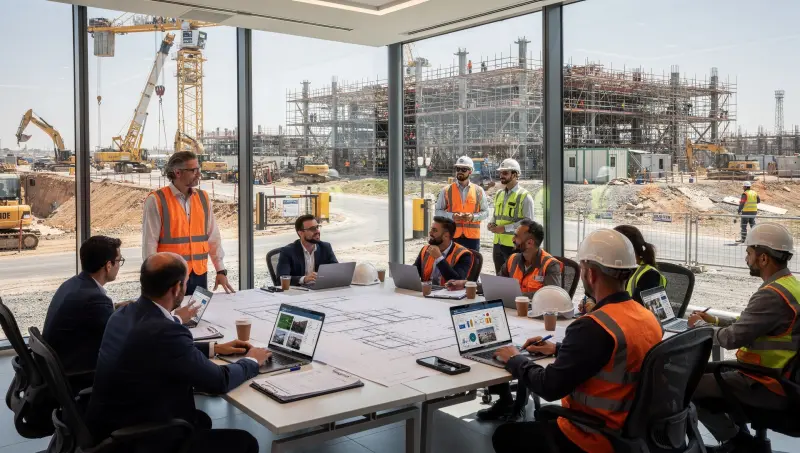
Advanced Work at Height Control and Rescue Assurance Training Course

Course Details
-
# 1409_204050
-
2 – 6 November 2026 06.Nov.2026
-
San Diego
-
14000 €
Overview
Advanced Work at Height Control and Rescue Assurance Training Course is a one-week course for safety, operations, maintenance, construction, facilities, engineering, and contractor-management functions who leave with a Work at Height Control and Rescue Assurance Pack. Participants connect work at height risk assessment, the hierarchy of controls, access-system selection, fall protection equipment inspection, anchor and clearance planning, permit control, contractor supervision, dropped-object prevention, rescue readiness, incident response, and field verification. Agile Leaders Training Center presents work at height control as a disciplined operational assurance practice.
Who Should Attend
- Safety functions responsible for hazard assessment, control standards, permits, and verification
- Operations and maintenance functions authorizing or performing elevated tasks
- Construction and facilities functions selecting access systems and coordinating site controls
- Engineering functions reviewing anchors, clearances, interfaces, and equipment suitability
- Contractor-management functions governing competence, supervision, and field compliance
- Emergency functions preparing rescue arrangements and incident response
The course assumes participants already plan, authorize, supervise, inspect, or verify elevated work and leaves out introductory awareness, equipment certification, and specialist rope-rescue qualification.
Departments and Industries
The course supports departments and industries that manage elevated maintenance, construction, inspection, access, or emergency-response tasks.
- Construction, infrastructure, and civil works
- Manufacturing, utilities, and process operations
- Facilities, property, and building maintenance
- Energy, transport, and telecommunications operations
- Safety, engineering, reliability, and technical-services departments
- Contractor management, procurement, and emergency-response functions
Learning Objectives
By the end of this course, participants will be able to:
- Analyze elevated-task hazards and select controls using the hierarchy of controls
- Compare access systems against task, surface, duration, and exposure conditions
- Evaluate fall protection equipment, anchors, clearance, and swing-fall risks
- Build permit, contractor-control, and dropped-object arrangements
- Develop rescue, incident-response, and communication plans
- Apply field verification and improvement methods to work-at-height activities
Course Agenda
Day 1: Risk and Control Architecture
- Work at Height Task Boundary Map
- Hazard Identification and Exposure Profile
- Hierarchy of Controls Selection Matrix
- Fragile-Surface and Opening Risk Register
- Dropped-Object Exposure Zone Plan
Day 2: Access and Fall Protection Systems
- Access-System Suitability Decision Tree
- Ladder and Scaffold Condition Checklist
- Elevated Work Platform Interface Review
- Fall Restraint and Fall Arrest Selection Method
- Equipment Compatibility and Traceability Record
Day 3: Anchorage and Equipment Assurance
- Harness, Lanyard, Connector, and Lifeline Inspection Record
- Anchor Suitability Evidence Sheet
- Fall-Clearance Calculation Worksheet
- Swing-Fall and Edge-Contact Assessment
- Equipment Quarantine and Defect Escalation Process
Day 4: Permit, Supervision and Rescue Readiness
- Work at Height Permit Control Checklist
- Competence and Authorization Verification Matrix
- Contractor Supervision and Handover Protocol
- Rescue Scenario and Response-Time Analysis
- Rescue Plan, Communication, and Equipment Readiness Sheet
Day 5: Work at Height Assurance Practice
- Exercise: Diagnose a Control Failure from Field Evidence
- Exercise: Select Access and Fall Protection for a Maintenance Task
- Exercise: Verify Anchor, Clearance, and Equipment Arrangements
- Exercise: Test a Permit and Rescue Scenario
- Capstone Exercise: Work at Height Control and Rescue Assurance Pack
Practical Exercises
The course uses suggested activities drawn from construction, manufacturing, utilities, and facilities settings.
- Suggested activity: map an elevated task, identify fall and dropped-object exposures, and select controls with documented decision criteria.
- Suggested activity: inspect sample equipment records and reconcile compatibility, anchor, clearance, edge, and quarantine evidence.
- Suggested activity: challenge a contractor permit, supervision arrangement, rescue plan, and communication sequence against a field scenario.
- Suggested activity: assemble risk, access, equipment, permit, rescue, and verification artifacts in the capstone pack.
FAQs
Who suits advanced work at height control training, and what does it assume?
Advanced work at height control training suits personnel who already plan, authorize, supervise, inspect, or verify elevated work and need to integrate risk, equipment, permit, contractor, rescue, and assurance decisions.
How does advanced work at height training differ from basic height-safety awareness?
Advanced work at height training emphasizes decision evidence, access selection, anchor and clearance evaluation, permit governance, contractor control, rescue testing, and field verification rather than introductory hazard recognition.
How should fall protection equipment inspection be controlled?
Fall protection equipment inspection should use defined acceptance criteria, compatibility checks, traceable records, pre-use examination, periodic review, defect quarantine, and clear authority for release or rejection.
What belongs in a work at height rescue plan?
A work at height rescue plan should define credible scenarios, access and recovery methods, roles, communication, equipment, casualty considerations, site interfaces, escalation routes, and a process for testing readiness before work begins.
How is work at height field verification performed?
Work at height field verification compares the task, permit, people, access system, equipment, anchors, exclusion zones, rescue arrangements, and changing conditions with the approved control basis before and during the job.
Conclusion
The course connects task risk, access systems, fall controls, equipment assurance, permits, contractor supervision, rescue readiness, incident response, and field verification. Participants take back a Work at Height Control and Rescue Assurance Pack. The pack helps teams authorize elevated work with clearer evidence, test critical controls, respond to deviations, and improve repeat-task planning.
Occupational Health, Safety and Security Training Courses
Work at Height Control and Rescue Training Course (1409_204050)
Course Details
# 1409_204050
2 – 6 November 2026
San Diego
Fees : 14000 €
Advanced Work at Height Control and Rescue Assurance Training Course runs in San Diego over 5 days, with 1 upcoming date in San Diego. The course fee is 14,000 €.
All dates in San Diego
| Dates | Price | Actions |
|---|---|---|
| 2 – 6 November 2026 | 14,000 € | Register |
Training in San Diego
Experience our top-notch training courses in San Diego. Join one of our training courses in USA Today!
All courses in San DiegoThis course in other cities
- Abu Dhabi
- Accra
- Amman
- Amsterdam
- Athens
- Baku
- Bali
- Bangkok
- Barcelona
- Berlin
- Cairo
- Cape town
- Casablanca
- Chicago
- Doha
- Dubai
- Frankfurt
- Geneva
- Istanbul
- Jakarta
- Johannesburg
- Kuala Lumpur
- Kuwait
- Lagos
- Langkawi
- Lisbon
- London
- Madrid
- Manama
- Marbella
- Milan
- Montreux
- Munich
- Muscat
- Nairobi
- New York
- Nice
- Paris
- Phuket
- Porto
- Prague
- Rome
- Seoul
- Sharm El-Sheikh
- Singapore
- Tashkent
- Tbilisi
- Tokyo
- Toronto
- Trabzon
- Vienna
- Zanzibar
- Zoom