Safe Plant and Equipment Isolation Training Course

Course Details
-
# 2075_252136
-
24 – 28 May 2027 28.May.2027
-
Berlin
-
5700 €
Overview
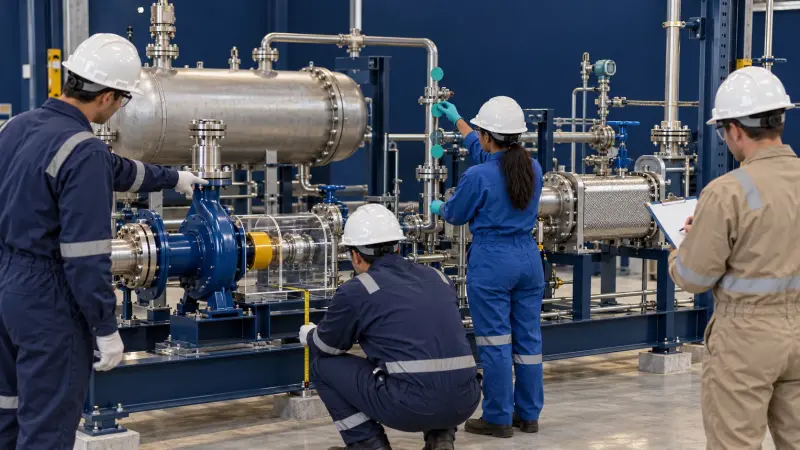
Safe Plant and Equipment Isolation Training Course is a one-week practical course for operations, maintenance, electrical, mechanical, instrumentation, and HSE personnel who control hazardous energy before work. Participants build an Isolation Control Pack connecting equipment identification, energy mapping, risk assessment, isolation-point selection, permits, locks and tags, positive isolation, stored-energy dissipation, zero-energy verification, group control, handover, and reinstatement. Agile Leaders Training Center develops traceable isolation decisions aligned with site authorization and procedures.
Who Should Attend
- Operations personnel who prepare, install, verify, monitor, and remove process isolations
- Mechanical maintenance teams exposed to pressure, movement, gravity, springs, fluids, and stored energy
- Electrical and instrumentation personnel who isolate supplies, controls, signals, and automatic starts
- Permit issuers, performing authorities, area authorities, and supervisors coordinating work boundaries
- HSE and assurance personnel who inspect isolation procedures, records, behaviours, and deviations
Participants should understand their site's permit-to-work and equipment-identification practices. The course does not replace competent authorization, electrical licensing, task-specific procedures, jurisdictional rules, or the owner’s approved isolation standard.
Departments and Industries
The course supports facilities where unexpected energization, movement, pressure, temperature, or hazardous substances can harm personnel.
- Oil and gas production, refining, petrochemical, terminal, and pipeline operations
- Power generation, utilities, water, wastewater, and district-energy systems
- Chemical, pharmaceutical, food, metals, mining, and process manufacturing
- Facilities management, industrial maintenance, construction, and commissioning
- Operations, maintenance, engineering, inspection, reliability, and HSE functions
Learning Objectives
By the end of this course, participants will be able to:
- Identify electrical, mechanical, hydraulic, pneumatic, chemical, thermal, gravity, pressure, and residual energy sources.
- Select isolation methods from a documented risk assessment, work scope, equipment boundary, and site standard.
- Prepare an isolation certificate, point list, marked drawing, permit interface, and lock-and-tag arrangement.
- Install positive, mechanical, process, and electrical controls and dissipate stored or reaccumulating energy.
- Perform try-test-prove and zero-energy verification before work and maintain isolation integrity during the task.
- Control group isolation, shift handover, scope changes, removal, reinstatement, and audit evidence.
Course Agenda
Day 1: Define the Isolation Boundary
- Hazardous Energy Source and Release-Path Map
- Equipment, Line, Valve, Cable, Drive, and Control Identification
- Work Scope, Intrusive Task, and Isolation Boundary Review
- Authorized, Affected, Issuing, and Performing Role Matrix
- Isolation Standard, Permit-to-Work, Drawing, and Procedure Interface
Day 2: Select and Plan the Isolation Scheme
- Isolation Risk Assessment and Failure-Mode Review
- Single Valve, Double Block and Bleed, Disconnection, and Positive Isolation Comparison
- Blind, Spade, Spacer, Blank Flange, Break, and Physical Restraint Selection
- Electrical Disconnect, Control Circuit, Automatic Start, and Backfeed Review
- Isolation Certificate, Point List, Marked Drawing, and Independent Check Plan
Day 3: Install, Secure, and Prove Isolation
- Shutdown, Stop, Separation, Lockout, and Tagout Sequence
- Drain, Vent, Depressurize, Purge, Flush, Cool, Block, and Restrain Actions
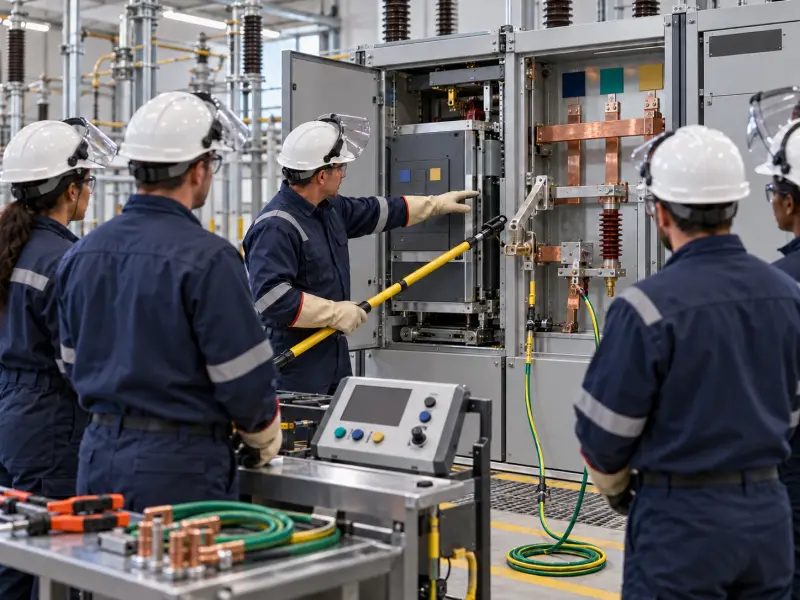
- Try-Test-Prove and Electrical Test-Instrument Validation
- Zero-Energy, Dead-Leg, Trapped-Pressure, and Reaccumulation Verification
- Isolation Security, Lockbox, Key Control, Monitoring, and Worksite Communication
Day 4: Control Complex and Changing Work
- Group Isolation and Personal Control Arrangement
- Multiple Work Parties, SIMOPS, Contractor, and Shared Equipment Interface
- Shift Handover, Extended Work, Suspension, and Continuity Record
- Scope Change, Additional Isolation, Deviation, and Stop-Work Decision
- Isolation Audit, Field Verification, Defect, and Corrective-Action Record
Day 5: Reinstate Plant and Demonstrate Control
- Suggested Exercise: Build an Equipment Energy Map
- Suggested Exercise: Select and Mark an Isolation Scheme
- Suggested Exercise: Verify Zero Energy and Isolation Integrity
- Suggested Exercise: Manage a Group Isolation and Shift Handover
- Capstone Exercise: Present an Isolation Control Pack and Reinstatement Plan
Practical Exercises
The course uses suggested activities based on realistic equipment, drawings, permits, energy sources, and work-party interfaces.
- Suggested activity: trace every energy and material path, define the intrusive-work boundary, and identify credible isolation failures.
- Suggested activity: compare isolation options, select controls proportionate to risk, and produce a marked drawing and point list.
- Suggested activity: apply locks, tags, restraints, drains, vents, and proof tests in a controlled simulation and document zero energy.
- Suggested activity: reconcile personnel, tools, guards, valves, blinds, circuits, permits, and notifications before staged reinstatement.
FAQs
Who suits safe plant and equipment isolation training?
Safe plant and equipment isolation training suits operations, maintenance, electrical, mechanical, instrumentation, permit-control, supervision, and HSE personnel who isolate or work on industrial equipment.
Is lockout/tagout enough for every process isolation?
No. Lockout and tagout control operation of energy-isolating devices, but process hazards may also require draining, venting, purging, disconnection, blinding, restraint, monitoring, or another positive method selected through risk assessment and site rules.
What does zero-energy verification involve?
Verification confirms that identified sources are physically isolated and residual energy is relieved or restrained. It uses approved attempts to operate, suitable test instruments, pressure or level evidence, inspection, and continued monitoring where energy can reaccumulate.
How is an isolation removed safely?
Authorized personnel confirm work completion, equipment integrity, guard restoration, removal of nonessential items, safe positioning of people, reconciliation of locks and tags, permit closure, communication, staged removal, and controlled return to service.
Conclusion
Participants leave with an Isolation Control Pack for their organization. It combines an energy map, boundary drawing, risk assessment, isolation certificate, point list, verification record, group-control plan, handover log, audit sheet, and reinstatement checklist. The pack turns isolation into a documented lifecycle from hazard identification to safe return to service.
Occupational Health, Safety and Security Training Courses
Safe Plant and Equipment Isolation Course (2075_252136)
Course Details
# 2075_252136
24 – 28 May 2027
Berlin
Fees : 5700 €
Safe Plant and Equipment Isolation Training Course runs in Berlin over 5 days, with 1 upcoming date in Berlin. The course fee is 5,700 €.
All dates in Berlin
| Dates | Price | Actions |
|---|---|---|
| 24 – 28 May 2027 | 5,700 € | Register |
Training in Berlin
Explore professional training courses in Berlin, Germany. Build practical skills, enhance your career, and join our expert-led training programs today.
All courses in BerlinThis course in other cities
- Abu Dhabi
- Accra
- Addis Ababa
- Amman
- Amsterdam
- Athens
- Baku
- Bali
- Bangkok
- Barcelona
- Cairo
- Cape town
- Casablanca
- Chicago
- Doha
- Dubai
- Frankfurt
- Geneva
- Istanbul
- Jakarta
- Johannesburg
- Kuala Lumpur
- Kuwait
- Lagos
- Langkawi
- Lisbon
- London
- Madrid
- Manama
- Marbella
- Milan
- Montreux
- Munich
- Muscat
- Nairobi
- New York
- Nice
- Paris
- Phuket
- Porto
- Prague
- Rome
- San Diego
- Seoul
- Sharm El-Sheikh
- Singapore
- Tashkent
- Tbilisi
- Tokyo
- Toronto
- Trabzon
- Vienna
- Zanzibar
- Zoom