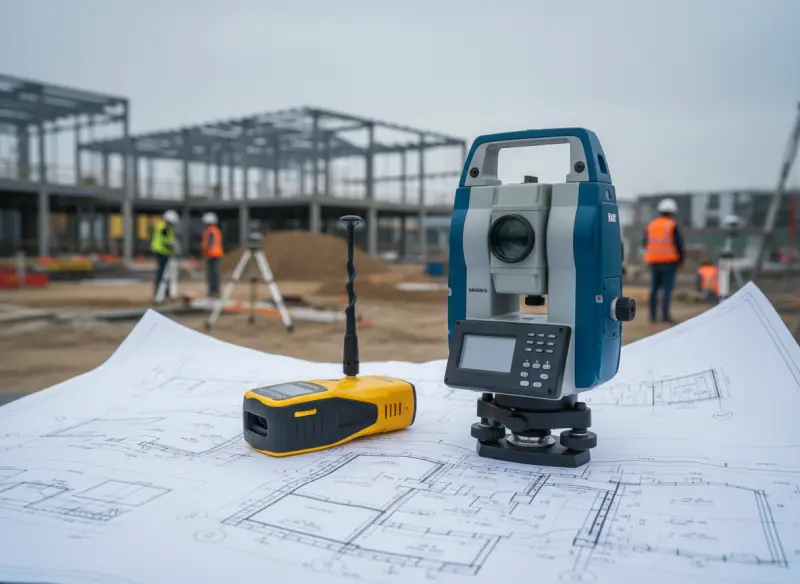
GNSS Precision Surveying & Mapping Techniques
Course Details
-
# 103600513_71973
-
13 – 24 September 2027 24.Sep.2027
-
Dubai
-
13000 €
Course Overview:
The GNSS Application for Surveying and Mapping course dives into the practical and theoretical aspects of GNSS technologies and their vital role in modern surveying and mapping. With an in-depth focus on GNSS surveying techniques, GNSS positioning systems, and the integration of GNSS mapping technologies, the course ensures participants can confidently apply GNSS for topographic mapping, surveying, and environmental mapping. Throughout the course, participants will explore advanced real-time kinematic surveying, differential GNSS surveying, and gain hands-on experience with mobile GNSS mapping. The course aims to enhance knowledge on GNSS data processing, surveying equipment with GNSS, and GNSS-based surveying tools, making it ideal for professionals involved in land surveying, civil engineering, and geospatial mapping.
Target Audience:
- Surveyors
- Geospatial Analysts
- Civil Engineers
- Environmental Consultants
- Mapping Professionals
- Project Managers in Geospatial Fields
Targeted Organizational Departments:
- Surveying and Mapping
- Geospatial Information Systems (GIS)
- Construction & Civil Engineering
- Environmental Sciences and Planning
- Infrastructure & Development
- Research and Development
Targeted Industries:
- Geospatial & Mapping Services
- Construction & Civil Engineering
- Environmental Consulting
- Urban Planning & Development
- Agriculture & Land Management
- Government Agencies for Land Surveying
Course Offerings:
By the end of this course, participants will be able to:
- Understand and apply core principles of GNSS in surveying and mapping.
- Use GNSS surveying techniques for high-precision land surveying.
- Implement differential GNSS and real-time kinematic GNSS methods for accurate positioning.
- Integrate GNSS with GIS for environmental mapping and topographic mapping.
- Conduct surveying and mapping using GNSS-based surveying tools and satellite positioning systems.
- Troubleshoot and reduce common GNSS errors affecting surveying projects.
Training Methodology:
- Case Studies: Practical case studies highlighting real-world GNSS applications.
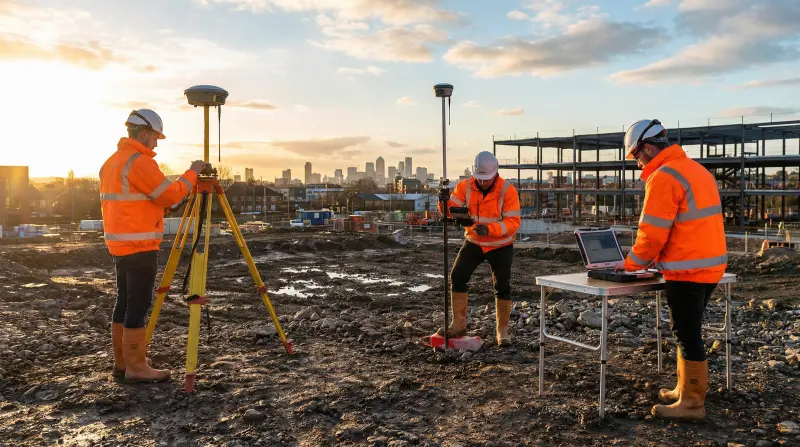
- Hands-on Practice: Direct experience with GNSS receivers and mobile GNSS mapping.
- Group Work and Discussions: Collaborative tasks exploring GNSS data processing, surveying tools, and best practices.
- Feedback Sessions: Constructive feedback on GNSS techniques to ensure correct implementation.
- Reflection & Review: Daily reflection on core concepts such as GNSS accuracy and surveying with GNSS.
Course Toolbox:
- GNSS Receivers and Antennas
- Surveying Software for GNSS data processing and analysis
- Mobile GNSS Mapping Apps
- Online Resources and Databases
- Reference Materials on GNSS Positioning and Surveying Standards
- Case Study Examples for real-world GNSS applications
Course Agenda:
Day 1: Introduction to GNSS and Surveying Basics
- Topic 1: Overview of GNSS technologies in modern surveying
- Topic 2: GNSS positioning systems: GPS, GLONASS, Galileo, BeiDou, and more
- Topic 3: The importance of GNSS surveying in modern mapping and positioning
- Topic 4: Basic principles of GNSS data processing for surveying and mapping
- Topic 5: Introduction to satellite positioning systems for surveying
- Topic 6: Surveying with GNSS: Setting up for accurate measurements
- Reflection & Review: Understanding the role of GNSS in land surveying and mapping projects
Day 2: GNSS Surveying Techniques and Real-Time Methods
- Topic 1: Introduction to real-time kinematic surveying (RTK) and its benefits
- Topic 2: Differential GNSS surveying: Enhancing precision and accuracy
- Topic 3: GNSS surveying techniques: Static vs dynamic methods
- Topic 4: GNSS for land surveying: Field applications and best practices
- Topic 5: Practical session on surveying equipment with GNSS
- Topic 6: The role of multi-GNSS systems in real-time applications
- Reflection & Review: Review of GNSS applications and surveying accuracy
Day 3: Advanced GNSS Surveying and Mapping Tools
- Topic 1: Advanced techniques in high-precision GNSS mapping
- Topic 2: GNSS for topographic mapping: Collecting and processing data
- Topic 3: Mobile GNSS mapping: Field methods and equipment
- Topic 4: GNSS data processing: Ensuring accuracy in topographic surveys
- Topic 5: Satellite navigation in surveying: Understanding GNSS systems in the real world
- Topic 6: GNSS surveying tools: From traditional to mobile technologies
- Reflection & Review: Techniques for enhancing GNSS accuracy in mapping
Day 4: GNSS Error Sources and Quality Control
- Topic 1: Identifying and minimizing GNSS errors: Ionospheric and tropospheric delays
- Topic 2: The impact of multipath in GNSS surveying
- Topic 3: Quality control in GNSS surveying: Methods for error correction
- Topic 4: Satellite ephemeris and clock errors in GNSS measurements
- Topic 5: The role of geoid models and coordinate transformations
- Topic 6: Implementing GNSS network design for accurate survey results
- Reflection & Review: Best practices in managing GNSS errors and ensuring surveying quality
Day 5: Integration of GNSS with GIS and Mapping Technologies
- Topic 1: Integrating GNSS with GIS for environmental and spatial mapping
- Topic 2: GNSS-based surveying tools for GIS integration
- Topic 3: GNSS for environmental mapping: Data collection and analysis
- Topic 4: GNSS for cartography and its impact on map accuracy
- Topic 5: GNSS for geodesy: Surveying Earth’s movements and measurements
- Topic 6: Case studies: GNSS applications in civil engineering
- Reflection & Review: How GNSS data enhances GIS mapping and environmental studies
Day 6: GNSS Coordinate Systems and Transformations
- Topic 1: Understanding coordinate reference systems in GNSS surveying
- Topic 2: GNSS in geospatial mapping: The role of CORS networks
- Topic 3: The relationship between geoid, ellipsoid, and GNSS coordinates
- Topic 4: Geodetic datums and their importance in surveying
- Topic 5: Map projections and their application in GNSS surveys
- Topic 6: The importance of coordinate transformations for GNSS data
- Reflection & Review: Key learnings on GNSS coordinates and surveying precision
Day 7: High-Precision GNSS Surveying Methods
- Topic 1: Techniques for high-precision GNSS surveying in civil engineering
- Topic 2: Static GNSS survey techniques: Achieving sub-centimetre accuracy
- Topic 3: Dynamic GNSS surveying: Real-time applications and benefits
- Topic 4: Implementing high-precision GNSS mapping in urban planning
- Topic 5: PPP-RTK (Precise Point Positioning with RTK) for standalone accuracy
- Topic 6: Best practices in network RTK for precise surveying
- Reflection & Review: Optimizing GNSS precision for professional surveying projects
Day 8: GNSS Applications in Construction and Infrastructure
- Topic 1: GNSS for civil engineering: Applications in construction and infrastructure projects
- Topic 2: Surveying with GNSS in large-scale construction mapping
- Topic 3: GNSS for infrastructure monitoring: Real-time deformation studies
- Topic 4: Integrating GNSS with construction management tools
- Topic 5: GNSS surveying best practices for large projects
- Topic 6: GNSS for urban planning and smart city projects
- Reflection & Review: Discussing the use of GNSS in infrastructure development
Day 9: Multi-GNSS Systems and Satellite Navigation Evolution
- Topic 1: The rise of multi-GNSS systems: Combining GPS, GLONASS, Galileo, and BeiDou
- Topic 2: GNSS in surveying: Enhancing accuracy through multi-constellation data
- Topic 3: Satellite navigation in next-generation surveying techniques
- Topic 4: GNSS for topographic mapping: Integrating multiple constellations
- Topic 5: The future of GNSS in geospatial surveying and mapping technologies
- Topic 6: Impact of multi-GNSS on surveying quality and real-time data
- Reflection & Review: Future developments in satellite navigation and surveying systems
Day 10: Practical GNSS Surveying and Final Review
- Topic 1: Hands-on session: Surveying and mapping with GNSS equipment
- Topic 2: Final projects: GNSS surveying techniques in action
- Topic 3: Addressing GNSS data processing challenges in real-time
- Topic 4: Final review of GNSS-based surveying tools for topographic mapping
- Topic 5: Surveying equipment with GNSS: Best practices and troubleshooting
- Topic 6: Preparing for GNSS surveying in real-world projects
- Reflection & Review: Comprehensive review of GNSS surveying techniques and their applications
FAQ:
What specific qualifications or prerequisites are needed for participants before enrolling in the course?
Participants should have a foundational knowledge of surveying and basic mapping principles. Familiarity with geospatial technologies or surveying tools will be an advantage.
How long is each day's session, and is there a total number of hours required for the entire course?
Each session lasts around 4-5 hours, with a total of 20-25 hours spread over 2 weeks.
How does GNSS surveying differ from traditional surveying methods?
GNSS surveying provides real-time positioning with high precision, especially in large-scale or challenging environments where traditional methods may struggle. Unlike traditional tape measurements or optical instruments, GNSS can cover large areas quickly and with reduced error rates, using signals from multiple satellites and multi-GNSS systems for enhanced accuracy.
How This Course is Different from Other GNSS Surveying Courses:
The "GNSS Application for Surveying and Mapping" course stands out by offering a deep dive into both the theoretical foundations and practical applications of GNSS technology. This course integrates multi-GNSS systems, real-time kinematic surveying, and mobile GNSS mapping, providing a comprehensive understanding of GNSS techniques and tools. Unlike other courses, this program also focuses on GNSS data processing for high-precision surveying and mapping, along with advanced surveying equipment used in modern geospatial projects. With a balanced mix of hands-on exercises, GNSS error correction, and field application, participants will be equipped with the skills to leverage GNSS technologies in real-world surveying and mapping scenarios.
Maintenance Training and Engineering Training Courses
GNSS Precision Surveying & Mapping Training Course (103600513_71973)
Course Details
# 103600513_71973
13 – 24 September 2027
Dubai
Fees : 13000 €
GNSS Precision Surveying & Mapping Techniques runs in Dubai over 12 days, with 4 upcoming dates in Dubai. The course fee is 8,500 – 13,000 €.
All dates in Dubai
| Dates | Price | Actions |
|---|---|---|
| 4 – 15 July 2027 | 13,000 € | Register |
| 12 – 23 July 2027 | 8,500 € | Register |
| 19 – 30 July 2027 | 13,000 € | Register |
| 13 – 24 September 2027 | 13,000 € | Register |
Training in Dubai
Experience our top-notch training courses programs in the vibrant city of Dubai, United Arab Emirates (UAE).
All courses in DubaiThis course in other cities
- Abu Dhabi
- Accra
- Amman
- Amsterdam
- Athens
- Baku
- Bali
- Bangkok
- Barcelona
- Berlin
- Cairo
- Cape town
- Casablanca
- Chicago
- Doha
- Frankfurt
- Geneva
- Istanbul
- Jakarta
- Johannesburg
- Kuala Lumpur
- Kuwait
- Lagos
- Langkawi
- Lisbon
- London
- Madrid
- Manama
- Marbella
- Milan
- Montreux
- Munich
- Muscat
- Nairobi
- New York
- Nice
- Paris
- Phuket
- Porto
- Prague
- Rome
- San Diego
- Seoul
- Sharm El-Sheikh
- Singapore
- Tashkent
- Tbilisi
- Tokyo
- Toronto
- Trabzon
- Vienna
- Zanzibar
- Zoom