Senior Leadership Program for Transformation and Organizational Excellence

Course Details
-
# 103600616_78240
-
24 May – 4 June 2027 04.Jun.2027
-
Abu Dhabi
-
8000 €
Overview
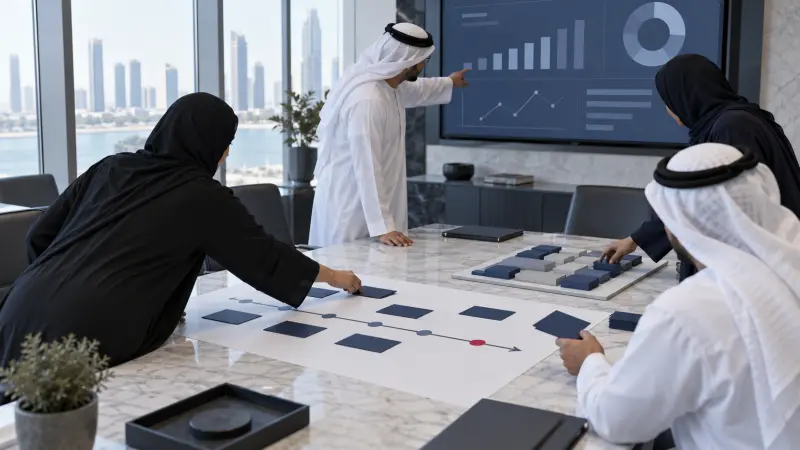
Transformation programmes stall at the top more often than on the front line: sponsors lose alignment, operating model redesigns drift, and excellence initiatives become reporting exercises. The Senior Leadership Program for Transformation and Organizational Excellence is a two-week executive programme for leaders who own an enterprise change agenda. Participants work on a live transformation case from their own organisation, building a case for change, a target operating model, a sponsorship map, a benefits realisation plan and an excellence self-assessment. Each day ends with a board-style review in which executives defend their decisions to peers acting as a steering committee. This course is delivered by Agile Leaders Training Center.
Who Should Attend
- Top executives accountable for the organisation's overall performance and its change agenda
- Leaders responsible for turning strategy into an executed transformation portfolio
- Directors who own institutional excellence, quality and performance results
- Sponsors and steering committee members who approve, fund and govern transformation programmes
- Directors leading mergers, restructurings or digital operating model changes
Departments and Industries
Participants typically come from units that design, fund or measure enterprise transformation.
- Transformation Management Offices and Strategy Realisation Units
- Institutional Excellence and Quality Award Teams
- Organisation Design and Operating Model Functions
- Enterprise Portfolio and Investment Committees
- Government Entities, Utilities, Healthcare Networks, Banks and Holding Groups
Learning Objectives
By the end of this course, participants will be able to:
- Build a compelling case for change that links strategic intent to measurable burning platforms.
- Build a target operating model covering structure, processes, capabilities and governance, sequenced into waves with stage gates and decision rights.
- Analyse sponsors, resistors and change agents and plan a sponsorship cascade.
- Use a benefits realisation register with owners, baselines and tracking cadence.
- Evaluate organisational excellence through a self-assessment based on the EFQM Direction, Execution and Results logic.
- Apply culture levers, from rituals and incentives to leadership behaviours, and defend a transformation charter to a board-level audience.
Course Agenda
Day 1: The Executive Mandate for Transformation
- Why transformations fail: evidence from stalled enterprise programmes
- Distinguishing incremental improvement, restructuring and full transformation
- The role of the executive sponsor versus the programme director
- Diagnosing organisational readiness and change saturation
- Selecting each participant's live transformation case and framing the transformation question for the steering committee
Day 2: Building the Case for Change
- Translating strategy into a transformation ambition statement
- Quantifying the cost of standing still
- Scenario planning for competitive, regulatory and technology shifts
- Crafting the change narrative for boards, staff and regulators
- Testing the case with a sceptical stakeholder panel and seeking steering committee approval
Day 3: Target Operating Model Design
- Operating model canvas: value chain, organisation, locations, information, suppliers
- Centralisation, federation and shared service choices
- Spans, layers and decision rights in the future organisation
- Capability mapping and gap prioritisation
- Drafting the current-state to future-state bridge and stress-testing it before the steering committee
Day 4: Transformation Governance and Roadmapping
- Structuring a transformation office and its reporting lines
- Wave planning, dependencies and stage-gate criteria
- Portfolio rationalisation: stopping projects that no longer fit
- Escalation paths and executive decision forums
- Integrated transformation dashboard design and steering committee approval of the roadmap
Day 5: Sponsorship, Stakeholders and Resistance
- Sponsorship cascades from board to front-line supervisors
- Stakeholder heat maps and influence planning
- Reading the sources of resistance: loss, uncertainty and capability
- Engaging unions, regulators and long-tenured staff
- Designing the change agent network and presenting the engagement plan to the steering committee
Day 6: Culture and Leadership Behaviours
- Culture diagnostics: the cultural web and values audits
- Defining the few critical behaviours that move results
- Role-modelling by the executive team and symbolic acts
- Aligning incentives, promotions and recognition with the new culture
- Leading through ambiguity during restructuring, with a steering committee review of the culture shift plan
Day 7: Organisational Excellence Models
- Principles of excellence frameworks and quality awards
- Direction, Execution and Results in the current EFQM Model, and the RADAR assessment logic
- Running an evidence-based self-assessment workshop
- Turning assessment findings into improvement projects and reviewing them with the steering committee
- Process ownership and end-to-end process management
Day 8: Benefits Realisation and Performance
- Benefits mapping from initiative to strategic outcome
- Baselines, leading indicators and tracking cadence
- Balanced scorecards and objectives-and-key-results for transformation
- Handling benefit leakage and double counting
- Reporting transformation value to the board and signing off the benefits register
Day 9: Digital Enablement and Sustaining Momentum
- Digital and data as transformation accelerators
- Agile ways of working at enterprise scale
- Avoiding transformation fatigue and quick-win traps
- Institutionalising change in policy, structure and systems
- Succession and capability building for the next wave, with a steering committee review of the sustainability plan
Day 10: Transformation Charter Presentations
- Assembling the complete transformation charter
- Board-style presentations of each participant's case
- Peer challenge and executive panel feedback
- Personal commitments as a transformation leader
- First-hundred-days action plan on return to work and programme close
Practical Exercises
These suggested activities apply the programme's tools to each participant's own transformation case.
- Suggested activity: draft a case for change and ambition statement, then map the future organisation on the target operating model canvas.
- Suggested activity: build a sponsorship cascade and stakeholder heat map for your transformation.
- Suggested activity: plan transformation waves against a stage-gate checklist and run a culture web diagnostic.
- Suggested activity: complete the excellence self-assessment workbook and a benefits realisation register.
FAQs
Do participants need to bring a real transformation case?
It is strongly recommended. Each participant develops a charter for an actual or planned change in their organisation; a realistic composite case is provided for those who cannot share details.
How long is each daily session and the whole programme?
Daily sessions run approximately four to five hours, giving forty to fifty hours across the two weeks, including case work and steering committee reviews.
Is this a general leadership skills course?
No. Personal leadership skills are touched on only as they apply to sponsoring change. The focus is enterprise transformation: operating model design, governance, culture, excellence assessment and benefits delivery.
Conclusion
Rather than working through interpersonal skills one by one, this programme follows a single transformation from ambition to board approval. Every tool, from the operating model canvas to the benefits register, is applied to the participant's own case, and every day ends with a mock steering committee. Executives leave with a complete transformation charter they can table at their next board meeting.
Leadership and Management Training Courses
Senior Leadership Program for Organizational Excellence (103600616_78240)
Course Details
# 103600616_78240
24 May – 4 June 2027
Abu Dhabi
Fees : 8000 €